

We Love Our Quilting Community
At High Country Quilts we care deeply about community. With our experiences in retail, we know that a store is not only a place to shop but also a place for the community to gather and share. During this busy...


You're standing in a quilt shop with a basket of beautiful fabric in one hand and a stack of decisions in the other. One program looks simple, one looks ambitious, and every sample on the wall seems to promise a finished quilt with no mention of what happens when life gets busy halfway through. That's where a quilt block of the month can make the whole process feel manageable, because it turns one large project into a series of smaller, guided steps.
For a beginner, that rhythm matters. You're not just buying fabric and a pattern, you're buying a structure that helps you learn, keep pace, and finish something you feel proud of.
A customer can walk into a quilt shop, look at a wall of BOM samples, and still leave without a clear picture of what she is signing up for. The idea sounds plain, but the format has a specific shape. A quilt block of the month is a subscription-style quilting program where you receive a new block pattern on a set schedule, usually monthly, and often with matching fabric, until you have enough blocks to assemble the full quilt top.
That format did not begin as a retail trend. It grew out of serialized quilt publishing that has been around for more than a century. In the 1910s, newspapers such as the Kansas City Star began publishing quilt designs one block at a time, usually weekly or monthly, and some even offered prizes for completed quilts, as noted in the historical overview from the International Quilt Museum. Earlier still, block-style quilts became increasingly common in the 1820s and 1830s, and by the mid-1800s, repetition and grid-like arrangements had become the predominant format for American-made quilts, according to the same historical record.

The appeal is practical. One block feels manageable. One month gives you time to cut, sew, press, and ask questions before the next block arrives. That slower pace is why BOMs have lasted so long, and why shops still use them to teach skills in a way that does not overwhelm new quilters.
If you are comparing programs, look past the prettiest fabric first. A better question is whether the project matches your time budget, your comfort with new techniques, and the kind of encouragement that keeps you sewing. Some quilters stay motivated by a clear finish line. Others do better with small monthly goals that fit around work, family, or travel. A BOM can suit either style if the schedule and block size are realistic.
Practical rule: if a project looks exciting but the finish line feels distant, a BOM can keep the work moving by breaking the quilt into small wins.
The other part beginners often miss is flexibility. A BOM does not have to run your life on a rigid timetable. If you know ahead of time that you may need to pause, skip a month, or slow your pace, you can choose a program that still works when life gets crowded. That is one reason shops use BOMs as teaching tools, they give you room to learn without rushing every step.
That same structure also helps a shop like High Country Quilts guide new quilters through a project they can finish with confidence. The format reflects how quilt knowledge has often been shared, incrementally, publicly, and with enough spacing for careful work. If you want to see how a shop frames that kind of project, browse the Block of the Month offerings alongside the fabrics and classes that support them.
The commercial side of a BOM is easier to understand when you break it into steps. First, you enroll in the program. Then you pay the sign-up fee or first month's charge, and after that the shop sends the monthly kit or makes it available on schedule. A useful reference point for subscription structure is the RecurX glossary entry on subscription models, which helps explain why recurring delivery and recurring billing are central to this format.
Most BOM kits include the pattern, fabrics, and instructions for that month's block, but they don't always include everything needed to finish the quilt. One major retailer notes that most kits include the quilt top fabric, binding, and instructions, while backing fabric, thread, and batting are excluded, so plan for those separately.
The fine print matters. Some programs use a non-refundable registration fee and automatic monthly billing, and one documented program charges a $25 registration fee with monthly billing afterward. Another example offers a 10-month BOM with a $31.99 monthly cost and a return rule that allows month 1 to be returned within 14 days. Those terms aren't unusual, but they do mean you should read the enrollment details before you commit.
Delivery cadence also varies more than many beginners expect. Stitchin' Heaven notes that some BOMs send one block each month while others send as many as six blocks each month, and programs can run from 6 months to 2 years, with most falling in the 12–13 month range. That's a big difference in pace, and it changes how much cutting and stitching lands on your table each month.
If you want a quick checklist before joining, use this one:
The best surprise in a BOM is a beautiful block, not an unexpected charge.

A BOM should fit your real life, not just your wish list. If your evenings are unpredictable, a program that releases a block every month may feel calmer than one that drops several blocks at once. If you like momentum, a faster format can be energizing, especially if you prefer seeing progress quickly.
The key is to compare the format, not the marketing photos. A traditional monthly program usually gives you one guided task at a time. An accelerated program can move faster but demands more cutting and more focus in each delivery window. Some digital or self-paced programs let you work on your own timeline, which can help if you know your schedule shifts often.
| Format | Typical Length | Blocks per Shipment | Best For |
|---|---|---|---|
| Traditional monthly BOM | About a year | One block | Beginners who like steady structure |
| Accelerated multi-block BOM | Shorter or similar overall run | Several blocks | Confident quilters who want more progress at once |
| Self-paced digital BOM | Flexible | You choose when to print and sew | Busy makers who need maximum control |
The pattern itself matters too. Look for techniques you already know, then scan for unfamiliar pieces like paper piecing, half-square triangles, quarter-square triangles, or border assembly. A block can be beautiful and still be wrong for your current skill level if every month introduces a new construction method you haven't practiced yet.
Choose the project that lets you finish, not just the one that looks impressive on the wall.
That doesn't mean avoiding challenge. It means choosing a challenge you can sustain. If you know you learn best by doing one thing at a time, a slower BOM can build confidence without creating pressure. If you're the type who wants a burst of progress and doesn't mind longer sewing sessions, a multi-block shipment may suit you better.
A monthly BOM goes more smoothly when you repeat the same routine each time. Open the kit, read the pattern before you cut a single piece, then sort the fabrics by block unit and add labels if the instructions call for several similar pieces. After that, cut carefully, sew in the order the pattern gives you, press each seam as you go, and trim the block to size before setting it aside safely.
That final step matters more than it first appears. Exact trimming and a steady seam allowance keep the block fitting into the full quilt later, especially when sashing and borders depend on each piece lining up cleanly. A published BOM finish guide instructs quilters to trim every block to exactly 15 inches square, then assemble a 3-by-4 layout using 2.5-inch by 15-inch and 2.5-inch by 27-inch sashing components before adding 52-inch-long top and bottom sashings. Another BOM example finishes at 106 inches by 106 inches, which shows how quickly small inconsistencies can become a problem in a large quilt top. Those measurements come from the Checkerdist BOM finish guide.
You do not need a crowded sewing room, but you do need a setup you can rely on month after month.
A month-by-month project gets easier when you give it a home. One basket or bin for current pieces, one flat space for finished blocks, and one folder for extra pattern pages can save a lot of frustration.
If you like working with precuts, some BOM patterns are designed with that in mind. One sampler example uses 25 total block units plus a lattice system, 5.5 yards of background fabric, 100 cornerstones cut at 2.5 inches, and compatibility with a 10-inch Layer Cake or Jelly Roll strip that yields sixteen 2.5-inch squares. That kind of standardization makes the monthly process much easier to manage. For a kit-based setup that follows that kind of planning, compare what is included before you buy from a Block of the Month product page.

The hardest part of a BOM usually is not the sewing. It is the long middle stretch, when the first month felt exciting and the finish still seems far away. A lot of BOM coverage explains how to make each block, but it leaves the emotional and practical side of completion underexplained. That gap matters, because a long project needs a plan, not just enthusiasm.
A smaller or more modular BOM often fits beginners better than a large, showy one. That choice is not a downgrade, it is a better match between the project and your time, attention, and energy. If your schedule is crowded, a project you can finish will feel more rewarding than one you set aside after a few months.

If you fall behind, do not put the project away and hope it sorts itself out. Pull out the current month's pattern, finish the easiest block first, and decide whether you want to catch up, simplify, or shift the quilt into a smaller top or a wall hanging. A lot of quilt instruction focuses on the ideal path, but real life brings stash substitutions, changing time budgets, and sewing machine limits.
You can stay involved by reducing decision fatigue. Pick one night each month as BOM night. Keep your machine threaded, your ruler nearby, and your cutting space clear enough that you can begin without a reset. Community check-ins help too, especially when you can share progress with other participants instead of sewing alone for months on end.
A BOM should fit your life. If it keeps colliding with your calendar, the project scale needs to change.
If your chosen pattern uses techniques that feel intimidating, simplify wherever the pattern allows. Use stash fabrics when the color value still works, or choose a version of the block that relies on methods you already know. The goal is to keep the overall design intact, not to chase a perfect execution standard that makes the quilt harder to finish.
For a project with more hands-on support, High Country Quilts in Colorado Springs offers a 2025 AccuQuilt, 12 month Block of the Month class through its events site, which gives beginners a structured option while they learn.
A local quilt shop changes the BOM experience in a real way. You can see the fabrics in person, compare colorways under shop lighting, and ask questions before you commit to a yearlong project. That matters when you are choosing between kits, because a pretty photo on a screen does not tell you how a fabric reads next to the rest of the collection.
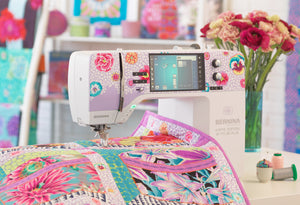
High Country Quilts is an authorized BERNINA dealer, so a BOM participant can also get help with machine setup, tension questions, and general sewing troubleshooting while working on a recurring project. That kind of in-person support helps when a block does not square up or when a seam starts behaving differently than the pattern expects.
The shop also supports the social side of BOM participation. Classes and community events give quilters a reason to return, share progress, and keep projects moving instead of letting them drift. For many beginners, that recurring contact is what turns a subscription into a finished quilt top.
A local shop can also help you adjust a BOM when life gets crowded. If a month runs tight, you can ask which block is easiest to finish first, whether a kit can be simplified with stash fabric, or how to keep the project moving without losing the overall design. That practical guidance matters for anyone balancing a quilt with work, family, or other sewing projects.
If you want a smaller companion project while you work through a BOM, a practical bag can make it easier to carry notions, scissors, and a block on the go. A crossbody tote bag pattern is a good example of the kind of accessory pattern that keeps your supplies organized between sewing sessions.
A good BOM choice starts with a realistic look at your time budget, your skill level, and what keeps you interested from one month to the next. A quilter who wants a calm, steady finish may be happier with a slower program. A quilter who likes fresh techniques and can stay on schedule may prefer something with more variety. The right fit is the one you can complete, because a finished quilt teaches more than a pattern you never have time to open.
It also helps to plan for ordinary life, since that is usually where BOM projects slow down. If your weeks are crowded, choose a format with blocks you can finish in shorter sewing sessions, or ask whether the program can be adapted with simpler fabric choices when needed. If you like motivation from deadlines, a subscription with regular delivery can keep you moving. If you work better with flexibility, look for a program that leaves room to catch up without pressure. That kind of planning keeps the project manageable when work, family, or other sewing projects pull your attention elsewhere.
A small accessory project can make the process easier to carry between sewing sessions. A crossbody tote bag pattern is a practical way to keep notions, scissors, and a block together while you work through your BOM.
High Country Quilts can help you sort through fabrics, classes, and BOM options without guessing your way through the process. If you are ready to begin with guidance, visit High Country Quilts and look for a program that matches the pace you can keep.
At High Country Quilts we care deeply about community. With our experiences in retail, we know that a store is not only a place to shop but also a place for the community to gather and share. During this busy...

Hi! We’re Adam and Renee Wheaton, the new owners of High Country Quilts! For more than 40 years, we’ve owned and operated vacuum and sewing businesses. Following in Renee’s father’s footsteps after he retired from All Discount Vacuum and Sewing in Colorado...


Leave a comment