
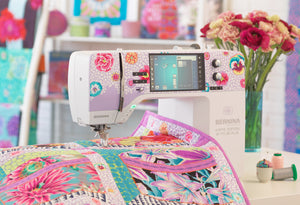

We Love Our Quilting Community
At High Country Quilts we care deeply about community. With our experiences in retail, we know that a store is not only a place to shop but also a place for the community to gather and share. During this busy...


A quilt advent calendar is a beautiful, fabric-based countdown to Christmas. It typically features 24 small pockets sewn onto a quilted panel, ready to be filled with little treats or notes. More than just a decoration, it's a handmade heirloom that your family can enjoy year after year.
 Imagine creating a holiday tradition with your own two hands. A quilt advent calendar is so much more than a decoration; it’s a future family treasure, just waiting to be filled with memories. Whether you're a seasoned quilter or just starting your sewing journey, this guide is here to help you make one from scratch.
We’ll walk through the whole process together. From the simple joy of choosing your fabrics to adding that final stitch, I'll cover every detail. This project isn’t just about sewing—it's about building excitement for the holidays, one pocket at a time.
Your handmade calendar becomes a tangible piece of your family’s story. It’s a wonderful way to step away from disposable, store-bought calendars and put your time into something truly meaningful. For me, the best part is seeing the joy it brings each December.
A handmade advent calendar doesn't just count down the days; it builds a story. Each year, as you fill its pockets, you add a new chapter to your family's holiday narrative.
This is your chance to let your holiday spirit shine. You can design it to match your home’s decor, reflect your family's personality, or bring a festive theme you've always loved to life. I’ve found the creative process is often just as rewarding as the finished piece.
This project quickly becomes a beloved family ritual. The daily discovery of what’s inside each pocket creates small moments of connection and delight that everyone looks forward to. If you want to add even more festive fun, there are plenty of other magical Christmas countdown ideas and crafts you can explore to celebrate the season.
So, let's get started on this wonderful project. It’s a promise of warmth, handcrafted charm, and new traditions for years to come.
Alright, let's talk about the fun part: picking your fabrics and getting your tools ready. This is where your quilt advent calendar really begins to take shape, moving from an idea in your head to a beautiful pile of materials on your cutting table. Getting your supplies in order first means you can dive right into the sewing without any frustrating stops and starts.
When it comes to fabric, there's a clear winner for a project like this. You need something that can handle being hung, stuffed with goodies, and loved for years to come. That’s why I always come back to 100% quilting cotton. It behaves beautifully under the needle, presses to a perfect, crisp finish, and the sheer variety of prints and colors is just staggering.
Your color palette sets the whole mood for your calendar. Are you picturing a cozy, traditional Christmas, or are you leaning toward something a little more modern and bright? There's no right or wrong answer—just what feels right for your home and your holiday spirit.
I find the easiest way to start is by picking one "hero" fabric—a print that you absolutely adore. From there, you can pull all your coordinating colors for the pockets, binding, and backing directly from that print. It’s a simple trick that guarantees a cohesive, professionally designed look.
My Go-To Fabric Store Trick: When you're picking fabrics, unroll a bit from each bolt and lay them next to each other. Take a few steps back and squint your eyes. This little trick blurs the patterns and helps you see how the colors truly interact, giving you a much better preview of your finished quilt.
It's no surprise that handmade projects like this are becoming so popular. We’re seeing a huge shift toward more meaningful, hands-on holiday traditions. In fact, the global advent calendar market, which now includes all sorts of creative craft formats, was valued at $1.32 billion in 2024 and is projected to hit $2.47 billion by 2033. It just goes to show how much people are looking for special ways to celebrate, moving beyond the simple chocolate calendars of the past. If you're interested in the business side of things, you can discover more insights about this growing market and its trends.
With your fabrics chosen, it’s time to round up your tools. Having the right gear not only makes the process more enjoyable but also makes a huge difference in the accuracy and quality of your finished calendar.
Here is a detailed checklist of the fabric, tools, and notions you’ll need to get started. I’ve included my personal recommendations and a few pro tips I’ve learned over countless projects.
| Item Category | Specific Item | Recommended Quantity/Size | Pro Tip |
|---|---|---|---|
| Cutting Tools | Rotary Cutter & Self-Healing Mat | A 45mm cutter is the standard workhorse; an 18"x24" mat gives you plenty of room. | A sharp blade is non-negotiable! I make it a habit to pop in a fresh blade before starting any big project. It guarantees clean, fray-free cuts. |
| Measuring | Clear Acrylic Ruler | If you only buy one, make it a 6"x24" ruler. It's the most versatile size for quilting. | Always trust the lines on your ruler for measurements, not the lines on your cutting mat. The ruler is far more accurate. |
| Sewing Machine | Standard Sewing Machine | You don’t need anything fancy. Any machine that can do a reliable straight stitch is perfect for this. | Start with a fresh needle! A universal size 80/12 is a great all-around choice for piecing with quilting cotton. |
| Notions | Quality Cotton Thread | A neutral color like cream, light gray, or off-white is your best bet to blend seamlessly with most fabrics. | Don't skimp on thread. Good quality thread prevents so much frustration from breaking and reduces lint buildup in your machine. |
| Pressing | Iron & Ironing Board | An iron with a good steam function is your secret weapon for getting perfectly flat, crisp seams. | Press as you go! This is the single most important habit for achieving a professional finish. It’s a game-changer. |
Beyond this list, a few other things will make your sewing life easier: a fabric marking pen for drawing guidelines, a small pair of sharp scissors for snipping threads, and a good supply of either pins or sewing clips. Getting everything gathered and organized now means you can settle in and enjoy the creative process without interruption.
Now that you have your beautiful fabrics and tools laid out, it's time to make those first crucial cuts. This is where your quilt advent calendar really begins to take shape, and honestly, a little precision now goes a long way. Think of it as the mise en place for sewing—getting everything prepped and perfectly cut makes the assembly process so much more relaxing and enjoyable.
We’re going to break down how to cut the main background panel, all 24 of the little pockets, and the accent fabric for your numbers. Taking your time here is the secret to a professional-looking finish.
Before you slice into your main fabric, let's quickly talk technique. A sharp rotary cutter and a clear acrylic ruler are your best friends for this job, but they need to be used correctly to get those perfectly straight lines and crisp corners.
I always recommend standing up when you cut. It gives you much better leverage and a bird's-eye view over your ruler, which helps prevent it from slipping. After you square up your fabric to get an initial straight edge, trust your ruler, not your mat, for all measurements. Rulers are simply made to a higher standard of accuracy.
When you're holding the ruler down, spread your fingers out wide—I call it making a "starfish" hand—to apply even pressure across its length. Then, roll the cutter away from your body in one smooth, confident motion. If you hesitate or have to stop and start, you're more likely to get a jagged edge.
A Quick Tip for Safety and Precision: Always, always close your rotary cutter blade the second you set it down. It’s a simple habit that has saved my fingers and my blades more times than I can count. A sharp blade is also non-negotiable. If you feel like you're really having to press down, or the fabric starts to snag, it's time for a new one.
This is the kind of detail that really separates a good project from a great one. The accuracy you achieve now will pay off with perfectly aligned pockets and clean lines later.
Let's start with the biggest piece: the background fabric. This is the canvas for your entire project.
First, give your fabric a good press with a hot, steamy iron. You can't get an accurate cut if you're measuring over wrinkles. Fold your fabric in half lengthwise, matching up the selvage edges (the finished factory edges). Lay this on your cutting mat, square up the folded edge with your long ruler, and trim off the uneven ends to create a perfectly straight starting point.
From this clean, new edge, you can now measure out the required width and height for your panel. Cut with firm, even pressure. If you have to fold the fabric again to fit it on your mat, just make sure all the layers are lying completely smooth and flat before you cut.
This diagram gives a great overview of how your supplies come together for a project like this.

You can see how the tools and fabric choices you make right at the start directly influence the quality of the final components.
Alright, on to the smaller pieces. You’ll need to cut 24 identical pockets, and the key here is consistency. My favorite time-saving trick is "stack cutting." After pressing your pocket fabric nice and flat, you can stack up to four layers and cut them all at once. It’s a huge time-saver and guarantees your pockets will all be exactly the same size.
When it comes to the numbers, you have a few fun options depending on the look you want and your comfort level:
It’s no surprise that projects like this are so popular. The entire quilt market was valued at $5.5 billion in 2024 and is projected to hit $7.24 billion by 2032 as more people seek out unique, handmade items. As a real-world example of this demand, I recently saw a small quilt advent calendar kit priced at $183 sell out almost instantly in an online crafting group. People are willing to invest in special holiday traditions. You can read the full research about the quilt market if you're curious about the trends.
Once every last piece is cut, get yourself organized for sewing. I like to use small trays or even labeled Ziploc bags to keep my background, pockets, and numbers sorted. It makes sitting down at the machine feel like you're ready to create, not search.
This is where the magic really starts to happen. With all your fabric pieces neatly cut and waiting, it's time to head to the sewing machine and watch your quilt advent calendar take shape. We’ll begin by getting the individual pockets ready before attaching them to the background, which is the key to getting a really polished, professional look.
Watching the grid of pockets come together is easily one of the most satisfying parts of making this project. It’s the moment all those flat fabric squares finally start to look like the festive calendar you've been picturing. Let’s get sewing!
Before you even think about placing the pockets on your main panel, we need to give them a clean, finished edge. A crisp, well-pressed pocket is the secret to a high-quality finish, as it keeps the fabric from fraying and makes the top edge nice and sturdy.
Start by taking one of your pocket squares to the ironing board. Fold the top edge down by 1/4 inch toward the wrong side of the fabric and give it a good press. Now, fold that same edge down again, but this time by about 1/2 inch. This will hide the raw edge completely. Press it one more time to set the double-fold hem.
With the pocket neatly pressed, take it over to your sewing machine. Stitch along the bottom edge of the fold you just made, about 1/8 inch from the edge. This technique is called topstitching, and it locks the hem down with a clean, visible stitch line.
A simple double-fold hem like this is a total game-changer. It doesn’t just look tidy—it also reinforces the pocket opening, which is so important since it'll be used every day in December.
You’ll need to repeat this for all 24 of your pockets. I know it can feel a bit repetitive, but I find that putting on some good music or a podcast makes the time fly by. Getting this step done right now will make the final assembly so much smoother.
Alright, with your pockets all hemmed and ready, it's time for the main event: laying them out on the background panel. The goal here is perfect alignment and spacing. Honestly, nothing throws off the look of a project like this faster than wonky, crooked pockets. I've got a foolproof method to share.
First, lay your large background panel flat on a big table or a clean spot on the floor. You’ll need a long acrylic ruler and a fabric marking tool—I prefer a heat-erasable pen, but a water-soluble marker works great, too. We're going to draw a light grid right onto the fabric to act as our guide.
Decide where you want your first pocket to go. For instance, a good starting point is often 2 inches down from the top edge and 2 inches in from the left side. Mark that top-left corner. From there, you can map out the entire grid.
Use your ruler to lightly draw the bottom and one side for each pocket's final position. This temporary grid is your secret weapon for getting everything perfectly straight.
Now that you've got your grid drawn, attaching the pockets is a breeze. Grab your first pocket and line it up with the guides you drew. The two raw sides and the raw bottom edge should sit right on your marked lines. Pin it down securely, or if you have them, sewing clips are fantastic for this.
You’ll be sewing the pocket down on three sides: the left, the bottom, and the right. If you have a walking foot for your machine, I highly recommend using it here. It helps feed all the layers of fabric through evenly and is the best tool for preventing the puckering or shifting that can sometimes happen.
Start sewing at the top-left corner of the pocket. Remember to backstitch for a few stitches to lock your seam in place. Sew down the side, pivot with your needle down at the corner, sew across the bottom, pivot again, and sew up the other side. When you reach the top-right corner, do another quick backstitch to reinforce it.
Just keep repeating this for all 24 pockets, following your grid. As you work your way through them, you'll see your advent calendar come to life. Take your time and enjoy it—your patience during the prep stage is about to pay off big time.

With all the pockets attached, your project finally looks like a quilt advent calendar! Now for the really satisfying part: the finishing touches that transform it from a quilt top into a polished, durable heirloom that will last for years.
We're going to build our "quilt sandwich," which is the core of any quilted piece. This just means layering the backing, batting, and your decorated top. From there, we'll move on to the actual quilting and then finish it all off by adding the binding and a way to hang it.
Think of this part like making a cozy fabric lasagna. You’ll need a big, flat surface to work on—I almost always use a clean floor for this. Start by laying your backing fabric down, wrong side up. I use painter's tape to secure it to the floor, pulling it just taut enough to get rid of any wrinkles.
Next, gently float your batting over the backing, smoothing it out from the center. Finally, place your completed advent calendar top over the batting, right side up. Again, work from the middle outwards to smooth away any puckers or folds. All three layers should be perfectly stacked and smooth.
Now, you need to hold everything together for the quilting process. You’ve got a couple of great options:
Your advent calendar doesn't need intricate, free-motion quilting to look amazing. In fact, simple straight-line quilting is often the most elegant and effective choice for a project like this. It adds texture and ensures everything stays put.
My personal favorite for this project is "stitching in the ditch." Using a walking foot on your sewing machine, you just sew directly in the seam lines around each pocket. This makes the pockets pop and secures them beautifully. For a clean, modern look, you could also add straight vertical or horizontal lines across the entire calendar, spacing them about an inch apart.
Pro Tip: Always use a walking foot for straight-line quilting. It grabs the top and bottom layers of your quilt sandwich at the same time, which is crucial for preventing the fabric from shifting and creating ugly puckers while you sew.
This quilting step does more than just add that classic texture; it reinforces the entire piece, making sure it can handle years of holiday excitement.
The binding is simply the fabric frame that encloses the raw edges of your quilt, giving it a clean, professional finish. Don't let this step intimidate you! With a little patience, it's completely manageable.
You'll start by cutting 2.5-inch wide strips of fabric and sewing them together end-to-end to create one long strip. Fold that strip in half lengthwise and press it. You’ll then sew the raw edge of this folded strip to the front of your quilt, wrap it around to the back, and stitch it down by hand for a nearly invisible finish.
The trickiest part for most people is getting those sharp, mitered corners. As you sew the binding to the front and get close to a corner, stop 1/4 inch from the edge, backstitch, and cut your thread. Fold the binding strip straight up to create a 45-degree angle, then fold it back down along the next side of the quilt. That little fold is the secret to a perfect miter when you wrap the binding to the back.
Your beautiful calendar is so close to being done! The very last thing to do is add a way to hang it up. I recommend one of these two reliable methods:
Handmade countdowns are definitely in demand. A 2022 survey revealed that 17% of people planned to buy an advent calendar, a number that’s even higher in the US and UK. This growing interest is a perfect fit for the crafting boom and the special appeal of a handmade item like this. You can read more about consumer interest in advent calendars to see just how popular they've become.
Once you decide to make one of these, you’ll probably have a few questions pop into your head. I know I did when I made my first one! Whether you’ve been quilting for years or are just starting out, it never hurts to have a few extra tricks up your sleeve.
Let’s get into some of the most common questions I get asked, from what to put in the pockets to keeping your finished calendar looking great for years to come.
This is the fun part! The real magic of a handmade advent calendar is that you can fill it with things that are perfect for your own family. Sure, a little piece of chocolate is a classic for a reason, but thinking beyond candy can make the countdown feel even more personal.
I've seen some wonderful ideas over the years. Here are a few favorites:
The goal isn't to spend a lot of money; it's to create a small moment of joy each day. It’s the shared activities and thoughtful little trinkets that build the best memories.
This simple shift turns your calendar from just a countdown into a family tradition you’ll look forward to all year.
Absolutely! This project is wonderfully adaptable, no matter your skill level. If you're new to quilting or just don't have a ton of time, there are some clever shortcuts you can take that still result in a beautiful calendar.
One of the biggest time-savers is to find a pre-printed advent calendar panel. These fabric panels have all the pocket designs printed right on them, so you get to skip cutting, hemming, and attaching all 24 individual pockets. All you have to do is quilt it and bind it.
The numbers can also be a sticking point for beginners. If appliqué seems a bit fussy right now, no worries! Try one of these methods instead:
Finally, when it comes to finishing, you can skip the binding entirely with a simple "pillowcase turn." Just place your quilt top and backing with the right sides together, sew around the edges, and leave a small opening. Then, you just turn it right-side out, press it flat, and topstitch the opening closed. Easy!
You're putting a lot of love into this project, so you'll want it to last for decades. Since it gets handled every day in December, a little bit of wear is normal.
For small spills or smudges, spot clean immediately with a damp cloth and a tiny bit of gentle soap. If it needs a full wash after the season is over, I always recommend a gentle, cold cycle in the washing machine. Then, lay it completely flat to dry. Putting it in the dryer, especially on high heat, is a recipe for a shrunken, bunched-up quilt.
Storage is just as critical. Folding your calendar sharply can create creases that become permanent over time. A trick I've learned is to roll it gently around a cardboard tube—an empty wrapping paper roll is perfect for this! Then, slide it into a breathable cotton or muslin bag. This keeps the dust off but allows air to circulate so it doesn't get musty. Always keep it in a cool, dry place away from direct sunlight, which will fade those beautiful fabrics you spent so much time choosing.
Ready to start your next creative project? At Famcut.com, we offer a wide range of high-quality fabrics, notions, and expert-led sewing classes to help you bring your ideas to life. Whether you’re making your first quilt advent calendar or your fiftieth, find all the supplies and inspiration you need at Famcut.com.
At High Country Quilts we care deeply about community. With our experiences in retail, we know that a store is not only a place to shop but also a place for the community to gather and share. During this busy...

Hi! We’re Adam and Renee Wheaton, the new owners of High Country Quilts! For more than 40 years, we’ve owned and operated vacuum and sewing businesses. Following in Renee’s father’s footsteps after he retired from All Discount Vacuum and Sewing in Colorado...


Leave a comment