
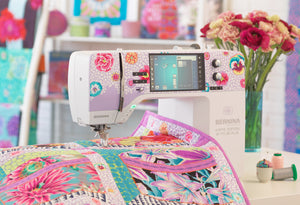

We Love Our Quilting Community
At High Country Quilts we care deeply about community. With our experiences in retail, we know that a store is not only a place to shop but also a place for the community to gather and share. During this busy...


You're probably here because a basic pet blanket no longer feels like enough.
You want something that fits the stroller well, stays in place, washes clean, and still looks polished after plenty of outings, naps, and paw traffic. That's exactly where precision quilting tools and notions start to matter. They don't turn quilting into a fussy exercise. They help you make a softer, safer, better-looking project with less frustration.
For a first premium project, a luxe pet blanket is a smart choice. It's useful every day, small enough to finish, and full of skill-building moments you'll use again on throws, baby quilts, patchwork tops, and home décor. If you already think of washable pet gear as part of a well-run home, this ultimate guide to washable dog beds is a helpful companion read. It approaches comfort and cleanup from the same practical angle.
A stroller blanket sounds simple until you use one that slides off, twists at the corners, or bunches under your pet. Then you notice every shortcut. The blanket looks cute in a photo, but it doesn't behave well in real life.
That's why I teach this project as a precision lesson disguised as a cozy gift. When your cuts are straight, your layers are even, and your seams are consistent, the blanket lies flatter and feels more refined in use. Your pet may not comment on seam accuracy, but they'll absolutely enjoy a blanket that doesn't wad up underneath them.
This little quilt asks you to practice the core skills that separate “I made it” from “I made it well.”
A polished quilt usually starts long before the machine turns on. It starts at the cutting mat.
A pet blanket is also forgiving in the best way. You can keep the shape simple, choose easy quilting lines, and still end up with something that looks polished. That makes it ideal if you're stepping into premium materials or using BERNINA accessories for the first time.
Luxe doesn't have to mean complicated. In quilting, it usually means the project feels intentional.
That might be a plush top fabric paired with a stable backing. It might be binding that sits smoothly at the corners. It might be stitching that looks calm and even instead of stretched or puckered. Those details create the look people often call “professional,” but they're really the result of good habits.
For pet projects, luxe should also mean practical. You want softness, but not slippery chaos. You want warmth, but not a blanket so bulky it fights the stroller seat. You want beauty, but not trims or add-ons that create safety problems.
When students finish a project like this, they usually don't just gain one blanket. They gain a process. They start to understand why quilters care about rulers, seam guides, pressing, and grain. Suddenly those tools stop looking optional and start making sense.
This underscores the value of precision quilting tools and notions. They help you build skills you can repeat with confidence.
You are standing at the cutting table with beautiful fabric in front of you, and this is the moment many first-time quilters make the project harder than it needs to be. They buy a pile of gadgets, skip one of the accuracy basics, and then wonder why their pieces drift out of square before they ever reach the machine.
For a stroller blanket, precision starts with a small group of tools that work together. Quilt educators consistently point to the same foundation: a rotary cutter, a self-healing mat, and a gridded acrylic ruler. Used as a set, they help you make clean, repeatable cuts with less shifting than scissors alone, as explained in this quilting supplies reference.

If you are choosing where to spend first, put your money where mistakes usually begin. Cutting errors multiply. A strip that starts slightly off can become a wavy binding, a corner that will not square up, or a top and backing that refuse to line up neatly.
Here is the job of each tool:
That trio is the quilting version of a sharp chef's knife, a stable cutting board, and a measuring cup. Each tool solves a different part of the same problem. Together, they help you cut pieces that match, and matching pieces are much easier to sew accurately.
If you are building a toolkit for your first premium project, start simple. A dependable ruler, cutter, and mat will improve your results far more than a drawer full of specialty gadgets.
Notions are the supporting tools that keep the project controlled and tidy. For a pet blanket, you do not need many, but the ones you choose should solve a real problem.
These are the ones I recommend keeping within reach:
A good rule for beginners is very practical. If a notion helps you hold fabric still, measure more accurately, or finish more neatly, keep it on the table. If it only seems clever, wait until you know you need it.
This is one of those places where students often want one right answer. Fabric decides the answer for you.
If you are using minky or another plush fabric, clips often behave better along the edges because they do not press into the pile the way pins can. If you are working with flatter woven cottons or flannel, pins can give you more control across the middle of the quilt sandwich. Many experienced quilters use both in the same project.
That is an insider tip worth remembering. You do not have to pick one camp and stay there. Choose the tool that keeps the layers calm.
A luxe result comes from comfort and control working together. Softness alone is not enough if the blanket shifts, bunches, or becomes too bulky for the stroller.
A few pairings work especially well:
| Material choice | Why it works for a stroller blanket |
|---|---|
| Minky top with cotton backing | Soft against your pet, with a more stable underside for quilting and binding |
| Flannel top and backing | Cozy, approachable, and easier for many beginners to manage |
| Cotton print with soft batting | Stable, easy to mark, and simple to quilt with clean results |
The reason these combinations matter is simple. Each layer affects the next one. A slippery top can fight your cutting. A stretchy backing can distort your quilting lines. Thick batting can make binding corners clumsy. Choosing balanced materials at the start gives your BERNINA and your hands a much easier job later.
For a pet project, safety belongs in the material conversation too. Skip trims, loose embellishments, or anything that could catch a claw or become a chew hazard. Professional-looking quilting is not only about appearance. It is also about making a blanket that is comfortable, durable, and safe for the animal using it.
Quilters who are new to premium tools often buy for an imaginary future version of themselves. It is usually smarter to buy for the project on the table.
Commentary on quilting tools often makes the same point: start with a small accuracy-focused kit, then add ergonomic or specialty tools after you know what your hands, fabric choices, and sewing habits require, as discussed in this quilting tool commentary.
For this blanket, that means your first round of shopping can stay focused:
That approach saves money, but what's more, it builds judgment. You start to notice why one ruler feels easier to align, why one clip holds bulky layers better, or why a cleaner cut leads to a smoother binding. Those small observations are what turn a first pet blanket into a real precision quilting lesson.
You spread your fabrics on the table, measure the stroller once, and cut with confidence. Later, the blanket slides into place without bunching at the footwell or spilling over the sides. That clean fit is not luck. It comes from measuring your actual stroller and cutting with the same care you want to see in the finished quilt.
For a pet blanket, precision affects more than appearance. A well-sized blanket stays where you place it, feels more comfortable for your furry passenger, and avoids extra bulk around harness points or tight corners. Premium tools help here because they remove guesswork. A clear ruler shows you whether your edge is straight. A sharp rotary cutter gives you a clean edge instead of a fuzzy one that shifts as you sew.
| Stroller Brand/Type | Recommended Blanket Size (Width x Length) |
|---|---|
| Compact pet stroller | Custom measure your stroller seat and add the coverage you want |
| Jogger-style pet stroller | Custom measure your stroller seat and add the coverage you want |
| Large cabin pet stroller | Custom measure your stroller seat and add the coverage you want |
| Basket-style stroller | Custom measure your stroller interior and add the coverage you want |
The table looks simple because it is teaching a habit, not a fixed formula. Pet strollers vary a lot in depth, side height, and interior shape. If you copy a generic blanket size, you may end up with a project that looks good on the table but fights the stroller every time you use it.
Use a flexible tape measure and jot down three details:
A quick sketch helps more than many beginners expect. Draw the seat shape, note rounded corners, and mark anything that changes how the blanket needs to sit, such as harness slots or a narrower foot area. It is the quilting version of making a pattern before cutting expensive garment fabric. A few notes on paper can save a frustrating recut.
If your pet likes to nestle into one corner, you might choose slightly more coverage at one end. If the stroller interior narrows toward the front, a slimmer rectangle often works better than forcing a larger blanket into the space.

New quilters often want to jump straight to the final dimensions. Slow down here.
Accurate cutting starts before the “real” cut. First square the fabric. Then align it with the grain. Then cut with your ruler and rotary cutter. Quilters also regularly test seam allowance accuracy on scrap, especially when they plan to use a 1/4-inch foot later, because small cutting errors and small stitching errors can stack up over the course of a project, as explained in this quilting tools guide.
Here is the reason behind that order. If your first edge is crooked, every measurement taken from it is slightly crooked too. It works like building a house on an uneven foundation. The problem may look tiny at the start, but it shows up more clearly at the corners.
At the cutting table, use a calm, repeatable sequence:
If you are pairing a stable cotton with a plush fabric like minky, cut the cotton first. Use that piece as your control layer. Minky can look flat while subtly shifting under the ruler, so the cotton gives your eye something dependable to compare against.
One small insider tip. Replace the blade sooner than you think you need to. A dull rotary blade often drags the fabric instead of slicing it cleanly, and dragged fabric rarely stays square.
Stack your cut pieces before you sew. If one layer consistently peeks out around the edges, pause and correct it now while the fix is still easy.
Precision at the cutting stage makes every later step easier to control. Your layers line up with less coaxing. Quilting lines look more intentional. Corners finish more neatly. If you use a BERNINA walking foot or quarter-inch foot in the next phase, those quality tools can do their job properly because you gave them accurate pieces to work with.
That is the larger lesson in this project. Professional-looking quilting does not come from one fancy machine feature or one expensive notion. It comes from a chain of small accurate choices, starting with the pattern, the measurement, and the first clean cut.
If a piece looks off, recut it. That choice feels slow in the moment, but it is usually the faster path to a blanket that fits beautifully and sits safely for the pet who will use it.
This is the part students usually look forward to most. The fabric starts to feel like a real quilt.
Your layers are simple: top, batting, and backing. The challenge is keeping them smooth while you sew, especially if one of those layers is plush or stretchy. That's where machine setup matters as much as technique.

Lay your backing wrong side up. Smooth it by hand. Add batting, then place the top right side up. Work from the center outward with your palms so you're removing bubbles rather than pushing wrinkles into the edge.
If you're using minky on top, handle it gently. Pulling it into place can create hidden distortion that only shows up after quilting.
I like to secure small pet blankets in stages:
With a BERNINA machine, your goal is steady feeding and visible, even stitches. For quilting through multiple layers, choose a needle suitable for your fabric combination and test on scraps before you start the main piece. That test tells you more than the machine settings on a chart ever will.
Watch for these clues:
A pet blanket doesn't need ornate quilting to look finished. It needs reliable stitching that holds the layers together and survives washing.
If you own a BERNINA, this is exactly the kind of project where a walking foot earns its keep. The BERNINA Walking Foot #50 helps feed multiple layers more evenly, which is especially useful when a plush top and woven backing want to travel at different rates.
That matters because the most common beginner problem in quilting isn't bad intention. It's fabric shift. One layer creeps ahead, the edge starts to wave, and suddenly the corners don't match.
For anyone quilting layered pet projects, the BERNINA Walking Foot #50 is worth looking at if you want more controlled feeding across bulky or slippery combinations.
If your lines start straight but drift by the end, don't assume your hands are the issue. Often the layers are feeding unevenly.
You don't need feathers or intricate motifs here. A small premium project often looks better with quiet quilting.
Try one of these:
For a stroller blanket, simple lines usually feel most elegant. They also keep the quilt supple enough to drape comfortably.
Sew from the center outward when possible. That helps distribute any slight movement toward the edges rather than trapping it in the middle. Pause every so often to smooth the layers again before continuing.
Even in a simple project, accuracy at the machine still matters. If you're piecing a border, attaching tabs, or joining sections before quilting, test your seam allowance on scraps and then measure the sewn result after pressing.
That last part matters. The presser foot marking alone isn't a promise. Fabric thickness, thread bulk, and needle position can all affect where the precise stitched seam lands. Quilters who get consistent results check the sewn unit instead of trusting the label on the foot.
A short demonstration can help if you want to watch the machine handling side of quilting in action:
Every beginner hits a point where the project suddenly feels awkward under the machine. That doesn't mean you've failed. It usually means one of three things needs adjusting.
| Problem | What to check first |
|---|---|
| Layers shifting | Basting method, walking foot, sewing pace |
| Wavy edge | Pulling while sewing, uneven layer alignment |
| Puckers in the middle | Starting at the outer edge instead of the center |
Slow down. Re-smooth. Test again on scraps if needed. Precision quilting tools and notions don't remove every challenge, but they make each adjustment more understandable.
You notice the difference at the edges first. A stroller quilt can be pieced beautifully and quilted well, but if the corners are lumpy, the binding twists, or a loose thread catches a claw, the whole project feels less polished and less safe. Finishing is the stage that turns careful construction into a blanket you will feel good about placing under a much-loved pet.
For premium projects, precision still matters right up to the last stitch. Clean finishing protects your work in the wash, keeps the quilt comfortable against paws and fur, and gives the blanket that professionally finished look people often describe as “store-bought,” even though the result is better because you controlled every step.
After quilting, lay the blanket flat and let the ruler do the decision-making. Trim away extra batting and backing, then square each corner carefully. If one side bows slightly, correct it now instead of asking the binding to hide it later.
That matters because binding behaves like a picture frame. If the quilt underneath is out of square, the frame announces it.

A small shift during quilting is normal, especially on a first premium project. Trimming is part of accurate finishing, not evidence that you did something wrong. Quilters at High Country Quilts often remind beginners that a measured cleanup step is one of the habits that separates rushed results from professional ones.
Binding does two jobs at once. It encloses the raw edge, and it protects the part of the quilt that gets the most handling, washing, folding, and paw traffic.
A reliable process is simple:
Beginners often worry most about the corners, and for good reason. Corners reveal whether the folds were made deliberately. Pause as you approach each one, stop at the same distance from the edge every time, and finger-press the fold before turning. A mitered corner is like wrapping a gift box neatly. The fabric needs a clear fold line and just enough tension, not force.
If your binding looks slightly wavy after the first pass, check two things before assuming the strip was cut wrong. First, make sure you did not stretch it while pressing. Second, confirm that your seam allowance stayed consistent around the full perimeter. Small variations add up fast at the edge.
Neat binding comes from repeatable measurements, flat pressing, and calm corner handling.
Useful extras should earn their place. On a stroller blanket, the best additions are usually soft, secure, and washable.
Consider these options:
Keep every addition flat and firmly attached. If something dangles, scratches, snags, or invites chewing, leave it off.
For readers who like the idea of personalization but want to keep the project soft and practical, spoil your feline with a personalized blanket offers a nice example of how custom details can stay gentle and simple.
Pet projects ask for a different standard than decorative throws. The blanket has to feel good, wash well, and avoid tempting behavior like chewing or claw-catching.
Use this finishing checklist before the first wash:
Shorter is better here. Safer is better too. The softest, smoothest version of the project is often the one that gets used most.
The first laundering tells you whether your finish was ready for use. Wash according to your fabric choices, dry as appropriate, and then lay the blanket out flat again.
Look closely at the binding corners, the ends of any tabs, and the densest quilted areas. If the edge still lies flat and the stitching remains closed, you have done more than finish a project. You have built a blanket that can handle daily life. That is the ultimate goal of precision tools and careful technique. They help you produce something luxurious, durable, and safe enough for your furry copilot.
Once you finish one blanket, you'll start seeing other possibilities in the leftover fabric.
A matching stroller set is an easy next step. You can make a seat liner, a soft strap cover, or a small coordinating mat for rest stops. Those projects use the same habits you just practiced: straight cuts, managed layers, and thoughtful finishes. They also help you use remnants in a way that feels intentional instead of random.
If you liked the construction but want easier washing, consider a duvet-style version next time. Make a soft outer cover and a removable inner layer. That approach takes more planning, but it's practical for pets that travel often or shed heavily.
Personalization doesn't need to mean elaborate embroidery or novelty trims. A carefully chosen print, a binding that frames the top fabric, or a stitched label with your pet's name can make the blanket feel specific and loved.
If you enjoy seeing how personalized pet blankets can lean playful without becoming fussy, spoil your feline with a personalized blanket offers another angle on making a pet comfort piece feel special.
This blanket is also a strong bridge project. Once you're comfortable with this format, you can try:
The biggest shift unfolds. You stop guessing. You start recognizing why a project worked, where it fought you, and which precision quilting tools and notions supported the result. That's when quilting becomes more enjoyable.
If you're in Colorado Springs or shopping online, keep building slowly. A better ruler, a walking foot, a reliable marking tool, or a class on machine quilting can move your skills forward much faster than buying everything at once.
If you're ready to make your first polished pet blanket or want help choosing the right BERNINA accessories, fabrics, and quilting notions, visit High Country Quilts. You'll find tools, materials, and hands-on guidance to help you sew with more confidence from the very first cut.
At High Country Quilts we care deeply about community. With our experiences in retail, we know that a store is not only a place to shop but also a place for the community to gather and share. During this busy...

Hi! We’re Adam and Renee Wheaton, the new owners of High Country Quilts! For more than 40 years, we’ve owned and operated vacuum and sewing businesses. Following in Renee’s father’s footsteps after he retired from All Discount Vacuum and Sewing in Colorado...


Leave a comment