

We Love Our Quilting Community
At High Country Quilts we care deeply about community. With our experiences in retail, we know that a store is not only a place to shop but also a place for the community to gather and share. During this busy...


A lot of baby quilts start the same way. You want to make something personal, soft, and safe, then you stand in front of a stack of fabric wondering what matters and what's just packaging language.
That confusion makes sense. With baby projects, fiber content, certification, washability, and texture all matter. So do the practical aspects of sewing it on a home machine without ending up with stretched seams, puckers, or a backing that slides all over the table.
For a modern baby quilt, I like combining organic cotton fabric for baby quilts on the front with a plush, vegan-friendly backing on the back. It gives you the clean look quilters love and the cozy hand-feel parents reach for every day. If you're also making practical nursery basics, Bornbir's burp cloth tutorial is a useful companion project because it helps you use soft baby-safe fabrics in a simple, everyday format before you commit to a full quilt.
The baby quilt that gets used most isn't always the fussiest one. It's the one that feels good in real life. Soft enough for snuggles, sturdy enough for washing, and thoughtfully made so the parent doesn't have to guess whether it belongs in the nursery, the stroller, or on the floor for tummy time.
That's why this style of quilt works so well. Organic cotton gives you a breathable, familiar surface for the quilt top. A plush synthetic backing adds warmth and that velvety feel people often want in a baby gift, without using wool or silk. The result feels current, but it still has the look of something worth saving.
I also think beginner quilters do better when they stop trying to make a complicated “special occasion” quilt and make a useful one instead. A simple patchwork or stripe layout in organic cotton can look polished fast. Add soft batting and a smooth binding, and it becomes the kind of gift people remember.
Practical rule: The safest-feeling baby quilt is usually the one with fewer fussy extras, stable seams, and fabrics you know how to wash well.
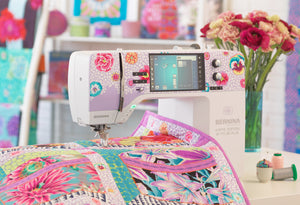
If you sew on a BERNINA, this is a satisfying project because the machine precision helps with accurate piecing and cleaner quilting lines. If you're newer to quilting, don't worry about chasing perfection. A baby quilt doesn't need intricate blocks to feel meaningful. It needs good fabric choices, smart prep, and finishing that holds up.
You feel the difference in the fabric stack before you sew a single seam. One cotton cuts into clean squares. Another shifts under the ruler. One plush backing feels dreamy in the shop, then stretches all over the table at home. Good material choices save beginners from a lot of frustration.
Each layer has a job. The top needs stability so your piecing stays accurate. The backing needs softness without becoming slippery and hard to control. The batting decides how the quilt will drape, puff, and wash.
For a first baby quilt, organic quilting cotton is the easiest place to begin. It presses flat, cuts cleanly, and feeds through the machine without much drama. If the goal is a modern quilt that still feels soft and natural, this is usually the fabric I recommend first.
Organic double gauze and organic muslin are lovely, but they ask more of the maker. Double gauze has an airy hand and beautiful crinkle, yet the looser weave can shift during cutting and fray more along the edges, as noted by PBS Fabrics on organic double gauze. Muslin is soft and breathable, though some versions can distort if handled roughly.
| Fabric choice | What works well | What to watch for |
|---|---|---|
| Organic quilting cotton | Accurate cutting, easier piecing, durable finish | Slightly less fluid than gauze or muslin |
| Organic double gauze | Soft hand, airy feel, beautiful texture | More shifting, more fraying, less crisp piecing |
| Organic muslin | Breathable, soft, relaxed nursery look | Can stretch a bit and may need gentler pressing |
A practical rule helps here. If you want sharp patchwork, choose quilting cotton. If you want a softer, more relaxed look and you do not mind slower handling, choose gauze or muslin for selected areas rather than the whole top.
If you're comparing fibers beyond cotton, organic cotton vs bamboo for baby clothes gives a helpful parent-focused overview of how the feel and function differ in baby textiles.

“Organic cotton” describes how the fiber was grown. It does not tell you everything about the finished cloth.
That distinction matters in a baby quilt. After cotton is grown, it is spun, woven, dyed, and finished. Two fabrics can both be organic cotton and still behave very differently at the ironing board, under the needle, and after washing. One may feel smooth and stable. Another may wrinkle, soften, and shrink more noticeably.
So I shop by fiber first, then by construction. For a baby quilt that needs to be used, washed, and loved hard, fabric behavior matters just as much as the organic label.
The organic and plush trends can work beautifully together. An organic cotton top gives you the breathable, natural surface many parents want. A vegan plush backing, such as minky-style or Cuddle-style fabric, adds the cozy texture that makes a baby quilt irresistible in real life.
It also changes the project.
Plush backing has stretch. It has nap. It can creep while quilting, and it adds bulk at the edges. That does not mean beginners should avoid it. It means the backing should be chosen with some restraint.
These choices usually work best:
These choices usually create trouble:
I tell students to stroke the fabric in both directions before buying. If the nap changes color or sheen a lot, mark the direction right away when you cut. That one habit prevents mismatched pieces and strange-looking seams later.
If you want to browse options for the quilt's interior layer, the cotton batting choices for quilting projects at High Country Quilts are worth reviewing before you settle on loft and drape.
Batting is the layer beginners underestimate most. It decides whether the quilt feels light and flexible or thick and cushy.
A cotton batting pairs naturally with an organic cotton top and gives a breathable, familiar finish. A bamboo blend usually drapes more softly, which can be lovely for a quilt that will be cuddled and folded often. A higher-loft cotton batting gives more puff between quilting lines, but it also adds thickness once you combine it with plush backing.
That trade-off matters on a BERNINA. A walking foot setup can handle a plush-backed baby quilt well, but the sandwich still feeds more smoothly when the batting is not overly bulky.
One factual example from the shop side is Warm & Plush Luxury Loft 100% Natural Cotton without Scrim at High Country Quilts. It is a cotton batting option suitable for quilts, including baby quilts, and it makes sense for makers who want loft without using wool or silk.
For a polished first project, I'd use:
That combination gives you the soft hand parents love and the control beginners need. It also suits a clean, modern baby quilt style better than a pile of specialty fabrics that all behave differently.
A baby quilt does not need rare materials to feel special. It needs fabrics that play well together.
Good prep fixes problems before they happen. Most baby quilt frustrations come from skipping this part, not from lacking sewing skill.

When you're sewing softer fabrics like muslin or double gauze, prewashing isn't optional. Experienced sewists prewash, use a new needle, and increase stitch length from a typical 2.5 mm to about 3 to 4 mm to reduce snagging and fraying, as shared in Suzy Quilts' guidance on sewing soft baby quilt fabrics.
That one adjustment saves a lot of grief.
Here's the prep order I recommend:
For plush backing, I'm more cautious. Some sewists prefer not to prewash plush because it can distort or create lint. If you skip prewashing there, at least inspect it for stretch, nap direction, and cut-edge behavior before layering.
A baby quilt can be a simple pattern and still look expensive if the cutting is clean. If the squares are off, the whole top starts to lean.
Use a rotary cutter, a non-slip ruler, and a mat with clear markings. Stack fewer layers than you think you need. Beginners often try to cut too much at once, then wonder why their corners don't meet.
A few habits help immediately:
The less you wrestle the fabric at the cutting stage, the more accurate your piecing will be.
A BERNINA handles baby quilt work beautifully when the setup matches the materials. For woven organic cotton piecing, a fresh needle and quality thread matter more than fancy settings. Once plush enters the project, feeding becomes the big issue.
For delicate organic cottons, a new needle is the starting point. A dull one can snag softer weaves and make them look rough long before the quilt is finished. The same soft-fabric guidance above also recommends 50 wt thread, which is a practical choice for piecing and general quilt construction because it gives you strength without heavy seam buildup.
If you're sewing layered sections or attaching the final quilt sandwich, a BERNINA Walking Foot #50 earns its keep. It helps feed the top and bottom layers more evenly, which is especially useful when one side is plush and wants to move differently than the cotton top.
A solid baseline setup for this project looks like this:
| Part of the job | Practical setup |
|---|---|
| Piecing organic cotton top | New needle, 50 wt thread, accurate seam guide |
| Sewing softer muslin or gauze | Slightly longer stitch, gentler handling |
| Layering with plush backing | Walking foot, even support on the table |
| Final quilting | Simple lines, avoid overly dense stitching |
Later, when you're ready to quilt the layers together, seeing a walking foot in action helps more than reading about it. This demo is a useful visual reference:
This is one of those small instructor secrets that prevents big headaches. Don't let the quilt drag off the machine. Plush backing plus batting creates weight, and that weight can pull your seams off line even if your machine settings are right.
Support the quilt on the table, roll or fold the bulk, and guide rather than tug. Most puckering blamed on the machine is really gravity plus too much pulling by the sewist.
The easiest baby quilt tops are often the prettiest. Large squares, wide strips, or a clean checkerboard let the fabric and texture do the work. That's especially smart when you're pairing organic cotton with a plush back, because the backing already brings visual and tactile interest.

For beginners, I like one of these approaches:
Dense piecing can increase handling-related fraying in softer cottons. Simpler blocks are often the smarter choice, especially if you're working with muslin-like textures or loosely woven fabrics.
If you're mixing prints, give the eye a place to rest. Pair one feature print with calmer solids or subtle coordinates. Baby quilts can get busy fast.
A quilt top looks flat and tidy because of two things. Consistent seam allowance and deliberate pressing.
Focus on an accurate quarter-inch seam. Don't sew by watching the needle alone. Use the guide on your machine or foot and keep the raw edge aligned consistently. If your seam allowance wanders, your block size will wander too.
For pressing, decide early whether you'll press seams open or to one side. Either can work, but inconsistency creates lumps. On a baby quilt with a plush back, reducing bulk where possible pays off later during quilting and binding.
Here's a reliable rhythm:
A baby quilt doesn't need complex blocks. It needs seams that match because you handled each step calmly.
If you're shopping for organic cotton fabric for baby quilts, GOTS is the certification I'd pay attention to first. For a product to be labeled GOTS-certified, it must contain at least 95% organic fibers, and the certification covers the textile supply chain from weaving to dyeing while also including social and environmental criteria, according to Happiest Baby's explanation of GOTS standards.
That matters for a baby quilt because you're not just buying fiber. You're buying a finished textile that has gone through processing.
There's also a “GOTS Made with Organic” category that requires at least 70% certified organic fibers in the finished product, which can help you compare labels more intelligently when not every fabric in a project is fully organic under the strictest threshold. For baby use, that broader processing standard is often more meaningful than a vague “natural” claim on a bolt or package.
Before you add batting and backing, lay out the completed top and look at it from a distance. Check for heavy clusters of dark prints, directional mistakes, or one seam that didn't quite catch.
Then clean up the top:
One more practical note. If the front is delicate and the back is plush, let the front stay visually simple. Trying to make both sides dramatic often makes the whole quilt harder to handle and less elegant when finished.
This is the stage where the project starts looking like a real quilt instead of a stack of nice intentions. It's also where plush backing can either cooperate beautifully or test your patience.
Layering matters because plush fabrics shift more easily than plain woven cotton. Start with the backing laid flat, then batting, then quilt top. Smooth each layer without stretching it.
If your project is based on a soft muslin-style baby quilt, a common benchmark is a finished size of about 50 x 50 inches, which works well as a play mat, crib quilt, or cuddle blanket, and products in that category are often marketed as 100% organic cotton with GOTS and sometimes OEKO-TEX certifications, as shown in this organic muslin quilt product example from Babyletto.
That size is manageable at a domestic machine and useful long after the gift is opened.
The quilting design should secure the layers without flattening the texture that made you choose plush in the first place. That's why I recommend easy paths such as stitch-in-the-ditch, straight lines, or soft, widely spaced waves.
Avoid heavy, dense quilting patterns for this style. They can make the quilt stiffer than you want and create extra drag while sewing. A walking foot setup usually gives the calmest result on mixed textures.

Once quilting is complete, trim the excess batting and backing so the edges are square. Don't rush this. A slightly crooked trim line shows up immediately when you attach binding.
For plush-backed baby quilts, I strongly prefer binding from a woven cotton. It folds more crisply, turns corners better, and doesn't add unnecessary thickness at the edge.
A clean binding process looks like this:
If the plush backing feels bulky at the edge, trim that layer carefully and evenly before the binding goes on. Don't trim aggressively. You still want a full edge, just not a lumpy one.
The binding is where handmade quilts either look calm and finished or a little rushed. Slow down there.
After binding, inspect every edge, corner, and quilting line. Look for missed spots, loose threads, and any area where the backing may have folded unexpectedly under the stitching.
Then give the quilt its first wash. That wash softens the hand, helps the quilt settle, and adds the light crinkle many quilters love in cotton-front projects. With a plush back, the contrast between the softly textured front and smooth cozy back is often what makes the quilt feel gift-worthy right away.
If you want a project with a modern nursery look, this is also the point where a small sewn label can turn a useful blanket into a keepsake.
Care is part of the project. If a baby quilt can't be washed easily and confidently, it won't get used the way it should.
For organic quilting cotton, the care routine should stay gentle. Use a mild detergent, wash in cold water on a gentle cycle, avoid bleach, and choose low-heat or line drying. Fabric softener is best skipped because it can clog the weave and reduce the fabric's natural softness over time, according to Stash Fabrics' care advice for organic cotton.
That guidance matters even more with a handmade baby quilt because the quilt is balancing several goals at once. You want it soft, but you also want the seams, batting, and surface texture to hold up.
A few habits help preserve the quilt:
Parents appreciate quilts they don't have to baby. Gentle care doesn't mean fragile care. It means washing in a way that protects the fabric choices you made from the beginning.
Usually because the layers are feeding at different rates or the quilt is dragging off the table. A walking foot helps, but physical support matters just as much. Keep the quilt bulk supported and guide it without pulling.
Use caution. Plush fabrics can react poorly to direct heat. If you need to remove creases, test first on a scrap and work carefully. In most cases, focus your pressing on the cotton top and keep direct iron contact away from the plush pile.
Stop early. Remove only the stitches that are causing the problem, smooth the layers flat again, and resew with the quilt better supported. If the mistake is small and secure, it's often better to leave it than over-handle soft fabrics.
Bring your ideas, or even your fabric pull, to a quilt shop and let someone feel the fabrics together in person. Baby quilts look simple, but texture, weave, and loft interact in ways that are easier to judge hands-on than online.
If you're planning a baby quilt and want help choosing fabric, batting, or the right BERNINA setup for plush-backed quilting, visit High Country Quilts. You can explore supplies, ask specific project questions, and get practical guidance that makes the first quilt go much more smoothly.
At High Country Quilts we care deeply about community. With our experiences in retail, we know that a store is not only a place to shop but also a place for the community to gather and share. During this busy...

Hi! We’re Adam and Renee Wheaton, the new owners of High Country Quilts! For more than 40 years, we’ve owned and operated vacuum and sewing businesses. Following in Renee’s father’s footsteps after he retired from All Discount Vacuum and Sewing in Colorado...


Leave a comment