

We Love Our Quilting Community
At High Country Quilts we care deeply about community. With our experiences in retail, we know that a store is not only a place to shop but also a place for the community to gather and share. During this busy...


Your dog is standing by the door, ready for a walk, and the weather has turned chilly. You want something warmer than a flimsy store-bought jacket, but you also want it to look like you made it on purpose, not like you cut armholes into an old sweater five minutes before leaving the house.
That's where this project gets fun.
A dog coat lined with modern quilting fabric by the yard gives you room to make something practical, washable, and full of personality. The faux fur on the outside adds warmth and softness. The quilting cotton lining brings color, structure, and that polished handmade look that makes people ask where you bought it.
I've helped plenty of sewists through projects like this, and the same worries come up every time. Will faux fur be a mess? How much fabric do I need? Can I do this if my dog won't hold still? The good news is yes, you can. If you can sew a straight seam and take your time, this is a very doable weekend project.
Your dog is pacing at the door, the leash is in your hand, and the morning air has that sharp bite that makes you reach for an extra layer. A custom coat solves several problems at once: you get a better fit, you choose the warmth level, and you get to use fabrics that feel like you.
That matters more than many sewists expect.
Store-bought dog coats often miss in the same places. The chest is too tight, the back is too short, or the fabric feels stiff and flimsy after a few washes. Sewing your own lets you adjust for a deep chest, a long back, or an older dog who needs warmth without a lot of weight pressing on the shoulders.
The fun part is the fabric pairing. Faux fur gives the coat insulation and that soft, cozy look people notice right away. Modern quilting fabric by the yard brings the structure on the inside, much like a good lining in a winter jacket helps the whole piece hold its shape and slide on more easily. If you have ever tried to wrestle a wiggly dog into a bulky, stretchy coat, you already know why that stable lining helps.
I've been there with thick fabrics that looked adorable on the table and felt much less adorable once they were stacked at the neckline. The trick is not choosing the fanciest materials. It is choosing materials that behave well together, especially if this is your first time sewing faux fur. At High Country Quilts, we often help customers build this kind of combination by starting with one quilting print they love, then matching it to a fur texture and color that will not turn every seam into a wrestling match.
One good pairing is enough.
A charcoal or tan faux fur outer shell with a clean geometric cotton lining can look polished without making the project harder than it needs to be. That is the sweet spot for a weekend sew. You get a coat that looks thoughtful, feels warm, and stands up better to regular use than many off-the-rack options.
If your dog's cozy habits extend from the sidewalk to the sofa, the practical ideas in this Aussie dog owner's sofa cover guide are useful too, especially for muddy paws, shedding, and daily lounging.
A good dog coat feels balanced in your hands. The outside needs enough body and warmth to stand up to chilly walks. The inside should feel smooth against your dog and stay cooperative under the presser foot.

Faux fur gives the coat its personality. It holds warmth, adds softness, and makes even a simple pattern look polished. For this project, I usually steer beginners toward short or medium pile fur because it behaves better at the spots that get thick fast, like the neck edge, belly band, and closure area.
I have learned that lesson the messy way. Long pile fur looks wonderful on the bolt, then suddenly fills your cutting table, your sweater, and half the sewing room once the scissors come out. It can work, but it asks more from you.
Here is a simple way to choose:
| Fabric area | Good choice | Why it works |
|---|---|---|
| Outer shell | Faux fur with manageable pile | Warm, soft, and easier to sew cleanly |
| Main lining | Quilting cotton | Smooth, breathable, and stable |
| Alternate lining | Flannel or minky | Extra warmth or softness, with more bulk |
If this is your first coat, pick the fabric combination that forgives small mistakes. Faux fur already adds enough drama. Your lining does not need to join the chaos.
The term “modern fabric” can be confusing. In most quilt shops, it usually describes the look of the print rather than a different fiber. That is helpful here, because modern quilting fabric by the yard is often quilting cotton, and quilting cotton is wonderfully practical for a project like this.
It presses flat. It cuts accurately. It slides under faux fur without as much shifting as stretchier fabrics. That stability is a relief when you are sewing around curved edges or trying to keep a small coat from twisting out of shape.
Modern prints also give you a clean visual contrast to a fluffy outer layer. A bold grid, scattered dot, simple stripe, or quiet geometric can make the inside of the coat feel intentional instead of leftover. As noted earlier, modern quilting fabrics often include solids, low-volume prints, and graphic designs, so you have plenty of room to match the mood of your faux fur.
Practical rule: If the outside is fluffy or heavily textured, choose a lining print that looks clear and crisp from a few feet away.
Width affects how you lay out your pattern pieces, especially if you are sewing for a broad-chested dog or adding a wrap that extends farther under the body. Standard quilting cotton is often wide enough for a small or medium coat, but larger shapes may need a more careful layout.
This is one of those details that saves frustration later. A fabric can be beautiful and still be a poor fit for your pattern if the usable width is narrow or the print direction limits how you cut. I always suggest sketching your main pieces on paper first, then comparing that shape to the width listed on the fabric.
The Fabric Fox explains common quilting fabric widths in its quilting fabric guide, which is useful if you are not yet used to reading fabric specs. For most dog coats, quilting cotton lining is still the easiest choice. Just remember to leave out the selvage when you estimate your cutting space.
A closely woven cotton also handles curves and topstitching more neatly. You will notice that during trimming and turning, when a cooperative lining helps the whole coat look sharper.
Quilting cotton is my usual recommendation, but it is not the only option.
If your dog runs warm indoors and only needs a coat for quick winter walks, quilting cotton is often enough. If your dog is small, short-haired, or always searching for the warmest spot in the house, flannel may be worth the extra thickness.
My weekend-project advice is simple. Use one fabric that behaves and one fabric that shines. Let the quilting cotton do the steady work, and let the faux fur be the show-off.
A dog coat can be beautifully sewn and still end up in the giveaway pile if the fit is off. Good measuring fixes most of that before you ever touch your fabric.

You don't need a complicated fitting session. For a simple vest-style coat, focus on these:
If your dog wiggles, measure twice and write down the larger chest number if the two are slightly different. It's easier to trim a pattern than to convince a dog to enjoy a too-tight coat.
A soft tape measure helps, but a string and ruler work in a pinch. Treats help too. I'm not above bribery when a fitting session is involved.
A basic coat pattern can be drafted on paper, freezer paper, or even taped-together printer sheets. Start with the back piece as a long, rounded shape that follows your dog's spine and widens slightly over the ribcage. Then add a belly band or chest wrap that will fasten under the body.
Think in shapes, not fashion terminology. You're making a top panel plus a securing strap.
Use this order:
Make the first version from paper or scrap fabric and test it before cutting your final materials.
Commercial patterns are useful, especially if you want more shaping or multiple closure styles. The trick is to stop thinking you must fit one single size straight from the envelope. Dogs aren't drafted that way.
Blend where needed. If your dog has a narrow neck and a deep chest, trace one size at the neckline and another through the body. If your dog is long-backed, extend the body length without making the chest any tighter.
Watch for these common fit issues:
| Fit problem | What to change |
|---|---|
| Coat pulls behind front legs | Scoop the arm area slightly |
| Belly strap is too snug | Extend the strap and closure overlap |
| Back is too short | Lengthen from the middle, not only at the tail |
| Neck gapes | Remove a little width at the neckline edge |
A quick muslin test saves a lot of grumbling later. Pin or clip it on your dog, check movement, and look at where the coat sits when your dog stands, sits, and turns.
Faux fur looks dramatic on the bolt, and then you bring it home and realize it has opinions. It slides. It sheds. It fills your cutting table with fluff. None of that means it's hard. It just means you need a slightly different method than you'd use for quilting cotton.

This is the trick that changes everything. Don't cut faux fur the way you cut regular fabric. If you slice straight through the pile with scissors, you chop the hairs, create blunt seam lines, and make a much bigger mess.
Instead, turn the fabric wrong side up and use a craft knife or box cutter to cut only the backing layer. That keeps the fur fibers long along the cut edge, so seams blend much better once sewn.
A few habits make this easier:
Faux fur has a nap, which means the pile naturally lies in one direction. Every pattern piece that lives on the outside of the coat needs to be cut with that direction in mind. If one section runs the opposite way, the finished coat will look off even if your sewing is perfect.
Stroke the fur with your hand. One direction feels smooth, the other rougher. Keep all major outer pieces aligned the same way.
For a dog coat, I usually want the fur to lie from neck toward tail. That makes the finished coat look natural and helps the surface lie flatter when the dog moves.
If you're unsure about nap, label the top edge of every pattern piece before cutting. Future you will be grateful.
Buying modern quilting fabric by the yard still matters, even if you like precuts for quilt projects. Retailers commonly group yardage with fat quarters, layer cakes, jelly rolls, charm squares, and kits, but yardage remains the practical choice for custom cuts and larger sections, including backing and apparel-style sewing. Quilting instructions also commonly advise allowing about 4 to 10 inches of extra fabric on each side when calculating backing yardage, which shows why buying by the yard stays important for projects that don't fit neatly into precut sizes, as noted by Hancock's of Paducah in its fabric and quilting information.
For this dog coat, you're not making a quilt backing, but the lesson transfers nicely. Bigger pieces need room for layout, direction, and mistakes. Faux fur also isn't a fabric you want to recut because you squeezed too tightly and forgot seam allowance.
Faux fur plus lining can feel thick under the presser foot. That doesn't mean your machine can't handle it, but you do want to set yourself up for success.
Try this machine checklist:
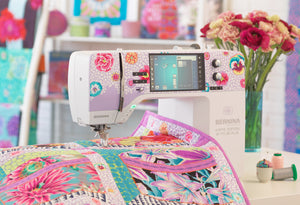
If you're comparing machines for projects that involve multiple layers, a BERNINA sewing machine selection is one place to look at models designed for precision sewing and heavier handling.
Here's a helpful visual if you want to watch fur handling in motion before you sew your project.
Clips usually work better than pins with faux fur because they don't crush the pile as much. If you do pin, place them within the seam allowance where possible.
After stitching, open the seam with your fingers and use a pin or awl to tease trapped fur out of the seam line. This small step makes a huge difference in how finished the coat looks. It's one of those techniques people think is advanced, but really it's just patient cleanup.
Once your pieces are cut, the project starts feeling like a real garment. This stage is satisfying because the shape appears quickly.
Sew the lining pieces together as one coat. Sew the faux fur pieces together as a separate coat shell. Keep checking that corresponding seams match and that your closure areas are clearly marked.
At this point, trim bulk where needed, especially around curves. On the faux fur side, trim only inside the seam allowance so you don't affect the visible pile.
Then place the two coats right sides together. Clip around the outer perimeter and sew, leaving a turning opening in a straight, low-stress area such as part of the lining edge.
Turning is the fun part, but take your time. Use a blunt tool or your finger to ease out curves and corners rather than jabbing hard and poking through the fabric.
A neat topstitch around the edge does more than decorate. It helps the coat hold its shape, closes the turning opening, and keeps the layers from twisting during wear.
I like to smooth the edge a little at a time before topstitching. Faux fur can creep into the seam, so use clips, your fingers, and a bit of patience.
Sew the perimeter once for structure. Topstitch it for control.
The closure you choose affects both appearance and flexibility. Some dogs need a forgiving fit because their coat will sit over a harness or sweater. Others do better with a flatter finish and less adjustability.
Here's a quick comparison:
| Closure type | Why you might choose it | Watch for |
|---|---|---|
| Velcro | Adjustable and easy to fit | Can catch fur if placed carelessly |
| Heavy-duty snaps | Clean look and secure hold | Needs accurate placement |
| Buttons or toggles | Decorative and custom-looking | Less forgiving if fit changes |
For many first coats, Velcro is the easiest choice. It lets you fine-tune the fit after the coat is finished, which is handy if your dog's fluff level changes with grooming or if you want room for a harness underneath.
Snaps look tidier and feel a bit more polished. They're lovely on a structured coat, especially if your lining fabric has a modern geometric print and you want the finish to feel crisp.
If you need closures, thread, and finishing bits for this kind of project, the sewing notions collection is a practical place to compare options.
The final details make a handmade dog coat look intentional instead of improvised. A narrow binding in a coordinating quilting cotton can frame the edges beautifully, especially if your lining print deserves a little extra attention. You can also add a small reinforced opening at the upper back if your dog wears a harness under the coat and you need access for a leash clip.
If the coat fits well through the chest but stands away at the waist, a small dart can help. Pin the extra fullness while the coat is on your dog, mark the fold, and sew the adjustment symmetrically. Tiny changes often make the biggest improvement in how the coat sits.
A few care habits will help the coat last:
If you add binding, leash access, or a closure adjustment after the first fitting, that isn't cheating. That's sewing. The first version teaches you what the second version can do even better.
A project like this gives you more than a cute dog coat. It teaches you how to pair textures, how to manage bulk, and how to use modern quilting fabric by the yard in a way that goes beyond quilts. That's a useful skill set, especially if you enjoy practical sewing with a little personality built in.
You've also made something most pet owners struggle to find. A coat that fits your actual dog, suits your taste, and holds up to real use.
If this project lit a spark, keep going. Try another version with a different lining, a lighter shell, or a sharper closure detail. Share your finished coat with #HighCountryQuilts so other makers can see what's possible.
If you'd like more hands-on help, in-person guidance, or a reason to plan your next weekend project, browse the class registration page and see what's coming up.
If you're ready to pick lining fabric, compare machines, or get help choosing notions for your next project, visit High Country Quilts.
At High Country Quilts we care deeply about community. With our experiences in retail, we know that a store is not only a place to shop but also a place for the community to gather and share. During this busy...

Hi! We’re Adam and Renee Wheaton, the new owners of High Country Quilts! For more than 40 years, we’ve owned and operated vacuum and sewing businesses. Following in Renee’s father’s footsteps after he retired from All Discount Vacuum and Sewing in Colorado...


Leave a comment