

We Love Our Quilting Community
At High Country Quilts we care deeply about community. With our experiences in retail, we know that a store is not only a place to shop but also a place for the community to gather and share. During this busy...


You know this moment. The quilt top is done, the blocks are behaving, the borders are on, and you finally spread it across the table to admire it. Then the next question shows up fast: how do I turn this into a finished quilt without wrestling the whole thing through my home machine?
That’s where Longarm quilting services Colorado Springs makers rely on can make the process feel much less intimidating. For some quilters, hiring out the quilting is the right next step. For others, that finished top becomes the reason to learn a new skill and try a longarm themselves. Both paths are valid, and both can lead to a quilt you’re proud to use, gift, or keep.
At a shop like High Country Quilts, we meet quilters in both camps all the time. Some want a trusted finisher. Some want to learn the machine, load their own quilt, and take control of every curve and stitch. If you're standing at that crossroads, this guide will help you sort out the options in plain language.
A finished quilt top can feel oddly unfinished.
You’ve already done the color decisions, the cutting, the piecing, the seam matching, and probably at least one round of unpicking. The top looks beautiful. But until it’s quilted, it’s still waiting to become the thing you imagined when you chose that first fabric.
For many quilters, this is the point where hesitation sets in. A baby quilt may feel manageable on a domestic machine. A larger project can feel bulky, awkward, and physically tiring. Even confident piecers sometimes pause here because quilting the layers together is a different skill than building the top.
That’s why longarm quilting exists. It’s the finishing stage that joins the quilt top, batting, and backing with stitching across the full surface. Instead of forcing a large quilt through a small throat space, the longarm lets the machine move over the quilt on a frame.
A longarm service isn’t “someone else finishing your quilt for you.” It’s a specialized final step, much like asking a framer to protect artwork you created.
In Colorado Springs, that finishing step is part of a real local quilting ecosystem. Professional providers handle edge-to-edge and custom work, which gives local makers options when they want a polished result without buying their own full longarm setup.
If you’re still deciding, keep this simple question in mind: do you want convenience and a professional finish, or do you want hands-on control and the chance to learn? That answer usually points you in the right direction.
A longarm machine operates differently from a standard sewing machine.
On a domestic machine, you push and turn the whole quilt under the needle. On a longarm, the quilt is attached to a frame and stays in place while the machine glides over the surface. That one shift changes the job from wrestling fabric to guiding stitching.

If you are new to longarming, this can feel backward at first. The needle still forms the stitch, but the handling is different. The frame supports the quilt sandwich, keeps the layers under even tension, and makes it easier to stitch across a large surface without constantly stopping to refold and reposition.
That difference matters for more than comfort. It affects stitch consistency, how smoothly the layers stay together, and how the finished quilting supports the design of the top.
As noted by Mountain Top Quilting Studio, longarm quilting is a well-established service in the Colorado Springs area. For a local quilter, that means you have real options. You can hire out the finishing, or you can use that professional world as a stepping stone toward learning the skill yourself.
The first term many quilters hear is edge-to-edge, often shortened to E2E.
With E2E quilting, one repeating design runs across the full quilt. It might be loops, leaves, swirls, stars, or geometric lines. The pattern is chosen once, then repeated across the surface rather than changing from block to block.
This style is common for a simple reason. It gives the quilt a unified finish without asking the quilting to compete with busy patchwork.
Quilters often choose E2E because:
E2E is often a good match for gift quilts, everyday quilts, seasonal projects, and tops made from precuts.
Custom quilting follows the structure of the quilt more closely.
Instead of one repeated design, the quilting changes based on the layout. A longarm quilter may use one motif in blocks, another in sashing, and a different treatment in borders. They may echo appliqué, outline shapes, or fill open background areas so the piecing stands out more clearly.
Here is the simplest way to choose between the two. If you want the quilting to support the top subtly, edge-to-edge usually does the job. If you want the quilting itself to shape the look of the finished quilt, custom work gives you more control.
Custom quilting usually takes more planning. It also invites more conversation between the quilter and the client, which can be especially helpful for heirloom pieces, quilts with meaningful fabrics, or tops with design details you want highlighted.
That is also where this topic connects to the do-it-yourself path. Once you understand what professional quilters are doing and why they make certain design choices, it becomes much easier to decide whether you want to send your quilt out or learn to run a longarm yourself.
You finish the last seam on a quilt top, spread it across the table, and feel that little rush of relief. Then you remember the next step. Quilting the layers together is a different kind of job, especially once the quilt is large enough to fight back.
That is often the moment a professional longarm service starts to make sense.
A domestic machine can absolutely quilt smaller projects well. Many quilters learn a great deal that way. But a bed-size quilt asks you to control weight, bulk, and stitch consistency all at once. It works a bit like trying to wrap a king-size comforter through a narrow hallway. The project is still yours, but the space and tools can make the job much harder than it needs to be.
The challenge is not only sewing. It is managing the whole quilt sandwich while you sew.
Common trouble spots on a home machine include:
A longarm setup is built for this scale. The quilt is loaded onto a frame, the layers stay under more even control, and the quilter can focus on the stitching path instead of wrestling the bulk.
A professional finish gives your quilt more than decoration. It adds structure.
Quilting holds the three layers together, helps the quilt wear well, and gives the surface a finished texture that suits the top. Good quilting supports your piecing, stabilizes it, and helps the whole quilt feel complete.
You also gain practical benefits:
For many quilters, the choice often becomes clearer. You can send the quilt to a local longarm quilter and get a strong finish without buying a machine. Or, if the process itself interests you, you can use that experience as a learning step and later rent a longarm and practice the skill yourself at High Country Quilts.
That kind of local quilt community support can also boost local business visibility while helping makers find services that match their goals.
Your quilt top is folded on the table, the backing is ready, and now you need to decide who should quilt it. That choice feels a lot easier once you know what to look for.
Colorado Springs has local longarm options, but the best fit depends on the kind of finish you want and how involved you want to be in the process. Some quilters want to hand off the project with clear guidance and pick it up ready for binding. Others want to start by using a service, then learn enough to quilt their own tops later. Both paths are valid, and it helps to compare providers with that bigger goal in mind.
One established local example is Mountain Top Quilting Studio, which offers digitalized edge-to-edge quilting and custom options. That range matters. A simple allover design suits many everyday quilts, while a custom approach can support special blocks, borders, or negative space.
A good intake conversation should feel a bit like talking with a skilled pattern teacher. You should come away with fewer question marks, not more.
Ask about these points:
It also helps to ask how they handle quilts that need a little problem-solving. If your borders wave, your seams are bulky, or your backing is not quite right, an experienced longarm quilter can often explain what needs attention before quilting begins. That kind of clarity saves frustration.
Price matters, but it should not be the only comparison point. Longarm quilting works a lot like choosing batting. Two options may look similar at first, but they behave very differently once the quilt is finished.
Use a few practical factors side by side:
| What to compare | Why it matters |
|---|---|
| Design range | Helps you match the finish to the quilt’s style |
| Intake process | Clear instructions often lead to smoother results |
| Comfort level | You want someone who answers questions clearly |
| Turnaround expectations | Important if your quilt is for a gift or event |
One more point often gets missed. Some shops and studios do more than provide a service. They also create a path for learning. If you are curious about longarm quilting itself, ask whether the local quilt community offers rentals, guidance, or classes after you have your first few quilts professionally finished. That is part of what makes choosing a local provider so useful. You are not only solving today’s quilt. You may also be finding your way into a new skill.
There’s also a community side to this. Quilting businesses often grow through referrals, classes, and local relationships. If you run a creative business yourself, or care about helping strong local shops get found, this guide on how to boost local business visibility offers useful context for why search visibility matters in handmade industries too.
If you are still deciding between hiring out the quilting or learning to do it yourself, a local shop such as High Country Quilts can help you sort through that choice in person. Sometimes the right next step is professional quilting. Sometimes it is renting a machine and learning on a smaller project first.
Your quilt top is done, and now it is spread across the table looking almost finished. This is the stage where a little care saves a lot of frustration. Good prep gives your longarm quilter a stable, readable project, the same way accurate cutting gives piecing a better start.
A longarm can add texture, movement, and structure. It cannot correct a top that is stretched, skewed, or rippling before it ever reaches the frame.

Pressing helps your quilter see the true shape of the quilt. If seams are folded under or one area is puffed up from handling, it becomes harder to tell whether the top is flat or only looks flat because it is rumpled.
Work through the whole top before drop-off. Check seam intersections, borders, and any pieced backing seams. If your pattern calls for seams to be pressed open or to one side, keep that choice consistent. Mixed seam direction can create thick spots, and thick spots can affect how evenly the quilt feeds and stitches.
Borders deserve extra attention. If a border waves on the table now, quilting will usually stitch that wave in place rather than remove it.
If your quilt top does not lie fairly flat before quilting, the longarm will stitch the shape it has.
Squaring sounds technical, but the goal is simple. You want the quilt to hang and finish like a rectangle, not pull off to one side.
Lay the top out flat and check the edges and corners. If one edge is noticeably longer, or a corner drifts out of line, trim carefully and only as much as needed. Do the same for the backing. Backing fabric should be pressed, neatly pieced if needed, and free of loose threads that could shadow through lighter fabrics.
This part often confuses newer quilters. Squaring does not mean forcing a badly distorted top into shape with aggressive trimming. It means checking alignment and correcting small issues before they become quilting issues.
Before you hand off your quilt, make sure each layer is ready.
Batting is one place where asking questions helps. Some quilters bring their own. Some longarm services provide options. If you are still learning what different battings do, this is a good moment to ask why one choice might suit a wall quilt, baby quilt, or everyday bed quilt better than another.
That question matters whether you are hiring out this quilt or planning to quilt your own later on a rental machine. Prep habits transfer.
Use this quick review before your quilt leaves home:
If you are considering learning longarm quilting yourself at High Country Quilts, this prep work is worth practicing now. Sending a quilt out teaches you what a quilter needs. Doing the prep carefully also prepares you for the day you load your own quilt and understand, firsthand, why these details matter.
Some quilters want someone else to finish the quilt. Others reach a point where they think, “I want to do this part too.”
That’s where machine rental becomes a practical middle path. You don’t have to buy a longarm to learn on one. You can take training, rent time on a machine, and quilt your own projects with support.

The cost comparison is one reason people look at this option. According to Ideal Stitches, a twin quilt service might run $50-$150, while renting a BERNINA Q24 at $30/hour post-training can create a clear break-even point for quilters who want more control. The same source notes that about 30% of quilters prefer self-finishing for control.
| Factor | Using a Longarm Service | Renting a Longarm Machine |
|---|---|---|
| Convenience | You hand off the quilt and let a specialist finish it | You do the loading, setup, and quilting yourself |
| Creative control | You choose from available designs and discuss options | You control design, pacing, and stitch decisions |
| Learning curve | Very low for the customer | Higher at first, especially with loading and planning |
| Time commitment | Less hands-on time from you | More time invested in the full process |
| Cost pattern | Service cost is tied to the quilt | Rental can make sense if you enjoy quilting your own projects |
| Skill growth | Minimal technical learning | Strong skill-building opportunity |
A service often fits quilters who:
Rental often fits quilters who:
Neither choice is more “serious” than the other. This is really about how you like to work.
If you’re curious about trying the machine path, BERNINA longarm rental options are the logical next thing to explore.
Some quilters discover they love piecing and never want to quilt their own large tops. Others try a rental session once and realize the finishing stage becomes their favorite part.
For many quilters, the biggest barrier to renting a longarm isn’t interest. It’s uncertainty. They don’t want to damage a quilt, load it incorrectly, or feel lost in front of the machine.
That’s exactly why certification-style training matters.

A class gives you a place to learn the workflow in order. You practice how the quilt loads onto the frame, how the machine moves, how to think about spacing, and how computerized quilting fits into the process. That sequence builds confidence much faster than trying to guess your way through it.
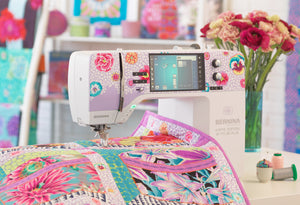
One of the machines quilters learn on in this space is the BERNINA Q24 with Q-Matic software. According to SparklesaxDesigns longarm quilting details, the BERNINA Q24 in service contexts offers computerized quilting at $0.035 per square inch, and the technology achieves less than 1mm stitch deviation. That precision helps explain why students are drawn to it. You’re learning on equipment designed for accuracy and consistency.
Hands-on instruction usually focuses on practical skills such as:
A short visual can help make the machine feel less abstract before you step into class:
Without instruction, a longarm can look complicated. With guided practice, it becomes a sequence of manageable steps.
That matters whether you want to quilt every project yourself or just have the option when a special top comes along. Learning on a BERNINA system also helps machine-focused quilters understand what computerized quilting does, instead of treating it like a black box.
If you’re ready to move from curiosity to hands-on learning, view quilting classes and training and look for the next step that fits your comfort level.
A pantograph is generally an all-over repeating design used in edge-to-edge quilting. Custom quilting changes design placement across the quilt to highlight blocks, borders, or specific features.
Sometimes yes, sometimes no. Providers vary. Always ask before drop-off so you know whether to bring all three layers or choose from batting options offered by the quilter.
Many longarm services use square-inch pricing. Some may also vary pricing based on whether the quilting is edge-to-edge or custom. If the quote feels confusing, ask the quilter to walk you through exactly what is included.
Turnaround depends on the provider, the season, and the complexity of the quilting. Some services are faster for edge-to-edge work than for custom quilting, and holiday periods often fill up sooner.
No. Renting makes the most sense after proper training, but it’s not reserved for experts. Many quilters start with classes because they want more control over finishing and enjoy learning one skill at a time.
That’s normal. If you love piecing and want the easiest route to a polished finish, a service may suit you. If you’re drawn to the machine itself and want to build a new skill, training and rental may be the better fit.
Your quilt doesn’t need the “most advanced” path. It needs the path that matches your goals, your time, and the way you like to quilt.
If you’re deciding between sending out a quilt, learning to use a longarm, or choosing supplies for the next project, High Country Quilts is a helpful place to start. You can explore fabrics, notions, classes, and longarm options, then choose the path that fits how you want to finish your quilt.
At High Country Quilts we care deeply about community. With our experiences in retail, we know that a store is not only a place to shop but also a place for the community to gather and share. During this busy...

Hi! We’re Adam and Renee Wheaton, the new owners of High Country Quilts! For more than 40 years, we’ve owned and operated vacuum and sewing businesses. Following in Renee’s father’s footsteps after he retired from All Discount Vacuum and Sewing in Colorado...


Leave a comment