
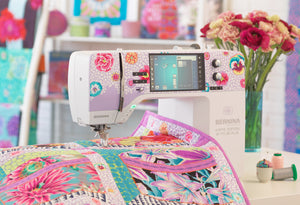

We Love Our Quilting Community
At High Country Quilts we care deeply about community. With our experiences in retail, we know that a store is not only a place to shop but also a place for the community to gather and share. During this busy...


If you've ever found yourself in a wrestling match with a queen-sized quilt, trying to shove it through the tiny opening of your domestic sewing machine, you already know the struggle. Longarm quilting completely changes the game. Instead of moving the fabric, you move the machine. That one shift makes all the difference and is the key to getting those polished, professional-looking results, even when you're just starting out.

For many quilters, the moment of truth comes when they realize their creative vision is bigger than the "throat" space on their home machine. That’s usually the main reason people make the leap to a longarm. It’s less about learning a wildly complex new skill and more about getting a tool that’s built for the job.
Imagine being able to draw with thread on a huge, perfectly smooth canvas. That's what it feels like. The entire quilt sandwich—your top, batting, and backing—is rolled onto a large frame that holds everything perfectly taut. This alone is a game-changer, as it means you can skip basting your quilt layers together on the floor. No more crawling around with pins or spray adhesive!
With a longarm, you stand comfortably and guide the machine’s sewing head, which glides on a track system over your stationary quilt. It's this freedom of movement that suddenly makes beautiful, flowing curves and complex patterns feel not just possible, but intuitive.
This ability to create high-end finishes is a huge reason for the quilting industry's recent growth. The stationary longarm quilting machine market is currently valued at around $500 million and is growing at a steady 7% each year. North America is at the heart of this boom, making it easier than ever for new quilters to find machines, classes, and communities. You can dig deeper into these numbers by reading the full stationary longarm quilting machine market report.
To really see if a longarm is the right next step for you, it helps to compare it directly with the quilting you've been doing on your domestic machine. It’s not about which one is "better," but which is the right tool for the quilt you want to create.
| Feature | Domestic Machine Quilting | Longarm Machine Quilting |
|---|---|---|
| Movement | You move the quilt under a stationary needle. | You move the machine head over a stationary quilt. |
| Workspace | Limited by the machine's "throat" space (typically 5-11 inches). | Very large, determined by the frame size (can be 10+ feet wide). |
| Quilt Prep | Requires basting (pinning, spraying, or stitching) layers together first. | Quilt layers are loaded onto separate rollers, eliminating the need to baste. |
| Ergonomics | Often involves sitting hunched over, pushing and pulling a heavy quilt. | Typically done while standing, with free-flowing, ergonomic arm movements. |
| Project Size | Best for small to medium quilts; large quilts are challenging. | Ideal for any size quilt, from wall hangings to king-sized bedspreads. |
| Learning Curve | Familiar machine, but controlling a large quilt takes practice. | Requires learning to control the machine's movement, but easier for large-scale designs. |
Ultimately, the choice comes down to the kind of quilting you want to do and the experience you want to have while doing it.
The biggest mindset shift is realizing what moves. On a domestic machine, you move the quilt. On a longarm, you move the machine. Everything flows from that one simple difference.
This guide is here to walk you through it all, step by step. We'll give you the practical, real-world advice you need to feel confident and excited about turning your beautiful quilt tops into finished works of art. Let's get you started on the right foot.
Deciding on your first longarm quilting machine feels like a huge commitment, and honestly, it is. But let's cut through the noise and technical specs. When you're just starting out, this decision really boils down to three simple things: the space you have, the money you can spend, and the quilts you picture yourself making.
First things first, let's talk about reality. Before you even look at a single machine, grab a tape measure. The frame is the biggest part of any longarm setup, and they typically come in 10-foot or 12-foot lengths. A 12-foot frame is what you'll need for those sprawling king-sized quilts, but it eats up a massive amount of real estate. For most of us, a 10-foot frame is perfect for the queen, twin, and lap quilts we make most often.
Don't forget you need to be able to move around it! You'll want at least two to three feet of clear space in front of and behind the frame. Trust me, you'll need every inch of that room to move freely and not feel boxed in.
Pro Tip: I always tell people to use painter's tape to mark the frame's footprint on the floor. Leave it there for a few days. See how it feels to walk around it. This little trick gives you a much better sense of the space you're giving up than just numbers on a page.
Once you've figured out what physically fits in your room, you can start thinking about the machine head itself. The feature everyone talks about is throat space—that's just the distance from the needle back to the machine's body. It dictates how much quilting you can do in a single pass.
For someone new to longarming, a machine with 18 to 24 inches of throat space is the sweet spot. An 18-inch throat gives you plenty of room to learn and finish most projects comfortably. A 20-inch model is probably the most popular size for a reason; it gives you that extra breathing room for bigger, more ambitious patterns without being overwhelming.
What if you're working with a smaller room? Don't worry, you're not out of luck. A sit-down longarm could be your perfect solution. These are brilliant—they give you the powerful motor and deep throat of a traditional longarm but mount it into a large table. You move the quilt sandwich instead of the machine. They're a fantastic option if you're in an apartment or your craft room has to serve multiple purposes.
Let's be real: longarm machines are a serious investment. The good news is, there are a few different paths you can take to get started.
The quilting world is buzzing right now, and a big reason is that technology is making these machines so much easier to use. The global quilting machine market was valued at $850 million in 2023 and is still climbing, with computerized models projected to hit $1.26 billion by 2025. This growth means we’re seeing more models with built-in stitch regulators and automated patterns that can really shorten the learning curve. If you're a data person, you can dive into the numbers in this detailed quilting machine market report.
Financing is also a very common way to make a new machine affordable, as most dealers offer payment plans. As you weigh the options, think about the total cost, not just the sticker price. Factor in things like maintenance and any extra accessories you'll want. Ultimately, the right choice is the one that fits your quilting dreams and your budget.
The secret to a beautifully finished quilt actually starts long before you even touch the longarm machine. All that prep work—getting your layers ready and loading them just right—is what sets you up for a smooth, pucker-free quilting session. Think of it as building a strong foundation; it makes the creative part a whole lot more fun and frustration-free.
At the heart of good preparation is one simple, non-negotiable rule: you need more fabric than you think. Your backing and batting absolutely must be larger than your quilt top. I can't stress this enough. This isn't just a casual suggestion; it's the key to avoiding a world of headaches.
Your backing and batting need to be at least 4-6 inches larger on all four sides than your quilt top. For example, if your quilt top is 60" x 80", you'll want backing and batting that measures at least 68" x 88".
This extra material, what we often call "overage," is your safety net. It gives you the fabric needed to attach the quilt to the frame's leaders and a place to clip on side clamps, all without pulling your quilt top out of square.
Before you even approach the frame, take a few minutes to give your quilt top a final once-over. A well-prepped top is just so much easier to work with.
Making the jump to longarming involves a few key decisions right at the start.

This just goes to show how your available space, budget, and the kind of machine you want are all connected. It's a bit of a balancing act to find the perfect setup for you.
Alright, this is where the magic starts to happen. Loading your quilt onto the frame properly is what ensures a great result. While the exact clamps or pins might differ between machines, the goal is always the same: get all three layers smooth, even, and taut without stretching them.
First up is the backing fabric. Your frame will have canvas "leaders" on each roller. You’ll attach the top and bottom edges of your backing fabric to these leaders. The trick is to find the center of your backing and the center of your leader, pin them together, and then work your way out to the sides. This is crucial for making sure the fabric rolls on perfectly straight.
Once it's pinned on, you’ll roll the backing onto the frame. You want it smooth and taut, but not stretched tight like a trampoline. Think of a perfectly tuned drumhead. Any wrinkles you see in the backing at this stage will be permanently quilted into your project, so take your time here.
Next, you’ll lay your batting over the smooth backing. The batting just lies on top; you don't attach it to any rollers. Just gently smooth it out from the center, getting rid of any folds or bumps.
Finally, it’s time for your beautiful quilt top. The easiest and most common method for beginners is to "float" the top. This just means you only attach the very top edge of your quilt top to the last remaining leader (the one on the quilt top roller). The rest of the top simply drapes or "floats" over the batting.
As you quilt, the machine will move down the frame, and the quilt top will be rolled up along with the other layers. This is a wonderfully forgiving method that helps prevent you from accidentally stretching or distorting your pieced top as you go.
The very last step before you start quilting your design is to baste the top edge. Just run a long, horizontal line of stitching across the top to secure all three layers together. This basting line is your final check, locking everything in place and confirming your foundation is ready for quilting.
Now for the fun part. With your quilt loaded and ready, this is where the magic really happens. You’re no longer just assembling a quilt top; you're learning to guide the machine and literally draw with thread. The whole goal right now is to master one thing: controlling the machine's movement to create beautiful, even stitches.
Your first decision is which stitch mode to use. Most modern longarms give you two main choices: regulated and manual.
Before you even think about putting a treasured quilt on the frame, you need to get a feel for the machine. Grab some cheap solid fabric, a scrap piece of batting, and a backing to create a practice "quilt sandwich." I always recommend solids because they show every stitch, making it easy to spot what’s working and what needs tweaking.
The point here isn't to create a masterpiece. It's to find a comfortable rhythm. You're teaching your brain and your arms to sync up. It’s a lot like learning to drive a stick shift—at first, it’s all clunky and deliberate, but pretty soon, it’s pure instinct.
The biggest mistake I see new longarmers make is trying to tackle complex designs or moving way too fast. The best advice I ever received was simply to slow down, breathe, and focus on making smooth, flowing lines. The pretty stitches will come.
A few simple drills are fantastic for developing this muscle memory.
As you practice, you'll start to develop a true feel for the machine. You want to guide it from your core and shoulders, not just your wrists. Keep your arms relaxed and your hands light on the handlebars—a "death grip" will just make your movements jerky and your muscles sore.
You’re also joining an amazing and growing community. The quilting world is projected to become a $5 billion industry by 2026, powered by an estimated 30 million passionate sewists. It's a diverse group, too; survey data shows that many people find this craft later in life, with a large segment of quilters being in their 60s, employed (17.5%), and incredibly productive, often making 10-12 quilts a year. You can dive deeper into these fascinating quilting market insights on craftindustryalliance.org.
You'll quickly notice how the weight of the machine influences your quilting. A heavier machine, like a Handi Quilter Amara, is incredibly stable and gives you that crisp, perfect stitch quality, but it might tire your arms out a bit at first. Lighter machines are zippier and easier to move, but they can take a little more finesse to keep steady.
Don't forget to take care of your body! Stand with your feet about shoulder-width apart and keep your knees slightly bent. Good posture is everything; it prevents back pain and helps you move fluidly across the entire frame. This foundational practice is what will transform longarming from an intimidating task into a relaxing, creative flow state.

Every quilter, no matter how seasoned, eventually faces a stubborn machine. When you're just getting your bearings on a longarm, these moments can feel especially defeating. But don't let it get you down—most of these hiccups have surprisingly simple fixes.
Think of this section as your personal cheat sheet for figuring out what’s gone wrong. Instead of getting frustrated, you'll learn to spot the clues your machine is giving you and get back to quilting with confidence.
One of the first hurdles you'll likely encounter is imbalanced tension. This happens when the top thread and bobbin thread don't link up perfectly in the middle of your quilt sandwich. The result? Little knots or loops showing up where they shouldn't be.
What You’re Seeing:
Your goal is to achieve a perfect "lock," where the stitch looks exactly the same on both the front and back. When you see issues, don't panic. First, completely re-thread your machine from spool to needle, making sure the thread is properly seated in every guide and tension disc. You'd be amazed how often this simple reset solves everything.
A fresh needle is the cheapest and fastest fix for about 80% of longarm quilting problems. If you're seeing skipped stitches or your thread is shredding, change your needle before you adjust anything else.
Nothing kills your quilting rhythm faster than a thread that keeps snapping. It's another classic headache for newcomers, but it’s almost always a problem you can solve yourself.
A thread break is just your machine's way of telling you that something is creating friction or stress. Your job is to play detective and find the source. Is the thread catching on the spool? Is the needle old and dull?
Where to Look When Your Thread Breaks:
If you’ve checked all these things and you're still having trouble, try a different brand or type of thread. Some machines are just plain picky and have their favorites.
Even with the best preparation, things can go sideways. This table is your quick-glance guide to diagnosing and fixing the most frequent frustrations you'll run into as a beginner.
| Problem (What You See) | Common Cause | How To Fix It |
|---|---|---|
| Skipped Stitches | A dull, bent, or incorrectly inserted needle. | Change the needle. Ensure it's the right type and fully inserted. |
| "Eyelashes" on the Back | Top tension is too loose. | Tighten the top tension dial in small increments. Re-thread the machine. |
| "Railroad Tracks" on Top | Top tension is too tight. | Loosen the top tension. Check that the bobbin is wound evenly. |
| Shredding or Fraying Thread | Dull needle, wrong needle size, or a burr on a metal part. | Change the needle to the correct size. Check the needle plate hole for burrs. |
| Jerky, Uneven Stitches | Tense grip on the handlebars; moving too fast for the stitch regulator. | Relax your shoulders and grip. Practice smooth, whole-body movements. |
| Tucks or Pleats on the Back | Backing fabric was not loaded smoothly and tautly. | Unpick the quilting, then re-smooth and re-baste the area. Be meticulous when loading the backing next time! |
Don't be afraid to stop and methodically work through this list. A few minutes of troubleshooting will save you hours of unpicking later on.
Finally, let's talk about the frustrating results you can see in the quilt itself. You might notice your lines of stitching look wobbly and uneven, or—every quilter's nightmare—you find a dreaded tuck or pleat in your backing fabric after quilting a huge section.
Jerky stitches are often an issue of ergonomics and practice. Many beginners hold the handlebars with a "death grip," which leads to tense, jagged motions. Try to relax your shoulders, keep a light touch on the controls, and guide the machine from your core, not just your wrists. Using your machine’s stitch regulator is a fantastic way to build consistency as you learn.
A fabric tuck on the back, on the other hand, is almost always a loading issue. It means the backing wasn't completely smooth and taut on the frame when you started. Unfortunately, there's no magic fix for this one besides unpicking the stitches. The good news is that you can easily prevent it next time by taking extra care to smooth the backing on the frame before you add the batting and quilt top.
Once you get the hang of the basics, you'll inevitably run into some specific questions. That’s a great sign! It means you're moving past theory and getting into the real, hands-on work of longarming. Let's tackle some of the most common questions I hear from new quilters.
This is a fantastic question, and getting it right solves so many problems before they even start. For your first few quilts, I always recommend a good 40-weight polyester or cotton thread. It's the workhorse of the longarming world—strong, forgiving, and it plays nice with most machines, even if your tension isn't perfectly dialed in. Brands like Glide and Superior Threads' SoFine! are popular for a reason; they just work.
As for needles, you absolutely must use needles made specifically for longarm machines. Don't try to use your domestic sewing machine needles! Longarm needles have a stronger shank and a larger eye designed to handle high speeds without shredding your thread. A size 16 or 18 is the perfect companion for that 40-weight thread.
My Golden Rule: Change your needle after every single quilt, or roughly every 8-10 hours of quilting. Seriously. A fresh needle is the cheapest insurance you can buy against skipped stitches, frayed thread, and a whole lot of frustration.
The last thing you want to do is practice on a quilt top you've poured your heart into. Instead, create a "practice sandwich." Just grab some inexpensive solid-colored fabric for your top and back, and use a piece of scrap batting in between. I always suggest solids because your stitches will pop, making it super easy to see your progress and check your tension.
I recommend warming up on your practice piece before every single quilting session. It’s also the perfect, low-stakes canvas to try out new patterns or audition thread colors before you commit.
Here are a few drills I still use to warm up:
Yes, and you absolutely should! Pantographs are a beginner's best friend. Think of a pantograph as a printed paper pattern that you unroll and place on a little shelf on the back of your longarm. You then use a laser light or a stylus attached to your machine to trace the lines.
This is a brilliant way to get a beautiful, consistent, all-over design without the pressure of having to invent the pattern yourself. It frees you up to focus on one thing: getting a feel for the machine's movement and speed.
My advice? Start with a simple, flowing pattern that is forgiving of small mistakes, like a large, open meander or a gentle wave. Designs without sharp points or intricate details are much easier to follow and will help you build confidence quickly.
This is a big one, and it boils down to two very different ways of working.
A stand-up longarm is the classic setup. It has a big frame—often 10 or 12 feet long—that holds all three layers of your quilt perfectly taut. You stand and guide the machine head over the stationary quilt. This is the go-to for tackling large quilts with edge-to-edge designs quickly and efficiently.
A sit-down longarm, on the other hand, looks more like a traditional sewing machine on steroids, set into a large table. It has the same powerful motor and generous throat space, but you sit and move the fabric under the needle, just like you would on your home machine.
So, which one is better? It honestly depends on your space, your budget, and the kind of quilting you want to do.
| Model Type | Best For | Main Advantage | Main Consideration |
|---|---|---|---|
| Stand-Up | Large quilts, edge-to-edge patterns | Incredibly fast and efficient for big projects; no basting needed. | It requires a large, dedicated footprint in your home. |
| Sit-Down | Detailed custom work, smaller quilts | Gives you fine control for intricate designs; has a more compact size. | You have to manage the bulk and weight of the quilt yourself. |
For many quilters, the stand-up model is the dream because it completely eliminates the chore of wrangling a heavy quilt. But a sit-down machine can be a phenomenal choice if you have limited space or you truly love doing detailed, custom quilting.
The best way to figure it all out is to get your hands on a machine. If you happen to be near Atlanta, Georgia, you should check out the folks at Famcut.com. They offer classes and have all the high-quality supplies you need to get started. You can see their full range of services at https://famcut.com.
At High Country Quilts we care deeply about community. With our experiences in retail, we know that a store is not only a place to shop but also a place for the community to gather and share. During this busy...

Hi! We’re Adam and Renee Wheaton, the new owners of High Country Quilts! For more than 40 years, we’ve owned and operated vacuum and sewing businesses. Following in Renee’s father’s footsteps after he retired from All Discount Vacuum and Sewing in Colorado...


Leave a comment