
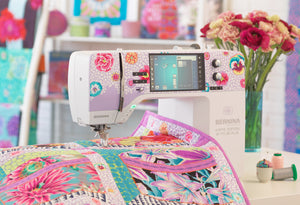

We Love Our Quilting Community
At High Country Quilts we care deeply about community. With our experiences in retail, we know that a store is not only a place to shop but also a place for the community to gather and share. During this busy...


Reimagine a Classic: Your Guide to Log Cabin Quilts
The Log Cabin block is one of those patterns almost every quilter recognizes, yet many sewists stop at the basic version and never test what else the structure can do. This is the core issue. It's not a lack of inspiration. It's not knowing which variation fits your skill level, fabric stash, and patience at the machine.
Historically, the Log Cabin pattern held deep meaning as well as visual appeal. Quilt historians trace its peak popularity to the American Civil War era, between 1861 and 1865, and connect it closely to the Abraham Lincoln administration. During that period, Union Army fundraisers adopted the pattern in 1863, and historians note that the center square often carried symbolic color meaning, with red representing the hearth and yellow representing the light from a window, as documented in this log cabin quilt history overview.
That history matters, but so does construction. A standard Log Cabin block is built around a center square with narrow strips added around it, and the visual power comes from contrast. Light and dark fabrics create the movement that makes the block feel alive. Once you understand that principle, the family of log cabin quilt variations opens wide.
This guide gets to the point quickly. You'll find seven practical variations, honest trade-offs, fabric suggestions, and tips that help the finished quilt look intentional instead of chaotic. If you're choosing your next project, or trying to stretch beyond a basic block, you're in the right place.
If you want the variation that teaches the whole Log Cabin language, start here. Straight Furrows is the version many quilters picture first. The logs build outward in a steady progression, and the design depends on clear light and dark placement to create those long directional lines.
It's beginner-friendly, but it still rewards precision. The easiest blocks to sew aren't always the easiest blocks to make look good, and Straight Furrows proves that. If your values are muddy, the pattern falls flat.

A standard Log Cabin block is defined by the center square, the number of logs, the width of each bar, and the color layout strategy. One practical beginner setup uses 1.5-inch strips cut on the crosswise grain and trims the block to a finished 10.5 x 10.5 inches, a method discussed in this block variation guide with construction notes. That size gives you enough room to stay accurate without wrestling tiny pieces.
Traditional Americana fabrics, solids, and low-volume prints all do well in Straight Furrows. Busy prints can work, but only if the value contrast is obvious when you step back. In classes, this is the variation that helps students understand why “pretty fabric” and “effective fabric” aren't always the same thing.
Practical rule: If the block doesn't look dramatic from six feet away, your light and dark groups are too close in value.
A real-world example is a beginner workshop quilt using solids for the dark side and shirtings for the light side. The result usually looks cleaner than a fully scrappy first attempt because the layout does more of the visual work. If you want a straightforward starting point before trying more adventurous log cabin quilt variations, a printed pattern such as this project resource for makers can help you keep the sequence organized while you build confidence.
Want a log cabin block that looks neat and classic without asking you to master tricky angles first? Courthouse Steps is often the answer. Instead of wrapping strips around the center in a continuous rotation, you add them in matched pairs on opposite sides, creating clean rectangular rounds that read like frames.
That order is what makes the block so appealing, and what makes sloppy cutting show up fast. In class at High Country Quilts, I recommend this variation to quilters who like structure and repeatable steps, but I also warn them that accurate strip width matters more here than it does in a scrappier layout.
According to the Encyclopedia of Pieced Quilt Patterns listing for Courthouse Steps, the block is recognized as a distinct Log Cabin variation built from opposing strips rather than a full spiral. That construction gives you a centered, formal look that suits two-color quilts, reproduction prints, and modern solids equally well. If you want inspiration for crisp, framed layouts before choosing fabrics, our quilt project planning ideas for collaborative makers can help you organize references and compare finished looks.
Courthouse Steps works especially well when you want balance instead of movement. The eye stays on the center square and reads each round as a border, so the fabric choices need to support that frame effect.
Small prints, solids, and reads-as-solid textures usually perform better than large-scale novelty prints. Big motifs tend to get chopped up and can interrupt the neat geometry. For a first attempt, a 10-inch or 12-inch finished block gives you enough room to keep the center square true and the outer rounds even.
The sewing itself is straightforward. Precision is the essential skill.
A practical trade-off comes with fabric contrast. Strong light-dark contrast gives Courthouse Steps dramatic definition, but softer value shifts can look elegant and subtle in a bedroom quilt. The choice depends on whether you want the block pattern to announce itself across the room or reveal itself up close.
For many quilters, this is the variation that builds confidence in accurate piecing. The steps repeat, the layout looks polished, and every block teaches careful construction without the extra complexity of angled units.
Want a log cabin variation that looks intricate without feeling impossible? Pineapple is a strong next step for quilters who already have a handle on accurate 1/4-inch seams and want more sparkle, sharper lines, and stronger secondary patterning across the quilt top.
It belongs to the log cabin family, but the construction behaves differently. Instead of broad rounds that build a square in a steady rhythm, Pineapple creates layered corners and faceted movement. The result is more decorative and more demanding. At High Country Quilts, we usually suggest it for confident beginners who enjoy careful cutting, or for intermediate quilters ready to trade speed for visual payoff.

Pineapple shines when fabric choice supports the geometry. Solids, tone-on-tones, and small prints usually give the cleanest results because they let the angled rounds read clearly. Large florals can work, but only if you want a softer, busier look and accept that some of the crisp structure will get lost. Strong value contrast helps every round show up, especially in wall quilts and heirloom-style projects where the block itself is meant to carry the design.
This block rewards disciplined prep.
Cut one test block before cutting a full quilt. Check that your ruler method, trimming sequence, and pressing plan all agree with each other. If they do not, the block can start to twist or lose point definition long before you notice the problem. Pressing seams open often helps reduce bulk, though lighter-weight quilting cottons sometimes behave just fine with seams pressed to one side. The trade-off is simple. Open seams give you a flatter block, while side-pressed seams can be a bit sturdier during handling and quilting.
A larger block size is usually the safer choice for a first Pineapple project. More room makes the angled pieces easier to control, and minor inconsistencies are easier to trim accurately. If you want polished presentation ideas while planning a gift quilt or display piece, this project styling and visual presentation resource can help you organize reference images alongside your fabric pull.
A visual walkthrough can help if you're a hands-on learner. This short demo is a helpful place to watch the rhythm of angled piecing before cutting into your favorite fabric.
One good real-world use for Pineapple is a statement wall quilt where every block can stand on its own. If you're assembling an inspiration file for detailed, gift-worthy projects that lean decorative and highly styled, this collaboration application page can serve as another reference point for presentation ideas and polished visual planning.
Off-Center Log Cabin is where tradition starts to loosen up. The center square shifts away from the middle, and suddenly the whole block feels more active. That little move creates tension, motion, and less predictable secondary patterns across the quilt top.
This is a strong choice for modern quilters, but it's not a random one. You still need control. If you offset the center without planning the surrounding values, the quilt can look accidental instead of intentional.
Sketch first. Even a rough paper draft helps you decide whether the center should sit slightly off or dramatically off. Once you start multiplying the block across a full layout, that placement creates a pattern language of its own.
The standard Log Cabin relies on diagonal light-dark contrast to create visual dynamism. That same principle becomes even more important in an off-center version because the eye needs value structure to make sense of the asymmetry. The geometry may be playful, but the contrast strategy still needs discipline.
A practical example is a contemporary baby quilt with soft low-volume lights and saturated darks. The offset center creates motion without requiring complicated piecing, and the modern look comes more from placement than from difficult sewing. If you enjoy browsing bold visual directions and curated presentation concepts while developing your own layout ideas, this gifting platform collection offers a useful creativity nudge.
Want a Log Cabin variation that looks in motion even when the quilt is lying flat? Spiral Log Cabin does that beautifully, but it rewards careful fabric planning more than fast sewing. At High Country Quilts, I usually recommend it for quilters who are already comfortable with consistent seam allowances and reading value changes across a block.
The visual twist comes from sequence. Each strip needs to feel like the next step in the turn, so random fabric placement rarely gives the same result as an intentional progression. Ombres work especially well. So do hand-dyed bundles, batiks with subtle shifts, or a tightly edited scrappy pull where every fabric clearly belongs in the same color family.
A Spiral Log Cabin still grows from a center square and adds strips in rotation, but accuracy matters more here because the eye follows the spin. If one strip is cut a little wide or a seam goes slightly off, the problem shows sooner than it does in a standard Log Cabin. I tell students to label their strip order before they sew, then lay out one full block beside the machine. That simple step prevents a lot of seam ripping.
Start with a test block.
Use scraps first and check two things before cutting the full quilt. First, make sure the value shift from strip to strip is gradual enough to read as a spiral. Second, confirm that your chosen pressing method keeps the block flat. Pressing to the side is traditional and often faster, but pressing open can reduce bulk once the outer rounds start stacking up.
Workshop note: If the spiral disappears, the usual culprit is weak contrast between neighboring rounds, not the piecing order.
This variation falls in the moderate range for construction difficulty. The sewing itself is straightforward. The challenge is discipline. You need to stay consistent with strip order, pressing, and color placement all the way through the quilt top.
One more practical tip helps a lot during layout. Rotate several finished blocks on a design wall before joining rows, then photograph your preferred arrangement. Spiral blocks can change character quickly with a quarter turn, and a reference photo keeps the quilt from drifting away from your original plan. If you enjoy studying how visual order affects a finished presentation, this guide to organized outreach and visual sequencing makes an interesting comparison point for structure and hierarchy.
Spiral Log Cabin is a strong choice for lap quilts, wall quilts, and art-focused projects where fabric movement is the star. If you want a version of Log Cabin that teaches color control while still using familiar strip piecing, this is a very satisfying one to make.
Barn Raising isn't a different block. It's a different arrangement, and that distinction matters. You can sew perfectly ordinary Log Cabin blocks and get an extraordinary quilt top by rotating them into a radiating layout.
That's one reason Barn Raising remains so loved. You don't need more difficult piecing. You need better planning.
Historically, the Log Cabin pattern became one of the most recognizable quilt images in North American textile history because of how light and dark values activate the block. Barn Raising takes that contrast and turns it into diamonds or nested squares that seem to expand across the quilt.
This arrangement works best when your blocks are consistent in value structure. If one block has a “light” side that reads medium, it can interrupt the radiating effect. That's why I always recommend sorting completed blocks into clear value groups before you place a single row.
A practical mockup on a floor or design wall is almost mandatory. Photos help too, especially because Barn Raising can look balanced in person and then reveal one awkward value jump in a photograph.
A real-world scenario is a bed quilt made from class blocks. Individually, the blocks may not look especially exciting. In Barn Raising, they suddenly read as a unified design. That's the power of arrangement.
Rainbow Log Cabin trades strict light-dark tradition for color progression. The energy is completely different. Instead of the classic cabin glow effect, the quilt becomes a study in movement through the spectrum.
That sounds loose and playful, but it still needs discipline. Rainbow quilts fail when the values within each color family are too mixed, or when the prints are so loud that the color path gets lost.

For scrappy Log Cabin variations, one reliable cutting approach is to divide the block into two distinct color groups, cut scraps into exactly 1.5-inch strips, and use 2.5-inch center squares before mixing pieces into piles for one complete block, as shown in this scrappy Log Cabin pattern guide. Even if you're sewing a rainbow rather than a strict scrappy quilt, that sort-first method is very effective.
The best rainbow versions often use solids, blenders, or very low-contrast prints. Ombres are especially helpful because they smooth the transition from one hue to the next. If every fabric has a different visual texture, the eye works too hard and the rainbow line breaks apart.
A good real-world project for this variation is a cheerful throw or kid's room quilt where color is the headline. It's also a smart use for stash collectors who want a quilt that celebrates variety without looking messy.
| Variation | 🔄 Implementation complexity | ⚡ Resource requirements & speed | 📊 Expected outcomes (impact) | ⭐ Key advantages | 💡 Ideal use cases |
|---|---|---|---|---|---|
| Classic Straight Furrows Log Cabin | Beginner, predictable, stepwise construction | Low, basic rotary tools; Fast (20–30 min/block) ⚡ | Clean traditional look with strong contrast; ⭐⭐⭐⭐ | Easy to learn, forgiving, versatile for precuts | Beginners, community quilts, quick bed quilts |
| Courthouse Steps Log Cabin | Intermediate, requires symmetrical pairing and precision | Moderate, organized strip sets; Medium (30–45 min/block) ⚡ | Formal, balanced frames; polished finish; ⭐⭐⭐⭐ | Refined appearance, hides small errors, highlights focal centers | Gallery-style quilts, novelty-center blocks, commissions |
| Pineapple Log Cabin | Advanced, angle cutting and complex piecing required 🔄 | High, 45° rulers, premium fabrics; Slow (60–90+ min/block) ⚡ | Dense, 3D optical texture; very high visual impact; ⭐⭐⭐⭐⭐ | Exceptional showpiece quality, showcases technical skill | Art quilts, competitions, heirloom commissions |
| Off-Center Log Cabin | Intermediate, rethinks traditional centering and planning | Moderate, standard tools, needs layout testing; Medium (25–40 min/block) ⚡ | Dynamic asymmetry and unexpected secondary patterns; ⭐⭐⭐⭐ | Modern, energetic look; flexible design options | Contemporary quilts, novelty/directional prints, modern exhibitions |
| Spiral Log Cabin | Advanced, mathematical color/value planning and precision 🔄 | High, graded fabrics/ombre sets; Slow (75–120 min/block) ⚡ | Hypnotic rotational illusion; dramatic color mastery; ⭐⭐⭐⭐⭐ | Striking optical effects, demonstrates advanced color control | Museum/art quilts, high-end commissions, show submissions |
| Barn Raising Log Cabin (Arrangement) | Intermediate, layout technique (depends on block difficulty) 🔄 | Variable, uses pre-made blocks; Quilt-level time 150–300+ min ⚡ | Bold radiating diamond/nested-square pattern; ⭐⭐⭐⭐ | Big visual impact from simple blocks; historically rooted | Large bed quilts, historical reproductions, community projects |
| Rainbow Log Cabin | Beginner–Intermediate, standard construction with color sequencing | Moderate, many color choices or precuts; Medium (25–45 min/block) ⚡ | Vibrant spectrum progression; playful contemporary impact; ⭐⭐⭐⭐ | Teaches color theory, high social-media appeal, modern look | Modern décor, workshops on color, trendy social posts |
The Log Cabin block has lasted because it gives quilters structure without boxing them in. A center square, a sequence of strips, and a clear value plan can become something very traditional or unmistakably modern. That range is what makes log cabin quilt variations so rewarding to explore.
If you're brand new, Straight Furrows or Courthouse Steps are sensible starting points. They teach accuracy, value contrast, and pressing discipline without forcing you into complicated geometry. If you already feel comfortable trimming blocks and managing seams, Pineapple, Spiral, and Off-Center versions offer more personality and a bigger creative challenge.
Barn Raising is the reminder that layout can matter as much as piecing. Rainbow Log Cabin is the reminder that color can carry the whole quilt when the structure underneath is sound. Both are useful lessons. Often, the difference between a quilt that feels flat and one that feels memorable comes down to planning before sewing.
One practical place to start is with your fabric pull. Set out your choices and look at them from across the room. Then decide whether you want the quilt to emphasize value, color, symmetry, or movement. That one decision will narrow the best variation for your project much faster than scrolling through dozens of finished quilts online.
It's also worth remembering that historical Log Cabin quilts carried both symbolism and purpose. Even the traditional center square had meaning in many quilts, and earlier examples were tied rather than quilted, according to the historical overview linked earlier. That sense of intention is worth keeping, even when your version is bright, modern, or highly experimental.
As you finish and store your work, good care matters too. If you're thinking ahead about safeguarding your cherished quilts, proper storage can help protect all that cutting, pressing, and stitching time you've invested.
If you want in-person guidance, fabric selection help, or machine support while building your next quilt, High Country Quilts is one relevant option for quilters in Colorado Springs. As an authorized BERNINA dealer and quilting shop, it offers fabrics, tools, classes, and hands-on help that can make the jump from “I want to try this” to “I finished it” feel much more manageable.
Ready to try one of these log cabin quilt variations for yourself? Visit High Country Quilts to explore quilting supplies, classes, patterns, and expert support for your next project.
At High Country Quilts we care deeply about community. With our experiences in retail, we know that a store is not only a place to shop but also a place for the community to gather and share. During this busy...

Hi! We’re Adam and Renee Wheaton, the new owners of High Country Quilts! For more than 40 years, we’ve owned and operated vacuum and sewing businesses. Following in Renee’s father’s footsteps after he retired from All Discount Vacuum and Sewing in Colorado...


Leave a comment