

We Love Our Quilting Community
At High Country Quilts we care deeply about community. With our experiences in retail, we know that a store is not only a place to shop but also a place for the community to gather and share. During this busy...


You’ve probably had this moment already. You see a quilt in a shop, at a market, or folded over the back of a sofa, and you think, “I would love to make something like that.” Then the questions start. Do I need a sewing machine? What tools do I buy first? What if I cut the fabric wrong? What kind of class am I even supposed to take?
That uncertainty is normal. Quilting looks complicated from the outside because finished quilts hide the process so well. What you’re really seeing is a series of small, learnable skills done in the right order.
For many beginners, local quilting classes Colorado Springs are the easiest way to turn curiosity into confidence. A good class gives you structure, clear demonstrations, and a room full of people learning the same basics you are. It also saves you from one of the most common beginner problems, which is trying to learn ten things at once from random videos and ending up more confused than when you started.
A new quilter usually walks in with one of two goals. They either want to make a real project, or they want to stop feeling intimidated by the tools. Both are good reasons to start.
What surprises most beginners is how welcoming a class feels once it begins. Nobody expects you to know quilting language on day one. You don’t need to arrive understanding binding, strip piecing, HSTs, or batting. You just need enough interest to sit down, listen, and try the first step.

Some students worry they aren’t “crafty enough.” Others have sewn clothes before but never made a quilt. Some haven’t touched a machine in years. In class, those differences matter less than you think because everyone starts with the same core habits.
A quilting class helps by narrowing your focus:
Quilting gets easier the moment you stop trying to learn everything at once.
Many students also appreciate a simple registration process. If you’ve ever tried to compare workshops and got lost in dates, supply notes, and sign-up steps, a scheduling tool like Session Monkey's booking system shows why clear class organization matters. It helps people see what’s available and commit without extra guesswork.
If you’re ready for a practical next step, start by browsing the High Country Quilts class calendar. Seeing the current options often makes the whole journey feel much more manageable.
You sign up for your first quilting class thinking the hard part will be sewing. Then you read the class description and realize the first real challenge is choosing the right format.
That choice matters because beginner classes do different jobs. Some teach the whole process from the ground up. Others help you test the hobby with one small project. A few focus on one sticking point, like cutting accurately or getting comfortable with your sewing machine.
Many beginners scan a class listing and still finish with the same questions. Will I finish something? Do I need my own machine? Am I supposed to know how to cut fabric already?
A good listing answers those questions plainly. If it does not, you may end up registering for a class that is useful, but not useful for you right now.
Before you enroll, check for these basics:
Choosing a class works a lot like choosing a starting trail. A short, flat path is great when you want to see whether you enjoy the walk. A longer guided route makes more sense if you want to build skill and confidence step by step.
| Class Type | Best For | Typical Duration | Outcome |
|---|---|---|---|
| Beginner series | Someone who wants a clear foundation | Multi-session | Practice with cutting, piecing, pressing, and assembling in order |
| One-day project workshop | Someone who wants to try quilting without a long commitment | One class | A small finished project and a feel for the process |
| Technique class | Someone who has started but keeps hitting one problem | Short focused format | Improvement in one skill, such as accurate cutting or matching seams |
| Machine mastery class | Someone who owns a sewing machine or feels rusty using one | Varies | Better control, cleaner stitching, and fewer machine-related frustrations |
If quilting is completely new to you, start with a beginner series. It gives you a map, not just a destination. You learn why each step matters before you stack the next one on top.
If you are still testing the waters, a one-day project workshop often feels more comfortable. You get a finished result, which is encouraging, and you also learn whether you enjoy the rhythm of quilting.
A technique class usually helps students who have already tried quilting at home and gotten stuck. Maybe your blocks keep shrinking. Maybe your seams look fine until pieces have to fit together. A focused class can clear up that one problem fast.
A machine mastery class helps if the machine itself feels like the obstacle. New quilters often blame themselves when the issue is thread tension, needle choice, or unfamiliar controls.
Useful rule: Pick the class that solves your next question, not the class with the prettiest sample.
If you already know you want beginner-friendly instruction, keep an eye out for class descriptions that explain the pace, the project, and the supply list in plain language. At High Country Quilts, that kind of clarity helps new students choose a class with fewer surprises and a lot more confidence.
You walk into the classroom with fabric in one hand, a supply bag in the other, and one big question in your mind. Am I about to slow everyone down? A good beginner class answers that question fast. The pace is built for learning, and new students are expected to ask questions.
The first session usually feels more like a guided practice than a test. Your instructor helps everyone get settled, checks that machines and tools are ready, and explains the project in small steps. Quilting works a lot like following a recipe. You do better when the ingredients are ready, the order makes sense, and someone shows you why each step matters.
Most classes start with the habits that make everything else easier. You may learn how to hold a rotary cutter safely, line up a ruler so it does not slip, and keep fabric smooth while cutting. Those tasks can seem simple at first, but they shape how accurately your pieces fit later.

You will probably hear about the quarter-inch seam allowance early in class. That is because quilting pieces are meant to fit together like puzzle parts. If each seam is a little too wide or a little too narrow, the finished block can end up off size.
In class, this is taught in a very practical way. You sew a short test seam, fold the fabric back, measure, and make a small adjustment if needed. That process removes a lot of guesswork. Instead of wondering whether you are doing it right, you get a clear way to check.
A beginner session often follows a steady rhythm:
That rhythm helps beginners relax. You are not expected to remember everything after one explanation.
Classes are usually quieter and more supportive than beginners expect. Some students ask questions right away. Others watch first, then try. Both approaches are normal.
You may also notice that troubleshooting is part of the lesson. If your thread bunches, your fabric shifts, or your seams do not line up, the instructor helps you figure out why. At High Country Quilts, that kind of guidance often includes machine setup tips, stitch settings, and presser foot choices that make piecing easier to repeat at home.
A strong first class teaches the skill and the checkpoint. You learn what to do, and you learn how to tell when something needs adjusting.
If you want to arrive with the basics already gathered, a Beginner Quilting Supply Kit can simplify the process.
Beginners often buy either too much or too little. They either leave with a bag full of specialty gadgets they won’t use yet, or they try to start with household substitutes that make the process harder than it needs to be.
A short, well-chosen tool list is better.

For early projects, focus on the tools that affect accuracy and ease of use every time you sew.
These aren’t luxury items. They’re the pieces that make learning smoother.
A dull cutter doesn’t just slow you down. It encourages ragged cuts and extra pressure, which makes fabric shift. A slippery ruler can throw off a strip before you even notice. Cheap thread can create problems that feel mysterious when you’re new.
In other words, tools affect learning. When the basics work properly, you can pay attention to the skill you’re practicing instead of fighting your setup.
For visual learners, this quick video helps show how beginner tools come together in a real quilting workflow.
Some purchases can wait. Specialty rulers, advanced feet, and highly specific organizers are useful later, but not required for your first class.
Start with this mindset:
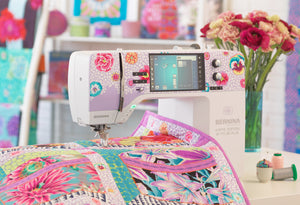
As one practical option, High Country Quilts carries BERNINA sewing machines and related accessories for students who want to compare machines, feet, and quilting tools in person. That’s useful when you’re trying to understand what fits beginner piecing versus what belongs on a future wish list.
If machine shopping is on your radar, the BERNINA sewing machine showroom is a logical next stop.
Once you’ve made a few blocks and your seams start looking steady, quilting opens up in a different way. It stops being only about technique and starts becoming about design choices.
That’s where workshops and guilds can make the hobby much richer. They give you fresh projects, new methods, and a reason to keep learning beyond beginner class notes.
Colorado-area workshops and guild programs often move into design-driven skills that many beginners haven’t seen yet. That can include building color palettes with 12-swatch organizers and learning to read more complex cutting diagrams from PDF patterns, both of which can improve project planning and fabric decisions (Piecing Partners Quilt Guild programs).
Those skills sound advanced, but they’re very approachable once your cutting and piecing basics feel stable.
A few common next-step topics include:
Guilds and workshops help many quilters move from “I can follow directions” to “I can make design choices on purpose.”
Quilting grows faster when you’re around other quilters. You overhear how someone solved a border problem. You see a fabric combination you wouldn’t have chosen yourself. You learn the language of the craft by being in the room.
Guilds add another layer. They can connect you with lectures, demonstrations, shared projects, and friendships built around the same hobby. For many people, that community becomes one of the main reasons they keep quilting.
If you’re ready to experiment with easy-to-coordinate fabric for new patterns, browsing precut fabrics such as jelly rolls and fat quarter bundles can be a simple way to try something new without pulling fabric one piece at a time.
Quilting is easier to start than it looks. You don’t need years of sewing experience. You don’t need a perfectly stocked studio. You need a place to learn the basics in the right order, a few dependable tools, and enough patience to practice one skill at a time.
That’s why local quilting classes Colorado Springs are such a helpful starting point. They remove guesswork. They give you a project, a process, and someone to ask when your seam, cut, or machine setting doesn’t look right.
The other gift of quilting is that it rarely stays a solo hobby for long. Classes lead to conversations. Conversations lead to projects. Projects lead to community. Before long, you’re not just learning how to sew straighter. You’re part of a local creative circle that shares ideas, fabric pulls, pattern suggestions, and encouragement.
If quilting has been sitting on your “someday” list, this is a good time to make it real. Browse our full class schedule and sign up today through the current High Country Quilts classes collection.
A lot of first-time students arrive with the same quiet worry. They are not sure what to bring, whether they will keep up, or if everyone else will already know more. That uncertainty is normal. A beginner quilting class is built to answer those questions as you go, much like following a pattern one step at a time instead of trying to see the whole quilt at once.
Not always. Some beginner classes provide classroom machines, and some are designed for students to bring their own. The class description should tell you which setup applies. If you already have a machine, bring it only when the supply list asks for it and you know how to transport it safely.
Costs vary by class length, the skill being taught, and whether supplies or pattern materials are included. A short technique class is often priced differently from a multi-session project class. Before you register, check what is covered in the fee and what you need to buy separately. That gives you a clearer picture than any general price range.
Bring the items listed by the instructor and nothing extra unless you are asked. For many beginners, that means fabric, thread, basic sewing tools, and sometimes a rotary cutter, ruler, and mat. If one item on the list is unfamiliar, ask before class. That is much better than buying the wrong tool.
Creativity in quilting usually starts small. You choose between two fabrics. You compare light and dark values. You decide which block arrangement feels balanced. Those are learnable skills, not something you either have or do not have on day one.
Beginner classes are designed for beginners. Instructors expect questions, repeat key steps, and help students fix problems before they turn into bigger ones. Asking for help early is part of learning well.
You will make a few. Every quilter does.
A first class is one of the safest places to make them, because you have guidance right there. A twisted block, a misread ruler line, or a seam allowance that drifts a little all become useful lessons once someone shows you how to correct them.
No. Many first projects are small on purpose. A placemat, table runner, pillow, or practice block lets you learn cutting, piecing, pressing, and quilting without handling a full-size quilt right away. It is the quilting version of learning a few scales before playing a whole song.
If you’re ready to stop wondering and start sewing, take the next step with High Country Quilts. Browse classes, gather your tools, and give yourself a beginner-friendly place to learn.
At High Country Quilts we care deeply about community. With our experiences in retail, we know that a store is not only a place to shop but also a place for the community to gather and share. During this busy...

Hi! We’re Adam and Renee Wheaton, the new owners of High Country Quilts! For more than 40 years, we’ve owned and operated vacuum and sewing businesses. Following in Renee’s father’s footsteps after he retired from All Discount Vacuum and Sewing in Colorado...


Leave a comment