

We Love Our Quilting Community
At High Country Quilts we care deeply about community. With our experiences in retail, we know that a store is not only a place to shop but also a place for the community to gather and share. During this busy...


You're probably here because you want more than a class listing. You want to know where to start, what kind of sewing workshop will help, and whether you can turn one class into a finished project instead of another half-started idea.
That's a smart way to approach in-person sewing workshops in Colorado Springs.
A good workshop does two things at once. It teaches technique, and it gives you enough structure to leave with momentum. For many beginners, a weighted quilt or weighted blanket-style project is a practical place to begin because it teaches measuring, straight stitching, accuracy, fabric handling, layering, and finishing. Those are transferable sewing skills, not one-project tricks.
Local learners also aren't starting from scratch in a vacuum. Colorado Springs already has a real hands-on sewing culture. Millie's Learn to Sew advertises $25 weekly classes and a seven-level curriculum that starts with beginner machine use, pattern reading, and starter projects, then builds upward. That matters because it shows beginners here can find entry points that are affordable, recurring, and skill-based rather than random one-off craft nights.
You sign up for a sewing workshop because you want to leave with something useful, not just a stack of notes. A weighted quilt is a strong choice for that kind of class. It gives you a practical project with clear decisions, visible progress, and a finished piece you will use at home.
That practical side is what draws many customers through our doors at High Country Quilts. A weighted quilt asks you to make real maker decisions from the start. Fabric has to feel good against the skin. The size has to fit the person using it. The finish has to hold up to regular washing and everyday use. Those choices are easier to make in person, where you can handle materials, compare options side by side, and ask for help before you cut into anything.
Making your own also gives you control that store-bought versions cannot. You can choose washable cotton, a backing that feels cooler or softer, and an edge finish that matches your skill level. That sounds simple, but there is a trade-off. More choice means more chances to overcomplicate the project. For a first weighted quilt, I usually steer beginners toward stable fabrics and straightforward construction so they get a clean result without fighting the material.
Colorado Springs has the kind of sewing community that supports that approach. As noted earlier, local beginner instruction includes a step-by-step class path instead of random single-session projects. That structure helps new sewists build confidence in the right order. First machine control, then accuracy, then a project with enough challenge to feel satisfying.
A good workshop should leave you calm enough to keep sewing at home.
If you are setting up a private lesson, neighborhood sew day, or small project class, the logistics matter too. A simple tool like Google Sheets event check-in keeps arrivals organized so the group can get settled and start on time.
I also pay attention to how beginners learn in other creative communities. If you are curious how structured support helps people start and stick with a skill, these UGC creator platforms show the same pattern. People make faster progress when the next step is clear, the tools are close at hand, and someone can answer a question before frustration sets in. That is exactly what a good in-person sewing workshop in Colorado Springs should provide.
The planning stage decides whether this project feels smooth or frustrating. Weighted quilts are not difficult because of fancy techniques. They're difficult because small planning mistakes show up late, after cutting, sewing, and filling. If the fabric was the wrong choice, if the filler wasn't thought through, or if the dimensions weren't realistic for your machine, you'll feel it.
That's why I always tell beginners to slow down before the first cut.

People often shop fabric first because it's the fun part. For a weighted quilt, start with the person who'll use it.
Ask yourself:
If comfort is the top priority, many sewists like a soft backing. If accuracy is the top priority, woven cotton on both sides is easier to mark, sew, and square up. There's no universal right answer. There is only the best answer for the person making and using it.
Explore a sewing course option that supports step-by-step learning.
Filler changes the whole character of the project. Some options feel bulkier. Others feel finer and distribute differently. The mistake beginners make is picking filler based only on cost or whatever's easiest to order. Think instead about feel, volume, and how much control you want during filling.
| Feature | Plastic Poly Pellets | Micro Glass Beads |
|---|---|---|
| Feel | More noticeably pellet-like | Finer, smoother feel |
| Bulk | Takes up more space | Usually feels less bulky in compartments |
| Handling | Easier to see and pour | Can require more care when measuring and filling |
| Noise | May be more noticeable depending on fabric | Often quieter depending on construction |
| Fabric stress | Can feel more substantial in corners and seams | Can distribute with a subtler hand |
| Beginner friendliness | Often simpler to manage | Better when precision and containment are strong |
Neither is automatically better. If you want a first project that's easier to troubleshoot, choose the option you can measure consistently and contain securely.
People want an exact formula, and there's one guideline many sewists use.
A common rule of thumb is to aim for a finished weight that's roughly 10% of the user's body weight, plus a pound or two.
Treat that as a planning guideline, not a dare. Your fabric, filler, seam structure, and intended use all affect how the finished quilt feels in real life. A quilt that's pleasant folded over the lap may feel very different spread across the whole body.
Before you settle on dimensions, think about your machine throat space and your own patience.
A smaller project gives you:
A larger project gives you more coverage, but it also creates more drag, more bulk, and more chances for filler management errors. For a workshop environment, I usually favor a size that lets a beginner finish at least a meaningful portion without wrestling the machine every minute.
This is one of the biggest things local class listings often miss. Topic alone doesn't tell you whether a class fits your need. Structure does.
A progressive, multi-level class works well if you want skill-building over time. A private lesson works better if you're anxious, working around a specific machine problem, or need pacing specific to you. A social beginner workshop is often the easiest way to test whether sewing clicks before committing to a longer sequence.
That trade-off is especially relevant in Colorado because the market includes both structured and individualized learning formats. Wyzant's Colorado sewing lessons page lists at least 25 highly rated tutors and instructors in Colorado, which supports the idea that learners here want recurring help, not just a novelty class. It also reinforces a practical truth: sewing improves fastest when someone can correct technique in the moment.
If your goal is machine confidence, pick the format that gives you coached repetition. If your goal is social motivation, choose a group workshop. If your goal is finishing one specific project, private help often saves time.
For materials, this is also where a fabric wall becomes useful instead of overwhelming. If you're building a weighted quilt, your project rises or falls on sensible combinations, not impulse picks. A good materials stop gives you a chance to compare drape, density, and seam behavior side by side. That's why many local makers like project-based shopping rather than buying blind online.
CTA: If you're planning a weighted quilt, browse fabric with your end use in mind. Look for soft backing options, stable quilting cottons, and coordinating basics that will hold up through filling and quilting.
Weighted projects punish weak setup. That sounds blunt, but it's true. If your needle is dull, your thread is low quality, or your machine struggles with layered seams, you'll spend more time fixing problems than sewing.
A common pitfall for beginners is receiving poor advice. People are told to “just try it” with whatever is on hand. That can work for a pillow cover. It's not the approach I'd recommend for a weighted quilt.

Start with the basics that affect stitch quality and control:
People love shopping gadgets. Most projects don't need many. This one needs the right few.
A machine doesn't need to be industrial to manage this project, but it does need to be stable. Good presser-foot clearance, consistent feeding, and enough punch to stitch through multiple layers make a noticeable difference.
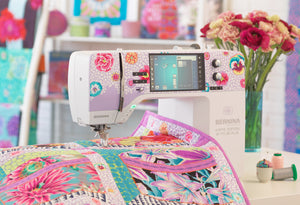
As an authorized BERNINA dealer, High Country Quilts carries machines and provides support for sewists who need help matching machine capability to project type. For layered projects, many people look at the BERNINA 475 QE because it's designed with quilting and precision sewing in mind.
See how an outreach service structures targeted support in another hands-on field.
Most workshop problems aren't mysterious. They're setup issues.
Here are the usual culprits:
Practical rule: If the machine sounds strained on a scrap test, it won't get happier on the full quilt.
In-person sewing workshops in Colorado Springs are most useful when the instructor sets people up for the project they're making. Generic machine intros help, but they aren't enough for a heavier, compartment-based quilt.
What works:
What doesn't:
CTA: If your machine hesitates on thicker seams or you're shopping for one that can grow with your projects, compare quilting-focused models like the BERNINA 475 QE before you commit to a heavy build.
This is the section that makes or breaks the project. The filler only behaves if the grid is accurate. The quilt only feels balanced if the compartments are consistent. If your lines wander, your final result will tell on you.
That's why I treat the grid as a skills exercise, not busywork.

The order matters. One studio-led advanced sewing curriculum teaches foundational control first, then moves into more advanced operations like cuff insertion, button bands, and finishing. That progression reflects a broader truth in sewing education, and the Workroom Social discussion referenced by Asian Sewist Collective makes that clear. You master machine control and accuracy, including straight lines, before asking the fabric to do complicated work.
Don't stitch the first line right after drawing it. Mark the full grid, then step back and verify spacing. Check the outside edges, the center, and whether your final columns are balanced.
A few things help here:
If the math doesn't divide neatly, adjust before sewing, not halfway through.
Start by joining the relevant layers for your grid construction method, then sew all vertical lines first to create channels. This keeps the process orderly and gives you long seam runs, which are easier to sew accurately than frequent starts and stops.
For cleaner results:
A workshop instructor can save a beginner a lot of grief here because line drift is easier to correct early than after every channel has been sewn.
See another example of a platform built around organized distribution and sequencing.
This is the safest way to keep filler controlled. You don't dump everything in and hope for the best. You measure for one row, distribute carefully, then sew the horizontal seam to trap that filler in place.
A practical workflow looks like this:
Sew the row you can control, not the row you can finish fastest.
Most problems come from rushing and from uneven measuring. If one channel gets overfilled, the seam becomes harder to close. If another gets too little, the finished quilt feels inconsistent. If filler sits in the stitch path, needles can deflect and seams can weaken.
That's also why this phase works well in person. Someone can watch your hand position, your pouring method, and your machine pace. A video can show the process. A workshop can catch the little habits that create messy rows.
Your first grid probably won't look factory-perfect. That's fine. It needs to be secure, reasonably even, and well contained.
Aim for:
CTA: For cleaner compartment lines, use a proper quilting ruler, dependable marking tools, and measuring aids that let you repeat the same motion every row.
Once the weighted panel is complete, the rest of the project becomes more familiar to quilters. You're no longer building compartments. You're turning a functional insert into a finished quilt with stable layers and durable edges.
That shift matters because the mindset changes too. Early construction is about containment. Final assembly is about polish and longevity.

Lay the backing fabric right side down. Add batting if your design calls for it. Place the weighted panel on top, right side up. Smooth each layer deliberately.
Wrinkles don't disappear later. They get trapped.
Use the basting method you trust most:
What matters is that the layers stay where you put them.
For many weighted projects, stitch in the ditch is the most practical quilting approach. You sew along the grid lines already created, which reinforces the compartments and secures the layered quilt without introducing unnecessary visual clutter.
That's usually the right move for a beginner because:
If the quilt starts feeling unwieldy under the machine, support the weight on the table instead of letting it hang. Hanging bulk pulls against your stitches.
Here's a helpful visual overview before you tackle the final passes:
After quilting, square the project carefully. Don't trim aggressively just to force a shape. Use the truest lines available and remove only what you need to create an even edge.
Beginners sometimes get discouraged at this stage. The project is almost done, but it still looks rough around the perimeter. That's normal. Binding transforms the look fast.
The binding is where a project stops looking assembled and starts looking finished.
Binding matters more on a weighted quilt than on a decorative throw that sees light use. The edges take strain every time the quilt is lifted, folded, or washed.
For a durable finish:
You can attach binding fully by machine or sew part of it by hand, depending on your preference. Machine finishing is practical and sturdy. Hand finishing gives more control over the final look. Neither is morally superior. Pick the method you'll complete cleanly.
A finished weighted quilt doesn't need decorative complexity to look good. It needs discipline.
That usually comes down to:
CTA: When you reach the finish stage, choose thread and binding with durability in mind. The last edge treatment affects how the whole project wears over time.
The first evening a weighted quilt gets used usually reveals more than the sewing table did. A corner may twist. One channel may settle differently than the rest. The weight may feel perfect for one person and tiring for another. Check those things before the quilt becomes part of a nightly routine.
Start with an honest inspection. Run your hands over the full surface and feel for thin spots, clumping, or compartments that shifted more than expected. Then look closely at the perimeter and any points where you started or stopped stitching. Small fixes now are far easier than repairing a leak after regular use.
Care depends on what you put inside the quilt and what you chose for the outer fabric. Some combinations handle gentle washing well. Others are better spot cleaned and aired out. If you want a solid refresher on storage and washing habits, this guide to proper quilt care is worth bookmarking.
A weighted quilt needs to be dependable in daily use. Good looks matter, but containment and comfort matter more.
Check these points before regular use:
In-person sewing workshops in Colorado Springs are valuable for this reason. An instructor can spot tension problems, seam weakness, and construction choices that may not hold up well once the quilt is washed and used repeatedly. At High Country Quilts, I often see makers gain confidence the moment someone experienced checks their work and gives them one clear correction instead of ten vague suggestions.
Colorado Springs has enough sewing activity to support steady progress, not just one-off classes. The Pikes Peak Artist Collective listing included an adult Intro to Machine Sewing Workshop as part of its programming. That matters because beginners usually improve through repetition, feedback, and another project right after the first one.
Local shop support helps too. If your machine starts nesting thread, if your needle choice is wrong for a dense quilt sandwich, or if your filler plan needs adjusting, an in-person conversation can save hours of frustration. That is the practical advantage of learning in a real sewing community instead of trying to solve every problem alone at midnight.
After a weighted quilt, the smartest next project is one that repeats a few useful skills without adding too many new variables at once.
Good follow-ups include:
That project sequence works well in class settings because each one builds on the last. You get more comfortable with cutting, seam consistency, pressing, and finishing, which makes the next workshop feel productive instead of overwhelming.
If you have been searching for in-person sewing workshops in Colorado Springs, treat that search like the start of a real project plan. Pick a class. Choose materials you can get locally. Bring your questions back to a shop that can help you troubleshoot. That is how a class search turns into a finished quilt, and then into a sewing habit that lasts.
If you're ready to turn a class search into a finished project, visit High Country Quilts to explore sewing supplies, machine support, and local class options that can help you move from “I want to learn” to “I made this.”
At High Country Quilts we care deeply about community. With our experiences in retail, we know that a store is not only a place to shop but also a place for the community to gather and share. During this busy...

Hi! We’re Adam and Renee Wheaton, the new owners of High Country Quilts! For more than 40 years, we’ve owned and operated vacuum and sewing businesses. Following in Renee’s father’s footsteps after he retired from All Discount Vacuum and Sewing in Colorado...


Leave a comment