
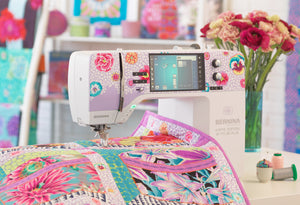

We Love Our Quilting Community
At High Country Quilts we care deeply about community. With our experiences in retail, we know that a store is not only a place to shop but also a place for the community to gather and share. During this busy...


You've found the print. You've found the plush backing. Then the doubt sets in.
Will the cotton and minky behave together? Will the edges ripple? Will the whole thing shift out of square halfway through sewing? Those are the exact questions that stop a lot of quilters right before a project that should be fun.
A double-sided throw is one of the most satisfying projects you can make from a designer quilting fabric shop online. It turns a print you love into something useful every single day, and it gives you a low-pressure way to learn one of the most valuable fabric-handling skills in sewing: pairing a stable woven with a stretchy plush.
A good throw blanket gets used hard. It lives on the sofa, gets pulled over cold feet, dragged into movie night, and borrowed by whoever gets to the couch first. That's why this project works so well. It isn't fussy. It's practical, giftable, and polished enough to look custom in your home.

The appeal of shopping this way is real. A 2025 quilting fabric market report valued the global quilting fabric market at $4.8 billion, with online stores accounting for about 38.6% of total revenue in 2025 and projected to grow at a 7.4% CAGR through 2034. That tracks with what quilters already know from experience. Designer prints, precuts, and specialty textures are often discovered online first.
This throw gives you two very different pleasures in one piece:
The trickiest part is the same thing that makes the blanket feel luxurious. Quilting cotton stays put. Minky wants to move. If you handle them like they're the same fabric, the project can get frustrating fast.
Confident beginners can absolutely make this. The seam construction is straightforward. The challenge is control, not complexity.
If you enjoy cozy projects in smaller formats too, POPvault's Barbie blanket guide is a useful reminder that the same design instincts apply whether you're sewing for a doll, a nursery, or a full sofa throw. Proportion, texture, and clean finishing always matter.
What works here is slowing down where it counts. Choose compatible fabrics. Cut on a flat surface. Pin more than you think you need. Let the machine feed the layers instead of tugging them through. That's how a simple throw starts looking store-bought.
A throw can look perfect on the table and still fight you at the machine. The usual culprit is the fabric pairing. Quilting cotton and minky can make a beautiful blanket together, but they do not behave alike, and that difference shows up fast once you start sewing.

Choose the front first. It sets the mood, and it also gives the project some structure.
For a throw, medium-scale prints usually read best from across the room. Florals, geometrics, modern blenders, and clear conversational prints all hold their own on a larger surface. Very tiny prints can get lost unless the color contrast is strong.
Good quilting cotton earns its place in this project for practical reasons:
Online, product photos matter. So do close-ups and customer comments about hand and drape. One useful buying habit is to focus on detailed product photos, look for certifications like OEKO-TEX, and read reviews that mention hand or drape. That gives you a better read on quality before the fabric ever reaches your cutting table.
For the backing, standard minky is the safest choice for this project. It is soft, warm, washable, and much easier to manage than a very deep or stretchy plush.
This is the point where experience saves frustration. Newer quilters often choose the fluffiest backing because it feels luxurious in the store. Under the presser foot, that extra loft can shift, stretch, and ripple against the cotton. A lower, denser pile is usually easier to sew cleanly, especially on a first throw.
Look for:
At High Country Quilts, this is the pairing I suggest most often for a foolproof result: a quality quilting cotton on the front and a standard-weight minky on the back. It gives you the softness people want without turning the sewing stage into a wrestling match.
A good combination should suit the room and the person using it.
For family-room throws, pick a cotton print with enough movement to hide daily wear, and skip pale minky that shows every bit of lint. For nursery gifts, softer palettes and quiet texture tend to age well. For a living-room accent piece, let the cotton carry the pattern and keep the backing simple.
This quick pairing guide works well:
| Front fabric style | Backing choice | Why it works |
|---|---|---|
| Bold floral or novelty print | Smooth solid minky | Keeps the print as the focal point |
| Low-volume or subtle blender | Dimple minky | Adds texture without visual clutter |
| Modern geometric | Short-pile plush | Helps the finished throw look crisp |
| Patchwork-style cotton top | Simple backing texture | Prevents the project from feeling too busy |
Pretty collection shots do not tell you how a fabric will sew. For this project, the missing details matter.
Check whether the listing helps you judge print scale, hand, usable width, and care requirements. If the cotton looks limp in every photo, expect a softer finish with less body. If the minky description is vague about pile or stretch, assume you may need more control at the machine.
That trade-off matters because the trickiest part of this throw is not choosing a pretty front and a soft back. It is joining a stable woven to a slippery plush without distortion. A manageable fabric pairing gives you a much better shot at success before you even thread the machine.
One more practical note. If you know you will sew this on a BERNINA, choose fabrics that suit the machine setup you plan to use. Standard quilting cotton with standard minky works especially well with a Walking Foot and slightly reduced speed, and it responds better to the fine adjustments that make these mixed-fabric projects go smoothly.
A throw that looks polished starts at the cutting table. Cotton forgives a little. Minky usually does not, and any inaccuracy here shows up later as creeping edges, rounded corners, or a backing that wants to wave.
Before you cut anything, confirm the usable width, fiber content, and care notes on the fabrics you ordered. Then add enough yardage for shrinkage and your seam allowance. This practical yardage guide is a good reference if you want a clean way to calculate before fabric arrives: verify fiber content and usable width, add seam allowance and potential shrinkage, then calculate your final yardage.
For a simple double-sided throw, cut the cotton and minky to the same size before they ever go to the machine.
| Throw Size | Fabric Dimensions (Width x Length) |
|---|---|
| Baby throw | 36" x 42" |
| Lap throw | 50" x 60" |
| Sofa throw | 60" x 72" |
| Oversized cuddle throw | 60" x 80" |
Use those as working sizes, not rigid rules. If a print has a directional motif you want centered, or the minky width gives you a cleaner cut a little smaller, adjust now and keep both pieces square.
Press the quilting cotton first. Creases from the bolt can throw off a measurement more than people expect, especially on a longer throw.
Then square one edge and cut from that edge, not from the factory fold or selvedge. I trust four things here:
Support matters. If part of the fabric is hanging off the table, the grain can pull off line and your ruler reading will still look correct until the last few inches.
Shop rule that saves projects: square first, then cut to size.
This is the part that sets up smooth sewing on a BERNINA. If the minky is stretched or cut slightly off, no machine setting will fully fix that.
Lay minky plush side down so it grips the mat better. Smooth it with flat hands and let it relax into place. Do not tug it into alignment. Minky can look flat while still being under tension, and that tension shows up the minute the presser foot starts feeding.
A reliable approach looks like this:
Painter's tape marks on the mat can help you hold a straight reference line, especially if you are cutting a large sofa throw alone.
Accurate cutting gives the machine a fair start. On mixed cotton and minky projects, I get the best results when both layers begin perfectly square and the edges match without stretching either fabric to make them cooperate.
That matters even more if you plan to use a Walking Foot or Dual Feed. Those features improve fabric control, but they work best when the pieces were prepared correctly at the table. Good cutting reduces the amount of easing you have to do under the needle and makes it much easier to keep your seam allowance consistent.
Do not pin mismatched pieces together and trim them as one unless the difference is very small. If one layer is noticeably off, unpin it, re-square it, and cut it correctly.
Trying to ease a too-small cotton top onto a slightly stretched minky backing is what creates the wavy edge people blame on the machine. In most cases, the problem started before the first stitch.
A careful ten minutes here saves a lot of unpicking later.
You smooth the layers, line up the edges, and everything looks right. Then the minky creeps under the needle, the cotton stays put, and one side finishes longer than the other. That is the part that frustrates people, not the pattern itself.
The fix starts before the first stitch. Lay the minky right side up on a large table, then place the quilting cotton right side down over it so right sides are together. Smooth both layers from the center toward the edges with flat hands. Let the fabric relax into place. If you tug the minky now, you build distortion into the seam before the machine ever touches it.

Cotton forgives loose prep. Minky does not.
I pin this project more densely than many quilters expect, especially on a larger throw. Start by marking or folding to find the center of each side on both layers. Match those centers first, then secure the corners, then fill in between them. That spreads any slight easing across the full edge instead of forcing it into one corner.
Clips work well on thick plush, but fine pins still have a place. If the minky has a lofty pile, clips help avoid crushing it. If the backing is thinner and wants to shift, pins placed perpendicular to the seam usually hold more accurately.
Use this sequence:
The biggest challenge here is uneven feed. Minky has stretch, loft, and drag. Quilting cotton is stable. If the machine feeds one layer faster than the other, the seam ripples or the backing grows by the end of the pass.
On a BERNINA, I reach for the Walking Foot #50 first. It gives the top layer positive movement, which is what slippery or plush fabrics need. If your machine has BERNINA Dual Feed, that can also help, but for thick minky I still prefer the walking foot because it gives very visible, steady control.
A reliable starting setup is:
Test this on scraps from both fabrics layered together. That test seam tells you more than the machine manual will, because minky varies a lot by brand and pile height. At High Country Quilts, that is usually the difference between a calm sewing session and twenty minutes with a seam ripper.
Sew one side at a time and keep the weight of the throw fully supported on the table. If half the project hangs off the edge, gravity pulls on the minky and changes how it feeds. Guide the fabric with both hands close to the foot. Keep your grip light.
At the corners, stop with the needle down, lift the presser foot, pivot, and resettle the layers before continuing. On plush fabric, that brief pause matters. It keeps the corner from twisting out of square.
A few habits save a lot of trouble:
If the top cotton seems to creep ahead of the minky, reduce speed. Slow stitching is usually more accurate here than trying to correct with your hands. The foot should feed the layers. Your job is to keep them flat, aligned, and supported.
For quilters who also care about how mixed textiles wear in the home, this guide to wool rugs in Australia is a useful read on fiber behavior and long-term texture.
This short demo is useful if you like to see hand position and feeding in motion before sitting down at the machine.
What works
What usually causes trouble
Before you call the seam finished, inspect it while the project is still wrong side out. Check that both layers are caught cleanly, the corners are secure, and the opening is the only unstitched area. Fixing a missed section now is easy. Fixing it after turning is annoying.
The finish is what makes this throw look intentional instead of homemade in the rushed sense of the word. This part is simple, but it deserves a careful hand.
Clip the corners diagonally without cutting into the stitching. That removes bulk and helps the points turn neatly. Then reach through the opening, pull the throw right side out, and work each corner gently into shape with a point turner, a chopstick, or another blunt tool.
Don't jab. You're shaping the corner, not spearing it.
Once the throw is turned, smooth the seam so it rolls right to the edge. On the opening side, fold the raw edges inward to match the stitched seam allowance.
Press the cotton side as needed to flatten the edges. For the minky side, use low heat and a pressing cloth. Polyester plush can react badly to too much heat, and once the pile gets flattened or damaged, it doesn't bounce back nicely.
If you want the neatest possible finish, hand sew the opening closed with a ladder stitch. It disappears into the seam and keeps the edge looking clean.
A two-layer throw needs one final step so it holds up to use and washing. Secure the layers together beyond the turned seam.
You have a few good options:
For home use, I usually prefer perimeter topstitching because it keeps the blanket tidy without competing with the print.
If your throw is going to live in a room with other warm natural textures, it helps to think about the whole space. This overview of wool rugs in Australia is a good example of how texture, durability, and care all work together in everyday interiors.
Wash on a gentle cycle with cold water. Dry on low heat or air dry. That approach is kinder to both the cotton face and the plush backing.
For storage, fold loosely rather than compressing it tightly under heavy stacks. Plush fabrics look better when the pile has room to recover between uses.
The first throw usually teaches the most when you change one variable at a time. Keep the size similar, then swap the front, backing, or finish so you can feel what each choice does under the needle. That matters with minky and quilting cotton, because a pretty fabric pairing can still sew poorly if the weight, stretch, or pile fight each other.
A plain cotton front with minky backing is still the most forgiving version I recommend at the shop. After that, these variations work well:
For this project, yardage usually beats precuts on the backing and any unpieced front. Precuts make more sense once you decide to build a cotton top first.
Wavy seams usually come from stretching the minky during sewing. The machine is telling on the handling.
Check these points first:
On a BERNINA, I usually get the best result by slowing the machine down and letting the feed system do the work. For many throws, a straight stitch around 3.0 mm is a better starting point than a shorter stitch, especially on plush backing with some give. If the seam still ripples, test a little more presser foot pressure control or reduce your sewing speed before you unpick the whole side.
Start with the needle. Minky exposes a tired needle fast, and skipped stitches often disappear after a fresh one.
Try this short checklist:
If I am pairing quilting cotton with a thick, slippery minky, I test needle types on leftovers before sewing the project. A universal needle may work on one brand of minky and miss stitches on another. That is a real trade-off with plush fabric. Softness varies, pile height varies, and the machine setup sometimes needs a small adjustment to match.
This usually starts at the cutting table, not at the machine. If one layer was cut a little off grain or the minky relaxed after cutting, the mismatch shows up at the corners.
Lay both pieces flat again on a large surface. Smooth from the center out. Re-square if needed, then re-clip before sewing. Do not stretch the minky to match the cotton. Trim for accuracy instead.
If one corner ends up bulky after turning, grade the seam allowance a bit more aggressively on the minky side and leave the cotton side slightly wider. That small adjustment helps the corner turn cleaner without a lump.
A few final problem-solvers are worth keeping in mind. If the fabric sheds, clean the machine before topstitching. If the throw feels stiff, your stitch length is probably too short or your topstitching is too close to the edge. If the project suddenly starts fighting you, stop and test on scraps instead of guessing on the main piece.
The second throw almost always looks better than the first, especially once you learn how your BERNINA feeds cotton and minky together. That confidence is the whole point.
You finish the last line of topstitching, turn the throw right side out, and suddenly the fabric on your shelf starts looking different. Instead of separate cuts of cotton and minky, you can see pairings that will work, corners that will turn cleanly, and prints that deserve a backing with the right weight and drape.
That is a useful shift for any quilter, especially if buying from a designer quilting fabric shop online still feels a little abstract. A project like this trains your eye. You get better at judging scale, checking fiber content, and choosing yardage with a finished piece in mind instead of buying on color alone.
The primary value of this throw is practical. It teaches the habits that carry into the next project:
Those skills matter because this project sits in a sweet spot. You are not piecing blocks or managing a full quilt sandwich, but you are handling one of the trickier combinations in home sewing. Quilting cotton wants to stay put. Minky often wants to shift, creep, and stretch at the worst moment. Learning to control that on a throw gives you a solid base for baby quilts, stroller blankets, quilted nursery pieces, and simple gift sewing.
I often recommend this kind of project to quilters who want a satisfying finish without fighting a complicated pattern. You still get meaningful machine practice. You still have to make good decisions at the cutting table. And when you are done, you have something people reach for.
If this throw made you more confident about sewing cotton with plush backing, keep that momentum. High Country Quilts offers the fabric, tools, machine support, and hands-on guidance that help the next project come together with fewer surprises, whether you are sewing at home or stopping in locally for classes and service.
At High Country Quilts we care deeply about community. With our experiences in retail, we know that a store is not only a place to shop but also a place for the community to gather and share. During this busy...

Hi! We’re Adam and Renee Wheaton, the new owners of High Country Quilts! For more than 40 years, we’ve owned and operated vacuum and sewing businesses. Following in Renee’s father’s footsteps after he retired from All Discount Vacuum and Sewing in Colorado...


Leave a comment