
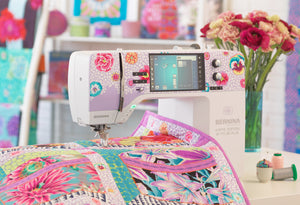

We Love Our Quilting Community
At High Country Quilts we care deeply about community. With our experiences in retail, we know that a store is not only a place to shop but also a place for the community to gather and share. During this busy...


If you've ever spent what feels like an eternity painstakingly folding and pressing fabric strips by hand, you know the struggle is real. The good news? A simple little tool called a bias tape maker can turn that tedious chore into a genuinely quick and satisfying part of your sewing process.
You just feed a fabric strip into the wide end of the gadget, gently pull it through, and press the perfectly folded tape as it emerges from the narrow end. It's that simple.

Whether you’re a seasoned quilter or just starting your sewing journey, mastering the bias tape maker can truly elevate your projects from "homemade" to "handmade professional." Think of it as your secret weapon for creating those flawless, crisp finishes that once felt so out of reach.
When you make your own bias tape, you add a unique, coordinated touch that you just can't get from pre-packaged options.
Creating your own tape opens up a whole new world of creative possibility. Suddenly, you aren't limited by the handful of solid colors on the store shelf. You can perfectly match the fabric of your main project for a subtle, seamless look, or grab a bold, contrasting print to make a real statement.
But it's about more than just aesthetics. Making your own tape has some serious practical advantages:
Bias tape makers have been a quiet hero in sewing rooms since the 1970s, when they first appeared in sizes ranging from 1/4 inch to 2 inches. Here at High Country Quilts in Colorado Springs, we've seen firsthand how these little tools help our customers achieve incredible results with their BERNINA machines and our beautiful quilting fabrics. This shared enthusiasm is part of a huge creative movement—quilting is projected to become a $5 billion industry by 2027. You can read more about the history of this handy tool if you're curious.
The real magic of a bias tape maker is the dead-on consistency. Every single inch of tape comes out with perfectly uniform folds, giving your finished project that clean, polished edge that’s just so tough to get right by hand.
In this guide, we're going to cover everything from picking the right fabric to pressing flawless single and double-fold tape. Let’s get started.
Great bias tape doesn’t just happen—it all starts with how you prep your fabric. I can't tell you how many times I've seen a project get frustrating simply because these first few steps were rushed. Getting this part right is the secret to a smooth, professional finish.
For most projects, you can't go wrong with a lightweight, 100% cotton like poplin or quilting cotton. They press beautifully, hold a sharp crease, and are generally a dream to work with. If you need a softer, more delicate finish for a garment, something like a cotton lawn or voile is a fantastic choice, you just have to handle it a bit more gently.
If your project has any kind of curve—think necklines, armholes, or scalloped edges—cutting on the true bias is non-negotiable. This just means you’re cutting your fabric strips at a perfect 45-degree angle to the selvage (that finished edge of the fabric).
Why is this angle so important? It unlocks the fabric's natural stretch and flexibility. This is what allows your finished bias tape to hug curves and lay perfectly flat without any weird puckering or bunching. It's a foundational skill, and truly mastering bias cut sewing will make a world of difference in your projects.
While bias is king for curves, you don't always need it. For straight-edged projects, you can save a ton of fabric by cutting your strips on the straight grain, either with or across the grain.
This is the perfect approach for things like:
These straight-grain strips won't have that signature stretch, but they offer great stability and are way faster to cut out.
Unless you’re working on a tiny project, you'll probably need to join several strips to get the length you need. But be careful—a bulky, straight seam will absolutely get jammed in your bias tape maker.
Pro Tip: The trick is to join your strips with a diagonal seam. Place the ends right sides together, forming a 90-degree angle. Stitch diagonally from corner to corner. Once you trim the excess and press that seam open, the bulk is distributed, letting it slide right through the tool without a hitch.
Here’s a final tip we always share in our workshops: give your fabric a light misting of spray starch before you cut. It gives the fabric more body and makes it almost paper-like. This little step prevents the fabric from stretching out of shape while you're cutting and feeding it, guaranteeing your bias tape comes out perfectly uniform every time.
Alright, you've got your fabric strips cut and joined, and now it’s time for the magic. This is where those lengths of fabric transform into perfectly uniform bias tape right before your eyes. Honestly, once you get a feel for the rhythm, it's one of the most satisfying parts of any sewing project.
First things first, you need to thread the fabric strip into the bias tape maker. The easiest way I’ve found to do this is to snip the end of your strip into a sharp point. It creates a natural leader that makes feeding it into the wide mouth of the tool so much simpler.
Sometimes, a softer or more stubborn fabric just doesn't want to cooperate. This is when a pin, stiletto, or even a sewing awl becomes your best friend. Gently poke the pointed tip of the fabric and use the tool to guide it through the channel until it peeks out the narrow end. Once you have a little tail to grab, you're ready for the next step.
Here's a little trick I swear by that makes a huge difference: pin the very beginning of that fabric tail directly to your ironing board cover. This simple move creates just the right amount of tension, keeping the strip straight and preventing it from twisting as you work. You'll have so much more control.
Now for the main event. Get your iron hot and ready. Hold the metal handle of the bias tape maker in one hand and gently pull on the fabric tail with the other. As you slowly and steadily pull the maker away from where you pinned the fabric, you'll see it fold itself perfectly.
Follow the tool closely with the tip of your iron, pressing the freshly folded tape as it comes out. The key is to find a smooth, continuous motion. If you pull in jerky motions or try to rush, you’ll likely end up with uneven folds or stretched-out tape. Think of it as a coordinated dance between your hands and the iron.
This visual guide shows just how important those first few steps are for making this whole process a breeze.

As you can see, taking the time to cut, join, and starch properly is the foundation for creating beautiful, hassle-free bias tape every time.
As the tape emerges from the tool, it will be in a single-fold format. This just means both raw edges are folded neatly to meet in the center. Single-fold tape is fantastic for:
To make double-fold tape—the kind you'll almost always use for binding quilts or finishing necklines—you just add one more step. Take your finished single-fold tape and press it in half lengthwise. This simple fold encases all the raw edges, giving you a clean, durable finish on both sides of your project.
A common mistake is pulling the bias tape maker too quickly, which stretches the fabric. A slow, consistent pace is your secret weapon for professional-looking tape. Remember, the iron is just there to set the crease, not to drag the fabric along.
It's a useful skill to master, especially when you consider that the average quilter starts 11 projects a year, and most of those need binding!
As a practical example, for a 9mm bias tape maker, you’ll want to cut your fabric strips to 18mm (about 3/4 inch). If a seam gets stuck while you're feeding it through, try using an awl to gently guide it from the back, making sure the seam allowance stays centered. For an extra-crisp finish, I always press the tape, flip it over, and press it again from the other side.
We demonstrate these exact techniques in our BERNINA training classes right here in Colorado Springs. For an even deeper dive, check out these in-depth tips about bias tape creation on SherriQuiltsaLot.com.
Even the most seasoned sewist hits a snag now and then. When you’re in the zone, the last thing you want is a tool that isn't cooperating. Let’s look at some of the most common frustrations you might run into with a bias tape maker and figure out how to get you back on track.
One of the biggest headaches is tape that twists and turns as it exits the tool. Before you get too frustrated, check how you're pulling. If your tension is uneven or you’re pulling at a slight angle, the fabric will naturally skew. The fix is usually simple: slow down. Pull the tool straight back with a single, smooth, and steady motion.
Of course, sometimes the problem starts way back at the cutting mat. If your strip wasn’t cut on a perfect bias, it has a built-in tendency to twist. This is one of those times where there’s no easy fix after the fact, which really drives home why that initial prep work is so important.
Ever pull out a long strip of bias tape only to find one fold is wider than the other? This almost always points back to one of two things. First, take a look at how you started. If the fabric wasn't perfectly centered when you fed it into the maker, that slight misalignment will travel down the entire length.
The second thing to check is your iron. If it’s cranked up too high, the heat can cause certain fabrics to shrink or distort as you press, leading to those frustratingly uneven folds. Try dialing the temperature back a bit, especially when working with delicate materials like cotton lawn.
Fabric jams are another all-too-common issue. If your fabric bunches up and refuses to budge, run through this quick mental checklist:
My Two Cents: I've found that most issues with bias tape makers come down to the prep work. An accurately cut strip, properly pressed seams, and a little spritz of starch can prevent nearly every common problem before it even starts.
These makers are a real lifesaver for tiny tape, especially anything under 1/8 inch. They create a much cleaner finish than trying to fold 1/4-inch tape back on itself, which often adds too much bulk on curves. In the local classes I teach, we've found that using a maker can be up to 80% faster than folding by hand.
Just remember, you only need the stretch of a true bias cut for navigating curves. For straight projects like straps or drawstrings, a straight-grain cut works perfectly well. A great tip for getting started is to pin the end of your fabric strip to the ironing board. This anchors it, letting you press the top, then the bottom, and finally fold it over to create your finished binding. For more great industry info, check out the latest quilting market trends on CraftIndustryAlliance.org.
Alright, you've got the hang of your bias tape maker. This is where the real fun starts—moving past the mechanics and into the art of it all. Having a stash of your own custom-made bias tape completely changes the game, opening up design choices that you just can't find in a pre-packaged roll.
Think about it: you can finish a quilt with binding made from the exact fabric used in a tiny corner of one of your blocks. It's that kind of subtle, cohesive touch that makes a project look truly professional. A simple handmade apron can go from plain to boutique-worthy with a pop of vibrant, contrasting floral trim that you made yourself.

While a flawless quilt binding is reason enough to own one of these tools, their usefulness goes so much further. Custom tape lets you add a polished, personal finish to all sorts of things.
Here are just a few ideas I've seen (and tried!) to get you thinking:
Making your own bias tape isn't just about matching colors. It's about taking full control of your project's aesthetic. You get to choose the print, the scale of the pattern, and the quality of the fabric, making sure every last detail fits your vision.
We see some incredible creativity in our sewing classes here at High Country Quilts. Just last week, a customer brought in a set of placemats where she’d used a tiny, 1/4-inch bias tape in a metallic fabric to add this incredibly chic pinstripe detail around the edges. Another person used leftover strips from a child’s dress to bind the edges of a matching doll blanket.
It’s those thoughtful little details that make handmade items so special. By learning how to use a bias tape maker, you’ve given yourself the key to unlocking endless customization. Every single project you make can now be truly, uniquely yours.
Even with a step-by-step guide, trying a new tool for the first time always brings up a few questions. It’s totally normal to get stuck on the little details that can make or break your project. Here in the shop, we get asked the same things over and over by quilters and sewists getting the hang of their bias tape makers, so we’ve put the most common ones right here.
This is a great question, and honestly, a point of confusion for a lot of people. The short answer? Nope, you don't. The "bias" part of bias tape is only a must-have when you need your finished tape to stretch and bend around curves.
Let's break it down:
Knowing the difference here is key to picking the right finish for your project. When the fabric strip first comes out of your bias tape maker, it's called single-fold bias tape.
In this form, both of the long, raw edges are simply folded in to meet right at the center. It lies flat and is perfect for situations where you just need a clean finish on one side, like turning under a raw edge inside a garment or topstitching a decorative trim.
To create double-fold bias tape, you just take it one step further. Once your single-fold tape is pressed and cooled, you fold it in half again lengthwise, tucking those first folds to the inside. This move completely encases all the raw edges, creating a super durable, finished edge on both sides of your fabric. It's the gold standard for binding a quilt for a reason!
You sure can! And let me tell you, it's a total game-changer, especially if you're into appliqué. Making your own fusible tape gives you incredible control for creating things like stained-glass quilting designs or applying tricky, curved decorative trims.
You’ll need a roll of paper-backed fusible web. The trick is to cut a strip of the web that's just a little bit narrower than your finished single-fold tape width. For example, if you're using a 1/2-inch maker, your finished tape is 1/2 inch wide, so you'd cut your fusible web strip to be about 3/8 inch.
As you feed your fabric strip into the maker, just lay the fusible web strip on top of it (fusible side down) before it goes into the folding channel. As you pull the maker and press the tape, the iron’s heat bonds the web to the back of your fabric. And just like that, you've got custom, iron-on bias tape!
Ugh, a jammed bias tape maker is so frustrating, but don't give up! It's almost always one of a few simple, fixable issues.
The most common culprit is a poorly sized fabric strip. Your strip has to be cut to the exact width your specific maker calls for. Even being off by a tiny fraction can cause the fabric to bunch up and jam inside the channel.
Another thing to check is how you're starting it. Snip the leading end of your fabric strip into a sharp, clean point—it helps it navigate the narrow path much more easily. If it’s still being stubborn, especially with slippery or soft fabrics, grab a stiletto or an awl to gently poke it through the opening. A good spritz of heavy spray starch can also work wonders, giving flimsy fabric just enough body to glide right through.
Hopefully, these answers make you feel more confident as you learn how to use a bias tape maker. For some real-life, hands-on help, feel free to pop into a class at High Country Quilts or browse our huge selection of tools and fabrics online. Visit us today!
At High Country Quilts we care deeply about community. With our experiences in retail, we know that a store is not only a place to shop but also a place for the community to gather and share. During this busy...

Hi! We’re Adam and Renee Wheaton, the new owners of High Country Quilts! For more than 40 years, we’ve owned and operated vacuum and sewing businesses. Following in Renee’s father’s footsteps after he retired from All Discount Vacuum and Sewing in Colorado...


Leave a comment