
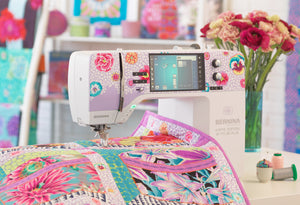

We Love Our Quilting Community
At High Country Quilts we care deeply about community. With our experiences in retail, we know that a store is not only a place to shop but also a place for the community to gather and share. During this busy...


You have the pattern on the table, the fabric is waiting, and the size chart is not your friend. The bust fits one size, the hips want another, and the envelope number has nothing to do with what you buy in a store.
That is normal.
If you want to know how to size up a sewing pattern, start with one truth: commercial patterns are a draft, not a verdict. They give you a base shape. You make it fit your body, your project, and the way you want the garment to move. That matters for everyday clothes, and it matters even more for cosplay, where stiff trims, armor layers, lining, boning, and specialty fabrics leave very little room for wishful thinking.
Sizing up works best when you treat it like pattern work, not guesswork. Measure carefully. Add space where the body needs it. Keep the original seam shapes under control. Then sew a muslin before you cut the main fabric. That is how you get a clean fit without wrecking expensive materials.
Most fitting problems start before the first cut. They start when someone picks a pattern size based on ready-to-wear habits.
Pattern sizing and retail sizing do not match. Ready-to-wear sizes often run several inches smaller per U.S. size, and a ready-to-wear size 12 bust is about 38 inches while a pattern size 12 is about 40 to 42 inches, as explained in Curvy Sewing Collective’s guide to grading a pattern up. If you choose by the number on the envelope instead of your measurements, you can begin the project with the wrong base size.

You need more than a casual bust and waist check. For most garments, measure:
Keep the tape parallel to the floor and do not pull it tight. You are measuring your body, not trying to win an argument with it.
For cosplay builds, also check the areas that will affect mobility. Think upper arm, shoulder width, calf, or torso length if the costume includes fitted sleeves, structured jackets, leggings, or body armor bases.
Tip: Wear the undergarments you plan to use with the finished garment when you measure. A different bra or shapewear changes the fit map.
Look at two things on the pattern:
These are not the same.
The body measurement chart tells you the size the pattern was drafted to fit. The finished garment measurements tell you how big the sewn garment will be. The difference between those two is ease.
Ease is where many people go wrong. They see a finished measurement bigger than their body and think the garment will be too loose. Not necessarily. Woven garments need room to breathe, sit, bend, and zip. Craftsy guidance cited by Curvy Sewing Collective notes that woven garments need room for ease, often several inches, and that is the range I expect in many fitted but wearable woven projects.
When sizing up, choose the pattern size that gives you the cleanest starting point in the area that is hardest to alter.
For bodices, that is usually the upper chest and shoulders. For skirts and simple pants, the hips often matter more. For fitted cosplay jackets, I prioritize shoulder and upper bust shape first, because fixing a too-wide shoulder after the fact is messier than adding room at the side seams or lower torso.
A quick decision guide helps:
| Garment type | Best place to choose your base size |
|---|---|
| Fitted bodice or dress | High bust or upper chest |
| Jacket or coat | Shoulders and upper back |
| Skirt | Waist to hip balance |
| Pants or leggings | Hips and upper thigh |
| Cosplay armor underlayer | Mobility points like shoulder, bust, and hip |
A lot of sewists fight the pattern because they keep trying to force their retail size onto it. Ignore the number. Use the chart, the finished measurements, and your body data.
If your bust is one size and your hips are another, that does not mean the pattern is wrong. It means you have a normal body, and the pattern needs grading or blending.
Some habits pay off immediately.
If you skip this stage, every later adjustment becomes harder. If you get this stage right, the rest of the fitting process becomes mechanical instead of emotional.
Once you know how much extra room you need, the main work begins. Good grading changes the size without ruining the shape.
That is the point people miss. If you make every edge bigger, the armhole gets strange, the neckline drifts, darts point in the wrong direction, and side seams no longer sew together cleanly. You need controlled changes.

The easiest sizing change is built into many multi-size patterns. If the pattern includes several sizes nested together, study the spacing between the printed lines.
Standard grading increments are typically small measurements between sizes at key anchor points, and InHouse Patterns Studio gives the example of adding ¼ inch at the bust for each size in its article on adding a size to a pattern. Those small increments are what keep the shape consistent.
If you only need to go up one size beyond the printed range, you can often continue the same spacing outward. This works best for simple garments with moderate shaping, such as:
It is less reliable for fitted bodices, jackets, corseted shapes, and anything with a set-in sleeve.
For most custom work, slash-and-spread is the method that gives the best control.
You mark the pattern, cut along planned lines, open the paper where room is needed, then tape fresh paper underneath and redraw the seams. It sounds dramatic, but it is one of the safest ways to change size while preserving design intent.
Here is a practical bodice approach.
Take a front bodice piece with a bust dart and side seam shaping. You need more room through the bust and waist.
The biggest beginner mistake is spreading without deciding where the added room should live. If the body needs more space at the full bust but not the shoulder, spread low and outward, not everywhere.
Key takeaway: Add width where the body expands. Protect the parts that already fit, especially neckline, shoulder, and armhole.
This method is especially good for:
It also helps when you need to add length as well as width. You can slash horizontally across designated lengthen/shorten lines and insert paper without changing the side seam shape too much.
Some sewists hate cutting their pattern pieces into pieces. Fair enough.
Pivot-and-slide gives you a less destructive option. You keep a pivot point fixed, rotate the pattern section, and trace the new edge. This works well when you are adjusting curves or shifting dart intake without chopping up the original shape.
I use pivoting most often for smaller refinements, such as:
It is not my first choice for large size jumps. For larger changes, slash-and-spread is easier to read and easier to correct.
A simple rule helps: do not assume every part of the pattern gets the same increase.
Some areas can take straightforward grading. Others cannot.
| Area | Usually safe to grade evenly | Needs more caution |
|---|---|---|
| Side seams | Yes | Watch matching front and back lengths |
| Waistline | Often | Check dart intake and waistband pieces |
| Hips | Often | Blend smoothly into thigh or hem |
| Shoulders | Sometimes | Too much width creates sloppy fit |
| Armholes | Limited | Distortion shows up fast |
| Necklines | Limited | Easy to over-enlarge |
A lot of advice online treats grading like a neat formula. In practice, it is a balancing act.
If you add enough width to make the waist comfortable, you may also flatten the waist curve and lose shape. If you increase the bust without touching the dart, the dart can point too high, too low, or too far outward. If you enlarge a sleeve but ignore the armhole, the sleeve cap can stop matching the bodice.
That is why method matters. InHouse notes that fitted garments include several inches of ease, and precise grading can reduce muslin iterations by 50%. That matches real sewing experience. Controlled pattern work saves time later because you are not repairing distortions you created at the paper stage.
For costumes, grade the base garment before you add style layers. Do not enlarge after you attach peplums, armor covers, decorative panels, or exaggerated collars. Fit the body shell first.
That one habit prevents a lot of panic.
Once the basic size is close, the detailed fitting begins. Few individuals are a single, consistent pattern size from shoulder to hem. They need more room in one area, less in another, and sometimes extra length in a spot the size chart never addresses.
That is where precision grading earns its keep.

For close fit work, use anchor-point grading. That means you identify stable landmarks on the pattern, then extend the grade from those points rather than freehanding the whole outline.
Good anchors include:
Confident Patternmaking describes anchor-point grading as extending grade lines from key anchors like seams and the bust apex, with measured increments such as small increases at side seams, and notes that using a worksheet leads to a significantly more accurate first muslin compared to freehand attempts in its article on size-inclusive grading. That is exactly why I recommend writing the changes down instead of trusting your eye.
If you freehand everything, small errors stack up fast.
A common fitting situation looks like this: the bust fits one size, the waist another, and the hip another. You do not need to choose one and suffer through the rest.
Blend between sizes.
For example, if the bust is smaller than the hip:
Do not jump abruptly from one cutting line to another. Blending should happen over distance, not at a sharp point.
If the front strains or gapes over the bust, simple side seam grading is often not enough. You may need a fuller bust adjustment approach so the pattern gains room and shaping at the same time.
Signs the bust area needs targeted work:
In that case, add room through the bust area while preserving the shoulder and upper chest if those already fit. On costumes with rigid trims or topstitching, this matters even more because the fabric will not hide a bad draft.
Bodies do not expand in identical proportions. If you add the same amount everywhere, the garment can twist or sag.
Confident Patternmaking warns that ignoring directional grading rules can distort a significant portion of garments. That is easy to believe. Hips often need a different increase from bust. Upper body changes may not belong at the hem. Curves need to be redrawn with intention.
A reliable way to think about width changes is to divide the total change across the pattern symmetrically. If a garment needs more circumference, spread that increase across front and back instead of forcing it all into one side seam.
Many sewists focus only on width. Then the waist seam lands too high, the bust dart points at the wrong place, or the hip curve sits above the body’s actual hip.
If the vertical proportions are off, fix them.
Lengthen or shorten at the pattern’s marked adjustment lines when available. If there is no line, make one in a low-distortion area, usually between major shaping zones. Keep the grainline straight. Then walk the seams again to check matching lengths.
A jacket with the right circumference but the wrong bust level still fits badly.
Here is a useful visual walkthrough before you alter your own pieces:
| Problem | Likely pattern issue | Better adjustment |
|---|---|---|
| Gaping neckline | Added width too high | Keep shoulder and neckline stable, add room lower |
| Tight hips | Not enough width at hip level | Blend out at side seam or use hip-specific spread |
| Bust drag lines | Width added in wrong area | Use bust-focused adjustment, not all-over enlargement |
| Waist seam riding up | Vertical length too short | Add length through torso, not just side width |
| Dart points look wrong | Dart not moved after grading | Reposition and true dart legs |
Tip: After every precision adjustment, check seam lengths, dart intake, notches, and grainline. A fit fix that breaks construction is not finished.
For custom cosplay, precision grading is what separates “it closes” from achieving a refined appearance. A fitted coat, uniform, or fantasy bodice should follow the body where it needs to and hold structure where it should. The paper work creates that result.
The muslin is not a beginner crutch. It is insurance.
If you are learning how to size up a sewing pattern, this is the step that saves projects. It catches bad grading, misplaced darts, neckline problems, and mobility issues before your main fabric pays the price. That matters with everyday sewing, and it matters even more when the final fabric is expensive, textured, hard to replace, or already fused to interfacing, trim, or foam-backed layers.

A good test garment answers a short list of questions:
You do not always need a full, polished mock-up. For some projects, a partial muslin is enough. A bodice muslin can stop at the waist. A jacket muslin may need one sleeve to test arm movement. A skirt muslin may only need one closure and basic seam assembly.
Choose inexpensive fabric with a behavior close to your final fabric. For woven garments, use a woven test fabric. If the finished project will be structured, choose something with enough body to show strain and collapse accurately.
Do not use a floppy substitute for a firm garment and expect clear answers. The muslin should reveal the fit, not disguise it.
The first thing I look for is strain. Then I look for excess.
Watch for:
Mark directly on the muslin with a pen or pencil. Pin out extra fabric. Draw new seam lines. Label front and back if the shape is close enough to get confusing.
Key takeaway: If you pin a fix on the body and do not transfer it back to the paper pattern, the fix does not exist.
Skipping the muslin feels faster only until the first mistake lands on the main fabric.
Then you are unpicking topstitching, re-cutting mirrored pieces, trying to hide patched seam allowances, or deciding whether the costume can be saved with trim. None of that is efficient. None of it is fun.
A muslin slows you down at exactly the moment when speed causes damage. That is why experienced sewists keep making them. Not because they love extra steps, but because they prefer one controlled test over a chain of expensive repairs.
Pattern grading gets messy when your tools fight you. It gets much easier when your setup is simple and reliable.
You do not need a studio full of specialist gear. You do need a few things that make accurate marks, clean curves, and readable corrections.
My regular grading kit is small:
If you sew a lot of cosplay, add a tracing wheel and colored pencils. They help when the pattern has many panels, seam style changes, or armor placement marks.
A graded pattern is not ready just because the new outline is drawn. It must also be trued.
That means checking that:
A side seam can look smooth on its own and still fail when paired with the back piece. Walk the seams. Put one piece edge against the other and check the sewing line, not just the cut edge.
These are the issues I see most often.
If the dart spread widened but the dart point stayed put, the shaping can aim at the wrong place. Redraw the dart legs and check that the dart still points to the intended bust area without ending too sharply.
This usually means too much width was added too high on the pattern. Pull the change lower into the bust or side seam area and keep the neckline closer to the original shape.
That often happens when the side seam was enlarged without rebalancing waist shaping. Revisit the curve and the dart intake. More circumference does not always mean a straighter side seam.
This is a paper issue, not a sewing issue. Rewalk the seams, then true the curves. If one seam has stretched during tracing or redrawing, correct it before cutting fabric.
Tip: Write every change on the pattern piece. “Added at hip,” “shortened waist,” “moved dart,” and similar notes save time when you revisit the pattern months later.
A daily dress can survive a small fit compromise. A fitted cosplay coat with heavy trim often cannot. Decorative top layers make errors more visible. Stiff materials reduce forgiveness. Closures sit under stress.
That means troubleshooting should reflect the project. If the garment must support armor, belts, or layered panels, test it with those conditions in mind. If the piece is for everyday wear, prioritize comfort, drape, and washability.
Some fit problems are easy to identify and hard to solve alone. Princess seams, asymmetry, corseted styles, and form-fitting jackets benefit from another trained eye.
Hands-on guidance can speed up that learning curve. Local sewing communities and classes are especially useful when you need someone to pin the garment on your body, spot drag lines from the side, or help translate a muslin fix back to the paper pattern.
Yes, but with caution.
Sizing down is not just “the reverse” when the original pattern already has broad shoulders, deep armholes, or style ease you do not want. Remove width gradually, protect key landmarks, and check whether the design still has enough movement. Small reductions are straightforward. Large reductions can alter the look of the garment enough that choosing a different base pattern may be smarter.
No.
Knits use stretch, recovery, and often less ease than woven garments. That changes how much room the pattern needs and where the fit pressure shows up. You can still blend sizes and adjust length, but do not automatically apply woven logic to a stretch pattern. Test with a fabric that behaves like the final knit. A stable ponte and a slinky jersey will not fit the same way.
Blend between sizes.
Use the upper area that gives the cleanest shoulder and chest fit, then transition to the waist and hip lines you need. Keep the side seam smooth. On multi-panel garments, spread changes across the relevant seams rather than forcing all the difference into one edge.
Treat each seam as part of the full circumference.
Do not enlarge only the side front or only the center front. Distribute changes thoughtfully so the seam lines remain balanced over the body. Mark bust level carefully, because princess seams show fit errors quickly. After grading, walk every seam pair and true the curves before sewing.
Usually, no.
Seam allowance is not the same as pattern shaping. Adding extra at the edges may give a little emergency room, but it will not move darts, rebalance style lines, or fix where fullness belongs. It also fails when the garment needs more than a minor increase.
Enough to answer the fit question.
For a fitted bodice, that may be the bodice only. For pants, you need the upper leg and crotch area to understand the fit. For a coat, include the shoulder, bust, and at least one sleeve. Build the smallest useful test that still reveals the problem.
Trust motion.
Sit, bend, reach, and lift your arms in the muslin. Cosplay garments especially need movement checks because closures, armor supports, and layered fabrics reduce ease once the full build is assembled. If the garment only works in a neutral pose, it does not fit well enough yet.
Yes, if they work in stages.
Start by tracing carefully, making one controlled change at a time, and sewing a muslin. You do not need to master every adjustment at once. Most fit improvement comes from good measuring, sensible blending, and the discipline to correct the paper after each test.
If you want hands-on help with fitting, grading, cosplay builds, or sewing skills in the Atlanta area, Famcut.com is a strong place to start. It serves sewists, quilters, crafters, and cosplay makers who want better materials, practical instruction, and support that goes beyond reading a pattern envelope.
At High Country Quilts we care deeply about community. With our experiences in retail, we know that a store is not only a place to shop but also a place for the community to gather and share. During this busy...

Hi! We’re Adam and Renee Wheaton, the new owners of High Country Quilts! For more than 40 years, we’ve owned and operated vacuum and sewing businesses. Following in Renee’s father’s footsteps after he retired from All Discount Vacuum and Sewing in Colorado...


Leave a comment