
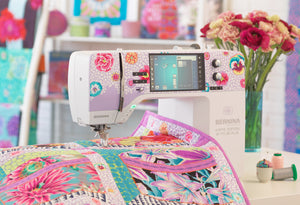

We Love Our Quilting Community
At High Country Quilts we care deeply about community. With our experiences in retail, we know that a store is not only a place to shop but also a place for the community to gather and share. During this busy...


Working with pleather can feel intimidating, but I promise you, most of the battle is won before you even sit down at your sewing machine. The secret isn't some complex technique—it's all about having the right tools for the job. Using your standard sewing setup is a recipe for skipped stitches, puckered seams, and a whole lot of frustration.
To get those crisp, professional-looking results, you just need to make a few smart swaps in your toolkit.

If you've ever tried to force pleather through your machine with a standard needle and foot, you already know the unique kind of chaos that ensues. The fabric sticks, stretches, and stubbornly refuses to feed evenly. This isn't like sewing with forgiving cotton; pleather doesn't forget a mistake, as every misplaced needle hole is there to stay.
It's no wonder so many of us want to master this material, though. It's used for everything from slick moto jackets to incredible cosplay, with over 40 billion square feet produced annually. It's affordable, versatile, and looks amazing when handled correctly.
So, let's get your toolkit sorted out. The right supplies are non-negotiable for avoiding permanent damage and getting a finish you can be proud of.
Here's a quick-reference guide to the must-have tools for any pleather project. Get these right, and you're halfway to a flawless finish.
| Tool or Supply | Recommended Type | Why It's a Game-Changer |
|---|---|---|
| Sewing Needle | Microtex, Leather, or Denim | Sharp points pierce the pleather cleanly instead of punching ragged holes. |
| Thread | 100% Polyester or Nylon | Strong and durable, it won't snap or shred under the stress of dense seams. |
| Presser Foot | Walking Foot, Teflon Foot, or Roller Foot | Prevents the "sticky" top layer from dragging, ensuring even fabric feed. |
| Cutting Tool | Rotary Cutter & Self-Healing Mat | Delivers clean, precise cuts without stretching or distorting the material. |
| Marking Tool | Chalk, Fabric Pen, or Scotch Tape | Marks the backing or surface without leaving permanent stains or holes. |
| "Pins" | Wonder Clips, Binder Clips, or Pattern Weights | Holds layers together securely without creating permanent holes in the fabric. |
With these core items in your kit, you're setting yourself up for a much smoother and more successful sewing experience from the very first cut.
First things first: that universal needle in your machine has got to go. A standard needle has a slightly rounded tip meant to slip between the threads of woven fabric. When you try that on pleather, it just punches a messy hole or, even worse, bounces right off the surface, causing a mess of skipped stitches.
You need a needle that pierces cleanly. Your best bets are:
No matter which you choose, always start a new pleather project with a fresh needle. A dull point is the number one cause of stitching headaches.
Put that cotton thread back in the drawer. It just doesn't have the strength to hold up in a pleather seam and is likely to shred or snap from the friction and tension.
You need a synthetic thread with strength and just a bit of flexibility. 100% polyester thread or a heavy-duty nylon thread are your best friends here. They're tough enough for garments, bags, and upholstery that will see a lot of wear and tear. For most apparel, an all-purpose polyester is fine, but for bags or anything structural, I'd reach for an upholstery-weight thread.
Pro Tip: If your thread keeps shredding, your first suspect should be the needle—it's likely dull or the wrong type. If a new, correct needle doesn't fix it, your thread might be too thick for the needle's eye, causing friction and breakage.
Here’s the biggest hurdle with pleather: its top surface loves to grip the metal presser foot and throat plate of your machine. This friction makes the top layer drag behind while the feed dogs keep pulling the bottom layer through. The result? Wavy, stretched-out, and completely uneven seams. A specialized foot isn't a suggestion; it's a must.
Finally, how you cut your pleather is just as important as how you sew it. Understanding the value of proper scissors in sewing is key, but for pleather, a rotary cutter and self-healing mat are even better. They allow you to cut precise, clean lines without lifting or stretching the material, giving you a perfect starting point for a professional seam.

If there's one thing you need to understand about pleather, it's this: the material has a memory. Unlike woven cottons that can be steamed and coaxed into behaving, pleather remembers every single mistake. Every pinhole, stray scissor cut, and accidental stretch is there to stay.
That’s why getting your prep and cutting right isn't just a suggestion—it's the foundation for your entire project. Think of your pattern pieces as architectural blueprints. If they're cut inaccurately, the whole structure will be off, and there's no going back.
The very first habit to break is reaching for your pin cushion. With pleather, pins are your enemy. Pushing a pin through the material doesn't just make a temporary hole; it permanently punctures the top coating, leaving a visible scar you can’t press away.
So, how do you hold your pattern pieces down? You’ll need a few alternatives in your toolkit.
This small shift in your setup makes a world of difference. It keeps your material perfectly pristine before you even get to the sewing machine.
Just like with pins, you can’t use traditional marking tools that might damage or permanently stain the surface. A standard tracing wheel will leave a trail of dotted scars, and a permanent marker can bleed right through to the front.
Always, always test your marking tool on a scrap of your pleather first. You're looking for something that either sits on the surface and wipes off easily or disappears completely.
A great trick I use all the time is to make tiny snips into the seam allowance to mark notches. For internal points like darts, I’ll use a chalk pencil or a disappearing ink pen on the backing of the fabric. That way, any marks stay hidden on the inside of the garment.
Now for the most critical step: the cut itself. With synthetic leather's massive growth in popularity, learning to handle it properly is a valuable skill. However, this isn't a fabric you can just hack at with any old pair of scissors. In fact, using scissors can drag and stretch the material by up to 10%, creating wavy, imprecise edges. If you're curious about its growth, you can read the full research about the synthetic leather market.
This is exactly why a rotary cutter and a self-healing mat are non-negotiable for working with pleather. They are the true secret to a professional-looking result.
Using a rotary cutter allows you to apply firm, even pressure while the pleather stays completely flat on the mat. Lifting the material to get scissors underneath is what causes that warping and distortion. A sharp rotary blade slices cleanly through, giving you pattern pieces that are the exact size and shape you intended. No stretching, no jagged lines—just perfect, project-ready pieces.
Getting your sewing machine ready for pleather isn't about wrestling with it. It’s more of a negotiation. The good news is that most modern machines can handle faux leather beautifully once you know which settings to tweak. Your whole goal is to help the fabric glide, not fight it, creating strong seams that won't perforate or pucker the material.
If you skip these adjustments, you're signing up for a world of frustration—puckered seams, stretched-out pieces, and weak stitches that can pop under the slightest strain. Let's get your machine dialed in so it works with the pleather, not against it.
Right off the bat, the most critical change you'll make is to your stitch length. For pleather, you need to go longer than you would for a typical cotton fabric. I usually start somewhere between 3.0mm and 4.0mm.
Think about why this is so important. Every single time your needle pierces the pleather, it's creating a permanent hole. If those stitches are too close together, you're essentially creating a perforated "tear here" line, just like on a ticket stub. This dramatically weakens the seam and makes it a prime candidate for ripping open later.
Longer stitches put more space between those holes, preserving the material's integrity. As a bonus, they just look cleaner and more professional on pleather's smooth surface.
Perfect tension is what gives you that beautiful, balanced stitch where the top and bottom threads lock perfectly between the fabric layers. With pleather, your machine's default tension can sometimes be a little too aggressive. You might notice the fabric puckering slightly or the bottom thread getting pulled up to the top side.
This often happens because the slightly tacky surface of pleather adds extra friction. To counteract this, you'll likely need to slightly reduce your upper thread tension. Try turning the tension dial down a notch or two from its default and see how the stitches look.
Your goal is a seam that looks identical on both sides, with no little knots or loops showing. If you see the bobbin thread on top, your tension is too tight. If you see loops of the top thread on the bottom, it’s too loose.
If you have a computerized machine, you might have the ability to adjust the presser foot pressure. This feature is a game-changer for sewing with pleather. The default pressure is set to hold standard woven fabrics firmly, but on pleather, it can actually pin the material down and stop it from feeding smoothly.
By reducing the presser foot pressure, you let the fabric breathe and glide more freely. This little adjustment works wonders, especially when combined with a walking foot or Teflon foot, and can almost completely eliminate issues with sticking or stretching.
Don't have adjustable pressure? No worries. Using one of those specialty feet we talked about earlier will usually solve the problem all on its own.
Before you even think about stitching your actual project pieces, you need to sew a test swatch. Seriously. This is the one step you cannot skip. Every bolt of pleather is different—some are thin and stretchy, others are thick and stiff. What worked for your last project might not work for this one.
Here’s my routine every single time:
Adjust one setting at a time—tension, length, etc.—and sew another test line until it looks perfect. This five-minute ritual will save you from ruining expensive fabric and prevent the headache of having to rip out stubborn pleather seams later.

This is where your flat pattern pieces start to look like an actual garment. The way you handle your seams and topstitching is what separates a homemade-looking project from one that looks sharp and professional. It’s all in the details.
Sewing with pleather means you have to unlearn a few habits. The material doesn't fray, which is great, but its thickness can create a lot of bulk at the seams. Let's get into the nitty-gritty of how to construct strong, clean seams that lay flat.
First things first: do not backstitch at the beginning or end of your seams. I can't stress this enough. When you backstitch on pleather, you're essentially punching a line of perforations into the material. This creates a weak "tear here" line that's almost guaranteed to fail under any tension.
So how do you lock your stitches? You have two solid options:
Tie them off by hand. Leave long thread tails, maybe 4-5 inches, when you start and stop a seam. When you're done sewing, just pull the top thread through to the back and tie the two tails together with a tight double knot. This is my go-to method; it's foolproof.
Use a lock stitch. If your sewing machine has a lock stitch or knot-tying function, use it. This feature stitches in the same spot a few times to secure the thread, all without the damaging back-and-forth motion.
Getting this right from the start is fundamental to sewing durable pleather projects.
Pleather seams get thick, fast. This is especially true where multiple seams come together, like at the underarm of a jacket. You can’t just blast them with a hot iron to press them open like you would with cotton. The key is to manage that bulk before it becomes an issue.
The best way to do this is by grading your seam allowances. It sounds technical, but it’s just a fancy term for trimming the layers inside your seam to different widths.
This staggering of the layers gets rid of that hard ridge you’d otherwise feel from the outside, creating a much smoother transition. For an even flatter finish, you can use a bit of leather glue or double-sided tape (I like using Wonder Tape) to hold the seam allowances open before you topstitch them down.
Topstitching is what gives pleather that classic, polished look. It’s not just for show—it also helps hold those bulky seam allowances in place. But getting a perfectly straight line on a material that can be sticky or slippery is a real challenge.
I’ve found the most effective tool for straight topstitching isn't a special foot, but a simple piece of painter's tape. I run a strip of tape along my fabric, aligning its edge exactly where I want my stitch line to be. Then, I just sew right alongside the edge of the tape. It gives me a flawless guide every single time.
When you topstitch, be sure to lengthen your stitch even more than for your construction seams. A stitch length of 4.0 mm to 4.5 mm looks incredibly clean and professional. A longer stitch also minimizes the number of holes you're punching in the material. Using a slightly thicker topstitching thread, maybe in a contrasting color, can also add a fantastic pop.
Getting sharp corners on your topstitching is all about the pivot. Sew right up to the corner, then stop with the needle down in the fabric. Lift your presser foot, turn the fabric 90 degrees, lower the foot, and keep sewing. That "needle down" technique is the only way to get crisp, clean corners.
Curves can feel a lot trickier. The secret is to go slow. Guide the fabric with both hands, making constant, tiny adjustments as you feed it through the machine. Don’t try to force the fabric to bend; you'll just end up with puckers. It's much better to sew a few stitches, stop (with the needle down!), readjust your fabric, and then sew a few more. Patience is your best friend here.
You’ve sewn the final stitch, and you're almost there! But don't put your machine away just yet. The finishing work is what really separates a project that looks "homemade" from one that looks truly professional and store-bought.
Pleather's thickness means seams can get chunky and stiff in a hurry. Getting them to lay flat and look clean, both inside and out, requires a few specific tricks I've picked up over the years.
Forget everything you know about pressing seams on woven fabrics. You can’t just hit pleather with a hot iron and expect it to behave; it simply won’t hold a crisp crease that way. The real secret is to physically remove the bulk before it becomes a problem.
Your best friend for this is a technique called grading the seams. After sewing your seam, you’ll trim the layers of the seam allowance to different widths. I always trim the layer closest to the body shorter, leaving the layer that will face the outside of the garment the longest. This creates a gentle, tapered slope instead of a hard, obvious ridge under your fabric.
For an even flatter finish, you can topstitch the seam allowances down. After grading, finger-press the seam open. Then, working from the right side of your project, stitch a neat line parallel to the original seam, catching the seam allowance underneath. This pins everything down permanently and adds a really nice, ready-to-wear detail.
Let me be clear: a hot iron is pleather’s worst enemy. Direct contact, even for a second, can lead to a melted, bubbly disaster. Trust me, it's a mistake you only make once. The cardinal rule is to never let a hot iron touch pleather directly.
If you absolutely must use an iron, say for a hem or a stubborn corner, you need to proceed with extreme caution.
Honestly, I rarely even use an iron anymore. My go-to tool is a small rubber mallet or a tailor’s clapper. After finger-pressing a seam on the wrong side, I’ll give it a few firm taps. The pressure flattens the seam without any risk of heat damage. It's much safer and surprisingly effective.
Once your piece is finished, a little bit of proper care goes a long way in keeping it looking brand new. Remember, most pleather is essentially a type of plastic (PU or PVC), and it should be treated that way.
When it comes to cleaning, keep it out of the washing machine. For most minor spills and dirt, a simple wipe-down with a damp cloth and a drop of mild soap is all you need. It’s always a good idea to test your soap on an inconspicuous spot first, like an inside seam.
How you store your pleather items is just as crucial.
By paying attention to these finishing details and care instructions, you can be confident that your pleather creations will stay beautiful and durable for years to come.
Even when you've done everything right, pleather can throw you a curveball. We've all been there: you're cruising along, and suddenly your machine starts skipping stitches or the seam looks wavy and stretched. It’s frustrating, but don't panic. These issues are almost always easy to fix once you know what to look for.
Most of the time, the solution is a simple tweak to your needle, foot, or machine settings. Let's diagnose the most common headaches so you can get back to your project.
If your machine is skipping stitches, the first and most important thing to check is your needle. From my experience, 90% of skipped stitches trace back to one thing: a dull, damaged, or incorrect needle. The point just can't pierce the pleather cleanly, so the machine's hook misses the thread loop. It's a simple mechanical failure.
Before you touch a single dial on your machine, swap out that needle. Put in a fresh Microtex or leather needle and see what happens. If you’re still having issues, the pleather's sticky coating might be grabbing your thread and shredding it. Make sure your thread isn't too chunky for the needle's eye, and maybe give a non-stick needle a try.
Key Takeaway: Skipped stitches are your needle's way of crying for help. The first, and often only, step you need to take is to change it. This one little thing solves the vast majority of stitching problems with pleather.
There’s nothing worse than finishing a seam only to see it looking wavy and distorted. This is a dead giveaway that your fabric layers are feeding unevenly. The sticky top layer is dragging against the metal presser foot, while the feed dogs underneath are pushing the bottom layer through just fine.
That’s your cue to swap out your presser foot. A walking foot, Teflon foot, or roller foot will be your best friend here. They are all designed to glide over sticky surfaces and help both layers move together in perfect sync. If your machine has an adjustable presser foot pressure, try lightening it up a bit, too.

When you're done sewing the seam, you might still find it's a little bulkier than you'd like. This flowchart gives you a quick visual guide for how to handle it—basically, you either press it flat or, if it's too thick, carefully trim the seam allowance to reduce the bulk.
Sometimes you just need a quick reference to diagnose what's going wrong. I put together this table to help you quickly identify the likely cause of a problem and the best way to fix it.
| Problem | Likely Cause | How to Fix It |
|---|---|---|
| Skipped Stitches | A dull, damaged, or wrong-sized needle. | Immediately change to a new Microtex or leather needle in the correct size (80/12 to 100/16). |
| Shredded Thread | The needle eye is too small; friction from the pleather coating. | Switch to a larger needle, use a non-stick needle, or try a quality polyester thread like Gütermann Mara. |
| Wavy or Puckered Seams | The top layer is dragging on the presser foot. | Use a walking foot, Teflon foot, or roller foot. You can also reduce presser foot pressure. |
| Needle Marks or Holes | The needle is too large or has a cutting point that is too aggressive. | Switch to a smaller Microtex needle (size 80/12 or 90/14). Avoid using a regular leather needle on thin pleather. |
| Fabric Won't Feed | The pleather is sticking to the machine bed and/or the standard presser foot. | Tape a piece of matte tape (like Scotch Magic Tape) to the bottom of your presser foot and the machine's throat plate. |
Think of this table as your first-aid kit for faux leather projects. By methodically checking your needle, thread, and foot, you can solve almost any issue that comes your way.
Let's tackle some of the most common questions I hear from people new to sewing with pleather. Getting your head around these key points first will save you a world of frustration and help you get straight to the fun part.
Good news—you almost certainly don't need a special machine. I've sewn plenty of faux leather projects on my trusty domestic machine. It's not about the machine itself, but how you set it up.
Success comes down to three key things:
With those adjustments, your home machine will be more than capable of handling pleather projects.
One of the best things about pleather is that it doesn't fray. This means traditional folded hems are not only unnecessary but also create a ton of unwanted bulk. You have much sleeker options.
For a sharp, modern finish, you can simply leave the edge raw. It looks clean and intentional. Another great technique is to turn the edge under just once and topstitch it down. If you want a completely invisible finish, a fusible bonding tape like Steam-a-Seam is an excellent choice.
A word of caution: pleather and high heat are enemies. If you're using an iron for fusible tape, always use a press cloth, set your iron to a very low setting, and press quickly and gently. It doesn't take much to melt the fabric.
Ah, the classic sticky needle problem. This happens when adhesive from the pleather's coating builds up on the needle as it heats up from friction, causing it to drag and skip stitches.
The first thing to do is always swap in a fresh, sharp needle. If it keeps happening, try pausing every so often to wipe your needle with a bit of rubbing alcohol on a cotton swab. Using a dedicated non-stick needle can also be a game-changer, as its coating is designed specifically to prevent this kind of buildup.
At Famcut.com, we're passionate about helping you master new skills and bring your creative visions to life. Explore our wide selection of sewing supplies and cosplay materials today at https://famcut.com.
At High Country Quilts we care deeply about community. With our experiences in retail, we know that a store is not only a place to shop but also a place for the community to gather and share. During this busy...

Hi! We’re Adam and Renee Wheaton, the new owners of High Country Quilts! For more than 40 years, we’ve owned and operated vacuum and sewing businesses. Following in Renee’s father’s footsteps after he retired from All Discount Vacuum and Sewing in Colorado...


Leave a comment