
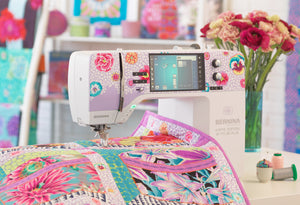

We Love Our Quilting Community
At High Country Quilts we care deeply about community. With our experiences in retail, we know that a store is not only a place to shop but also a place for the community to gather and share. During this busy...


You may be sitting at your table right now with a pattern open, fabric folded beside you, and one big question in your head: Where do I even start? Maybe you want clothes that fit your body better than store-bought ones. Maybe you want to hem a shirt, sew a simple skirt, or finally understand what all those pattern symbols mean.
That feeling is normal.
Most beginners do not struggle because sewing is impossible. They struggle because online tutorials often jump straight to the steps without explaining why they matter. A seam allowance gets mentioned, but not how it affects fit. Grainline gets named, but not why your garment twists when it is ignored. Pressing gets treated like a chore, not the quiet habit that makes everything look better.
I teach new sewists with a slower approach. We build one skill at a time, use plain language, and keep the first garment simple enough to finish. If you can learn to cut accurately, sew a straight seam, press as you go, and fix small mistakes without panic, you can sew clothes.
Your first handmade garment usually starts with a very ordinary frustration.
You try on a skirt in a store and the waist fits, but the length feels wrong. Or the shoulders on a top sit awkwardly. Or the fabric looks fine on the hanger and strange on your body. Sewing lets you step out of that cycle. You get to choose the fabric, the size, the shape, and the details that matter to you.
That is why the first project feels so satisfying. You are not just making cloth hold together. You are making something that reflects your taste and your body.

Sewing also connects you to a very old human skill. The craft dates back at least 20,000 years, with early people using bone needles and animal sinew. It kept evolving through iron needles in the 14th century, eyed needles by the 15th century, and modern machines that can sew up to 5,000 stitches per minute, as described in Britannica’s student overview of sewing.
I like beginners to know that history because it removes some of the intimidation. Sewing is not magic. It is a practical skill people have learned, adapted, and passed along for generations.
Your first garment does not need to be impressive. It needs to be finishable.
That usually means:
A pull-on skirt, a boxy top, or simple pajama-style pants make good first clothing projects because they teach the basics without overwhelming you.
Your first success matters more than your first masterpiece.
When beginners finish something wearable, they stop seeing sewing as mysterious. They start seeing it as a sequence of manageable choices. That shift is huge.
You can absolutely learn from books and videos. But many people learn faster when someone can answer the exact question they have in the moment.
A beginner might ask, “Why is my fabric shifting?” when the deeper issue is that the piece was cut off grain. Or “Why does this hem look wavy?” when the solution is pressing and stitch control. That is where hands-on teaching makes a difference. You are not just copying motions. You are building understanding.
You sit down to sew your first garment, and the part that stalls you is not the pattern. It is the pile of tools on the table. Some are useful. Some are distractions. A good beginner toolkit keeps that first project calm and manageable.
At High Country Quilts, we often see new sewists gain confidence faster when their tools are simple, dependable, and easy to understand. The goal is not to collect everything. The goal is to choose tools that help you learn why each step works, so the process feels less mysterious each time you sew.

A sewing machine helps you practice construction skills without spending all your energy on hand stitching. That matters for beginners. You can focus on guiding fabric, checking seam allowances, and learning how pieces fit together.
If I were setting up a beginner for a first garment, I would start with a short, hardworking list.
| Tool | Why you need it | Beginner note |
|---|---|---|
| Sewing machine | Sews seams, hems, and basic garment construction | Choose one with a straight stitch and zigzag |
| Fabric shears | Cuts fabric cleanly so edges stay accurate | Use them for fabric only |
| Paper scissors | Cuts pattern pieces without dulling fabric shears | Keep them separate from sewing scissors |
| Pins or clips | Holds layers in place before stitching | Pins are enough for most first projects |
| Measuring tape | Measures your body, fabric, and elastic | A soft tape is easier to wrap and read |
| Clear ruler or seam gauge | Checks seam allowances, hems, and small measurements | Helpful for accuracy at the cutting table and ironing board |
| Seam ripper | Removes stitches when something goes off track | Every beginner uses one |
| Iron and ironing surface | Presses fabric and shapes seams as you sew | Good pressing improves the final result |
| Thread snips | Trims thread tails quickly | Saves time during construction |
That list covers the jobs you will do over and over. Cut. Hold. Measure. Stitch. Press. Fix.
A beginner machine should feel steady and predictable. Fancy features can wait.
Start with these basics:
A machine works like a car you are learning to drive. You want controls that are easy to find and a response you can trust. If the machine behaves consistently, you spend less time guessing and more time learning what your hands are doing.
Some beginners do well with an older secondhand machine. Others prefer a new model with local instruction and support, especially if they want help learning features on BERNINA machines. Either option can work if the machine forms a balanced stitch and feels comfortable to use.
Some tools are helpful once you start sewing more often, but you do not need them on day one.
Many beginners buy specialty tools before they know their sewing habits. It is better to let real projects guide those choices. After one or two garments, you will know whether you want faster cutting, easier marking, or better storage.
The iron.
Beginners often picture sewing as the part where the machine runs. Much of the clean finish comes from pressing. A seam that is pressed after stitching lies flatter, matches more neatly at the next step, and looks sharper from the outside.
You can think of pressing as setting the shape of the fabric. The stitches hold pieces together, but heat and steam help teach the fabric where to stay. That is why two garments sewn with the same pattern can look very different in the end.
If your project looks rumpled or uneven, pressing is often the missing habit. A simple toolkit, used well, will take you much farther than a crowded drawer full of gadgets.
Beginners often think sewing starts when the needle hits the fabric. It starts earlier.
Good results come from preparation. In fact, beginner sewing is often better understood as a preparation skill first and a stitching skill second. When fabric is prepped well, the pattern is understood, and the cutting is accurate, the garment usually goes together with far fewer surprises.

For a first garment, choose a fabric that behaves.
Stable woven cotton is a strong place to start because it holds its shape, presses well, and does not slide across the table. A beginner-friendly knit can also work, but only if your pattern is simple and you are comfortable going a bit slower.
Good first-garment fabrics usually have these qualities:
If a fabric wrinkles under your hand and stays where you put it, that is usually a good sign for a beginner.
Wash and dry your fabric the way you plan to care for the finished garment. Then press it flat.
That pressing step matters more than most new sewists realize. According to sewing experts, pressing fabric before cutting can improve cutting accuracy by 30-50%, and cutting off grain contributes to twisting and poor fit in an estimated 70% of beginner garments, as explained in Seamwork’s guide on sewing your first garment and aligning grainline correctly.
A lot of “my garment feels wrong” problems begin on the cutting table.
Grainline sounds technical, but the idea is simple.
Woven fabric has threads running lengthwise and crosswise. Your pattern piece usually has an arrow printed on it. That arrow needs to sit parallel to the lengthwise grain of the fabric. If it does not, the garment can twist, hang oddly, or pull in the wrong places.
Think of grainline like hanging wallpaper straight. If the first strip is crooked, everything after it looks off.
Here is a simple way to handle it:
This is slower at first. It is worth it.
New sewists often want to jump straight to cutting. Pause and read the pattern first.
Look for:
Patterns become less intimidating when you treat them like instructions for a kit. You do not need to understand every single term at once. You just need to know what the next symbol means.
Read the full pattern once before cutting. You are not trying to memorize it. You are trying to avoid surprises.
Do not choose your pattern size based on your usual store size. Pattern sizing is its own system.
For most beginner garments, start by measuring your bust, waist, and hips. Use the pattern’s body measurement chart, not the size you think you “should” be. If your measurements fall across different sizes, that is normal. Bodies are not manufactured to match one size line.
When in doubt, a simple garment with ease is more forgiving than a fitted one. That is another reason first projects usually go better with boxy tops, elastic waists, and relaxed silhouettes.
Once your fabric is pressed and your pattern is laid out, pin or weight the pieces so they do not shift.
Then cut with long, controlled motions. Do not lift the fabric too much off the table. Let the scissors glide, or use a rotary cutter if that feels more stable for you.
A few cutting habits help immediately:
One more thing beginners need to hear: cutting is part of sewing. Many people fear cutting because it feels final. But confidence comes from doing it with care, not avoiding it.
This is the point where beginners often hold their breath. The fabric is cut. The pattern pieces are stacked. The machine is threaded. Now it is time to sew.
That first seam can feel louder than it should.

The secret is to make the first seam boring. Boring is good. Boring means controlled, steady, and repeatable.
Before you sew your garment pieces, practice on scraps from the same fabric.
Test these things first:
This tiny practice step saves a lot of frustration. If the machine is skipping stitches or chewing thread, you want to discover that on a scrap, not on your front bodice.
A lot of beginners stare at the needle. Instead, watch the distance between the fabric edge and the seam guide on your needle plate.
That distance is your seam allowance. Many garment patterns use 5/8 inch (1.5 cm). If that spacing stays consistent, your garment pieces will fit together the way the pattern intended.
Think of the seam allowance as the hidden border that shapes the garment. If one seam is narrow and the next is wide, the fit changes.
At the beginning and end of a seam, sew a few stitches forward, then reverse, then continue forward. That is backstitching.
It locks the seam so it does not pull apart with wear. A simple backstitch at the start and end of a seam can hold 20-30 lbs of tension, and pressing each seam as you sew helps prevent distortion and fit issues that can show up in up to 50% of cases when pressing is skipped, according to this Instructables guide on sewing basics and seam handling.
That may sound like a small habit. It is one of the habits that makes handmade clothes hold up.
If you remember only one sentence from this article, remember this one: press every seam after sewing it.
Do not wait until the whole garment is done. Press after each seam is stitched.
Why it matters:
Pressing is not the same as ironing a shirt. In garment sewing, you lift and lower the iron more than you push it around. That helps avoid stretching or distorting the fabric.
Sew. Press. Sew. Press. That rhythm will improve your results faster than almost any fancy technique.
If your pattern is basic, construction often follows a predictable order.
This is a good point to watch someone else do the motions and compare them to your own setup.
Woven fabrics can fray at the raw edges. For a beginner, a zigzag stitch is a simple way to help control that fraying.
You do not need a serger to make wearable clothes. A basic machine can finish seams well enough for many beginner projects. Stitch close enough to secure the edge, but not so tight that the fabric tunnels.
For hems, start with a simple double-fold hem:
That gives you a clean finish and teaches precision.
Do not keep sewing just because you started. Stop, assess, and fix it.
A crooked seam is not a character flaw. It usually means one of these things:
Beginners improve quickly when they slow the machine down and keep both hands lightly guiding the fabric, not pulling it.
A beginner learns faster when the project teaches one clear lesson at a time. Two early clothing projects do that especially well: an elastic-waist skirt and a basic T-shirt hem adjustment.
They are different enough to stretch your skills, but simple enough to finish.
This is one of my favorite first garments because it gives you a real clothing win without forcing you into zippers, darts, or buttonholes.
You cut simple pieces, sew straight seams, create a waistband casing, and hem the bottom. That sequence teaches a lot.
A typical process looks like this:
The exciting part comes when it suddenly stops looking like flat fabric and starts looking like clothing.
A skirt like this also teaches patience around measurement. The elastic needs to feel secure but comfortable, and the casing needs enough room for it to move through smoothly.
If your first skirt looks slightly uneven at the hem but fits and gets worn, that is a successful project.
The elastic-waist skirt helps you practice:
It also gives you a garment that forgives minor imperfections. That is valuable when you are learning.
The second project is not a full garment from scratch. It is an alteration. That is intentional.
Beginners build confidence when they learn they can improve clothes they already own. A T-shirt hem teaches control on knit fabric without asking you to construct an entire knit top.
Try this on a shirt you do not mind experimenting with.
Here is the basic idea:
The lesson here is different from the skirt. You are learning how fabric stretch changes the feel of sewing. The knit may want to ripple if you pull it. Your job is to guide, not stretch.
The skirt teaches construction.
The T-shirt hem teaches control.
One gives you the thrill of making a garment from pieces. The other teaches you that sewing can also be practical, fast, and immediately useful. Together, they answer two common beginner doubts: “Can I make clothes?” and “Can I fix the clothes I already have?” Yes to both.
If you are deciding which to do first, choose based on what feels motivating. If you want a full garment, make the skirt. If you want a quick success, alter the T-shirt.
Beginners often assume a mistake means they are bad at sewing. Usually it means they are doing what all sewists do, which is testing, adjusting, and learning.
A tangled bobbin, a skipped stitch, or a puckered seam is not unusual. It is information.
Start with the simplest fixes first.
| Problem | Common cause | First thing to try |
|---|---|---|
| Thread nesting underneath | Machine threaded incorrectly or thread tails loose | Rethread the machine completely |
| Skipped stitches | Dull or wrong needle | Change the needle |
| Puckered seam | Tension issue, fabric distortion, or lack of pressing | Test on scraps and press |
| Fabric not feeding well | Wrong presser foot pressure or hands pulling fabric | Let feed dogs do the work |
Many machine problems look dramatic and have very ordinary causes.
If your stitches suddenly look bad, stop and check thread path, needle, bobbin, and lint buildup before assuming the machine is broken.
Cutting something wrong.
This feels catastrophic because fabric is finite. But even then, not every error ruins the garment. Sometimes you can recut a smaller size piece, add a facing, shorten a hem, or use the fabric for a different version of the pattern.
The beginner skill here is not perfection. It is problem-solving.
Good sewists are not people who avoid mistakes. They are people who know how to pause and respond to them.
This is one place where generic tutorials often leave beginners hanging.
Stiff quilting cotton can pucker badly at 90-degree corners, especially when the sewer is trying to turn precisely on a machine. Anecdotal data suggests many beginners struggle with these corners, and machine-specific techniques can help, as discussed in this right-angle sewing guide focused on corner handling.
If you are sewing corners on structured cotton with a BERNINA, try this approach:
The important idea is control. Structured quilting cotton does not forgive an oversized pivot or rough handling. A clean corner comes from slowing down enough to hit the turn precisely.
Sew in short sessions.
When beginners get tired, they rush. Then they misread instructions, sew the wrong sides together, and make preventable errors. A short session with clear focus is more productive than a long frustrated one.
You finish your first garment, try it on, and notice every little thing. One hem waves a bit. One seam is straighter than the other. That moment can either discourage you or teach you. In a good sewing class, it becomes a lesson. You start to see that each project is practice you can wear.
Progress comes faster when each new garment has one clear job. Make another simple piece and give yourself a single focus, such as smoother hems, cleaner seam finishes, or a neckline that feels less intimidating than it did last week. Sewing works like building muscle memory. Your hands learn what your eyes are starting to notice.
Your machine needs that same steady attention. Brush out lint. Change the needle before it gets dull. Keep the manual close so you can check settings instead of guessing. Beginners often blame themselves for skipped stitches or uneven feeding when the underlying cause is a tired needle or a machine that needs a quick clean.
Community helps here in a way videos often cannot. At High Country Quilts, beginners can learn why a technique works, not just copy the steps. That matters. When you understand why fabric shifts, why a presser foot choice changes control, or why a BERNINA setup feels smoother for certain tasks, you can solve more of your own sewing problems the next time they show up.
Sewing also gives many people a calmer rhythm. Measuring, pressing, stitching, and checking your work pull your attention into the present in a very practical way.
Keep your next goal small and specific. Choose projects that stretch your skills a little, but not so much that every step feels like a fight. Confidence grows that way, one finished garment at a time.
If you are ready to move from reading about sewing to creating clothes, visit High Country Quilts to explore sewing classes, BERNINA machine support, fabrics, and beginner-friendly supplies. A good first project gets easier when you have the right tools and a place to ask questions.
At High Country Quilts we care deeply about community. With our experiences in retail, we know that a store is not only a place to shop but also a place for the community to gather and share. During this busy...

Hi! We’re Adam and Renee Wheaton, the new owners of High Country Quilts! For more than 40 years, we’ve owned and operated vacuum and sewing businesses. Following in Renee’s father’s footsteps after he retired from All Discount Vacuum and Sewing in Colorado...


Leave a comment