
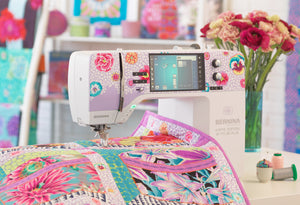

We Love Our Quilting Community
At High Country Quilts we care deeply about community. With our experiences in retail, we know that a store is not only a place to shop but also a place for the community to gather and share. During this busy...


If you've ever wanted a quick, satisfying sewing project, look no further than the fabric scrunchie. It's one of the first things many of us learn to sew, and for good reason! All it really takes is a rectangle of fabric, a bit of elastic, and a few simple stitches to create something both cute and practical.
Scrunchies are back in a big way, and it’s not just about '90s nostalgia. They’re genuinely better for your hair, preventing the breakage and annoying ponytail bumps that regular hair ties are famous for.
The real magic happens when you start making your own. Suddenly, all those beautiful fabric scraps you couldn’t bear to throw away have a new purpose. That leftover cotton from a summer dress? It's now a matching scrunchie. It's a fantastic, creative way to reduce waste and get a custom accessory in the process.
Believe it or not, you'd also be tapping into a massive global trend. The scrunchie market was valued at a whopping USD 1.2 billion in 2024, and it’s expected to more than double by 2033. Fabric scrunchies account for 65% of that market, driven by how easy they are to make at home. When you can create your own for less than a dollar instead of buying one for $5 or $10, you're not just saving money—you're taking part in a billion-dollar industry from your own craft table. You can discover more about these market trends and their impact on home sewing.
Making your own scrunchies is a win-win all around:
A standard scrunchie starts with an 18-inch by 4-inch fabric strip and an 8-inch piece of elastic. This ratio creates the classic "scrunched" look, but you can easily adjust these measurements for a skinnier or more oversized style.
Getting the proportions right is key to a great-looking scrunchie. While the "standard" size is a perfect starting point, don't be afraid to experiment! Use this table as a jumping-off point to get the look you want, whether it's a subtle skinny scrunchie or a bold, oversized one.
| Scrunchie Style | Fabric Dimensions (Length x Width) | Elastic Length |
|---|---|---|
| Classic | 18" x 4" | 8" |
| Oversized / XL | 22" x 5" | 8" |
| Skinny | 18" x 2.5" | 7" |
| Mini (for kids/thin hair) | 14" x 3" | 6" |
These are just suggestions, of course! The beauty of DIY is making it your own. Try a longer fabric piece for extra ruffles or a shorter one for a tighter, less "scrunched" look.
Any good sewing project starts with getting all your ducks in a row. Before you even think about threading a needle, let’s talk about what you’ll need to make the perfect fabric scrunchie. The best part? It’s a super simple project, and you probably already have most of these things lying around your craft space.
The first, and most fun, choice you'll make is your fabric. This is where you get to decide the personality of your scrunchie. For anyone just starting out, I always recommend a simple quilting cotton. It’s a dream to work with because it doesn't slip and slide, plus it comes in every color and pattern imaginable, like the ones we carry here at Famcut.
If you're aiming for something a little more luxurious or want to be extra kind to your hair, you can't go wrong with silk or satin. Their smooth texture helps prevent breakage, but I’ll warn you—they can be slippery little things to sew!
The fabric really sets the whole mood. Are you going for a fun, everyday look or something a bit more dressed up?
Next up is your elastic. The width and type you pick will determine how well your scrunchie holds and how it feels in your hair. A standard ¼-inch or ½-inch elastic is perfect for most scrunchies. Braided elastic gives a really firm hold, while knitted elastic is softer with more stretch, which I find more comfortable for wearing all day.
My Secret to the Perfect Scrunch: The key to getting that perfectly bunched-up look is all in the fabric-to-elastic ratio. I always make my fabric strip at least twice the length of my elastic. For a really full, ruffly scrunchie, try a ratio closer to 2.5:1—it makes a huge difference!
Once you've got your fabric and elastic picked out, you just need a few basic tools to bring it all together. You really don't need a fancy sewing studio to get started.
Here’s a quick checklist of what I keep on my table:
Having everything laid out and ready to go makes the whole process feel less like a chore and more like a fun, creative session.
If you're looking for a fast, durable scrunchie with a really clean finish, breaking out the sewing machine is the way to go. This method gives you a professional-looking accessory in just a few minutes. And honestly, even if you're just getting started with machine sewing, this is a perfect project to get comfortable and learn some key skills.
The whole process is surprisingly simple once you get the hang of it. You're essentially just sewing a fabric tube, threading some elastic through it, and closing it up. After making countless scrunchies myself, I've picked up a few tricks that I’ll share to make it even easier. You’ll be churning out a whole collection before you know it.
This quick visual breaks down the workflow from start to finish.

As you can see, you really only need a few core items to get started, which is why this is such a fantastic project for any crafter.
First things first, let's create the main body of the scrunchie. Take your fabric rectangle (a 20x5 inch piece is a great starting point) and fold it in half the long way, making sure the "right" sides of the fabric are touching. Pin along that long, raw edge to keep everything from shifting.
Now, head to your machine and set it for a standard straight stitch. Here's a crucial tip for a scrunchie that lasts: always backstitch at the beginning and end of your seam. It just takes a second and locks those stitches in, preventing them from coming undone.
Sew down that long edge, but don't sew it completely shut. You'll want to leave a 1 to 2-inch gap unsewn near both the beginning and the end. This is the secret passageway that makes turning your scrunchie a breeze later on.
Once it's sewn, take a moment to press the seam open with an iron. I know it seems like a small step you could skip, but trust me, it makes a world of difference. Your finished scrunchie will lay so much flatter and look way more polished.
Pro-Tip: If you don't own a serger, don't worry! Just run a zigzag stitch along the raw edges of your fabric before sewing the tube. This is a fantastic way to stop fraying, especially on fabrics like linen or looser cottons, and will make your scrunchie last so much longer.
Ready for a little sewing magic? It's time to turn that tube into a circle. Reach inside the tube, grab the fabric at the far end, and pull it back through toward the opening where your seam is. It sounds a little weird, but you'll see how it works! You'll end up with a loop where the two short ends of your tube are now meeting, right sides together. Stitch those two ends together to create a continuous circle.
Next up is the elastic. Attach a safety pin to one end of your 9-inch elastic strip. Find the gap you left in the side seam earlier and use it to feed the safety pin all the way through the fabric channel until it pops out the other side. Just be careful not to lose the other end of the elastic inside the tube!
Overlap the elastic ends by about half an inch and stitch them together securely. You can do this quickly by hand or with a zigzag stitch on your machine. Give it a good tug to make sure it's not going anywhere.
We're in the home stretch! All that's left is to close that little gap on the side of your scrunchie. For a finish so clean it's practically invisible, I recommend using a ladder stitch (sometimes called a blind stitch) by hand. This technique neatly catches the folded fabric on each side and pulls the opening shut without any obvious thread.
If you're in a hurry, you can absolutely finish it on the machine. Just fold the raw edges of the opening inward and topstitch it closed, sewing as close to the very edge as you can. It's a strong and perfectly fine way to finish, and the natural folds of the scrunchie will hide the seam beautifully.
Learning to make fabric scrunchies isn't just a fun craft; it's a surprisingly smart skill. The scrunchie market was valued at USD 27 million in 2023 and is expected to grow to USD 43 million by 2031, with fabric scrunchies leading the way thanks to the athleisure trend. Read the full research about the scrunchie market's growth to see just how big this little accessory has become.
No sewing machine? No problem. You absolutely don't need one to create fantastic fabric scrunchies. Honestly, some of my favorite ways to make them are completely machine-free.
Hand-sewing can be a really calming and portable project, while no-sew methods are your best friend when you need a scrunchie, like, now. They're also perfect for crafting with kids without worrying about needles.

Let’s dive into these two simple approaches. You’ll be surprised at how professional your results can be with just a few basic supplies and a little bit of patience.
Making a scrunchie by hand is a wonderfully mindful process. It follows the same basic steps as the machine-sewn version—you’ll still fold your fabric, create a tube, and thread the elastic—but your needle and thread do all the work.
The real secret to a sturdy hand-sewn scrunchie lies in the stitch you choose. While a simple running stitch might seem easiest, I always recommend taking the extra minute to learn the backstitch. It creates an incredibly strong, interlocking seam that truly rivals a machine stitch for durability. Your scrunchie will handle all the stretching and twisting you throw at it.
How to Backstitch: It’s easier than it sounds! Bring your needle up through the fabric from the back, make a small stitch backward, then bring the needle up again a short distance ahead of your first stitch. Now, just bring the needle back down into the same hole where the last stitch ended. Each new stitch perfectly fills the gap, creating a solid line of thread.
When it's time to close that final little opening, the ladder stitch (sometimes called an invisible stitch) is your best friend. You'll work by picking up tiny, alternating bits of fabric from the folded-in edges of the gap. As you pull the thread taut, the opening magically disappears, leaving a clean, seamless finish that looks store-bought.
Okay, for anyone who wants instant gratification, the no-sew scrunchie is a total game-changer. This technique swaps out thread for fabric adhesives, making it a fantastic option for a quick craft session or getting younger makers involved safely.
You'll need a reliable fabric adhesive. Your two main choices are a quality fabric glue or iron-on hem tape.
The process is straightforward: fold your fabric rectangle into a tube and use your chosen adhesive to seal the long edge. Then, glue or tape the two short ends together to form the fabric loop. Once your adhesive is set, thread the elastic through and use one last dot of glue or a tiny piece of hem tape to seal the small opening. It's a brilliant shortcut to a finished scrunchie.
Feeling a little unsure which method is right for you? This table breaks down the pros, cons, and durability of each technique to help you choose the best approach for your time, tools, and desired result.
| Method | Pros | Cons | Best For |
|---|---|---|---|
| Machine-Sewn | Fastest for batching, most durable seams, very professional finish. | Requires a sewing machine and basic knowledge of how to use it. | Making lots of scrunchies, selling them, or for items that will get heavy use. |
| Hand-Sewn | Relaxing and portable, low-cost startup, can be very durable with the right stitches. | Slower than machine sewing, stitch consistency takes practice. | Mindful crafting, projects on-the-go, and anyone without a sewing machine. |
| No-Sew | Extremely fast, no needles required, great for kids and craft parties. | Durability depends heavily on the adhesive; may not withstand machine washing. | Quick gifts, kids' crafts, or when you need a cute accessory in a pinch. |
Ultimately, there's no single "best" way—it all comes down to what works for you. Whether you're a seasoned seamstress or have never touched a needle in your life, you can absolutely make a scrunchie you'll love to wear.

Alright, you've nailed the basic scrunchie. Now for the part I always look forward to the most: getting creative and really making them your own. A simple scrunchie is just a starting point; think of it as a blank canvas waiting for your personal touch.
This is your chance to experiment with different shapes, textures, and little extras that match your style or turn a simple accessory into a thoughtful, handmade gift. With just a few simple tweaks, you can go from a basic hair tie to a statement piece.
One of the easiest ways to give your scrunchie a little something extra is by adding a tie. These are just separate fabric pieces you attach at the very end, but they completely change the look.
A great way to start is by creating a simple bow tie piece. Cut a rectangle about 8 inches long and 3 inches wide. Fold it in half, sew around the edges leaving a small gap, turn it right-side-out, and press. Then, just tie it onto your finished scrunchie!
Who says you have to stick to just one fabric? Combining materials is my favorite way to use up leftover scraps and design something truly unique. This is where your eye for color and texture can really shine.
Why not try a reversible or two-toned scrunchie? Instead of one large fabric rectangle, cut two thinner ones from different fabrics. Sew them together along both long sides to make your tube, then just finish the scrunchie as you normally would. As it scrunches up, you'll see little peeks of both fabrics.
This is also the perfect excuse to do some patchwork. If you have a pile of tiny scraps you can't bear to throw away, sew them together into a larger piece of "new" fabric before you start cutting. You'll end up with a one-of-a-kind scrunchie that tells a story. You could even add a few delicate beads or simple embroidery stitches to a finished scrunchie for a final, personal touch.
Even with a project as fun and simple as making fabric scrunchies, you're bound to run into a few little snags. Whether you’re trying to figure out a small hiccup or just want to get that perfect professional finish, let's walk through some of the questions I hear all the time.
Think of this as your go-to troubleshooting guide. Getting these details right is what really elevates your scrunchies from just "homemade" to beautifully handcrafted.
This really comes down to the style you’re going for and where you’ll be wearing it. For an everyday, works-with-everything scrunchie, you can’t beat lightweight quilting cotton. It’s a breeze to work with, holds its shape, and the pattern options are endless.
If you want something a bit more luxe or are making scrunchies to protect your hair while you sleep, satin or silk are my top recommendations. Their silky-smooth surface glides over your hair, which means less snagging and breakage. On the other hand, velvet adds a wonderfully rich texture for a fall or winter vibe, while a soft jersey knit gives you incredible comfort and stretch.
Ah, the dreaded flat scrunchie! This is easily the most common issue people face, and thankfully, it has a simple fix. It all comes down to the fabric-to-elastic ratio. If your finished scrunchie looks a little sad and sparse, it just means your fabric strip wasn't long enough for the elastic inside.
As a rule of thumb, make your fabric strip at least twice the length of your elastic. So, for an 8-inch piece of elastic, you'll want a fabric strip that's a minimum of 16 inches long.
For an extra-plush, super-ruffled scrunchie, I always aim for a ratio of 2.5 or even 3 to 1. Using a 20 to 24-inch fabric strip with that same 8-inch elastic will give you that gorgeous, bunched-up look every single time.
Fraying edges can turn a fun project into a frustrating mess, especially with fabrics that have a looser weave. The best defense is a good offense—finish your raw edges before you sew your fabric tube.
Here are a few ways to do it:
Of course, starting with a tightly woven fabric, like quilting cotton, will give you a head start and minimize fraying from the get-go.
When you’re closing up that final gap by hand, you want a seam that can handle being stretched day in and day out. Your secret weapon here is the backstitch. It’s the gold standard for hand sewing because it creates a strong, interlocking stitch that mimics the durability of a machine seam.
To do it, you just poke your needle a small stitch length backward from where your thread came out, effectively locking the previous stitch in place. Keeping your stitches small and even is key. This one little technique is a total game-changer for making sure your handmade scrunchies last.
Ready to start your next project with the perfect materials? Famcut has a beautiful selection of high-quality fabrics and all the sewing supplies you need. Find your inspiration and get crafting today by exploring our collection at famcut.com.
At High Country Quilts we care deeply about community. With our experiences in retail, we know that a store is not only a place to shop but also a place for the community to gather and share. During this busy...

Hi! We’re Adam and Renee Wheaton, the new owners of High Country Quilts! For more than 40 years, we’ve owned and operated vacuum and sewing businesses. Following in Renee’s father’s footsteps after he retired from All Discount Vacuum and Sewing in Colorado...


Leave a comment