
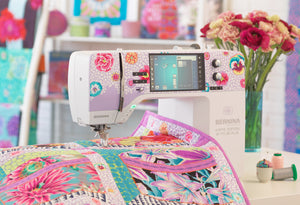

We Love Our Quilting Community
At High Country Quilts we care deeply about community. With our experiences in retail, we know that a store is not only a place to shop but also a place for the community to gather and share. During this busy...


Before you even think about twisting that first petal, let's talk about what you'll need. Getting your supplies in order is the first, and maybe most important, step to creating beautiful fabric roses. The real magic happens when you pair the right fabric—like a sturdy felt or a dreamy silk—with the perfect tools. A hot glue gun is fantastic for speed, but a good old needle and thread will give you a flower that lasts. Setting up your workspace first will make the whole process a lot more fun and a lot less frustrating.

Honestly, making a stunning fabric rose isn't about having some secret, advanced skill. It's really just about having the right stuff on hand. The fabric you choose sets the entire tone for your bloom, determining whether it looks rustic and charming or elegant and high-end.
The tools you use are just as important. Some projects are perfect for the quick, sturdy bond of a hot glue gun. For anything you plan to wear, though, traditional sewing is usually the way to go because it keeps the flower soft and flexible. There's no single "right" way—it all comes down to the look you're after and your own crafting style.
Your fabric is the star of the show here. Different textiles have completely different personalities, and knowing how they'll behave is key to getting the look you want.
Did you know the vibrant reds we love in roses have a fascinating history? Early dye techniques, like the Turkey red process, colored an estimated 60% of all rose-colored fabrics in medieval Europe. Later, the discovery of cochineal in 1519 completely changed the game, offering a pigment twice as strong as anything seen before.
Besides fabric, a few other tools will make your life so much easier. A truly sharp pair of fabric scissors is non-negotiable; they give you those clean, crisp edges and prevent snagging. I also always keep a ruler and some fabric chalk or a disappearing ink pen nearby for marking out my patterns.
A common mistake I see is people using their regular old craft scissors on fabric. They just chew up the material, leaving a frayed, messy edge that’s a nightmare to work with, especially on something delicate like satin.
For a great overview of what you might need in your kit, check out these essential tools for sewing and crafting. Now, let’s talk about how you’ll actually put your rose together.
To make things even easier, here’s a quick-glance guide to help you pick the right supplies for the job.
| Item | Recommended For | Pro Tip for Best Results |
|---|---|---|
| Hot Glue Gun | Felt, thick cottons, and quick projects where durability is secondary. | Use a low-temp gun to avoid melting synthetic fabrics. Apply glue sparingly to prevent it from seeping through and looking bulky. |
| Needle & Thread | Silk, satin, organza, and any wearable items needing flexibility. | Match your thread color as closely as possible to your fabric. For most gathered roses, a simple running stitch is all you'll need. |
| Fabric Scissors | All fabric types. | Keep one pair of scissors just for fabric! This is the secret to keeping them perfectly sharp for clean cuts every single time. |
| Floral Wire/Tape | Creating stems for bouquets or arrangements. | As you wrap the wire with floral tape, gently stretch the tape. This activates the adhesive and gives you a nice, secure hold. |
Ultimately, having these basics on hand will prepare you for just about any fabric flower project you can dream up.

The rolled spiral rose is the one most of us learn first, and there's a good reason for it. It's fast, forgiving, and you get gorgeous results without a lot of fuss. It works best with sturdy, non-fraying fabrics like felt or tightly woven cotton. I always think of this method less like following a pattern and more like sculpting—you're guiding the fabric into a bloom with your hands.
What I love most is the sheer simplicity. You don't need fussy templates or precise measurements. Instead, you get to shape the flower as you twist and roll, which means every single rose you make will be one-of-a-kind.
Your first step, cutting the fabric, is probably the most important one for determining how your rose will look. Start with a circle of fabric; its diameter dictates the size of your finished flower. A 4-inch circle is a fantastic starting point for a nice medium-sized bloom, perfect for a brooch or a hair accessory.
Now, you're going to cut a continuous spiral, starting from the outside edge and moving toward the center. Think of it like peeling an apple all in one long strip.
No matter which style you choose, make sure to leave a small, solid circle of fabric at the very center of your spiral. This little tab becomes the base that holds everything together.
I’ve found that freehand cutting gives the most natural-looking roses. Don’t worry about making the spiral perfectly uniform; slight variations in width actually add to the flower's organic charm and character.
Once your spiral is cut, you'll have a long, winding strip of fabric ready to become a beautiful rose. This is where the real fun begins.
With your fabric strip ready, it's time to start rolling. The secret to a beautiful rose lies in creating a well-defined center. Start at the outermost end of the strip—the pointy tip where your scissors first started. Roll this end as tightly as you possibly can for the first two or three turns. This forms the central bud.
After you've got the center established, you can relax your grip a bit. Keep wrapping the fabric strip around the bud, but let it get a little looser with each layer. It's this gradual loosening that mimics how a real rose unfurls.
As you roll, add small dabs of hot glue every half-turn or so, right along the bottom edge of the strip. This locks the layers in place and builds the flower's structure from the base up. A word of caution: go easy on the glue! Too much can seep through and create stiff, unnatural-looking spots on your petals.
This last part is what really brings your flower to life. As you're adding the final layers, you'll want to gently twist and "fluff" the fabric. Instead of pulling the strip tight against the core, let it drape a bit more loosely. I like to fold the top edge of the fabric down and away from the center as I wrap, which really sells the illusion of delicate, open petals.
When you get to the very end of your spiral, you'll be left with that little circular tab you saved.
This little trick creates a neat, flat base that seals all your hard work. It also makes it incredibly easy to attach your finished rose to pretty much anything—a headband, a wreath, or the corner of a beautifully wrapped gift.
If the rolled rose is the charming little bud, then the gathered rose is the showstopper in full bloom. This technique creates a romantic, lush flower with soft, overlapping petals—perfect when you want to add a touch of drama and elegance. It’s a fantastic way to learn how to make fabric roses that feel really special, and you'll be surprised how quickly you get the hang of it.
Unlike the spiral method where you coil a single piece, this style is built from a long, ruffled strip of fabric that you shape as you go. The magic happens in the gather, which transforms a flat ribbon of material into something with beautiful depth and texture. This is my absolute favorite approach for lightweight fabrics like satin, organza, or silk; their natural drape creates the most gorgeous, flowing ruffles.
First things first, you'll need to cut your fabric into a long strip. The dimensions you choose here directly control the final look of your flower, so it's worth thinking about what you want to achieve. A longer strip gives you a fuller, denser rose, while a wider strip creates larger, more dramatic petals.
For a classic, medium-sized rose, I usually start with a strip about 2 inches wide and 24 inches long. This is a great baseline that gives you a substantial flower without it being overwhelming.
And don't stress about getting the edges perfectly straight. I’ve found that a slightly uneven or wavy cut can add a wonderfully organic feel to the finished petals, making the rose look even more realistic.
With your strip cut, it's time to create the ruffles. We’ll do this with a simple running stitch, a basic hand-sewing technique. Just thread your needle, knot the end, and begin sewing long, loose stitches along one of the long edges of your fabric.
The key here is to aim for consistency. Try to keep your stitches a uniform length—about a quarter-inch long works well. This helps the fabric gather evenly, so you avoid awkward puckers or flat spots later on. A little trick I use for slippery fabrics like satin is to pin the strip to my jeans or a small sewing cushion. It keeps everything from sliding around while I work.
My number one tip here: always leave a long "tail" of thread at the beginning and end of the strip. You’ll use these tails to pull and adjust the gathers, so give yourself at least four to six inches to work with.
When you’re done, you'll have a flat strip of fabric with a single line of thread running along its bottom edge, ready to be brought to life.
Now for the fun part! Gently hold one end of the thread and start pushing the fabric down toward the knot, almost like you’re closing an accordion. You’ll see the fabric immediately begin to bunch up into soft ruffles. Keep pulling and gathering until the entire strip is beautifully condensed.
With your ruffled strip ready, it's time to build the rose.
The beauty of this method is the control it gives you. You can twist the strip as you coil it to make the petals stand up, or lay it flatter for a more open, bloomed-out look. Once you reach the end, just tuck the raw edge underneath and add a few final stitches to secure it completely. You'll be left with a gorgeous, multi-layered flower perfect for anything from a wedding bouquet to a stunning hair accessory.
Once you've gotten the hang of the basics, a whole new world of intricate fabric roses opens up. Moving beyond simple coils and ruffles lets you create blooms with incredible personality, from the sharp, geometric petals of Kanzashi to the soft, charming textures of yo-yos. These advanced methods are perfect for when you want your project to make a truly unique statement.
Learning these skills also connects your work to a rich history. Fabric florals are far from a new trend; textile artists have been crafting them for centuries. We've seen floral motifs on fabric as far back as China's Tang Dynasty (618-907 AD), and by the 15th century, elaborate floral lace was a status symbol across Europe. The real game-changer was the invention of roller printing in 1783, which boosted production from just 10 yards per artisan per day to over 100 yards an hour, making beautiful rose-patterned fabrics widely available. You can dive deeper into the fascinating history of floral fashion on highlatitudestyle.com.
This diagram shows the simple, three-step process for making a classic gathered rose, which is a fantastic foundation for many of the more advanced techniques.

As you can see, the core idea of cutting, stitching, and coiling is the starting point for so many beautiful designs.
Kanzashi is the traditional Japanese art of creating incredible hair ornaments by folding fabric, often into flowers. Instead of rolling or gathering, this method involves folding individual squares of fabric into sharp, pointed, or rounded petals. It definitely requires patience and a bit of precision, but the result is a distinctly elegant and structured flower.
I’ve always found that crisp fabrics like silk dupioni or a fine cotton work best because they hold a sharp crease so well. The whole process feels a bit like origami for fabric.
Once you've made enough petals (five or six is usually enough for a simple flower), you just arrange them in a circle on a felt backing and secure them in place. The finished bloom is beautifully stylized and perfect for high-end cosplay, formal hair accessories, or as a striking embellishment on a handbag.
The "yo-yo" is a classic quilting technique that’s wonderfully adaptable for creating charming, textured roses. A fabric yo-yo is simply a circle of fabric gathered along its edge to form a small, puffy disc. By layering these yo-yos in different sizes, you can build a delightful, dimensional rose that has a lovely, handmade feel.
This method is incredibly forgiving and, better yet, a fantastic way to use up all those little fabric scraps you’ve been saving. To get started, you'll cut several circles of fabric in graduating sizes—for example, one 4-inch, two 3-inch, and two 2-inch circles.
A common mistake I see is pulling the gathering thread too tight, which flattens the yo-yo. You want to gather it just enough so the raw edges tuck inside neatly, leaving a soft, puffy center. Aim for a gentle pucker, not a tight, squished knot.
After sewing a running stitch around the edge of each circle and gathering them, you just stack them up. Place the largest yo-yo on the bottom, layer the smaller ones on top, and secure each layer with a stitch through the very center. For a final touch, I love sewing a decorative bead or a small, tightly rolled fabric bud into the middle to complete the rose.
Working with ribbon brings a different set of skills to the table. Since ribbons have finished edges, you don’t have to worry about fraying, which lets you focus entirely on the folding and shaping. This technique is absolutely ideal for creating small, delicate roses—perfect for detailed work like embellishing a baby’s dress or decorating a wedding invitation.
The most common method involves folding the ribbon back and forth at an angle as you roll it.
Each fold you make creates the illusion of a new petal. From my experience, a satin or grosgrain ribbon that’s about 1 to 1.5 inches wide gives the best, most defined results. A few hidden stitches or tiny dabs of fabric glue along the bottom edge will hold your delicate creation together as you go.
Not sure which advanced technique is right for your project? Each one creates a unique look and feel. This table breaks down the differences in skill, materials, and final appearance to help you choose the perfect method.
| Technique | Best For | Primary Skill Required | Finished Look |
|---|---|---|---|
| Kanzashi | Formal accessories, brooches, modern decor | Precision folding, patience | Sharp, geometric, stylized |
| Yo-Yo | Quilts, appliqué, shabby-chic projects | Hand-stitching, gathering | Soft, textured, charmingly rustic |
| Ribbon | Delicate embellishments, gift wrap, corsages | Dexterous folding, tension control | Small, classic, uniform |
Ultimately, the best technique comes down to the style you're aiming for. Kanzashi offers a crisp, modern elegance, while yo-yos provide a soft, vintage charm, and ribbon roses are perfect for classic, delicate details. Don't be afraid to experiment with all three
You’ve put in the work and created a gorgeous fabric rose. It’s a great moment, but the real fun begins when you give that flower a job to do. This is where we transform your beautiful bloom into a finished piece you can wear, display, or give away.
How you finish your rose really dictates its purpose, whether it's destined to be a sturdy brooch, a delicate hair clip, or part of a stunning bouquet. These simple finishing touches make all the difference and ensure your creation looks professional and holds up over time.
Turning a fabric rose into a brooch is probably one of the most classic uses. The secret to a good pin? A solid, no-flop base. That’s where a small circle of stiff felt becomes your best friend.
Just cut a circle of felt slightly smaller than the bottom of your rose. Fire up your hot glue gun, add a decent amount of glue to the felt, and press it firmly onto the back of the flower. This neatly covers up all the raw, gathered edges and gives you a stable foundation for the hardware.
From there, you’ve got a couple of solid options:
If you envision your roses in a vase or as part of a bouquet, they'll need stems. Floral wire is perfect for this, and you can pick different gauges depending on how stiff you need the stem to be.
Start by bending a small loop at one end of a piece of floral wire. Put a dab of hot glue on the loop and press it right into the center of the rose's base—before you add any felt backing. For an even stronger connection, you can poke the straight end of the wire up through the center of the rose, make the loop on the top side, and hide it among the inner petals with a bit of glue.
Once the wire is secure, wrap the whole thing with green floral tape. Here’s a key tip: stretch the tape a little as you wrap. This activates the adhesive and gives you a smooth, professional-looking stem.
Hand-making fabric flowers has a long history, descending from Victorian-era mills. The craft continues today in places like M & S Schmalberg, a New York City factory that has been producing these blooms since 1914. The craft truly took off with synthetic fabrics; when nylon debuted in 1938, it slashed material costs by 70%. Now, fabric roses are a crafting staple, appearing in an estimated 75% of costumes at major U.S. cosplay events. You can learn more about the history of this iconic fabric flower manufacturer from CBS News.
Attaching your roses to clothing, pillows, or quilts requires a softer approach. You want the flower to feel like it belongs, not like it was just stuck on top. For this, hand-sewing is your best bet.
Grab a thread that matches your project and make small, hidden stitches around the base of the rose, catching the fabric of the garment underneath. If you stitch from the underside of the flower, you can keep your work completely invisible from the front. This method ensures the rose lies flat and moves naturally with the fabric.
Imagine a beautiful cascade of flowers on the shoulder of a jacket or a small cluster of buds on the corner of a throw pillow. Once you get the hang of it, you’ll find that the possibilities for using your handmade roses are endless.
As you get the hang of making fabric roses, a few questions are bound to pop up. It’s totally normal! From figuring out which fabric to start with to keeping your finished flowers looking fresh, getting a few expert tips can make the whole process a lot more fun.
Think of this as your personal cheat sheet for troubleshooting the little things. Getting these details right is what takes your flowers from "practice" to "perfect." Let's dive into some of the questions I hear most often.
If you're just starting out, grab some felt. Seriously, it's the most forgiving fabric you can find. It's stiff enough to hold its shape beautifully, which is a huge help for the rolled spiral technique, and the best part? It doesn't fray. That means you can focus on your technique without wrestling with messy edges.
A crisp, non-stretchy cotton is another great starting point. Once you've got the motions down, you can move on to more elegant fabrics like satin or silk. They look stunning, but just be warned—they're slippery and can be a bit more challenging to work with.
Ah, the dreaded fray. It happens to the best of us, especially with gorgeous fabrics like satin, organza, or even some looser cotton weaves. Don't worry, you've got a few fantastic ways to keep those edges looking clean.
If you’re making something that needs to be super durable—like an appliqué on a shirt that will be washed—the best method is to sew a tiny rolled hem along your fabric strip before you start gathering. It takes more time, but it’s bomb-proof.
Honestly, for quick projects, I almost always heat seal my synthetics. It’s fast, incredibly effective, and the sealed edge is practically invisible. The key is to move quickly and keep the flame moving so you don't scorch the fabric.
If you want to create one-of-a-kind roses with custom colors, playing with natural dyes is an amazing creative path. You can use plants and flowers from your own garden to give your fabric beautiful, subtle colors before you even cut your first petal. This works best with natural fibers like cotton, silk, or linen.
Goldenrod, for example, gives you the most brilliant sunny yellows. You just simmer the flowers to create a dyebath, then add your fabric (which you'll want to pre-treat with alum so the color sticks) and let it soak up that gorgeous pigment.
Another really fun method is "tataki zome," which is just a fancy term for flower hammering. You lay fresh petals—marigolds or coreopsis work beautifully—onto your fabric, cover them, and gently hammer away. The pigment transfers directly onto the cloth, creating a stunning, watercolor-like effect.
To keep your fabric roses looking their best, a little gentle care goes a long way. If they get dusty, a quick blast with a hairdryer on a cool, low setting works wonders. For little spots or stains, just dab the area gently with a slightly damp cloth and a tiny bit of mild soap.
Whatever you do, don't submerge your flowers in water! It can ruin their shape and dissolve any glue you used.
When it's time to put them away, the goal is to prevent them from getting crushed.
And if you’ve attached your roses to a piece of clothing, always opt for hand-washing to make sure they stay beautiful.
At Famcut.com, we're all about helping you bring your creative ideas to life. From high-quality fabrics perfect for your next cosplay to the essential tools every sewer needs, we have you covered. Explore our collection and find everything you need for your crafting journey at https://famcut.com.
At High Country Quilts we care deeply about community. With our experiences in retail, we know that a store is not only a place to shop but also a place for the community to gather and share. During this busy...

Hi! We’re Adam and Renee Wheaton, the new owners of High Country Quilts! For more than 40 years, we’ve owned and operated vacuum and sewing businesses. Following in Renee’s father’s footsteps after he retired from All Discount Vacuum and Sewing in Colorado...


Leave a comment