

We Love Our Quilting Community
At High Country Quilts we care deeply about community. With our experiences in retail, we know that a store is not only a place to shop but also a place for the community to gather and share. During this busy...


When you need neat box pleats for a skirt panel or a cushion trim, it all starts with good planning. We’ll touch on fabric measuring, marking fold lines, folding, pressing, and stitching—so you can move confidently through each phase.
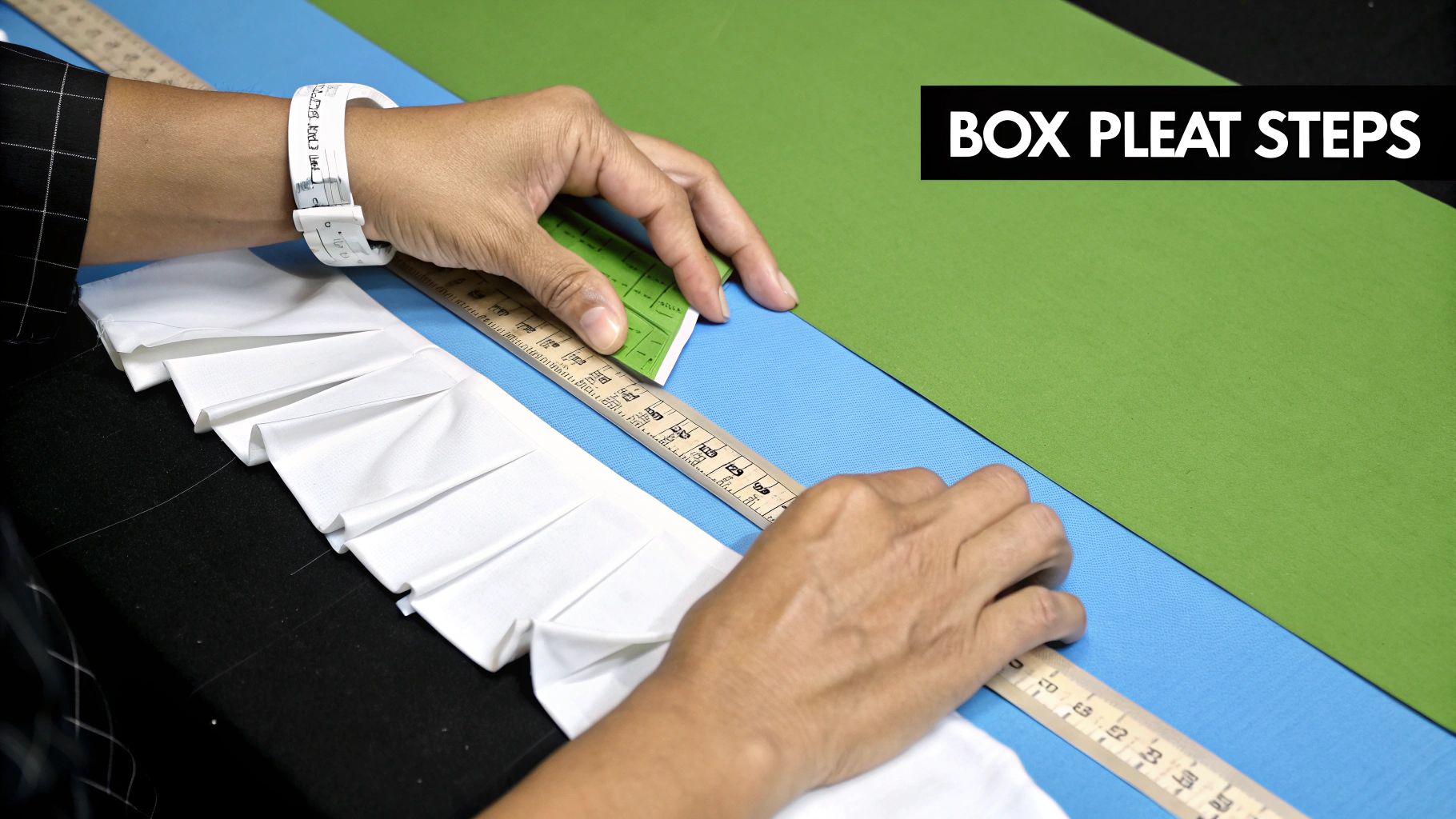
Below is a quick overview of how the process unfolds:
| Stage | Description | Approximate Time |
|---|---|---|
| Measuring | Mark fabric length and add allowances | 5 mins |
| Marking | Draw fold lines with chalk or marker | 5 mins |
| Folding | Pinch and fold for uniform width | 10 mins |
| Pressing | Press each pleat sharply | 5 mins |
| Sewing | Stitch top edge to secure pleats | 10 mins |
Use these benchmarks when laying out your tools to keep things moving smoothly.
Key Tips:
Expect to invest about 35–45 minutes per skirt panel once your workspace is set up. For extra practice drills and detailed tutorials, visit our free sewing lessons.
Box pleats have long married practicality with sleek, architectural lines. They grant garments extra room to move without sacrificing a tailored appearance.
Historians trace pleating back to 2000–3000 BCE in ancient Egypt, where only royalty wore finely folded linen. Artisans would use heated metal rods or hand-stitching to keep each crease intact.
That meticulous work consumed about 40–60% of a master pleater’s annual hours. Learn more about box pleats history on this topic here.
By the 19th century, pleating shifted from bespoke craft to systematic tailoring. Experienced hands could fold 8–12 linear inches per hour, holding each crease to within 1/16 inch for perfect uniformity.
“Precision in pleating defined both status and style for centuries,” notes a textile historian.
By the 1950s, box pleats enjoyed a revival in women’s daywear and evening gowns. Designers played with volume and shape, giving pleats a fresh spin in everyday wardrobes. To explore those vintage inspirations, check out iconic 1950s fashion styles, where box pleats were prevalent.
Today, you’ll spot box pleats in a wide variety of garments:
| Era | Main Use | Key Metric |
|---|---|---|
| Ancient Egypt | Royal linen garments | 40–60% annual workload |
| 19th Century | Tailored wear | 8–12 in/hr speed |
| Modern Day | Uniforms, couture, ready-to-wear | Consistent folds |
History shows us why precise fold widths, sharp pressing, and thoughtful fabric choice remain vital. Embracing these time-tested techniques will elevate your own pleated creations.
Crisp, long-lasting pleats start with careful preparation and steady technique.
Proper preparation is half the work when it comes to lasting pleats.
Marry accurate marking, patient folding, and correct pressing, and your homemade box pleats will rival professional results. Start practicing these tips today and enjoy a noticeable boost in fit and finish.
Happy pleating adventures ahead.
Deciding how to fold your fabric has a big impact on both speed and the final look. Hand-pleating lets you shape each crease exactly, but it can chew up hours if you’re working on a full skirt panel. On the flip side, running panels through a pleating machine or using a heat press speeds things up and keeps every fold uniform.
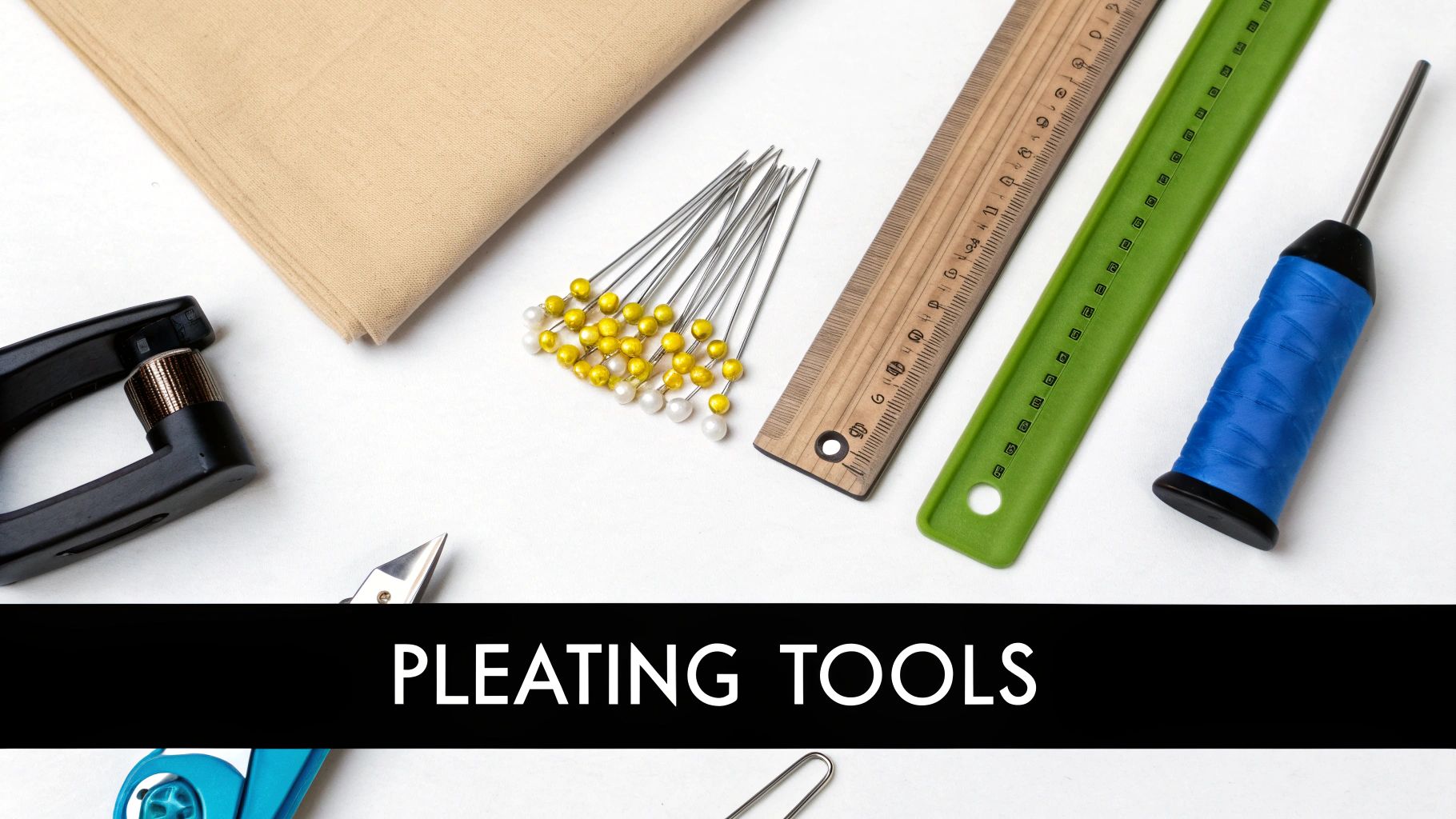
A basic kit like this often stays under $50, while a commercial pleating setup can push your budget into the thousands. In my small studio, I’ll hand-pleat a few dozen scarves in a day, using clips to hold slippery silks without prick marks.
Below is a look at an industrial pleating machine in action.
You’ll notice an automated feed that guides fabric through evenly spaced folds, cutting labor time per garment dramatically.
Quick side-by-side numbers can help you decide which route makes sense for your project.
| Method | Speed (inches/hour) | Precision (fold accuracy) | Daily Output | Approx Cost per Garment |
|---|---|---|---|---|
| Hand-pleating | 8–12 | 1/16 inch | 2–4 | $45–60 |
| Machine-pleating | 100–150 | 1/32 inch | 500–800 | $8–12 |
Over the last century, industrial techniques have pushed output efficiency by more than 300%. Designers like Mariano Fortuny and Issey Miyake pioneered heat-setting silk pleats that still hold up beautifully today. You can explore their methods in depth on Pleated Fashion History at PleatsLog.
Whether you’re in a home workshop or a factory floor, these figures highlight the trade-offs between hands-on control and high-volume speed.
Real makers often replace pins with clips to protect delicate fabrics. Check out our Geasy Clips Standard Blue for even spacing and no snagging.
Precision Matters When Every Fold Must Align Within 1/32 Inch.
With the right tools and a bit of practice, that crisp box-pleat finish is entirely within reach.
A crisp box pleat starts long before the iron hits the material. I always reach for mid-weight fabrics like cotton or a cotton-polyester blend because they hold a sharp fold without flopping. Over the years, linen has also earned its place in my toolkit—just remember it can shrink by 5%–10% if you skip prewashing.
Before you cut a single yard, prewash everything. A quick soak reveals hidden shrinkage, so I add an extra 10% to my yardage. This small buffer saves a mountain of frustration and yard waste.
Here’s a quick comparison to narrow your choices:
| Fabric Type | Weight | Pros | Shrinkage |
|---|---|---|---|
| Mid-weight cotton | 6–8 oz/yd | Holds crisp pleats, easy press | Up to 5% |
| Polyester Blend | Medium | Resilient, keeps edges sharp | Minimal |
| Linen | Medium | Sharp creases, breathable | Up to 5% |
To calculate your yardage, follow these bullet-proof rules:
Once yardage is settled, it’s time for precision. I draw fine chalk or pencil lines, working in long, unbroken strokes. Then I pin layers snugly or use a light mist of temporary spray adhesive to prevent any shifting.
For absolute accuracy, combine these marks with accurate measurement techniques. Think of marking pleats like tailoring a suit—every millimeter matters.
Precise marking can halve your sewing time and drastically cut back on fabric damage.
Silks, chiffons and sheers love to wander under your pins. Here’s my go-to method:
For reliable marking, nothing beats the Quilter’s Select 2.5 x 18-inch Non-Slip Ruler. Its grip transforms any slippery project into a breeze.
Before folding, give your chalk or marker a moment to dry—this little pause prevents smudges and keeps every crease in place.
Seams shift your pleat edges inward, so I always tack on 0.5" to each side of a panel before marking. On a 20" wide panel, that extra half-inch per side adds 1" total—meaning you actually cut 21". This simple tweak ensures your pleats land perfectly once sewn.
When your fold lines are in place, bring the outer edges together so the pleat meets at the centre. Give each fold a gentle pinch with your fingers before you reach for pins or clips.
Secure the layers at the top edge, then keep the fabric taut as you move everything onto the ironing board.
This quick overview covers preparing the cloth, taking precise measurements, and marking guidelines.
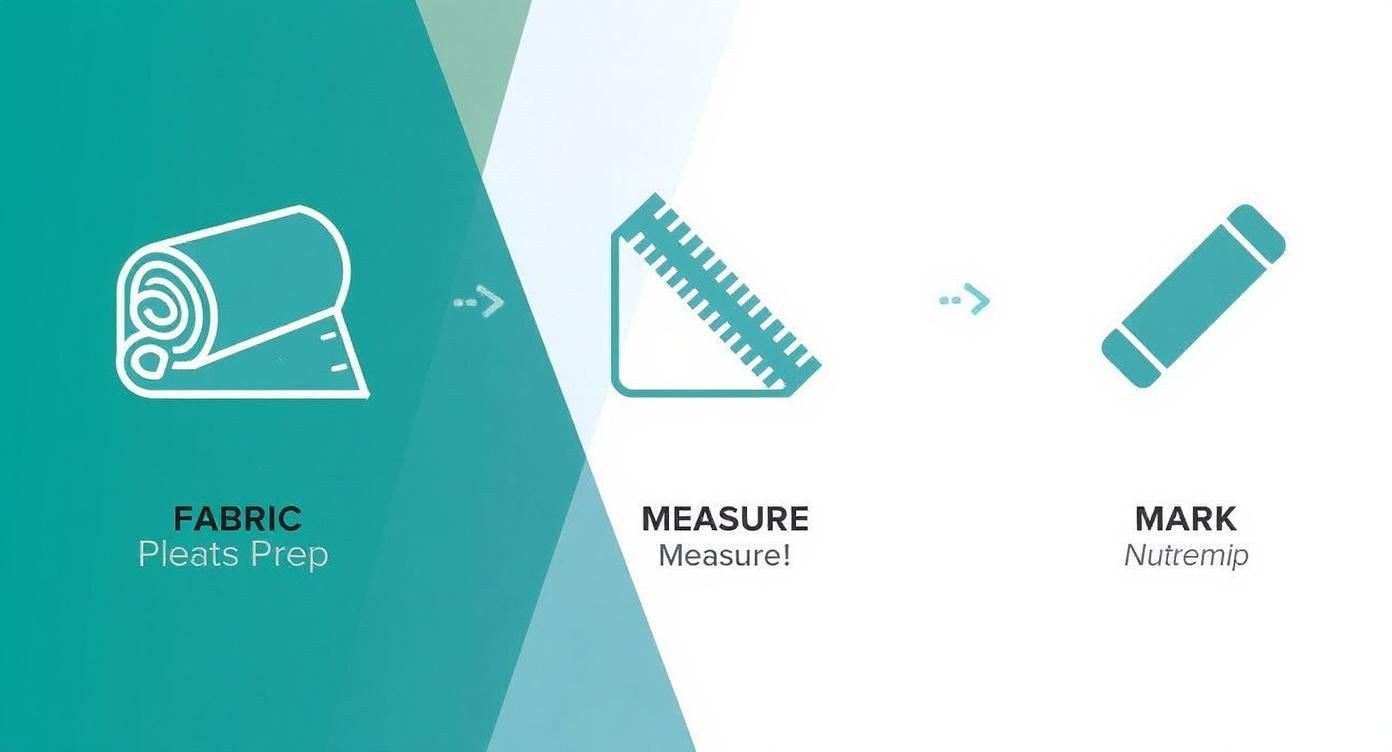
The infographic lays out three steps: rolling out fabric, measuring with a ruler, and marking lines with tailor’s chalk. Every bit of prep trims pleat errors by 60%.
Natural fibers like cotton or linen thrive under steam—you’ll see crisp creases without soaking the fabric. Synthetics prefer a dry-heat approach to avoid water spots or melting edges.
Keep these tools on hand:
Before final stitching, use temporary basting or stay-stitching to lock everything in place. A few short machine tacks go much faster than long hand basting.
For extra strength:
Precise pressing and secure basting make the difference between flat folds and floppy pleats.
Test your iron’s heat on a scrap of fabric first to avoid accidental scorch marks. Let each pleat cool completely under a wooden clapper before moving on.
Follow these guidelines for polished results:
Finish with a quick cold-press cycle to set every crease for that crisp, professional look.
Pleats that drift off-center or puff up are surprisingly common, even for seasoned sewists. One minute everything aligns, the next project shows unwanted puckers or slipping layers.
A quick touch-up with light starch and a gentle re-press often sorts out these hiccups. Here’s a shortlist of fixes I reach for time and again.
Quick Fix List
Occasionally pleats relax after the first wash. A moderate-heat iron and a press cloth will bring that crisp fold right back.
"Fine-tune tension early to save seam ripping later."
Box pleats carry a rich global backstory. By the 1950s, they featured in 60–70% of UK, US and Japanese secondary school uniforms. Discover Pleats History At Cahaya Studios
Slippery fabrics like silk or fine synthetics can run away from you. A few simple tactics keep everything in line:
You might be interested in our Dual Seam Fix Thread Remover tool for quick seam corrections: Dual Seam Fix Thread Remover
Every sewist’s dream? Perfectly crisp box pleats. Mid-weight cotton, cotton blends and light suiting fabrics are your best friends here. Stay away from heavy stretch knits or loose weaves—they’ll sag and blur your sharp lines.
When I’m making pleats for a school uniform or a tailored skirt, I always reach for:
Getting your yardage right is half the battle. As a rule of thumb, plan on 3 times your finished panel width; that covers two folds plus the base.
On top of that, tack on 10% extra to handle shrinkage, pattern matching and the occasional oops moment.
Most domestic machines shine with a walking foot when it’s pleat time. A quick tension check, paired with temporary basting, keeps layers from slipping.
Basting pleats before stitching can cut down on distortion and save you a headache later.
Here’s my go-to approach:
A little finishing magic goes a long way. Light spray starch and a clapper do wonders to keep those folds razor-sharp.
For quality materials, expert tips and even hands-on sewing classes, visit Famcut.com.
At High Country Quilts we care deeply about community. With our experiences in retail, we know that a store is not only a place to shop but also a place for the community to gather and share. During this busy...

Hi! We’re Adam and Renee Wheaton, the new owners of High Country Quilts! For more than 40 years, we’ve owned and operated vacuum and sewing businesses. Following in Renee’s father’s footsteps after he retired from All Discount Vacuum and Sewing in Colorado...


Leave a comment