
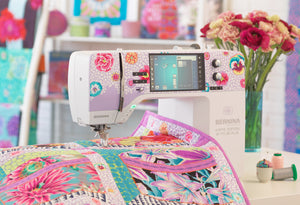

We Love Our Quilting Community
At High Country Quilts we care deeply about community. With our experiences in retail, we know that a store is not only a place to shop but also a place for the community to gather and share. During this busy...


That old chair you love—the one with the perfect shape and unbeatable comfort—doesn't have to be an eyesore just because the fabric is worn out. You can give it a second life by making a custom slipcover. The process is straightforward: you'll gather your tools, pick a fabric you love, pin it directly to the chair to create a pattern, then cut and sew. It’s a project that completely transforms furniture without the hefty price tag of reupholstery.

There’s something incredibly satisfying about reviving a piece of furniture with your own two hands. A DIY slipcover isn't just a cover-up; it’s a style reinvention that lets you inject your personality directly into your home decor.
This guide is designed to be your trusted companion through the entire process, from that first measurement to the final stitch. We'll get right into the practical techniques I’ve learned over the years to get a professional-looking fit, turning that tired chair into a piece you’re proud to show off.
The best part of making your own slipcover is that you call all the shots. Forget being limited by what’s available in stores. You get to choose the exact material and design that fits your vision.
It’s interesting—while the home furnishings industry is massive, it’s tough to find hard data on the rise of DIY projects like slipcover making. Most reports, like those from The Business Research Company, focus on mass-produced goods. This just goes to show that this craft is a unique, community-driven movement of people choosing custom solutions over store-bought ones.
A DIY slipcover does more than just update furniture; it’s a fantastic sustainable choice. By giving an old chair a new lease on life, you’re keeping it out of a landfill. That’s a win for your home and the planet.
Learning how to make a slipcover is a rewarding journey, and I’ll be here to guide you. We’ll start with the essential tools you’ll need and then dive into choosing the right fabric—one that balances style with practicality. After that, we'll demystify the pattern-making process so you can get that snug, custom-tailored fit. Let's get started.
This is where the magic really begins. Picking the right fabric is probably the most critical choice you'll make in this whole process. It's about more than just color and pattern; the material you select will determine the chair's final look, how well it holds up, and frankly, how frustrating or fun it is to sew.
Think about where this chair lives. A piece destined for a formal, rarely used living room has very different needs than the family room armchair that doubles as a pet bed and a snack table. For those high-traffic heroes, durability and washability are non-negotiable.
When a chair gets a lot of daily use, you need a fabric that's as tough as it is beautiful. These materials are the workhorses of the slipcover world, and I recommend them constantly.
Here's a tip I learned the hard way: pre-wash and dry your material exactly how you plan to care for the finished slipcover. Cotton-based fabrics can shrink up to 10%. Trust me, discovering that after you've spent hours sewing is a mistake you only make once.
Now, if your chair is more of a showpiece in a quiet corner, you can have some fun with more luxurious materials. These often need a little extra care, but the high-end result is worth it.
Performance velvets, for example, give you that plush, rich texture but are often engineered to resist stains and wear much better than old-school velvets. Linen and linen blends offer a gorgeous, breezy, and relaxed aesthetic that’s hard to beat. The downside? They wrinkle if you even look at them too hard. Some people love that lived-in charm; others find it a constant battle.
Getting a handle on the specifics is key. To get a much deeper understanding of your options, I always suggest reading up on everything you need to know about upholstery materials. A little research here will pay off big time in the final product.
Feeling a bit overwhelmed by the options? It's completely normal. I put together this quick guide to help you compare some of the most popular choices at a glance.
| Fabric Type | Durability | Washability | Ease of Sewing | Best For |
|---|---|---|---|---|
| Cotton Duck | High | Excellent | Easy | High-traffic areas, beginners, crisp look |
| Denim | Very High | Excellent | Moderate | Casual spaces, homes with kids/pets |
| Twill | High | Good | Easy | Versatile use, wrinkle resistance |
| Linen Blend | Moderate | Good (gentle) | Moderate | Relaxed, elegant rooms, low-traffic |
| Performance Velvet | High | Varies (spot clean) | Difficult | Formal spaces, a luxurious feel |
In the end, it really boils down to your personal style and how you live. A bold, busy pattern can be a stunning focal point and is brilliant at hiding small stains or a bit of pet fur. On the other hand, a solid neutral is timeless and lets you change up your decor with pillows and throws.
Whatever you’re leaning toward, please do yourself a favor and order swatches first. You need to see and feel the fabric in your room, with your lighting, before you commit to buying several yards.
Alright, you've selected and pre-washed your fabric. Now comes the part that really makes or breaks a slipcover: creating the pattern. This is where we translate the chair's unique shape into flat pieces of fabric, and believe me, getting this right saves a world of frustration later.
Don't let the word "pattern" intimidate you. We’re going to cover two fantastic, field-tested methods. One isn't necessarily better than the other; it's about what works best for your chair's style and your own comfort level.
I absolutely love this technique for chairs with lots of personality—think of the dramatic curves on a wingback or the rounded shape of a barrel chair. Pin-fitting is exactly what it sounds like: you drape and pin your fabric directly onto the chair, essentially sculpting the pattern in real time. It's a very hands-on approach that lets you see exactly how the fabric will hang.
Start by cutting oversized, rough blocks of your pre-shrunk fabric. You'll work section by section. Lay a piece over the inside back of the chair, for example, smoothing it out and pinning it right along the chair’s original upholstery seams.
Once a section is pinned perfectly, you can mark your cutting lines right on the fabric, remembering to add your seam allowance. The real beauty of this method is its flexibility; you can tweak and adjust as you go for a truly bespoke fit.
If your chair is more geometric—like a straightforward dining chair or a classic Parson's chair—the paper-tracing method is a solid choice. This is also the way to go if you think you might want to make another slipcover for the same chair down the road. It takes a bit more patience upfront but leaves you with a durable pattern you can use again and again.
Grab some large sheets of paper—specialized pattern paper is great, but kraft paper or even newspaper taped together works in a pinch. Press the paper firmly against one section of the chair, like the outside arm, and carefully trace its outline.
I cannot stress this enough: label every single pattern piece as you create it. Write things like "Outside Left Arm," "Inner Back," or "Seat Cushion Top." It feels tedious, but this one habit will save you from a major headache when you're trying to piece everything together later.
After tracing, you'll need to add your seam allowance around all the edges of your paper patterns before cutting them out. A 1/2 inch to 5/8 inch allowance is pretty standard, but the most important thing is to be consistent across all your pieces.
Pay close attention here, because this is a detail that trips up so many first-time slipcover makers. For a slipcover to look sharp and stay put, you need extra fabric that can be shoved deep into the crevices of the chair—mainly where the seat meets the back and arms. A slipcover that keeps riding up and looking messy is almost always a slipcover without enough tuck-in allowance.
As a rule of thumb, add at least 8 to 10 inches of extra length to the pieces that will meet in these cracks. This means the bottom of the inner back piece and the inner sides of the arm pieces need that extra fabric. This gives you plenty of material to anchor the slipcover securely, keeping it from shifting every time someone sits down.
The simple infographic below shows the basic workflow that both of these pattern-making methods fit into.

These core steps—pre-washing, cutting, and sewing—are the pillars of the project. Your pattern-making happens right after the wash and just before you make your final cuts.
Whether you decide to pin-fit directly on the chair or trace a paper pattern, your goal is an accurate blueprint. Once your pieces are drafted, lay them out on your fabric, being mindful of the grainline and any patterns. Then, and only then, can you confidently move on to the fun part: cutting and sewing.
With all your fabric pieces cut out and ready to go, it’s time for the magic to happen at the sewing machine. This is where those flat shapes become a real, three-dimensional cover for your chair. We’re going to tackle this in a logical order that I’ve found minimizes headaches and gives you a much cleaner, more professional finish.
The best way to approach this is to work from the largest pieces inward. You’re essentially building the main "shell" of the slipcover first, then adding the smaller details like the arms and any skirting. This simple strategy keeps you from getting tangled up in too much bulky fabric right from the start.
Before you even think about pressing that foot pedal, a few minutes of preparation will make all the difference. Using the right tools for your specific fabric is absolutely essential if you want a slipcover that will actually last. I've seen too many projects fail because of skipped stitches or weak seams, and it's almost always preventable.
While you won't find this level of detail in broad market reports, like the ones from EIN Presswire that look at the chair industry as a whole, this is the kind of practical wisdom passed around in the sewing community. Trust me, these small setup steps are what truly separate a frustrating project from a fantastic one.
If I can give you one piece of advice that will save you hours of picking out stitches, it's this: baste your slipcover together for a test fit before you sew the final seams. Basting is just a fancy word for sewing with a very long stitch length—the longest your machine can do, usually around 5.0 mm—so it's easy to pull out later.
Go ahead and pin your main pieces together: the inside back to the seat, the seat to the front panel, and so on. Sew these key seams with your long basting stitch. Don't worry about finishing the edges or adding a closure just yet.
Now, gently slide this basted shell onto your chair. This is your moment of truth.
Look for any areas that are pulling, sagging, or just don't feel right. It is so much easier to rip out a few long basting stitches and tweak a seam now than it is to deconstruct a fully finished slipcover. This one step is my secret to getting that perfect, custom-tailored fit every time.
Once you’re happy with how the basted cover is sitting, you can move forward with confidence. Simply sew your final seams with a regular, shorter stitch length, sewing right on top of your basting lines.
With the fit confirmed, it's time to make it permanent. Following a consistent assembly order just makes the whole process feel less chaotic.
Just sewing the seams isn't enough. If you leave the raw edges on the inside, your beautiful slipcover will become a frayed disaster after its first wash. Luckily, you have a few good options for finishing them, depending on the tools you have on hand.
| Seam Finish Method | Equipment Needed | Best For |
|---|---|---|
| Zigzag Stitch | Standard Sewing Machine | All fabrics; a simple and effective go-to. |
| Serger/Overlocker | Serger Machine | A professional, durable finish, especially for fabrics that fray a lot. |
| Pinking Shears | Pinking Shears | Tightly woven fabrics like canvas; a quick, no-sew alternative. |
Even a simple zigzag stitch run along the raw edge of your seam allowance will dramatically improve the lifespan of your slipcover.
Because the top of a chair is often wider than its base, you'll need an opening to get the slipcover on and off easily. The best place for this is usually along a side seam or at a back corner, where it will be less noticeable.
With your seams sewn, finished, and a closure installed, the heavy lifting of construction is done. Now you can move on to the really fun parts: perfecting the fit and adding those final finishing touches.

You've sewn the main pieces together, and you're officially on the home stretch. This is where the real magic happens—transforming a basic cover into something that looks truly custom and professionally made. It’s all about nailing the fit and layering in those details that make people ask, "Where did you buy that?"
The first thing to do is a final test-fit. Get the slipcover on the chair, pulling and smoothing it into place. Now, take a step back and look at it from every angle. Be critical. You’ll almost certainly spot a few areas that sag, pucker, or pull. Don't sweat it. This is a completely normal part of the process, and these little tweaks are surprisingly easy to fix.
With the cover still on the chair but turned inside-out, you have the perfect canvas for making adjustments. Grab your pins and tackle one problem area at a time. If a seam looks loose or droopy, just pinch the extra fabric along the seam line and pin it to mark a new, tighter line.
Once you’ve pinned all your tweaks, gently take the slipcover off and head back to your machine. Sew along your new pin lines, and you'll be amazed at the difference this little effort makes. The result is a crisp, snug fit that screams "professional."
This final fitting is what separates a good slipcover from a great one. Taking an extra 30 minutes to adjust the fit is the single best investment you can make for a high-end result that doesn't look homemade.
A well-executed hem is what grounds the whole project. It provides a clean, finished edge and can completely change the personality of your chair. Before you even think about cutting, put the slipcover on the chair one last time to decide on the perfect length. Use pins to mark your desired hemline, using a ruler to keep the distance from the floor consistent all the way around.
Here are a few hemming styles to consider:
| Hem Style | Description | Best For |
|---|---|---|
| Simple Clean Hem | A classic double-fold hem that creates a crisp, minimalist line. | Modern or transitional chairs where you want an unfussy, streamlined look. |
| Gathered Ruffle | A long strip of fabric is gathered and then stitched to the bottom edge. | Achieving a soft, romantic, or cottage-style vibe. |
| Box-Pleat Skirt | Structured pleats are folded and sewn for a formal, tailored skirt. | Traditional armchairs or dining chairs, giving them a classic, fully upholstered feel. |
Each option brings its own character. A simple hem is quick and contemporary, while a box-pleat skirt takes more fabric and patience but delivers an incredibly sophisticated finish.
Piping—also known as cording or welting—is that fabric-covered cord running along the seams of expensive furniture. It's a total game-changer for a DIY project. Not only does it reinforce your seams, but it beautifully defines the chair's silhouette for a crisp, high-end look.
While you can buy it pre-made, making your own is easier than you think and guarantees a perfect fabric match.
From there, you just sandwich this finished piping between your two main fabric pieces before sewing the seam. When you turn it right-side out, the piping pops out, giving the seam a sharp, defined edge. It's a small detail that makes a huge impact.
If your chair has a separate seat cushion, it'll need its own cover. Think of it as sewing a simple fabric box: you'll have a top piece, a bottom piece, and long side strips (often called "boxing").
The single most important detail for the cushion is a long zipper. This is non-negotiable if you ever want to wash it. The perfect spot is along the back seam of the cushion cover, where it stays completely out of sight. Installing a zipper there is a straightforward final step that ensures your beautiful new slipcover is as practical as it is stylish.
Even the most detailed guide can't anticipate every question that pops up when you're deep in a sewing project. When you're learning how to make a slipcover for a chair, a few common hurdles seem to trip everyone up. Don't worry—I've heard them all, and I'm here to share the answers that will get you through it.
Let's clear up a few of the most frequent questions from fellow sewers so you can get a result you're truly proud of.
This is always the first question, and the honest answer is, it really depends on the chair. A simple, armless dining chair might only need 2 to 3 yards of standard-width fabric. But if you're tackling a big, plush armchair with rolled arms and a separate T-cushion, you could easily be looking at 6 to 8 yards, sometimes more.
The only truly accurate way to know is to get out your tape measure. Go over every single piece of your chair: the inside back, outside back, the arms, the seat, and any skirt or ruffle you plan to add. Remember to add about 1 inch for each seam allowance, 4-6 inches for a decent hem, and—this is crucial—plenty for your tuck-ins. You want at least 12 to 18 inches of extra fabric to shove down where the seat meets the back and arms. This is what keeps your slipcover from riding up.
If you've fallen in love with a fabric that has a large, repeating pattern, a good rule of thumb is to buy 25% extra material. This gives you the wiggle room you need to match the pattern across your seams for that high-end, professional look. When in doubt, buying an extra yard is always smarter than running out of fabric halfway through.
For your first go, make your life easier by choosing a stable, mid-weight fabric with no stretch. Think about materials like cotton duck, canvas, or a good, sturdy twill. These are an absolute dream for beginners. They're easy to cut, they don't slide around while you're sewing, and they press beautifully, which means you'll get nice, crisp seams.
These fabrics are also incredibly forgiving. If you have to break out the seam ripper (and trust me, we all do!), they'll stand up to being unpicked and resewn without getting damaged or stretched out.
I always recommend starting with a solid color or a tiny, non-directional print. This way, you can focus all your energy on getting the construction and fit just right, without the headache of trying to line up stripes or florals. Steer clear of anything slippery like satin or stretchy like a knit fabric—they can be a nightmare to handle and often lead to a saggy, disappointing result.
You can, technically. People have hand-sewn incredible things for centuries. But I have to be honest with you: hand-sewing a slipcover is a massive undertaking. It requires an incredible amount of time and patience. Every single seam that holds the slipcover together would need to be sewn with a very strong backstitch to handle the stress of being pulled on and off the chair and going through the wash.
If you're committed to that path, you’ll definitely need upholstery-grade thread, a handful of sharp needles, and a thimble to save your fingers. While I admire the dedication, I strongly recommend using a sewing machine for a project of this size. A machine will give you a far more durable and polished-looking slipcover in a fraction of the time, making the whole process of creating a slipcover for your chair much more enjoyable.
Ready to dive into your next creative project? At Famcut.com, we're all about helping you bring your sewing and cosplay visions to life. From beautiful, high-quality fabrics to supportive classes right here in the Atlanta area, we've got everything you need to get started.
At High Country Quilts we care deeply about community. With our experiences in retail, we know that a store is not only a place to shop but also a place for the community to gather and share. During this busy...

Hi! We’re Adam and Renee Wheaton, the new owners of High Country Quilts! For more than 40 years, we’ve owned and operated vacuum and sewing businesses. Following in Renee’s father’s footsteps after he retired from All Discount Vacuum and Sewing in Colorado...


Leave a comment