
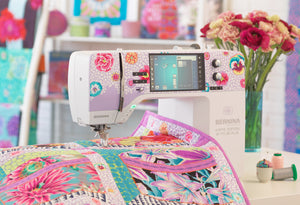

We Love Our Quilting Community
At High Country Quilts we care deeply about community. With our experiences in retail, we know that a store is not only a place to shop but also a place for the community to gather and share. During this busy...


Making a quilt sandwich is all about layering your backing fabric, batting, and quilt top into one cohesive unit. This is the crucial step that gets your project ready for the quilting stitches that will hold it all together for good.

Before you can dream of those beautiful, decorative stitches, the success of your entire quilt hinges on this one critical process: making the quilt sandwich. I can't stress this enough—this isn't just another box to check. It's the structural foundation that saves you from the headache of puckers, tucks, and shifting fabrics later on.
Honestly, mastering this skill is often what makes the difference between a project that looks "homemade" and one that feels like a truly handmade treasure. When you learn to make a quilt sandwich correctly, you're creating a stable, secure unit that will behave itself beautifully under your needle.
Think of it this way: your quilt sandwich is the canvas for your quilting art. A poorly made one is like trying to paint on a lumpy, wrinkled surface. No matter how incredible your stitching is, the final result will betray its shaky start.
A well-built sandwich ensures a few key things:
Taking the time to build a solid foundation is an investment in a smoother, more joyful quilting experience. It turns a potentially frustrating chore into a mindful part of the creative process.
Ultimately, understanding the 'why' behind this step sets you up for success. It ensures all those hours you poured into piecing your quilt top are rewarded with a finish that's just as stunning. Consider this your insurance policy for a quilt you’ll be proud of for years to come.
A beautiful quilt starts long before you ever make the first stitch. The secret to avoiding those frustrating puckers and achieving a smooth, professional finish lies in how you prepare your materials. It’s not the most glamorous part of the process, but trust me, getting your three layers—the top, batting, and backing—ready is a step you can't afford to skip.
Think of it like baking a cake. You wouldn't just toss ingredients in a bowl without measuring and mixing. In the same way, taking a little extra time now to prep each layer will save you a world of headaches later.
Your quilt top is the star of the show, so let's make sure it's ready for its moment in the spotlight.
The first, and most important, step is to give it a final, thorough press. Get your iron nice and hot, use some steam, and work out every last wrinkle. Pay close attention to your seam allowances—make sure they’re all lying flat and facing the direction you want them to go.
Once it's perfectly flat, do a quick inspection. Snip away any stray threads, especially dark ones that might show through lighter fabrics later. This little bit of housekeeping ensures no tiny mistakes get trapped inside your quilt forever.
The backing fabric is the unsung hero of your quilt. It provides the foundation and a beautiful finish. The key here is size—it must be larger than your quilt top. You need this extra space because fabrics can shift and pull slightly during the quilting process.
I always recommend adding 4-6 inches of extra fabric on all four sides.
So, if your quilt top measures 60" x 70", your backing fabric should be at least 68" x 78". It feels like a lot, but you’ll be glad you have it.
Most quilts are wider than a standard 42"-44" bolt of fabric, which means you'll likely need to piece your backing. Simply sew two lengths of fabric together (I usually do it right along the selvage edge) and press the seam open. Pressing it open is crucial as it helps reduce bulk and creates a nearly invisible seam that won’t get in the way of your quilting.
Pro Tip: If you have to piece your backing, I suggest running the seam horizontally across the quilt. When the quilt is loaded onto a longarm machine, a horizontal seam is under less stress and is less likely to pull apart.
Batting is the warm, fluffy heart of your quilt. The fiber you choose has a huge impact on the final look, feel, and weight of your project. It's what gives a quilt its cozy texture and beautiful drape.
When you're shopping for batting, you'll see a lot of different options. Understanding terms like What Is GSM in Quilts can help you pick the perfect weight and warmth, but personal preference plays a big role too.
To help you decide, here’s a quick rundown of the most common types I use in my own projects.
A quick reference guide to help you select the ideal batting based on your project's needs and desired finish.
| Batting Fiber | Best For | Loft (Thickness) | Drape |
|---|---|---|---|
| 100% Cotton | Traditional quilts with a classic, flat appearance. Creates a lovely crinkled look after washing. | Low | Soft but crisp |
| Cotton/Poly Blend | All-purpose quilts. Offers the softness of cotton with the stability and lower shrinkage of polyester. | Low to Medium | Very soft & pliable |
| Wool | Showcasing intricate quilting stitches. It’s warm, lightweight, and resists creases. | Medium to High | Excellent, lofty drape |
| Bamboo Blend | Projects needing exceptional softness and a silky drape, perfect for modern quilts and cozy throws. | Low | Silky and fluid |
Each type brings something special to the table, so think about how you want your finished quilt to look and feel.
Once you’ve made your choice, unroll the batting from its package and let it rest for a few hours. This helps relax any folds or creases from the packaging. Just like the backing, your batting needs to be cut 4-6 inches larger than your quilt top on all sides.
With all three layers perfectly prepped and sized, you’re officially ready to start building your quilt sandwich
Now that your layers are perfectly measured and pressed, it's time to bring them all together. This is where three separate pieces of fabric and batting transform into a single, cohesive canvas, ready for your stitches. The goal is simple but absolutely critical: create a perfectly smooth, flat, and stable foundation for your quilting.
The most important tool for this job? Space. You need a large, flat surface where you can spread your entire quilt backing without any part of it hanging off an edge. A clean hardwood floor is a classic choice for a reason, but a big dining table or even a couple of folding tables pushed together works just as well. Whatever you choose, take a moment to clear and clean it first—you definitely don't want any stray dust bunnies or pet hair permanently quilted into your project.
Your backing fabric is the base layer, and getting it right sets the stage for everything else. Start by laying your pressed backing fabric wrong side up on your clean, flat surface. The key here is to get it taut but not stretched. If you pull the fabric too tight, it’ll distort and spring back later, creating nasty puckers you'll have to quilt out.
Begin at the center of one side and secure the fabric to your surface with painter's tape or masking tape. Work your way from the center out to the corners. Then, repeat this on the opposite side, gently smoothing the fabric with your hands from the middle outwards as you go. Do the same for the remaining two sides. When you're done, your backing should feel smooth and firm, like a perfectly stretched canvas with zero wrinkles.
This step is non-negotiable if you want a pucker-free finish. A secured backing acts as an anchor, preventing the layers from shifting while you add the batting and quilt top. Think of it as your insurance policy against fabric creep.
With your backing secure, it's time for the batting. Unroll it and gently "float" it down onto the backing fabric. Don't pull or stretch it into place; just let it settle naturally.
Starting from the very center, use your hands to smooth the batting outwards towards the edges. The motion is a lot like smoothing fresh sheets on a bed. Work methodically in all directions—up, down, left, and right—until the batting lies completely flat against the backing. You shouldn't feel any lumps, bumps, or folds.
Next up is your beautiful quilt top. Just as you did with the batting, lay your pressed quilt top right side up over the batting. Find the center of your quilt top and line it up with the center of the other two layers. Then, once again, begin smoothing from the center out. Take your time here, paying close attention to make sure your seams, blocks, and borders are all lying perfectly flat.
This diagram breaks down the simple but essential order for preparing each layer of your quilt sandwich.

Visualizing the process—prepping the top, batting, and backing in order—is a good reminder that each layer needs its own attention before you can assemble them.
For larger quilts, getting that big quilt top laid down without creating new wrinkles can be a real struggle. Here’s a brilliant tip I learned years ago that has saved me from countless frustrations: use a pool noodle or even a clean cardboard tube from a roll of wrapping paper.
This little trick uses gentle tension to lay the fabric down perfectly flat, which almost eliminates the chance of accidental folds or creases. It gives you incredible control and helps ensure your piecing stays straight and aligned.
With your three layers now perfectly assembled, you are ready for the next critical step: basting.
Now that you’ve got your layers perfectly smoothed out and aligned, it’s time to lock them in place. This step is called basting, and it’s the secret to preventing all that frustrating shifting, puckering, and bunching while you do the actual quilting. Think of it as the temporary stitching that holds your entire masterpiece together until the permanent stitches are in.
There’s no single "right way" to baste a quilt. The best method for you really boils down to the size of your project, whether you're quilting by hand or machine, and frankly, your personal preference. Let's walk through the three most popular approaches—pins, spray, and thread—so you can figure out which one feels right for you and your quilt.
If you're new to quilting, pin basting is a fantastic place to start. It’s probably the most common method out there, and for good reason—it’s reliable and doesn't require any special chemicals. The key here is to use curved safety pins. That little bend in the pin is a game-changer; it makes it so much easier to scoop up all three layers of fabric without creating a big divot or shifting things around. Trust me, regular straight pins just won’t cut it here.
The process itself is simple, but it does take a bit of patience. You'll want to start pinning in the very center of your quilt and work your way out toward the edges. I find that placing a pin every 4-6 inches, or about a hand's width apart, is the sweet spot. This creates a secure grid that keeps everything from moving but still gives you enough room to work your quilting foot or hoop.
Hate the idea of opening and closing hundreds of tiny pins? You might be a spray-basting convert. This technique uses a temporary, repositionable fabric glue to hold the layers together. When you get it right, you're left with an unbelievably smooth, flat surface that’s a dream to quilt on. No pins to stop and remove as you go!
The trick to a great spray-basting job is to apply a light, even coat. Hold the can about 10-12 inches from the fabric and spray a fine mist—don't saturate it. You'll work one half of the quilt at a time. Just peel back the top or backing, spray the batting, and then carefully smooth the fabric back down, working from the center out to push out any air bubbles.
One thing you absolutely cannot skip with spray basting is good ventilation. The fumes can be strong, so always do this in a room with open windows, in a garage with the door up, or even outside on a calm day. And be sure to put down an old sheet or some cardboard to protect your floors or table from the sticky overspray.
This method is fantastic for machine quilting. Since there are no pins to navigate around, you can get into a smooth, uninterrupted stitching rhythm.
Thread basting is the old-school method, and it’s still the top choice for many hand quilters. It involves using a long needle and thread to make big, running stitches—usually about one to two inches long—through all three layers. You’re essentially creating a loose grid of thread across the entire quilt.
It’s definitely the most time-consuming option, but what you gain is complete control. The layers are held together securely without adding any of the bulk or stiffness you can sometimes get with pins. Hand quilters often swear by this method because it allows the quilt to drape softly and naturally while they work.
Deciding on your basting method is a huge part of learning how to make a quilt sandwich. Whether you choose the reliable security of pins, the speed of spray, or the meticulous control of thread, your goal is the same: to create a stable, shift-free canvas for your beautiful quilting.

Even after years of quilting, I still double-check my work when making a quilt sandwich. It’s one of those steps where a tiny shortcut can cause a huge headache later. Knowing what can go wrong is the best defense against it, turning a potential fix-it job into a smooth and enjoyable process.
The number one culprit we see is fabric shifting, which results in those dreaded puckers and tucks on the front or back of your quilt. The cause is almost always the same: the backing wasn't secured tightly enough from the get-go. If that bottom layer has any slack, everything you place on top of it is just waiting to move around as you baste and quilt.
Another sneaky reason for puckering is accidentally overstretching your fabric. When you tape down the backing or smooth out the quilt top, you're aiming for taut and smooth, not stretched like a trampoline. Every fabric has a bit of natural give. If you pull it too tight, it’s going to try and shrink back to its original size later, pulling the other layers with it and creating bunches.
It’s surprisingly easy to make a misstep with your materials or basting, but thankfully, these are also the easiest problems to prevent. A little extra attention before you begin can save you hours with a seam ripper down the road.
I can’t tell you how many times I’ve seen quilters try to get by with a backing or batting that’s just a hair too small. Cutting these layers with only an inch or two of wiggle room is asking for trouble. You absolutely want at least 4 inches of extra fabric on all four sides. Think of this as your insurance policy—it gives you a buffer against shifting and is non-negotiable if you’re sending your quilt to a longarmer.
Another common mistake is being too sparse with your basting. Whether you're a fan of pins, spray, or thread, trying to save a little time or a few pins here will backfire. Not enough basting means your layers are free to separate and shift while you’re quilting.
Your basting is the temporary scaffolding that holds your project together. If the scaffolding is weak, the structure will be unstable. Always use a little more than you think you need.
So, how do you steer clear of these issues? Focus on a few key actions every single time:
By keeping these common slip-ups in mind, you can build your quilt sandwich with confidence. You’re not just layering fabric; you’re creating a stable foundation for all the beautiful stitching to come.
Even the most seasoned quilters run into questions when putting together their quilt sandwich. It’s just part of the process! Here are a few of the most common things we get asked about at the shop, along with some practical advice to help you get unstuck and back to quilting.
This is a big one, and the answer is pretty simple: as a golden rule, make your batting and backing at least four inches larger than your quilt top on all four sides.
This isn't just a suggestion; that extra fabric is your safety net. It gives you plenty of wiggle room to account for any shifting or squaring up that needs to happen as you quilt. If you plan on using a longarm quilting service, that four-inch margin is non-negotiable. It’s what we need to properly load the quilt onto the frame. Trust me, it’s always better to have a little too much than to come up short.
You could, but you'll probably regret it. We always recommend using curved safety pins because they are built for this exact task. The curve makes a world of difference—it lets you easily scoop through the quilt layers and close the pin without creating a big divot or bunching up your fabric.
Straight pins force you to push down and then pull up, which can easily shift your layers and create puckers. Curved pins are so much easier on your hands and your quilt. It’s a small tool that makes a huge impact on your final result.
Wavy borders happen to everyone, so don't panic. It's usually a sign that one of your border strips was stretched a bit during sewing. The first thing to do is give your quilt top a good, final press with starch or a starch alternative. This can help the fibers relax and settle down quite a bit.
If you still have some waves, you can work with them during the basting process. As you smooth the quilt top out from the center, gently ease that extra fullness into place. You might need to add a few extra pins in the wavy sections to help hold everything down and prevent it from turning into tucks when you start quilting.
Ready to build your next beautiful quilt? The team at High Country Quilts can help you find the perfect fabrics, batting, and BERNINA machine for your project. Visit us in-store or explore our selection online to get started.
At High Country Quilts we care deeply about community. With our experiences in retail, we know that a store is not only a place to shop but also a place for the community to gather and share. During this busy...

Hi! We’re Adam and Renee Wheaton, the new owners of High Country Quilts! For more than 40 years, we’ve owned and operated vacuum and sewing businesses. Following in Renee’s father’s footsteps after he retired from All Discount Vacuum and Sewing in Colorado...


Leave a comment