
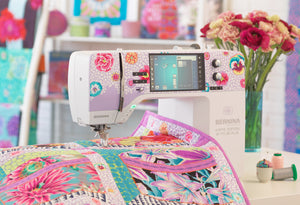

We Love Our Quilting Community
At High Country Quilts we care deeply about community. With our experiences in retail, we know that a store is not only a place to shop but also a place for the community to gather and share. During this busy...


Welcome to the world of quilting! Before you start dreaming of that full-sized, heirloom-quality quilt, let's talk about where it all begins: a single, perfect quilt block. This is your first lesson in building with fabric, and trust me, it’s far more rewarding and achievable than you might think.
Making that first block can feel like a huge leap. I still remember the mix of excitement and nerves I felt, but it’s where the magic really starts. There’s nothing quite like the satisfaction of turning a few flat pieces of fabric into a precise, beautiful design—it’s the very thing that gets so many of us completely hooked on this craft.
This guide is here to walk you through it all, skipping the confusing jargon to focus on the skills that will build your confidence from the ground up. We're going to concentrate on what you actually need to know to get started today. You don't need to buy out the entire craft store or master every technique at once.
The real secret to a great quilt isn't a top-of-the-line sewing machine or a massive fabric stash. It all comes down to a solid foundation in the basics. I’ve seen brand-new quilters create absolutely stunning work simply by focusing on a few key things. Think of it less like learning a complex new skill and more like following a trusted recipe for the first time.
You'll quickly find that quilting is really about:
My biggest hope for this project is that you gain the confidence and skills that are required to recreate traditional quilt blocks and quilt designs on your own. Once you learn the basic construction, a whole world of creativity opens up.
This guide is your starting point. We’ll walk through the essential tools, fabric choices, and piecing techniques that will help you create a block you’re proud of from your very first try. Let's get started on that first stitch.

Before we start sewing, let's talk about setting up your workspace. Having the right tools on hand makes the entire process smoother and, frankly, a lot more fun. You don't need a professional studio, just a few key items that will help you work precisely and sidestep some common beginner frustrations.
If you come from a garment sewing background, the biggest shift is how we cut fabric. For patchwork, scissors just don't deliver the razor-sharp accuracy we need. This is where the quilting "big three" come in: a rotary cutter, a self-healing mat, and a clear acrylic quilting ruler. This trio is non-negotiable for getting identical, perfectly straight pieces time after time.
Think of them as a system. The mat protects your work surface and "heals" after each cut, the ruler provides the straight edge, and the rotary blade slices through fabric like a dream. Once you experience the ease and precision, you'll see why tracing and cutting with scissors is a thing of the past for quilters.
Getting your toolkit right from the beginning is one of the best things you can do for your quilting. Here’s a quick rundown of the must-haves for making your first block.
| Tool/Material | Its Purpose in Quilting | Insider Tip for Beginners |
|---|---|---|
| Rotary Cutter & Mat | Provides clean, precise cuts through fabric layers. The self-healing mat protects your table and the cutter's blade. | Start with a 45mm rotary cutter—it's the most versatile size. Always use the safety lock when you're not actively cutting! |
| Acrylic Ruler | A transparent guide for measuring and ensuring straight cuts with a rotary cutter. | A 6" x 24" ruler is the workhorse of quilting, but a smaller square ruler (like 6.5" x 6.5") is fantastic for trimming finished blocks. |
| Quilting Cotton | The go-to fabric for quilts. It's stable, presses well, and is easy to sew. | Stick with 100% quilting cotton for your first project. It’s far more forgiving than stretchy or slippery fabrics. |
| Sewing Machine | Your primary tool for piecing the block together. | A basic, reliable machine is all you need. The most important feature is a consistent straight stitch. |
| Quarter-Inch Foot | A special presser foot with a guide to help you sew a perfect ¼" seam allowance, which is the standard in quilting. | This little foot is a game-changer for accuracy. If your machine didn't come with one, it's worth buying separately. |
| Cotton Thread | Used for piecing the fabric together. | A neutral-colored, 50-weight cotton thread (like gray, cream, or beige) will blend with most fabrics and is a great starting point. |
| Iron & Ironing Board | Essential for pressing seams flat, which leads to more accurate piecing. | A dry iron (no steam) is often preferred for quilting, as steam can sometimes distort the fabric. Press, don't "iron" back and forth. |
| Pins & Seam Ripper | Pins hold fabric pieces together for sewing. The seam ripper is your best friend for fixing inevitable mistakes. | Look for fine, sharp pins that won't leave large holes. And trust me, every single quilter owns and uses a seam ripper. It's a tool, not a failure! |
With these items in your corner, you'll be well-equipped to tackle your first quilt block with confidence.
Choosing your fabric is just as critical as having the right cutting tools. For anyone just learning how to make a quilt block, nothing beats 100% quilting cotton. It behaves beautifully—it doesn’t stretch much, it holds a press, and it’s very forgiving of the occasional mistake.
To make things even easier, you might want to start with "precuts." These are coordinated bundles of fabric that are already cut into standard quilting sizes.
When it comes to thread, quality matters. A good 50-weight cotton thread is the standard. Cheaper polyester threads often create more lint that can jam up your machine, and they can even break mid-seam, which is always frustrating.
Your sewing machine is the engine, but the real MVP is often the quarter-inch foot. This specialty foot typically has a small metal guide on the edge that makes sewing a perfect quarter-inch seam—the bedrock of quilting—almost automatic. Consistent seams are what make all your points and corners line up beautifully.
Finally, don't underestimate those small supporting notions. Sharp pins hold your pieces securely without distorting them. A hot iron is crucial for pressing seams flat. And please, embrace the humble seam ripper. Seeing one in a quilter's toolkit isn't a sign of inexperience; it’s the mark of a true quilter who isn't afraid to fix things and get it right.
Any seasoned quilter will tell you the secret to a sharp, beautiful quilt block isn’t in the sewing—it’s in the prep work. The real magic happens at the cutting mat. Think of it this way: accurate cuts are the foundation for everything that follows. Taking your time here is probably the single best thing you can do for your finished block.
Before your rotary cutter even sees the light of day, you have to get your fabric ready. The first big debate you'll run into is whether or not to pre-wash. Some quilters are ride-or-die for pre-washing to get any potential shrinkage or color bleeding out of the way. Others, myself included sometimes, love the crispness of fabric straight off the bolt.
If you decide to skip the wash, just be aware that deeply saturated fabrics (I'm looking at you, reds and navy blues) might bleed later on. Tossing a color catcher sheet in the wash when you finally launder the finished quilt is a great bit of insurance.
One step you absolutely cannot skip is ironing. Seriously. Never, ever cut wrinkled fabric. Even the tiniest crease will throw off your measurements, and you'll be left wondering why your pieces don't line up.
Use a hot, dry iron to get your fabric perfectly flat. I recommend avoiding steam because it can sometimes stretch and distort the fibers, which is the last thing you want right before you cut. A good press ensures your ruler is sitting on the true grain of the fabric. This simple step is a cornerstone of learning how to make a quilt block you can be proud of.
Alright, it's time to cut. Your rotary cutter is your best friend for precision, but always remember that blade is incredibly sharp, so handle it with respect. The goal here is consistency—every single piece should be an identical twin to the last.
Here's a tip I give everyone in my workshops: always "square up" your fabric before you cut a single piece. This just means creating a perfectly straight edge to measure from.
With that clean, straight edge, you're ready to start cutting your strips and squares with total confidence.
For a classic Nine-Patch block, precision is everything. If the pattern asks for 3.5-inch squares, being off by even 1/8-inch will create a real headache when you try to sew the rows together. This is where your careful cutting pays off, letting all your seam points match up beautifully.
Let's stick with that Nine-Patch example. You need five dark squares and four light squares. The most efficient way to do this is to first cut a 3.5-inch wide strip from both your light and dark fabrics. Then, you can simply turn those strips and "sub-cut" them into your 3.5-inch squares. Cutting this way is the best method for making sure all your pieces are perfectly uniform.
Alright, your fabric is prepped, your squares are neatly cut, and now we get to the fun part—stitching it all together. This is the moment the magic happens, when those separate little pieces of fabric start to form a pattern. We're going to make a classic Nine-Patch block, a fantastic first project because it's so satisfyingly simple and teaches you the core skills you'll use forever.
The plan is straightforward. We'll sew our squares into three separate rows. Then, after a bit of strategic pressing, we’ll join those rows to complete the block. But before your needle even touches the fabric, let's talk about the single most important rule in all of quilting: the quarter-inch seam allowance.
So why all the fuss about a ¼-inch seam? In quilting, precision is everything. That tiny measurement is the industry standard that holds the geometry of every pattern together. When a pattern tells you to cut 3.5-inch squares, it’s because the designer has already accounted for you "losing" a quarter inch of fabric on each side that gets sewn. This turns your 3.5-inch piece into a perfect 3-inch finished square once it's part of the quilt top. Nailing this consistently is the key to blocks that fit together perfectly.
The best way to guarantee a perfect ¼-inch seam is with a quarter-inch presser foot. This little gadget has a guide on its edge that you simply run your fabric along as you sew. It does the work for you. If you don't have one, no worries! You can easily make a guide by placing a strip of painter's tape or a small stack of sticky notes on your sewing machine, exactly ¼-inch from the needle.
Let's get stitching. A Nine-Patch is exactly what it sounds like: a block made of nine squares arranged in three rows of three. For a classic look, we'll arrange the colors so the top and bottom rows are the same (like dark-light-dark), and the middle row is the opposite (light-dark-light).
This handy visual shows how proper fabric prep is the foundation for everything we're doing now. It all starts here.

Before we join the rows, we need to press the seams. And how you press them is a game-changer. This is where we learn the quilter's secret handshake for perfectly matched corners: nesting seams.
On your top and bottom rows, use your iron to press the seam allowances toward the dark fabric. For the middle row, do the opposite: press the seams away from the dark center square (in other words, toward the light squares). By pressing the seams in opposite directions, you set yourself up for success.
When you lay one row on top of another with the right sides together, those opposing seams will butt up against each other and lock into place. You can actually feel them snuggle together with your fingers. This is the trick to getting those crisp, professional-looking points where all your corners meet.
Pin your rows together, making sure to place a pin right through each nested seam to hold it steady. Now, sew your top row to the middle row, and then attach the bottom row. Give the entire block one final press with the iron, and step back to admire your work. You did it

You’ve done the fun part—all your pieces are sewn together and your design is finally visible! But we're not quite done. These next steps, pressing and trimming, are what separate a good block from a great one. This is where you give your block that crisp, flat, professional finish that makes all the difference when it's time to assemble your quilt.
First, let's talk about pressing. And I mean press, not iron. It's a small distinction in language but a huge one in practice. When you iron, you're sliding the hot iron back and forth, which is a recipe for disaster in quilting. That motion can easily stretch your fabric along the bias, leaving you with a wavy, distorted block that will never lie flat.
Pressing is a much gentler art. You simply lift your iron, place it down on your seam, hold it for a moment, and lift it straight up again. This sets your stitches beautifully and flattens your seams without pulling anything out of shape.
For the flattest possible block, I swear by a two-step pressing method. Right after you sew a seam, before you even open the pieces, give that stitch line a quick press. This is called "setting the seam," and it helps the thread relax and meld into the fabric. It’s a tiny step that makes a noticeable difference.
Once the seam is set, open up your block and press the seam allowances. You might remember from our Nine-Patch assembly that we pressed seams toward the darker fabric to prevent shadowing. For these final seams that join the rows, you have a choice. You can press them to one side, or you can press them open.
I almost always press my final construction seams open. It might take an extra moment, but it splits the bulk evenly to either side of the seam. This gives you a remarkably flat block, which makes the final quilting process a whole lot smoother down the road.
With your block perfectly pressed, it's time for the moment of truth: squaring up. Let's be honest, no matter how precisely you cut and sew, fabric has a mind of its own. A little bit of stretch is inevitable. Squaring up is how we correct for that, trimming the block down to its final, perfect size so it plays nicely with its neighbors.
Since our Nine-Patch started with 3.5-inch squares, our target unfinished size is exactly 9.5 inches. Grab your square acrylic ruler (one that's at least 9.5 inches), your rotary cutter, and your cutting mat.
And there you have it—a perfectly square 9.5-inch quilt block. It’s crisp, flat, and ready for whatever you have planned next
Even after years behind a sewing machine, I still run into little puzzles. But when you're just starting out on your first quilt blocks, those small hiccups can feel like huge roadblocks. Trust me, every single quilter has been there, and the answers are usually simpler than you think.
Based on countless hours of teaching and my own quilting journey, I've put together answers to the questions I hear most often. These are the hurdles that pop up right after you've nailed the basics, and getting past them will make you feel like a quilting superhero.
Hands down, the absolute best fabric to start with is 100% high-quality quilting cotton. There’s a very good reason it’s the gold standard in our craft. This fabric is wonderfully stable, meaning it doesn’t stretch or slide around, which makes it incredibly forgiving when you’re learning to sew a consistent seam. Plus, it presses like a dream, giving you those crisp, flat seams we all strive for.
I always tell new quilters to avoid anything slippery like satin or stretchy like knits for their first projects. While they can be gorgeous, they require a completely different skill set and often lead to a ton of frustration right out of the gate.
If you want to make life even easier, I highly recommend starting with precuts. These are beautifully coordinated fabric bundles that are already cut into standard quilt-friendly sizes.
Ah, the wavy block. It’s one of the most common frustrations for new quilters, but it's almost always fixable. A block that refuses to lie flat is usually a sign of one of three things: an inconsistent seam allowance, accidentally stretching the fabric, or how you’re pressing it.
First, take a hard look at your seam allowance. Is it truly a perfect ¼ inch all the way down the seam? Even a tiny wobble can add up and cause ripples. If you find you're stretching the fabric, it’s often because you’re trying to "help" it through the machine by pushing or pulling. Relax your hands and let the machine's feed dogs do all the work.
Lastly, and this is a big one, remember to press, not iron. Pressing is an up-and-down motion with your iron. Ironing with a back-and-forth scrubbing motion will absolutely stretch your fabric, especially on the bias, and is the number one cause of those frustrating waves.
That little moment of victory when your seam points meet perfectly is what makes quilting so satisfying! The secret to achieving those crisp intersections isn't magic—it comes down to two key techniques: strategic pinning and "nesting" your seams.
When you join pieced rows, press the seam allowances in opposite directions. For instance, press all the seams in row one to the left, and all the seams in row two to the right. When you place these rows right-sides-together, the seams will snuggle up against each other and lock into place.
You can actually feel it with your fingers when the seams "nest" correctly. Once they're locked in, poke a pin straight down through the seam on both layers of fabric to hold them securely. This little trick creates a physical guide that ensures you sew directly over the intersection, giving you those perfect points every time. It’s a simple move that delivers professional-looking results.
At High Country Quilts, we're passionate about giving every quilter the tools and knowledge to create with joy. Explore our wide selection of high-quality quilting cotton, BERNINA sewing machines, and essential notions to help you build your skills with confidence. Visit us online at https://hcquilts.com to find your next project.
At High Country Quilts we care deeply about community. With our experiences in retail, we know that a store is not only a place to shop but also a place for the community to gather and share. During this busy...

Hi! We’re Adam and Renee Wheaton, the new owners of High Country Quilts! For more than 40 years, we’ve owned and operated vacuum and sewing businesses. Following in Renee’s father’s footsteps after he retired from All Discount Vacuum and Sewing in Colorado...


Leave a comment