
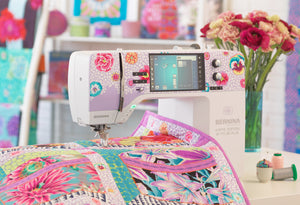

We Love Our Quilting Community
At High Country Quilts we care deeply about community. With our experiences in retail, we know that a store is not only a place to shop but also a place for the community to gather and share. During this busy...


So, you've heard quilters and crafters rave about fat quarters, and you've probably seen those tempting, neatly folded bundles at fabric shops. But what exactly are they, and why are they such a big deal?
A fat quarter is a specific cut of fabric that usually measures 18 inches by 22 inches. It’s created by taking a half-yard of fabric off the bolt and cutting it in half along the width. The result is a more rectangular, "fatter" piece compared to a traditional quarter-yard cut.

Before you start cutting into your own beautiful fabric stash, it’s really helpful to get why this particular cut is so beloved. When new quilters visit our sewing classes at Famcut, they often ask why fat quarters are so much more popular than standard cuts. The secret is all in their shape and the incredible versatility it offers.
If you ask for a quarter yard of fabric at most stores, you’ll get a "linear" or "long" quarter. This is a skinny strip cut straight across the width of the fabric (WOF), leaving you with a piece that's typically 9 inches tall by 42 to 44 inches wide. This shape can be pretty limiting, especially since many quilt block patterns require pieces wider than that 9-inch height.
This is where the fat quarter really shines. Its nearly-square shape gives you a much more practical and usable piece of fabric. You have the room to cut larger squares, chunky rectangles, or even circles that just wouldn't be possible on a long, narrow strip. You get the same total area of fabric, but in a much more useful configuration.
For many modern patterns, a fat quarter is the minimum size needed to cut all the required pieces for a single block. This efficiency is why they are a quilter's best friend.
That’s why so many designers create patterns specifically for fat quarter bundles—they know this cut provides the most creative freedom for your money.
The difference becomes crystal clear when you see the dimensions side-by-side. Think of it as getting the same amount of land, but one plot is a long, thin alley while the other is a spacious, buildable lot.
| Attribute | Fat Quarter | Linear Quarter Yard |
|---|---|---|
| Typical Size | 18" x 22" | 9" x 42" |
| Shape | Rectangular (almost square) | Long and narrow |
| Best For | Larger quilt blocks, tote bags, versatile patterns | Strips, sashing, and binding |
| Flexibility | High | Low |
Once you grasp this simple but crucial difference, you're ready to start creating your own fat quarters from your yardage. You're not just chopping up fabric; you're unlocking more efficient and creative possibilities for your next project.
Let’s be honest—getting those crisp, perfectly straight cuts isn't about magic. It's all about having the right tools for the job. Before you even think about slicing into that beautiful yardage, let's get your cutting station set up. These are the non-negotiables that will make your life easier and your cuts way more accurate.
First things first: you absolutely need a self-healing cutting mat. This is the foundation for everything. It protects your table, of course, but more importantly, it saves your rotary blade from getting dull in a hurry. A good mat also has a grid that’s a lifesaver for squaring up fabric.
Now for the fun part. The rotary cutter is a quilter’s best friend. For cutting fat quarters from larger pieces of fabric, a 45mm rotary cutter is the industry standard and a true workhorse. It's just the right size for making long, clean cuts through a couple of layers of cotton.
You might see smaller 28mm cutters out there, and they're fantastic for tight curves or appliqué work. But for what we're doing here, the 45mm is exactly what you need.
My number one tip? Always use a fresh blade. A dull blade is a dangerous one. You have to press harder, which makes the ruler more likely to slip, and it chews up your fabric edges instead of giving you a clean slice.
Finally, the real secret to accuracy is a good, clear acrylic ruler. If you only buy one, make it a 6" x 24" ruler. This is, hands down, the most versatile size you can own. Its length is perfect because you can cut across the entire width of your folded fabric without having to stop and move the ruler—a classic mistake that leads to wobbly lines.
I learned the hard way that your ruler must be longer than the edge you're cutting. Using a short ruler is just asking for "ruler creep," where it slides mid-cut and ruins your line. Invest in these three core tools, and you'll be starting off on the right foot from your very first cut.
Alright, you've got your tools, and you're staring at a fresh yard of fabric. Let's turn that big piece into four perfectly usable fat quarters. Getting this right comes down to a little prep and a few precise cuts, and it all starts with a step that, I confess, many of us are tempted to skip.
Seriously, wash and press your fabric first. It might feel like a chore, but it’s a game-changer. Pre-washing gets rid of any factory sizing, pre-shrinks the cotton so your finished project doesn't warp, and gives you a perfectly flat, smooth surface to work from. Trust me, trying to cut a wrinkly piece of fabric accurately is a recipe for frustration.
The next thing you have to do is create one perfectly straight edge to measure from. Never, ever trust the cut you got from the fabric store—it's almost guaranteed to be wonky.
Go ahead and unfold your yard of fabric completely so it’s lying as a single layer on your cutting mat. Look for the selvedge edges (the tightly woven sides, sometimes with manufacturer printing on them) and line one up with a horizontal line on your mat.
Now, lay your long 6” x 24” ruler across the width of the fabric near one of the raw ends. Square it up perfectly with a vertical line on the mat. Hold it down firmly and use your rotary cutter to slice off that uneven end. That first clean slice gives you a "true" edge to work from.
This initial squaring-up cut is the most important one you’ll make. Every single cut after this depends on this line being perfectly perpendicular to the selvedge, so take your time and get it right.
These are the three tools that will do all the heavy lifting for you.

The mat gives you a safe surface and a grid, the ruler acts as your straightedge guide, and the cutter does the slicing. Simple and effective.
With a true edge established, you're ready to make the cuts that matter. A standard yard of quilting cotton is 36 inches long and usually around 42-44 inches wide from selvedge to selvedge (often called WOF, or "width of fabric"). Our goal is to divide this into four equal chunks.
Here's how I do it every time:
The First Big Cut: From that perfectly straight edge you just made, measure 18 inches down the length of the fabric. Lay your ruler across the fabric at that 18-inch mark, double-check that it's parallel to your true edge, and slice. You should now have two pieces, each measuring 18" x ~42".
The Crosswise Cut: Take one of those new 18" x 42" pieces and fold it in half, matching the selvedge edge to the other cut edge. Place it on your mat, and from the folded side, measure out 11 inches. Make your cut through both layers. This will create two perfect 18" x 22" fat quarters.
Repeat and Finish: Just do the exact same thing with the second 18" x 42" piece of fabric. Fold it, measure 11 inches from the fold, and cut. Now you have two more fat quarters, for a total of four.
And that's it! You've successfully cut your own fat quarters from a yard of fabric. It’s a foundational skill that opens up a world of quilting patterns and smaller projects while helping you make the most of your fabric stash. If you're hunting for project ideas or want to sharpen your skills in a hands-on setting, check out the classes and supplies we offer at Famcut here in the Atlanta area.
Ask any quilter, and they'll have a horror story about a beautiful piece of fabric ruined by one small cutting error. Learning to cut your fat quarters accurately is less about just following steps and more about knowing which common pitfalls to sidestep. Let's talk about the mistakes we've all made so you don't have to.
One of the biggest culprits is not taking the time to square up your fabric before you start. It’s so tempting to assume the edge you get from the bolt is straight, but trust me, it almost never is. A slightly skewed first cut will throw off every single piece that follows, leading to wonky blocks and seams that just won't line up, no matter how much you try to fudge it later. Always, always create your own true edge first.
Another classic mistake is what we call "ruler creep." This is that frustrating moment when your ruler slides just a tiny bit mid-cut, leaving you with a wobbly or angled edge instead of a crisp line. It usually happens when you’re not applying firm, even pressure. To combat this, try spreading your non-cutting hand wide across the ruler—think of a starfish—to anchor it down securely.
A dull rotary blade can also sabotage your work before you even begin. A worn-out blade doesn't slice cleanly through the fibers; it chews and frays them, sometimes snagging threads and completely ruining your fabric. It's also a major safety issue. You have to push harder, which dramatically increases the chance of the cutter slipping and causing a serious injury.
I still remember ruining a gorgeous, out-of-print floral fabric I had been saving for the perfect project. I was in a rush and misread the ruler by a full half-inch. That single moment of impatience taught me the hard way: measure twice, cut once. It’s not just an old saying; it’s the golden rule of quilting for a reason.
Developing these simple habits—squaring up your fabric, holding your ruler securely, and always using a sharp blade—is what will separate a frustrating cutting session from a successful one. Think of them as your best defense against miscuts. Beyond fabric-specific tips, mastering the general principles of accuracy is a huge help. For more insights on this, you can check out these general precision cutting tips for flawless crafts.

Now for the fun part! With a perfect stack of freshly cut fat quarters, you have a ticket to all sorts of creative projects that go far beyond the standard quilt block.
Their unique, squarish shape makes them a dream for items where you want to avoid extra seams. Think tote bag panels, zippered pouches, and adorable baby bibs—you get a nice, clean piece of fabric to work with, which means less waste and a more professional finish.
I especially love how you can take one single fat quarter and create a whole coordinating set for your home. Imagine turning one beautiful print into a matching set of four drink coasters and a trivet. It's incredibly satisfying.
Fat quarters really shine in smaller-scale projects where a pop of color or a bold pattern can make a huge statement. If you're looking for some inspiration, here are a few ideas to get your creative gears turning:
The real magic of a fat quarter is its efficiency. One small piece can fuel a whole weekend of sewing fun, letting you try out a new pattern or technique without the commitment of buying several yards of fabric.
Even if your ultimate goal is a massive quilt, don't be afraid to use one of your new fat quarters for practice. Making something quick like a placemat is a fantastic, low-stakes way to build confidence with your cutting and piecing before you dive into that king-sized project.
Once you start working with fat quarters, you'll find a few questions come up again and again. Let's clear up some of the most common ones I hear from fellow quilters so you can get back to sewing.
A big one is always about maximizing fabric. How many 5-inch squares can you get from a single fat quarter? From a standard 18" x 22" fat quarter, you can consistently cut twelve 5-inch squares. You’ll often have a little strip of fabric left over, which makes fat quarters a really efficient way to build a stash for patterns that use charm packs.
Now, what about prepping that fabric? I can't stress this enough: pre-wash your fat quarters. While it’s tempting to skip this step and dive right into cutting, taking the time to wash and dry your fabric first is a habit that will save you a lot of headaches. It preshrinks the cotton, gets rid of any manufacturing residue, and helps prevent vibrant colors from bleeding onto your lighter fabrics later. If you don't pre-wash, your finished quilt block might pucker and distort the first time it's washed.
Another thing that often trips people up is directional fabric. If your print has a clear one-way design (like little animals or a floral vine), you have to pay close attention to your cutting layout. You might not be able to get as many pieces from the fat quarter, but it’s the only way to ensure your beautiful pattern is facing the right way up in your final project.
Many new quilters wonder if they really need to buy a rotary cutter, mat, and ruler right away. Can't you just use a good pair of scissors?
Technically, yes. But if you’re getting into quilting, a rotary cutter is a non-negotiable tool for accuracy and speed.
When you're piecing a quilt, precision is everything. Scissors can create slightly uneven or frayed edges, and those tiny inaccuracies add up quickly. Before you know it, your points don't match and your blocks are skewed. A rotary cutter gives you that perfectly clean, straight edge every single time.
It’s an investment that pays for itself in professional-looking results and a lot less frustration.
Ready to put your new skills to use with some beautiful fabrics and top-notch tools? Explore the materials, supplies, and friendly sewing classes we offer at Famcut, right here in the Atlanta area. Let's get your next project started at https://famcut.com.
At High Country Quilts we care deeply about community. With our experiences in retail, we know that a store is not only a place to shop but also a place for the community to gather and share. During this busy...

Hi! We’re Adam and Renee Wheaton, the new owners of High Country Quilts! For more than 40 years, we’ve owned and operated vacuum and sewing businesses. Following in Renee’s father’s footsteps after he retired from All Discount Vacuum and Sewing in Colorado...


Leave a comment