
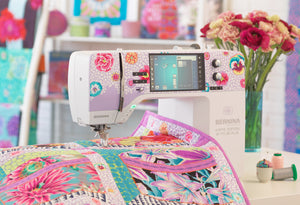

We Love Our Quilting Community
At High Country Quilts we care deeply about community. With our experiences in retail, we know that a store is not only a place to shop but also a place for the community to gather and share. During this busy...


Welcome to the vibrant world of fat quarters! These versatile fabric cuts are a quilter's best friend, but knowing how to slice them accurately is the key to unlocking truly beautiful projects. It all comes down to a simple process: press your fabric, create a perfectly square edge, and then cut the strips and shapes your pattern calls for.

If you've ever felt that magnetic pull toward a bundle of beautifully coordinated fabrics at the quilt shop, you already know the magic of the fat quarter. But what is it, exactly? A fat quarter is a piece of fabric measuring approximately 18 by 22 inches. Unlike a standard quarter yard—which is a long, skinny strip (9 by 42 inches)—this "fatter" shape gives you so much more flexibility for cutting larger squares and shapes.
Their convenience has made them a staple for quilters everywhere. It's no surprise that pre-cut formats like fat quarters recently accounted for 32.4% of total quilting fabric shipments globally. This popularity means that quilt shops know to stock them, and a huge number of patterns are designed specifically around them.
While you can buy pre-cut kits, learning to cut fat quarters yourself opens up a world of creative freedom. For a closer look at industry trends, you can explore this detailed breakdown of the quilting fabric market.
Learning this foundational skill unlocks the door to more intricate patterns and a professional finish, making your entire quilting journey more rewarding and enjoyable.
Cutting your own fat quarters gives you complete control over your project. You can ensure every single piece is perfectly square, which is the secret to avoiding the frustration of misaligned quilt blocks later. This precision is what separates a homemade-looking quilt from one with a polished, professional finish.
What's more, knowing how to break down a fat quarter efficiently helps you:

Before you even think about slicing into that gorgeous stack of fat quarters, let's talk about your setup. Getting your tools in order isn't just a preliminary step—it's the secret to getting clean, accurate cuts from the get-go. Precision and safety start here.
Think of these tools as a team. When they work together, you get perfect pieces every single time. For cutting fat quarters, there are three things you absolutely need: a self-healing rotary mat, a sharp rotary cutter, and a clear acrylic quilting ruler. This is your quilter's trifecta.
The mat is your foundation. It does the obvious job of protecting your table, but more importantly, it saves your rotary blade from getting dull. A dull blade is the enemy of good patchwork; it frays your fabric, skips threads, and can distort your cuts entirely.
My Two Cents: If you can, spring for the largest mat your workspace and budget can handle. A bigger surface means you aren't constantly shifting your fabric around, which is a major source of cutting mistakes.
Using a rotary cutter can slash your fabric prep time by as much as 70%. It’s no wonder they’re a staple in the $4.5 billion quilting industry, where efficiency and accuracy are everything. You can read more about quilting industry statistics and trends if you're curious.
Here's a breakdown of why each tool is so vital:
Spending a little extra on quality versions of these three tools really does pay off in the long run. For instance, a ruler with non-slip grips on the back is a lifesaver—it prevents that frustrating "ruler drift" that leads to wobbly cuts. These aren't just one-time buys; they’re investments in your quilting craft.
Let's be honest, the real secret to perfect patchwork isn't your fancy sewing machine—it all starts right here on your cutting mat. Fat quarters are incredibly handy, but they rarely arrive as a perfect 18” x 21” rectangle. Taking a few moments to square them up is the single most important thing you can do for accurate, beautiful quilt blocks.
First things first, give your fabric a good press. Use a hot, dry iron to smooth out every last crease and fold line from shipping. If you're a pre-washer like me, a quick spray of starch or a starch alternative can bring back that crisp, new-fabric feel. This little step makes the fabric much easier to handle and prevents it from stretching while you cut. Don't be shy with the iron; a truly flat piece of fabric is your best friend.
Before you start cutting, find the selvage. This is the tightly woven edge, often with tiny pinholes or the manufacturer's name printed on it. This edge is usually a bit distorted and won't lie perfectly flat, so it always needs to be trimmed away. On a fat quarter, you'll typically find the selvage along one of the longer sides.
Lay your pressed fat quarter on your cutting mat. The goal here is to create one perfectly straight edge to work from. Place your quilting ruler along one of the shorter, raw edges of the fabric, letting it hang over just enough to trim off any frayed or uneven bits.
To make sure your cut is perfectly perpendicular, align one of the horizontal lines on your ruler with the bottom folded edge of the fabric (or the selvage, if you haven't trimmed it yet). Hold the ruler down firmly with your non-dominant hand—I like to spread my fingers out like a starfish for even pressure. Now, take your rotary cutter and make one smooth, decisive cut away from your body. That's it! You now have your first clean, straight edge.
This simple workflow is the key to getting a perfectly squared-up piece of fabric every single time.

Now for the magic. Rotate the fabric 90 degrees on your mat. If you’re right-handed, you’ll want that newly cut edge on your left side.
Align a horizontal line on your ruler with the bottom edge of the fabric again. Then, slide the ruler over until its vertical edge lines up perfectly with that first clean cut you just made. Make your second cut.
You've just created a perfect 90-degree corner. This is the foundation for every precise cut you'll make from here on out.
My Two Cents: This two-cut method is a non-negotiable step in my studio. Creating that perfect right-angle corner first guarantees that every strip or square you cut from this point forward will be dead-on accurate. It’s a game-changer.
The difference this step makes is immediately obvious when you start piecing your blocks together.
| Attribute | Unsquared Fat Quarter | Squared Fat Quarter |
|---|---|---|
| Piece Accuracy | Shapes are slightly off, leading to wonky blocks. | All pieces are uniform with precise right angles. |
| Seam Alignment | Points and seams don't match up easily. | Seams nest perfectly and points are sharp. |
| Final Block Size | Blocks often end up smaller or larger than intended. | Blocks finish at the correct, consistent size. |
| Effort Level | More "fudging" and trimming required during sewing. | Assembly is faster, smoother, and more enjoyable. |
From this squared corner, you can now confidently measure and cut all your strips, squares, and triangles, knowing they will fit together beautifully. It’s a small investment of time that pays huge dividends in the final quality of your quilt.

Now for the fun part! With your fabric perfectly squared up, you can finally start slicing it into the building blocks for your next quilt. This is where all that potential packed into a single fat quarter gets unlocked.
Let's dive into the most fundamental cut: the strip. Strips are the backbone of so many quilting elements, from simple sashing and borders to the most intricate pieced blocks.
The most popular strip width by far is 2.5 inches, which you probably know from pre-cut "jelly rolls." To cut these, just lay your squared-up fat quarter on the mat. Line up the 2.5-inch mark on your ruler with the clean, straight edge of the fabric and make your cut. Keep moving your ruler over and cutting 2.5-inch strips until you've used the whole piece.
Once you have a nice pile of strips, turning them into squares is a breeze. This is called sub-cutting.
Let's say you need 2.5-inch squares. Just grab one of your strips, trim off the selvage to get a clean edge, and then turn it 90 degrees. From there, you simply cut the strip into 2.5-inch segments. It’s that easy.
This method works for any size square you need. It’s amazing how much you can get out of a single 18" x 21" fat quarter when you're precise.
What can you get from one fat quarter?
- Two 10" x 10" squares (the same as a "layer cake" square)
- Twelve 5" x 5" squares (just like a "charm pack")
- Six 2.5" x 21" strips (perfect for mixing with jelly rolls)
Maximizing your fabric this way is a huge deal, especially on big projects. A queen-size quilt might need 30-40 fat quarters, and making every inch count saves real money—a lesson you learn fast when you see how longarm quilting services are priced by the square inch! You can find more great tips on project planning from quilting experts on YouTube.
Ah, the Half-Square Triangle (HST). It's a cornerstone of quilting. There are a ton of ways to make them, but this is one of the most straightforward methods for beginners.
To make two HSTs at once, you’ll start with two squares of fabric. The trick is to cut them 7/8 of an inch larger than your finished HST size. So, if you're aiming for finished 4-inch HSTs, you'll need to start with two 4 7/8-inch squares.
Here’s the process:
Press them open, and voilà—two perfect HST units ready for your block. Mastering this simple technique is a game-changer and opens up a whole world of classic quilt patterns.
Alright, you've mastered how to cut fat quarters—but what happens next? Keeping all those freshly cut pieces in order is the real secret to a stress-free quilting project. Trust me, a chaotic cutting mat can quickly turn a fun afternoon into a frustrating mess of mixed-up squares and strips.
I've found that the simplest solutions are often the best. Grab some clear project boxes, zip-top bags, or even a handful of wonder clips to bundle identical stacks together. The absolute golden rule here is to always label everything. A small sticky note or scrap of paper with the size (e.g., "2.5-inch squares") and the intended quilt name can be a total lifesaver.
Before that rotary cutter touches the fabric, take a minute to step back and plan. This is especially crucial when you're making a scrappy quilt with a whole rainbow of fat quarters. Audition your fabrics first! Lay them out side-by-side on a design wall or even just the floor to see how the colors and prints play together.
This little bit of prep work helps you visualize the finished quilt and, more importantly, stops you from cutting into a precious fabric you later realize doesn't fit the vibe.
A well-organized workspace sets the stage for creativity. When your pieces are sorted and labeled, you can focus on the fun part—sewing—instead of hunting for the right square.
Once you get the hang of organizing your quilt projects, you might be inspired to tackle the rest of your creative space. Learning how to organize all your craft supplies like a pro can make a huge difference in your overall workflow and enjoyment.
Every quilter, no matter how long they've been stitching, has questions. When it comes to fat quarters, a few pop up time and time again. Let’s tackle some of the most common ones I hear.
Ah, the great debate. Personally, I’m a big fan of pre-washing fat quarters, and here’s why: it preshrinks the fabric and gets rid of any extra dye that might run and ruin your finished quilt. It’s a little insurance policy for your hard work.
If you do decide to pre-wash, don't skip the next step. You'll need to give them a good press with plenty of starch or a starch alternative. This brings back that crisp, stable feel you need for precise cutting.
The golden rule here is consistency. If you start a project with washed fabrics, stick with it. Mixing washed and unwashed fabric is a recipe for disaster—they'll shrink differently, which can distort your quilt top and even pop your seams.
Hands down, the most frustrating mistake is failing to square up your fat quarter before you make a single cut. Fat quarters rarely arrive with perfectly straight edges; they’re often a bit wonky from the way they’re cut and folded at the shop.
If you start measuring from one of those crooked edges, every piece you cut will be skewed. Trust me, this leads to a world of pain when your quilt blocks just refuse to line up. Taking a moment to create a true 90-degree corner is the most important thing you can do for an accurate project.
Wasting beautiful fabric feels like a crime, right? The key to maximizing every inch is to plan your cuts before you start slicing. I always map out my strategy first.
My best advice is to cut your largest pieces first. For example, if your pattern calls for a 6-inch square and a handful of 2.5-inch strips, start by cutting that big square from a newly squared-up corner. You can then easily cut the long strips from what’s left over with very little waste. A quick sketch on a notepad can work wonders for visualizing the best layout.
Ready to build your fabric stash with beautiful, high-quality fat quarters? Explore the stunning collection at High Country Quilts and find the perfect prints for your next project. Visit us online to see our latest arrivals.
At High Country Quilts we care deeply about community. With our experiences in retail, we know that a store is not only a place to shop but also a place for the community to gather and share. During this busy...

Hi! We’re Adam and Renee Wheaton, the new owners of High Country Quilts! For more than 40 years, we’ve owned and operated vacuum and sewing businesses. Following in Renee’s father’s footsteps after he retired from All Discount Vacuum and Sewing in Colorado...


Leave a comment