
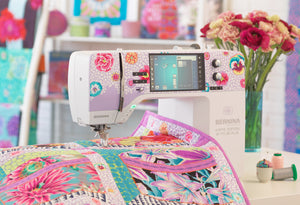

We Love Our Quilting Community
At High Country Quilts we care deeply about community. With our experiences in retail, we know that a store is not only a place to shop but also a place for the community to gather and share. During this busy...


To keep your fabric from fraying, you need a smart combination of prep work, the right cutting tools, and a solid edge finish. The real secret is to stabilize the fibers before you even think about cutting, maybe with some spray starch, and then follow up with a clean cut from a sharp tool like a rotary cutter or pinking shears.

Let's be honest, there's nothing more maddening than watching a perfectly cut piece of fabric dissolve into a web of loose threads right before your eyes. The solution isn’t some magic trick; it’s a foundational skill that starts long before you pick up your scissors. Learning how to cut fabric without it fraying is one of those core skills that truly elevates your sewing projects.
Consider this guide your personal sewing mentor. We'll walk through the essentials together, whether you're a quilter striving for perfect points, a cosplayer creating an elaborate costume, or just sewing your very first pillowcase at home.
Fabric frays for a simple reason: the individual threads woven together come loose along a raw edge. This is especially true for loosely woven materials like linen, tweed, and even some cottons. Our goal is to stop those threads from ever getting the chance to unravel in the first place.
It all boils down to a three-part approach that works every time:
By mastering these three areas, you'll stop reacting to fraying and start preventing it altogether. This small shift in your process is what makes the difference between a homemade project and a handmade one that looks professional and lasts for years.
For example, when I'm quilting, I almost always give my cotton pieces a light press with starch. It makes cutting with a rotary blade so much more accurate and crisp. But if I'm working with a slippery, delicate silk, I might just dab a bit of liquid seam sealant on the edges of small pattern pieces where a machine finish would be too bulky or visible.
Throughout this guide, you won't just learn how to do something, but why it works. When you understand the principle of fiber stability, you can walk up to any bolt of fabric with confidence, knowing your project will look just as good on the inside as it does on the outside.
I can't tell you how many times I've seen a gorgeous piece of fabric turn into a frayed, stringy mess simply because someone was too eager to start cutting. If you're dealing with anything that frays easily—like slippery silks or loose-weave linens—a little prep work isn't just a good idea; it's your secret weapon.
Think of it as taming the fabric before you ever pick up your scissors. By adding some temporary stability, you're preventing the threads from wiggling loose the second your blade touches them. It’s the difference between a clean, professional edge and a frustrating, unraveled disaster.
Before you do anything else, toss that fabric in the wash. This is non-negotiable. Fabrics come straight from the mill with sizing, chemicals, and other finishes that can make them feel stiff or slippery. A good wash gets rid of all that.
More importantly, it forces the fabric to shrink before you cut out your precious pattern pieces. Imagine sewing a perfect dress, only to have it shrink into a doll-sized version after its first wash. Pre-washing saves you from that all-too-common heartbreak.
Here’s where you really take control. Adding a bit of starch or stabilizer can completely change how a difficult fabric behaves on the cutting mat.
Spray Starch: Your best friend for most quilting cottons and other fairly stable wovens. A quick misting gives the fabric a crispness that helps your rotary cutter glide right through, leaving a perfectly clean edge.
Fusible Interfacing: When you’re wrestling with a particularly shifty or delicate fabric like rayon challis or charmeuse, you need to bring in the big guns. A lightweight fusible interfacing is a game-changer. It gently bonds to the back of your fabric with an iron, giving it the body and stability of a simple cotton.
Pro Tip: When you're using spray starch, go easy. A light, even mist followed by a pass with a hot, dry iron is all it takes. The goal is a crisp finish, not fabric that's stiff and crunchy like cardboard.
For example, trying to cut a floaty chiffon cape for a cosplay project without a stabilizer is a recipe for pure frustration. But by ironing a very lightweight fusible interfacing onto the wrong side first, that chiffon suddenly becomes a dream to work with. Your cuts will be sharp, accurate, and completely free of fraying. For more great tips from industry pros, check out what the experts at Bohin have to share on your sewing projects.
Finally, always give your fabric a thorough press after washing and treating it. A smooth, wrinkle-free surface is just as crucial as a sharp blade for getting that clean, fray-free cut that makes a project look truly professional.
If you've ever watched your carefully cut fabric pieces unravel into a mess of threads, you know that the tool you use makes all the difference. The fight against fraying begins the moment your blade touches the material. Having the right cutter isn't just about getting a straight line; it's about making a clean slice that keeps the weave intact.
Before you even think about cutting, take a moment to assess your fabric. Slippery silks and chiffons behave very differently from stable cottons, and your first step should be getting them ready for a clean cut.

As you can see, sometimes a quick press is all you need, but for those trickier fabrics, a little starch can be a game-changer, giving the material enough body to be cut without slipping and fraying.
Choosing the right tool for the job is just as critical as prepping the fabric. Let's break down the most common cutting tools and see where each one shines.
Here's a quick comparison of the three go-to tools you'll find in most sewing rooms. Each has its strengths when it comes to getting a fray-free edge.
| Cutting Tool | Best For | Fray Prevention Level | Pro Tip |
|---|---|---|---|
| Fabric Shears | Curves, corners, and intricate pattern pieces. Excellent for thick or textured fabrics like wool and bouclé. | High | The golden rule: NEVER use your fabric shears on paper. It dulls the blades instantly and causes snags. |
| Rotary Cutter | Long, straight cuts for quilting, bag making, or cutting block patterns. Perfect for delicate or shifty fabrics. | Very High | Change your blade at the first sign of skipping. A dull blade chews through fabric, creating a frayed mess. |
| Pinking Shears | A quick, built-in edge finish for stable to moderately fray-prone fabrics. Ideal for seam allowances on linings or samples. | Moderate | The zigzag cut works best on the bias (a 45-degree angle to the grainline), which further minimizes fraying. |
Understanding these differences will help you grab the right tool instinctively and set your project up for success from the very first cut.
A great pair of fabric shears feels like an extension of your hand. They offer incredible precision, which is exactly what you need when navigating the curves of an armhole or the sharp corners of a collar. Unlike basic scissors, shears have a specially designed knife-edge that slices cleanly through fibers instead of crushing them.
I always reach for my shears when working with thick materials like tweed or denim. They give me the leverage to cut through multiple layers cleanly. Just remember to dedicate them to fabric only—even one cut through paper can dull them enough to cause snagging on your next project.
For any project involving long, straight lines, a rotary cutter and a self-healing mat are your best friends. Think quilting, cutting straps for bags, or sizing large panels for home decor. This tool is an absolute workhorse.
It works by applying even, downward pressure, which pins the fabric to the mat as you cut. This action is what makes it so brilliant for slippery or delicate materials that might otherwise shift and fray under the lifting motion of scissors.
A sharp rotary blade is non-negotiable. The moment it starts skipping threads, stop and swap it out for a new one. Pushing a dull blade will only damage your fabric and your cutting mat.
Pinking shears are one of the most clever, low-tech tools for managing fraying. That classic zigzag edge isn't just for decoration; it's a functional design that stops threads from unraveling.
By cutting the fabric edge into dozens of tiny, angled pieces, the shears create threads that are too short to pull loose and fray. It’s a fantastic way to finish seam allowances inside a garment if you don't have a serger. I find them especially useful for finishing the edges on facings or linings that won't be visible from the outside—it's fast, effective, and gets the job done.

Getting that perfectly clean cut is a great feeling, but the job isn't done yet. To make sure your project survives its life outside the sewing room, you have to secure those raw edges. A solid seam finish is what separates a homemade project from a handmade treasure.
This is where you stop fraying before it can even start. These techniques do more than just protect your seams; they add a professional structure and quality that you can literally feel. Let’s walk through the most common and effective ways to finish your seams, from everyday machine stitches to beautiful couture details.
For most of us, the real workhorse for finishing edges is the humble zigzag stitch on our home sewing machine. It’s simple, effective, and gets the job done. The stitch works by creating a scaffold of thread over the raw edge, locking in any loose fibers.
This stitch is surprisingly versatile. On a stable quilting cotton, a standard zigzag along the edge works beautifully. But if you’re tackling something that frays just by looking at it—like a loosely woven linen or tweed—look for a multi-point zigzag setting on your machine. It offers more coverage and really pins those threads down.
My Two Cents: Always, always test your stitch on a scrap first. Your goal is to find the sweet spot with stitch width and length that fully covers the edge without making the fabric pucker or "tunnel." It's a quick check that saves a lot of headaches.
If you want your seams to look like they came straight from a high-end clothing rack, you need a serger, also known as an overlocker. This machine is a game-changer. In one incredibly fast pass, it trims away the excess seam allowance, sews a seam, and wraps the new edge in a fortress of thread.
The result is a perfectly clean, fully encased edge that simply cannot fray. It's the industry standard for a reason, especially for knits, activewear, and just about any garment you want to last forever. While a serger is an investment, it transforms your finishing process from a chore into a high-speed, professional step.
Sometimes, sewing a finish just isn't the right answer. For tiny, delicate, or hard-to-reach spots, a liquid seam sealant like Fray Check is an absolute lifesaver. You just apply a thin line of this clear liquid to a raw edge, and it dries into a permanent, invisible shield against unraveling.
This isn't for finishing a whole garment, but it's perfect for targeted fixes:
A little goes a long way. Use it sparingly, as too much can make the fabric a bit stiff.
When you're working on a truly special garment, the seam finish can become part of the design itself. These classic couture techniques are all about completely enclosing the raw edges, leaving nothing but beauty inside and out.
We've all been there. You find the most beautiful silk or a rustic, textured tweed, and you can't wait to turn it into something amazing. Then you lay it on your cutting table, and it seems to unravel just by looking at it. These are the fabrics that test our patience, but with a few tricks up your sleeve, you can get a clean cut every time.
Even with perfect prep work, some materials are just naturally prone to fraying. Let's get into the nitty-gritty of handling these common culprits so you can stop the fraying before it even has a chance to start.
Lightweight, slippery fabrics like silk, chiffon, and charmeuse are notorious for wanting to slide right off the cutting mat. That constant shifting is a direct cause of skewed, frayed edges. Your main goal here is to keep the fabric from moving at all.
One of the best methods I’ve found is the tissue paper sandwich. It’s an old-school trick that works like a charm.
You'll pin your pattern pieces right through all three layers. The paper gives the fabric the stability and grip it’s missing, preventing the delicate fibers from wiggling around as you cut. Just use your sharpest rotary cutter or shears, and once you're done, gently tear the paper away from the edges.
By sandwiching the fabric, you're essentially turning a slippery, uncooperative material into a stable, paper-like surface. This gives you the control needed for a perfectly clean cut on even the most delicate wovens.
On the other end of the spectrum are fabrics with a loose, open weave—think linen, tweed, and some homespuns. These are practically designed to fray because the threads have so much space to pull away from the edges. For these materials, you need a slightly different game plan.
First off, always give yourself a wider seam allowance. Instead of the standard 5/8 inch, I often cut with a 3/4 or even 1-inch allowance. This extra fabric acts as a buffer. If the edges start to unravel while you're handling the pieces, you still have plenty of solid material left for a strong, clean seam.
The second, and most critical, step is to finish the edges immediately after cutting. Don't set the pieces aside to deal with later. The moment a piece is cut, take it straight to your serger or sewing machine. A quick run through the serger or a simple zigzag stitch will lock those threads down before they can make a mess.
When I’m working on a tweed jacket for a cosplay project, for example, I serge every single pattern piece the second it comes off the cutting mat. It might feel like an extra step at the moment, but it saves me from a massive headache and a blizzard of loose threads down the line.
Let's tackle some of the questions I hear all the time from fellow sewers about keeping those fabric edges from unraveling. It’s a frustrating problem, but with the right approach, you can get a clean, professional finish every time.
If you're just starting out and don't have a serger, my go-to recommendation is a simple one-two punch. First, do all your cutting with a sharp pair of pinking shears. That zigzag edge they create dramatically shortens the threads along the cut, making it much harder for them to fray.
For an extra layer of security, especially for anything that will see the inside of a washing machine, just run a simple zigzag stitch from your sewing machine right inside the pinked edge. This combo is surprisingly tough and works beautifully on most woven fabrics, from crisp cottons to cozy flannels. It's a fantastic way to build good habits right from the start.
Ah, the dreaded knit curl! While knits don’t technically fray like wovens, their tendency to roll up can be just as maddening. The best way to fight this is to use a rotary cutter and mat. Scissors tend to lift and slightly stretch the fabric as you cut, which encourages curling, but a rotary cutter glides right through without disturbing it.
The real key is to handle the fabric as little as you can. Don't pull or stretch it as you cut, and try to move it gently from your cutting table to your machine. A light misting of spray starch can also work wonders, giving the edge just enough stiffness to lie flat while you sew.
This little bit of prep makes a world of difference. It stops that edge from rolling into a tiny tube and disappearing into your seam allowance.
Liquid seam sealants are best saved for small, specific jobs where sewing a finished edge isn't practical or would add unwanted bulk. Think of it as surgical glue for your fabric—you use it for precision work, not for slathering over a whole seam.
It’s the perfect solution for tasks like:
Try to avoid using sealants on long seams. They can make the fabric feel stiff and sometimes darken the color slightly. Because of this, you should always test on a scrap piece of your fabric first to see how it behaves before you commit to your actual project.
Once your garments are beautifully cut and sewn, showing them off is the final step. For creating stunning product images for an online store, tools like an AI Ghost Mannequin Generator can help you present your work professionally.
At High Country Quilts we care deeply about community. With our experiences in retail, we know that a store is not only a place to shop but also a place for the community to gather and share. During this busy...

Hi! We’re Adam and Renee Wheaton, the new owners of High Country Quilts! For more than 40 years, we’ve owned and operated vacuum and sewing businesses. Following in Renee’s father’s footsteps after he retired from All Discount Vacuum and Sewing in Colorado...


Leave a comment