


Free Fabric All Year: Our 2027 Fabric Punch Card
November 2–25 only: buy a $200 gift card in either store and get a free yard of fabric every month of 2027.

Last Updated: October 31, 2026
Quick Summary
Buying first sewing machine choices comes down to matching a machine to the projects you actually plan to make in the next six months. Write down three projects, set a budget ceiling, and decide whether you want dealer support such as setup and a test sew.
Buying your first sewing machine is less about finding the most features and more about matching a machine to the projects you actually plan to make. Many beginners find that a clear list of intended projects narrows the field quickly. Start by writing down three things you want to sew in the next six months, such as clothing repairs, home décor, or quilt blocks.
A common mistake is buying for a future skill level you have not yet reached. A machine that suits a quilter can overwhelm someone who has never threaded a bobbin. Think about how much time you will spend learning, too, because a machine you enjoy using gets used far more often.
Before you visit a shop for buying first sewing machine options, decide whether you want to sew with a dealer's help or shop independently. Dealers often provide setup, a short orientation, and a test sew, which many first-time buyers value. We recommend giving yourself a clear budget ceiling so you can compare machines in the same price range.
The best sewing machine for beginners is one that handles straight stitches, zigzag stitches, and buttonholes reliably, with a simple threading path and easy bobbin access. Extra stitch counts look impressive on a spec sheet, but most first projects use only a handful of stitches.
Focus on features that reduce frustration. An automatic needle threader, a clearly marked tension dial, and a top-loading bobbin make learning far easier. Adjustable presser feet and a sturdy metal frame also matter, because a wobbly machine makes straight seams hard to control.
Our pick for first-time buyers in this category is the Bernette B59 Sewing & Embroidery Machine ($2,249.00), which combines comfortable sewing with an accessible entry into embroidery. Its 515 stitches, 268 built-in embroidery designs, 3.5-inch color touchscreen, and automatic thread cutter cover everyday sewing and embroidery work. For a curated comparison of current options, see 5 Best Sewing Machines for Beginners in 2026.
Best for: Beginners who want sewing and embroidery in one machine. Skip if: You only plan to do basic hemming and mending.
A mechanical machine uses dials to select stitches and adjust settings, while a computerized machine uses a touchscreen or button panel and often automates tension and stitch selection.
For most new sewers, a computerized machine is easier to learn on because the screen shows exactly which settings are active. Beginners who want to understand the mechanics of stitch formation sometimes prefer mechanical models, since every adjustment is visible. Neither type is inherently better; the right choice depends on whether you value simplicity or automation.
Prices for first sewing machines vary widely across the United States, and the right budget depends on your goals. Basic mechanical models are generally the least expensive, while computerized and embroidery-capable machines cost considerably more. Rather than chasing the lowest sticker price, consider the cost of repairs, accessories, and the classes you may need.
At High Country Quilts, the Bernette B59 is priced at $2,249.00 and the Bernette B64 Airlock Serger is priced at $1,999.00. A serger is a specialty machine for finishing seams and is usually a second purchase rather than a first machine. Budget for a starter set of needles, thread, and a seam ripper as well.
The article's prices for the two machines it names are summarised below.
Bernette B59 Sewing & Embroidery Machine →
| Item | Price | Note |
|---|---|---|
| Bernette B59 | $2,249.00 | Sewing and embroidery machine |
| Bernette B64 Airlock Serger | $1,999.00 | Specialty seam-finishing machine, usually a second purchase |
Authorized dealers and big-box stores offer different strengths, and it helps to ask each seller what support is included before you buy.
If you are a first-time buyer, ask whether the dealer offers instruction, warranty service, and a test sew before you commit.
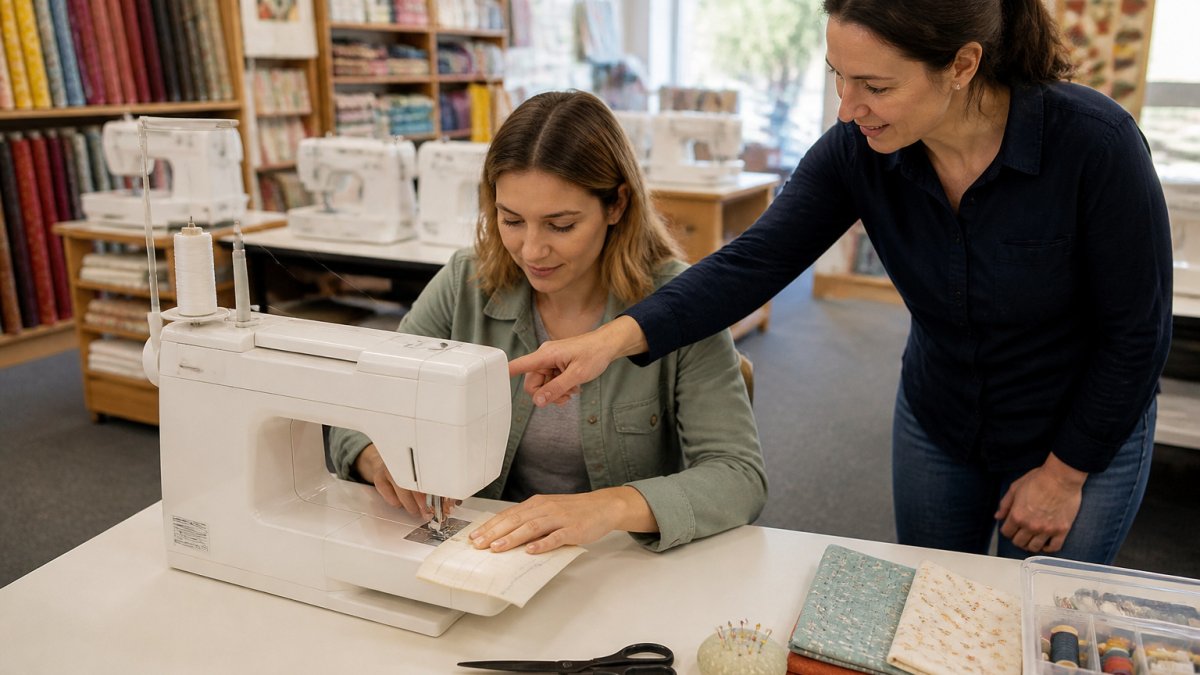
Testing a machine before you buy shows you how it actually feels in use. Bring your own fabric scraps and a spool of thread so you can evaluate stitch quality on familiar materials. Ask the seller to demonstrate a straight stitch, a zigzag stitch, and a buttonhole.
Watch for these signs during your test: even stitches on both sides of the fabric, smooth fabric feed without bunching, and quiet operation at medium speed. Try changing the stitch length and width to confirm the controls respond predictably. If the machine skips stitches or jams on light fabric, ask the dealer to adjust it before you buy.
Most new machines include a basic accessory set, but a few extras make early projects much easier. Ask for a seam ripper, an extra bobbin, a walking foot if you plan to quilt, and a sewing machine needle assortment. Beginner classes often include a required kit, so check what the instructor expects.
Quilting and embroidery machines can work for beginners, but they add complexity. A quilting machine benefits from a large throat space and a walking foot, while an embroidery machine adds hoops, designs, and software. If you are unsure, start with a straightforward sewing machine and add embroidery later. For a structured start, the School of Sewing book ($25.19) walks through twelve beginner projects, one lesson per month.
Our team at High Country Quilts is glad to help you compare machines before you buy. We are an authorized BERNINA dealer, so ask us about setup and questions after purchase.
If you are ready to learn on your new machine, the Kids Quick Start class ($75.00) introduces the sewing machine through a small cinch bag project. Find a beginner sewing class in Colorado to pair with your machine purchase. When you are ready to compare machines in person, see the Bernette B59 Sewing & Embroidery Machine and plan a visit to our Highlands Ranch store.

Start with the sewing you plan to do most. For basic garment and home sewing, a reliable straight stitch, a zigzag stitch, an adjustable stitch length and width, and a strong, easy-to-change presser foot system cover most needs. Check that the machine handles the fabric weights you will use, that the bobbin is easy to access and load, and that threading is clear without a manual. A machine that feels stable and quiet at moderate speed is usually a better sign than one packed with decorative stitches you may never use. Ask whether the dealer offers set-up help and a warranty, since those support matter as much as the hardware.
A beginner can start with a basic mechanical machine for a few hundred dollars, while computerized or embroidery-capable models run considerably higher. Set a budget that covers the machine plus starter accessories, a few presser feet, needles, thread and fabric for practice. The Bernette B59 Sewing & Embroidery Machine is listed at $2,249.00 and is an option for people who want embroidery as well as sewing. Compare a few options in person before deciding, and do not assume the most expensive model is the best fit for learning.
For most new sewers, a mechanical machine is simpler to learn on because its controls are direct and there are fewer settings to troubleshoot. A computerized machine offers pre-programmed stitches, automatic buttonholes and on-screen guidance, which can speed up projects once you understand the basics. If you expect to grow into more techniques, a computerized model may save money over time. If you want a machine you can understand quickly, start with a mechanical model and upgrade later if your sewing demands it.
Compare what each seller includes, such as demonstrations, set-up, and post-sale support, before you decide. Consider what happens if the machine needs service six months from now. At High Country Quilts in Highlands Ranch, we are an authorized BERNINA dealer and can help you with questions about our machines.
Sew a straight line, a zigzag and a buttonhole on several fabric types, including a stable cotton and a lighter knit if you plan to use both. Check that stitches stay even, the machine does not skip or jam, the presser foot lifts and lowers smoothly, and the foot pedal responds gradually. Listen for grinding or rattling, and try changing the needle and bobbin yourself. Ask to test the machine with your own fabric and thread when possible, since demonstration samples can look better than what you will get at home.
November 2–25 only: buy a $200 gift card in either store and get a free yard of fabric every month of 2027.

Serger and BERNINA Mastery classes, longarm training, bag-of-the-month, Kids Sewing Club and a Highlands Ranch retreat. Here's what's on the calendar in November.

Free gifts, included packages and special pricing on the BERNINA 790 ULTRA, 990, Liberty Editions, L 890 serger and Q Series longarms, now through December 31.


Leave a comment