
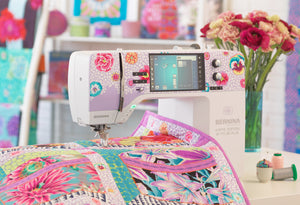

We Love Our Quilting Community
At High Country Quilts we care deeply about community. With our experiences in retail, we know that a store is not only a place to shop but also a place for the community to gather and share. During this busy...


You're probably here because you saw a bolt of batik fabric that stopped you in your tracks.
It might have been a deep ocean blue with shifting shadows, a leafy print with color that seemed to glow from inside the cloth, or a warm floral that looked nothing like ordinary quilting cotton. Then the questions started. Is this just a pretty fabric? Is it harder to sew with? Why does it look richer than a standard print? And if you're shopping for Hoffman Bali Batiks for sale, how do you choose confidently without ending up with colors that don't quite match?
Those are smart questions.
Many quilters fall in love with batiks before they fully understand them. That's normal. Batiks have a different feel, a different look, and a different buying experience than many printed cottons. They can be beginner-friendly, but they reward a little know-how. Once you understand what you're looking at, they stop feeling mysterious and start feeling exciting.
At High Country Quilts, we meet plenty of shoppers who are drawn to Hoffman Bali Batiks because the fabrics look painterly and polished at the same time. They often want to know whether batiks are worth the investment, whether hand-dyed fabrics are hard to work with, and how to avoid surprises when ordering online. Those are exactly the places where a little guidance helps.
A wall of batiks can feel different from every other fabric display in a quilt shop. Regular prints usually announce themselves with obvious flowers, dots, or novelty motifs. Batiks whisper instead. They pull you in with layered color, soft texture, and tiny shifts in value that make one fabric look sunlit and another look stormy.
That's part of why new quilters pause in front of them.
The first reaction is usually delight. The second is hesitation. If the fabric looks this special, people often assume it must be tricky to use. They worry they'll cut into it the wrong way, pair the wrong colors, or spend more than they should on something they're not ready for.
Batiks don't require expert status. They reward careful looking and simple preparation.
Hoffman has long been a familiar name to quilters, and that matters when you're shopping a fabric category that can feel unfamiliar. You're not just buying a random bolt with saturated color. You're buying into a fabric line known for hand-dyed character, broad color range, and project-friendly variety.
If you've admired Hoffman Bali Batiks for sale but haven't taken the plunge yet, the good news is that you don't need to learn everything at once. You just need to know what makes these fabrics different, what to check before you buy, and how to sew them with confidence. Once those pieces click, batiks become much less intimidating.
Batiks stand apart because they begin with a traditional wax-resist dyeing process. Instead of printing color onto fabric in the way many quilting cottons are made, artisans apply wax to certain areas so dye won't penetrate those spots. When the wax is removed, the cloth reveals pattern, movement, and layered color that feel built into the fabric rather than sitting on top of it.
A simple way to picture it is to think of masking tape in painting. Wherever the wax sits, it protects part of the design while the surrounding cloth takes on dye. Repeat that process in stages, and the fabric develops depth that's hard to imitate with flat surface printing.
Here's the process in visual form.

When quilters say batiks have richness, they usually mean a few things at once. The color often looks more saturated. The transitions can feel watery, marbled, or softly mottled. Even when a batik includes a defined leaf, floral, or geometric motif, there's often visual texture behind it.
That layered look is one reason batiks work so well in quilts that need depth without clutter. A blender batik can do more than a flat solid, but it won't fight your piecing the way a busy novelty print might.
Retailers also describe Hoffman's batik range as very broad. One source notes “nearly a thousand different designs in production” in the Bali Batik line at TrendTex Fabrics' Hoffman Bali Batik page. For a shopper, that kind of breadth means you're not limited to one narrow palette or a handful of motifs. You can build a full project with lights, mediums, darks, and texture shifts that still feel related.
Hoffman Bali Batiks carry extra trust because the company itself has deep roots. Hoffman California Fabrics says it was founded in 1924, and its factory overview states that it operates its own factory in Bali, creates over 800 new hand-dyed batik designs, and produces over 1 million yards annually in Bali batiks, as described in Hoffman's official factory video.
For quilters, those numbers mean something practical. A large, ongoing batik program usually gives you more consistent access to coordinated fabric families. If you want to make a wall quilt now and a matching table runner later, you're working with a line built for real quilting demand, not a one-time novelty drop.
Batiks usually cost more than ordinary printed quilting cotton because the making process is more involved and the finished fabric carries visible hand-work character. You're paying for color complexity, a distinctive surface look, and a fabric style that often reads as more artistic right out of the bolt.
That doesn't mean every project needs batik. It means batik is often the right choice when you want:
Practical rule: If you want your quilt to look richer with fewer fabrics, batiks are often a smart path.
For beginners, that's a useful way to think about value. You're not only buying yardage. You're buying a fabric that does more visual work for you.
You are standing at the fabric shelf with two batiks that both look blue at first glance. One reads more turquoise in daylight. The other leans smoky and soft. That small difference can change the whole quilt, which is why shopping for Hoffman Bali Batiks for sale works best when you look beyond the color name and start judging how each fabric will behave inside a fabric pull.

If you're ready to browse, explore our vibrant collection of Hoffman Bali Batiks today.
Hoffman Bali Batiks are quilting cotton, and batiks are usually sold in the standard quilting width range. Because they are hand-dyed and hand-finished, small variations from bolt to bolt are normal. If you are new to batiks, that point matters more than it may seem at first.
A good comparison is paint mixed by hand. The color family stays consistent, but one batch may be a touch deeper or softer than another. In quilting, that can affect borders, backgrounds, backing, and any project where you want one fabric to look continuous across a large area.
That is why experienced quilters often buy with a little more intention:
That last point can save real frustration.
If a beginner worries about dye lot differences, the safest plan is simple. Buy enough from the same bolt for any area where exact matching matters. If the project is scrappy, relaxed variation usually adds charm instead of causing a problem.
Both methods can work well, but they help in different ways.
| Shopping style | What it helps with | What to watch for |
|---|---|---|
| In person | Comparing undertones, checking value, seeing texture clearly | Less convenient if you need to shop quickly |
| Online | Browsing a larger selection, planning from home, easy comparison | Screen settings can shift color and contrast |
For new batik shoppers, value is often the missing piece. Value means how light or dark a fabric appears. If two fabrics are different colors but almost the same value, they can blur together in a pieced block. If their values are farther apart, the pattern usually shows more clearly.
That is why a batik pull should be judged a little like a black-and-white photo. The colors may be gorgeous, but the light, medium, and dark balance is what helps the quilt design read well.
Many new batik fans fall in love with the richest fabrics first. That makes sense. Batiks are full of movement and color. But a quilt made from all high-energy fabrics can start to feel crowded, much like a room where every wall is painted a bold color.
A calmer, more usable fabric pull usually includes contrast and resting places for the eye:
This approach helps you buy fabrics that will sew well together, not just fabrics that look appealing one by one.
If you shop with a pattern in mind, write down the needed values before you buy. For example, a pattern may call for a dark accent, a medium print, and a light background. That note keeps you from coming home with five beautiful mediums and no contrast.
Precuts and bundles offer different advantages. They are helpful, but they are not interchangeable.
Yardage gives you freedom. You can cut borders, larger pieces, and custom shapes without trying to stretch every inch. Precuts save time. They remove some early decisions and let you get to the fun part faster. Small bundles are often the easiest starting place for a beginner who wants coordinated batiks without building an entire palette alone.
A simple way to choose is to ask what problem you are solving.
That learning piece is important. A good bundle works like a mini lesson in color balance. You can spread the fabrics out and start noticing how warm, cool, light, dark, busy, and quiet pieces support each other.
If you are shopping at High Country Quilts or planning an online order, that mindset will help you buy with more confidence and less guesswork. Batiks become much easier to choose once you stop asking, “Do I like this fabric?” and start asking, “Where will this fabric work in my quilt?”
Batiks often surprise first-time users because they behave a little differently under the needle. They're still cotton, but the hand-dyed construction and tighter feel can change how they cut, press, and stitch. The good news is that most of the “difficulty” disappears once you make a few smart adjustments.
Beginners usually gain confidence quickly here.

Beginner guides often leave out the practical part. Batiks are hand-dyed, and one retailer highlights key considerations such as prewashing to test for colorfastness, choosing the right needle for the tighter weave, and appropriate pressing on its Hoffman batik guide page.
If you're new to batiks and nervous about bleeding or shrinkage, prewashing is a reasonable choice. It gives you information before the quilt is assembled. You'll know whether a saturated piece needs extra rinsing, and you won't be guessing once light fabrics are stitched beside dark ones.
Some experienced quilters skip prewashing because they like the crisp hand of unwashed fabric. That can work too. For a beginner, though, peace of mind matters. If washing your fabric first helps you relax and enjoy the project, that's a solid decision.
Batiks often feel smooth and dense compared with softer printed cottons. Because of that, a sharp needle matters. A fine, sharp needle helps the machine pierce cleanly rather than pushing at the fibers.
Good habits make a visible difference:
If you need supplies for setup, shop for quilting needles and notions before you start cutting. That keeps your first batik project from turning into a troubleshooting session.
Use the fabric's crispness to your advantage. Small units, narrow points, and detailed shapes often look especially clean in batik.
Batiks can hold a crease beautifully, which is one reason pieced blocks can look so sharp in them. Still, pressing works best when you stay controlled rather than aggressive. Lift and press instead of scrubbing the iron back and forth.
Try this sequence:
That little pause helps the fabric set into shape.
If your machine ever seems fussy with dense quilting cottons, setup matters more than force. At High Country Quilts, one practical option is BERNINA machine support and supplies through the shop's sewing department, especially if you want help matching machine setup to quilting fabrics and notions.
| Problem | Likely cause | Simple fix |
|---|---|---|
| Fabric feels stiff | New hand-dyed cotton often has a firmer hand | Prewash or steam press before cutting |
| Skipped stitches | Needle is dull or not sharp enough | Replace with a fresh fine needle |
| Colors feel “off” in the block | Values are too similar | Step back and compare light, medium, and dark placement |
| Edges fray more than expected | Heavy handling after cutting | Cut efficiently and piece sooner |
A lot of success with batiks comes down to respecting the fabric rather than fearing it. Once your needle is sharp, your cuts are clean, and your pressing is calm, batiks often feel wonderfully cooperative.
Batiks don't only work for tropical-looking quilts. That's one of the biggest surprises for new shoppers. Yes, they shine in lush color stories, but they're also excellent in modern quilts, traditional stars, art quilts, table runners, bags, and home décor.
The key is matching the fabric's personality to the project.

If you love visual movement, strip quilts and bargello-style designs can make batik color transitions look almost liquid. A coordinated set of batiks with gradual shifts from light to dark creates motion with very little extra effort from the pattern itself.
If you prefer precision, batiks are also wonderful for:
A quiet blue-gray batik can become a moody sky. A rust-and-gold blender can read like autumn leaves or sunlit earth. This versatility makes batiks especially fun. One fabric can do the work of color and texture at the same time.
You don't need to begin with a bed quilt. A pillow cover, runner, mini quilt, or zip pouch gives you room to learn without pressure. Those projects let you test how batiks cut, press, and stitch before you commit to larger yardage.
A beginner-friendly progression might look like this:
That sequence teaches a lot. You learn how batiks behave, which colors you naturally reach for, and whether you prefer bold contrast or softer blending.
When a fabric already has depth, even simple patchwork can look thoughtfully designed.
Some batiks have stronger motifs like leaves or florals. Others are subtle enough to read almost as solids. That difference can guide your pattern choice.
| Batik style | Works well for | Why |
|---|---|---|
| Mottled and marbled | Backgrounds, gradients, modern quilts | Adds texture without overpowering shapes |
| Leaf or floral motifs | Nature quilts, borders, focal blocks | Gives movement and recognizable form |
| Tone-on-tone batiks | Traditional patchwork, stars, samplers | Keeps piecing crisp while adding depth |
If you're ready for ideas that pair well with your fabric pull, browse our curated quilt patterns and choose one that lets the batiks do what they do best.
Buying batiks from a local quilt shop changes the experience in ways that matter. You can hold a fabric at arm's length and judge value. You can place one green next to three others and see which one leans gold, which one leans blue, and which one finally solves the palette problem in your quilt.
That kind of comparison is hard to duplicate on a screen.
A local shop also helps with the moments that trip beginners up. Maybe you're not sure whether your border fabric is too busy. Maybe your lights aren't light enough. Maybe your quilt needs one calmer fabric to keep the whole top from looking crowded. Those are much easier decisions when you can spread fabrics out and get another set of trained eyes on them.
Batiks ask shoppers to think in terms of value, saturation, and variation. Staff can help you compare pieces that look similar at first glance but behave very differently in a finished quilt. That's especially helpful when you're buying for a larger project or trying to coordinate new fabric with something already in your stash.
Classes matter too. A beginner sewing class or color-focused workshop gives you a place to test ideas before they become expensive mistakes. Many quilters learn fastest when they can ask, “Would these two work together?” and get an answer on the spot.
That broader support is easy to overlook. Fabric is only one piece. You may also need a fresh needle, a pattern, batting advice, or help with machine setup for crisp piecing. When those pieces come from the same place, the project tends to move more smoothly.
If you're curious how independent shops think about online selling versus marketplace selling, this practical article on Shopify vs Etsy for growing businesses gives useful context. It helps explain why some quilt shops build their own online collections while still focusing heavily on in-store service and education.
For Colorado Springs quilters, that local connection can turn a tentative purchase into a finished quilt. Instead of buying fabric and hoping for the best, you can get help making decisions before you cut.
Hoffman Bali Batiks appeal to quilters for good reason. They combine hand-dyed character, rich color, and project versatility in a way that feels special from the first cut. Once you understand what you're buying, they become much easier to shop for and much less intimidating to sew.
Three ideas make the biggest difference.
First, buy batiks with your eyes on value and coordination, not just on the prettiest single bolt. Second, give yourself a strong start with simple preparation, especially if you're concerned about colorfastness or machine setup. Third, choose a project that lets the fabric shine instead of fighting it.
You don't need to wait until you feel like an advanced quilter. A small, well-chosen batik project can teach you a lot and leave you with something beautiful.
If you're ready to explore fabric, patterns, machines, or classes, visit High Country Quilts and take the next step with support from a local quilting community that understands how to help beginners start well.
At High Country Quilts we care deeply about community. With our experiences in retail, we know that a store is not only a place to shop but also a place for the community to gather and share. During this busy...

Hi! We’re Adam and Renee Wheaton, the new owners of High Country Quilts! For more than 40 years, we’ve owned and operated vacuum and sewing businesses. Following in Renee’s father’s footsteps after he retired from All Discount Vacuum and Sewing in Colorado...


Leave a comment