
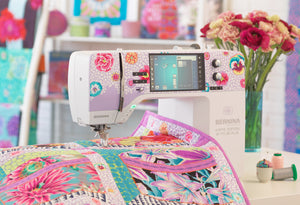

We Love Our Quilting Community
At High Country Quilts we care deeply about community. With our experiences in retail, we know that a store is not only a place to shop but also a place for the community to gather and share. During this busy...


A hexagon quilting template is a rigid pattern, usually acrylic or durable plastic, used to cut or mark identical hexagons so your quilt pieces fit together precisely. With a sharp rotary cutter and a plastic template, quilters can reach 95-98% first-pass seam alignment when cutting and piecing accurately, which is why template choice matters from the first cut.
If you've ever cut a handful of “close enough” hexagons and then watched the points drift, the rows buckle, and the center intersections refuse to meet, you already know why this tool matters. Hexagon quilts are beautiful, but they are not forgiving. A tiny cutting error shows up everywhere.
At Famoré University, we treat the hexagon quilting template as a precision tool, not a throwaway notion. The template, the blade steel, the fabric tension under your hand, even whether you're left-handed all affect the finish. Puckering is a real pain. So is hand fatigue. Both usually start long before the sewing machine does.
Search intent here is informational. The goal isn't to push a gadget. It's to help you choose the right template, cut cleaner shapes, and piece them in a way that gives you a quilt top that lies flat instead of fighting you.
A hexagon quilting template is a fixed shape used to make repeatable hexagons for piecing. You place it on fabric, mark around it or cut against it, and use that repeated shape to build designs like Grandmother’s Flower Garden and mosaic-style quilts. The whole point is consistency.
Without a template, most quilters drift in one of two ways. They either trim by eye and lose accuracy, or they make a paper guide that softens after repeated use. Neither is ideal when six sides have to agree with every neighboring piece.
Hexagons stack error. One side cut slightly off can still seem harmless in a single unit. Join several together, and suddenly the intersections won’t meet, the rows pull sideways, and the quilt top ripples.
Practical rule: If your shape isn’t repeatable, your seam allowance won’t be repeatable either.
That’s why rigid templates changed the game. They give you a stable edge to cut against and a reliable shape to mark through, especially when the template includes seam points or drilled dots.
This isn’t a modern shortcut. Hexagon templates have deep roots in quilting history. The earliest documented hexagon quilt templates date to approximately 1770 in the British Isles, the pattern became widely popular in American women’s magazines by 1827, and by 1860 publications such as Peterson’s Magazine were publishing formal instructions that recommended tin for reusable patterns, as documented in Barbara Brackman’s history of hexagon quilts.
That history matters because it explains something experienced quilters already feel in their hands. Hexagons survived because they work. They’re flexible enough for scrap quilts, formal enough for carefully planned mosaics, and satisfying enough that each generation keeps returning to them.
A good hexagon quilting template should do three things well:
If I had to boil it down, I’d say this: the template is not the quilt, but it decides whether the quilt starts straight.
Most quilters start by asking about size. Fair question. But material usually matters first.
A flimsy template can work for a small test block. It becomes irritating fast on a bed quilt, especially if you’re tracing, cutting, and reusing the same shape over and over. Many quilting tutorials barely touch template longevity, even though that matters a lot when a quilter may use the same shape across dozens of projects, which is exactly the gap noted by Patchwork Posse’s hexagon quilt tutorial discussion.
| Material | Accuracy | Durability & Reusability | Cost | Best For |
|---|---|---|---|---|
| Acrylic | High. Rigid edge makes rotary cutting and marking more reliable | Strong, reusable, suited to repeated cutting sessions | Higher upfront | Large quilts, repeated use, precision cutting |
| Durable plastic | High. Holds shape well and works for both cutting and hand piecing | Good long-term reuse | Moderate | Quilters who want a lasting template without bulk |
| Cardstock or paper | Fair at first, but it can soften and shift | Limited reuse | Low | Short projects, trying a size before upgrading |
| Freezer paper DIY | Good for temporary planning and light use | Limited, especially after repeated pressing or handling | Low | Testing layouts, occasional handwork |
In our tests at the cutting table, acrylic and durable plastic are the serious options. They stay rigid, they let you keep the blade honest, and they don’t go soft after a few sessions. Cardstock can get you started, but it’s rarely what you want halfway through a large quilt.
Paper also creates a subtle confidence problem. You start compensating for template wear without realizing it. You trim a little wider here, press a little harder there, and now your “same” hexagons are no longer the same.
A template that’s too thin can flex under pressure. One that’s too bulky can feel awkward when you’re tracing or cutting close with a rotary cutter. For hand work, many quilters like a template they can baste around cleanly without fighting the corners.
A template should feel stable under your fingers, not springy and not clumsy.
That balance is where durable plastic shines. It gives enough body to stay true, but it still handles well in repetitive work.
The material affects more than lifespan. It affects accuracy, hand comfort, and trust. If the template edge wanders, your blade wanders. If the corners deform, your folds bunch. If the template wears out early, your cost wasn’t really low. It was delayed.
For dedicated quilters, that’s the trade-off. Cheap templates often cost more in frustration than better ones cost at checkout.
If you quilt often, buy the template you won’t outgrow.
The best method for most quilters is a sharp rotary cutter on a rigid plastic template, with the fabric pressed flat before you ever touch the blade. That sounds simple, but the details decide whether your units nest neatly or start a chain of correction cuts.

Using a precision rotary cutter with a high-grade tungsten carbide blade on a plastic template can achieve 95-98% first-pass seam alignment, while dull blades create fabric drag that contributes to a 28% seam overrun rate, according to the machine-sewing findings summarized by Red Pepper Quilts.
Pressed fabric cuts better. Always. If the fabric still carries fold memory, every edge becomes a small gamble.
I flatten the fabric first and check grain before cutting multiples. If the grain is skewed, the nicest template in the room won’t save the final shape.
This is the part many tutorials skip. Blade material changes the cut feel.
A harder, better-finished blade slices cotton cleanly instead of pushing into it first. That matters when you're trimming stacked fabric or following a rigid template edge. In our tests, a high-grade blade reduced snagging and made corner transitions cleaner, especially on tightly woven quilting cotton.
Why this matters
Better steel holds a finer edge longer. In practice, that means less drag, less fraying at the cut edge, and fewer “mystery” distortions that really came from a tired blade.
The same logic applies to the rest of the tool. A rotary cutter with a stable pivot screw and smooth action gives you more control through each turn. If the handle flexes or the blade wobbles, your template can’t do its job.
Left-handed quilters know this immediately. “Ambidextrous” tools often aren’t. They may fit the hand, but they don’t always give a clean sight line to the cutting line.
A true left-handed setup changes visibility and pressure, which makes template-guided cutting easier and less tiring. If you’re left-handed, that’s worth checking before you assume the problem is your technique.
For detailed finishing tools after cutting, quilters often also keep a good pair from a professional shears collection nearby for trimming and cleanup work.
If your cuts are accurate, the rest of hexagon quilting gets calmer. Not easy. Calmer.
Hand piecing is slow in the best way. It gives you control over every edge, every meeting point, every little decision that machine sewing can rush past. But it only stays enjoyable when the prep is clean.

For hand-piecing, whip-stitching basted hexagons results in 89% stitch invisibility in longarm quilting, compared with 62% for less precise paper basting, and true left-handed shears can prevent up to 30% of reported hand fatigue in long sessions, based on the hand-sewing benchmarks cited by Jaybird Quilts.
A durable plastic template is easier to reuse and easier to trust than a softened paper shape. The fabric folds around it more consistently, and the corners stay defined.
I prefer corner-only basting because it protects the template and speeds up removal later. That’s especially useful in large projects where you’ll be handling the same shapes again and again.
The stitch should be small, regular, and almost boring. Boring is good here. Dramatic hand stitching usually means visible hand stitching.
Corner bulk is the classic problem. If you pull the fold too tight, the points bunch and the shape distorts. If you leave too much fabric, the seam gets lumpy.
Micro-tip scissors help here because they trim the overhang precisely without chewing the corner. That’s one of those details you don’t appreciate until you’ve fought fuzzy, thick folds for an afternoon.
Hand piecing rewards restraint. Pull just enough. Trim just enough. Stitch just enough.
Long English paper piecing sessions can turn into a grip problem fast. The wrong shears, stiff thread, and too much pinch pressure all show up in your hands before they show up in the quilt.
Left-handed quilters feel this even sooner if they’re using tools built for right-handed sight lines. A true left-handed pair of shears makes repetitive trimming less awkward and less fatiguing. That isn’t luxury. It’s basic control.
For quilters who spend hours on prep and trimming, tool maintenance matters too. A clean edge is easier to keep when you use a proper sharpening service for sewing tools instead of forcing tired blades through fabric.
Yes, you can. And if you dislike Y-seams, you probably should.
The trick is to stop thinking of hexagons as isolated six-sided shapes and start thinking in pairs, rows, and joining order. At Famoré University, we teach this as a sequencing problem. Most frustration comes from assembly order, not from the hexagon itself.

Instead of pivoting through traditional Y-seam intersections, you build units that let you keep sewing in straighter paths. That usually means preparing angled pieces or grouped units, then joining them in a planned sequence so the full hexagon appears without awkward inset seams.
This method is faster, but it also asks for better prep. Your cut edges have to match, your seam points have to stay visible, and your pressing has to support the next join.
One practical shortcut many modern quilters use is incorporating half-hexagon variants to reduce awkward joins. It’s a smart approach when you want the hexagon look without the full Y-seam headache.
If machine-sewn hexagons keep twisting, the problem is usually preparation and pressing, not the shape itself.
For quilters who want to build broader machine skills around this method, it also helps to study related piecing workflows through a focused quilting techniques blog like the FamCut blog library.
Puckering usually starts before the quilt top is assembled. It often comes from drag at the cut edge, stretched seams, or bulk trapped at the intersections. In other words, the quilt isn’t “misbehaving.” It’s showing you where precision slipped.

If the seam feels tight and the surface cups, check your intersections first. Bulky seam allowances need direction. One of the best fixes is to twirl or spin the seam allowances at the meeting point so the bulk distributes in a circle rather than stacking in one lump.
That small move helps the block lie flatter and makes quilting easier later.
We’ve found that quilters often blame their machine tension first. Sometimes that’s right. More often, the issue started with the cut edge or with seam points that were missed by a hair.
A pair of sharp finishing scissors helps when trimming stray threads and cleaning dense intersections. For detailed cleanup work, many quilters rely on precise trimming tools from specialized appliqué and embroidery scissors.
The quilters who get the cleanest hexagon results usually don’t have magic hands. They use repeatable methods, sharp tools, and they know when a template or blade is the weak link.
If you want to go deeper, look for technique-focused education that explains both the craft and the tool mechanics. Famoré University is built around that idea. Not just how to cut, but why one blade edge tracks better, why one template material stays true longer, and how small handling changes improve the final quilt. For more practice-based reading, explore Famoré University resources.
If you’re ready to improve your hexagon quilting template workflow with better cutting control, cleaner finishing, and tools built for long-term use, visit Famcut.com. You’ll find precision rotary cutters, specialty shears, left-handed options for left-handed users, and a sharpening service that helps your favorite tools keep working the way they should.
At High Country Quilts we care deeply about community. With our experiences in retail, we know that a store is not only a place to shop but also a place for the community to gather and share. During this busy...

Hi! We’re Adam and Renee Wheaton, the new owners of High Country Quilts! For more than 40 years, we’ve owned and operated vacuum and sewing businesses. Following in Renee’s father’s footsteps after he retired from All Discount Vacuum and Sewing in Colorado...


Leave a comment