

We Love Our Quilting Community
At High Country Quilts we care deeply about community. With our experiences in retail, we know that a store is not only a place to shop but also a place for the community to gather and share. During this busy...


So, what exactly sets a heavy duty sewing machine apart from the regular model sitting in your closet? It really boils down to raw power and a rock-solid build. These machines are the workhorses of the sewing world, designed with a powerful motor and a full metal frame specifically to tackle tough, thick materials without throwing a fit.
Think of it this way: you wouldn't try to haul a load of bricks in a family sedan. You'd grab the keys to a truck. It’s the same principle here. A standard machine might be great for piecing cotton, but a heavy duty model gives you the confidence to power through any quilting project you can dream up.
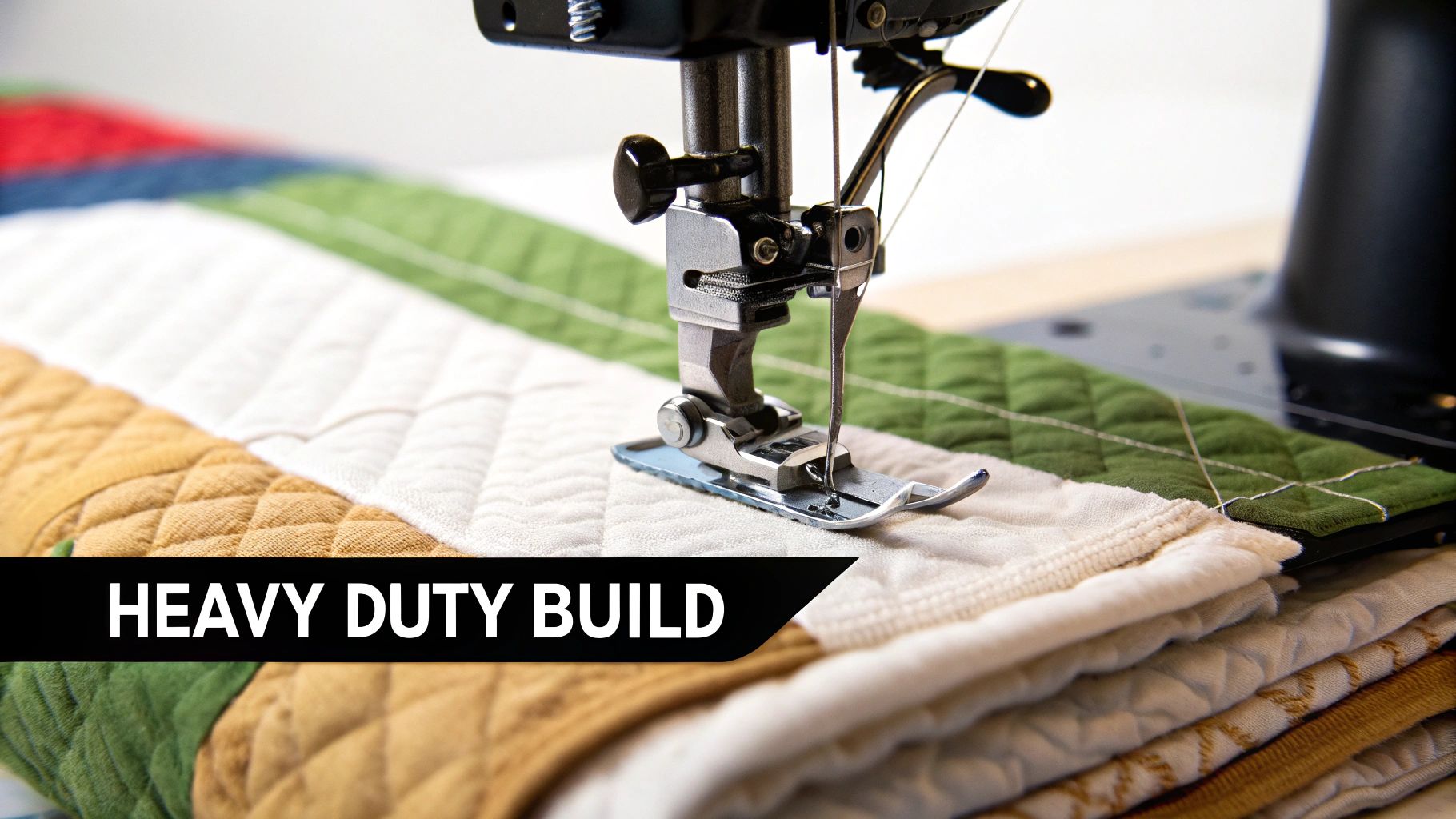
You see the term "heavy duty" splashed across a lot of marketing materials, but for a quilter, it means something very specific. It’s about capability. Your standard machine will often start to protest when you feed it a full quilt sandwich—that layered combination of the top, batting, and backing. And when you hit a seam where fabrics cross? You could be trying to push a needle through eight or more layers. That’s where a true heavy duty machine shines, plowing right through without a single skipped stitch.
That impressive strength comes from what’s on the inside. Many modern machines have swapped out metal for plastic parts to cut down on weight and cost. But a genuine heavy duty model is built around a sturdy, all-metal interior frame. This metal chassis is a game-changer for two big reasons:
This commitment to solid engineering is exactly why these machines are always in such high demand.
Beyond the sturdy frame, the motor is the real powerhouse. The motors in heavy duty machines are significantly beefier than what you'll find in their lighter-weight cousins. This isn't just about sewing faster, though many of them do have a high number of stitches per minute (SPM). It's all about piercing power.
A stronger motor can deliver consistent, powerful needle thrust even when you're sewing slowly. This is absolutely essential for things like intricate free-motion quilting or carefully navigating bulky seam intersections. The motor on a standard machine would likely strain or even seize up under that kind of pressure, leaving you with a mess of skipped stitches, broken needles, and a whole lot of frustration.
The core promise of a heavy duty sewing machine is reliability under pressure. It's the assurance that your machine won't falter when you're quilting a king-sized masterpiece or working with stubborn fabrics.
This growing desire for powerful, reliable equipment is clearly visible in market trends. The global market for heavy duty sewing machines was valued at approximately $3.8 billion in 2023 and is projected to climb to around $6.2 billion by 2032. This surge underscores a real demand for machines that can handle more demanding tasks, from industrial work to advanced quilting at home. If you're interested in the numbers, you can dig into these market insights on Cognitive Market Research.
Ultimately, choosing a heavy duty sewing machine is an investment in your craft. It’s about removing the machine's limitations from the equation, freeing you up to focus on what really matters: your creativity.
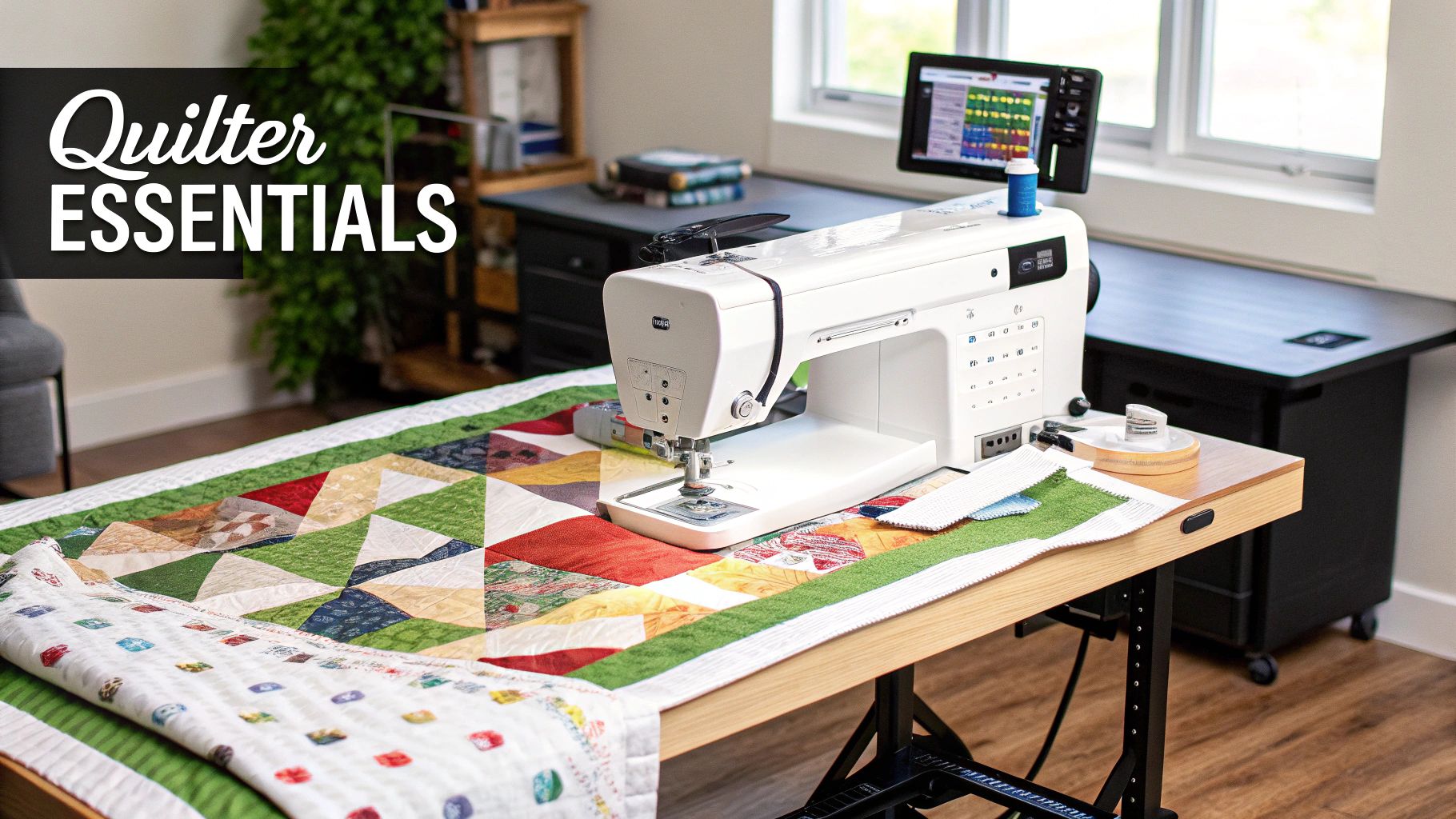
Sure, a powerful motor and a sturdy metal frame are the heart and soul of any heavy duty sewing machine. But for a quilter, that's just the starting block. What really turns a powerful workhorse into a dream quilting partner are the features designed specifically for our craft. These are the details that tackle the unique headaches of wrestling with huge, multi-layered projects.
Think of it this way: you could use a basic pickup truck to haul lumber, but a truck with a specialized towing package, a bed liner, and tie-downs makes the job infinitely easier and safer. For us, features like throat space, advanced feed systems, and high-speed stitching are our "towing package."
This demand for specialized tools is a growing trend. Quilters and other serious crafters are no longer settling for "good enough." The global sewing machine market, valued at $4.65 billion in 2025, is projected to hit $6.20 billion by 2030, and a big chunk of that growth comes from hobbyists who need machines that can keep up with their ambitions. You can dig deeper into these global trends by checking out this detailed industry report.
One of the first specs a quilter instinctively checks is the throat space (sometimes called the harp). This is the open area to the right of your needle, and it dictates how much quilt you can roll up and stuff in there without a fight. A standard home machine might offer 5-6 inches, which is fine for piecing small blocks but becomes a nightmare for anything bigger.
A true quilter's machine will give you 9 inches or more. That extra real estate is absolutely non-negotiable when you're trying to quilt a queen or king-sized project. It's the difference between smoothly guiding your fabric and battling a compressed, stubborn bundle that causes drag, crooked stitches, and a whole lot of frustration.
To make that generous throat space even more effective, an extension table is a must-have. This flat surface attaches to your machine, creating a large, level playing field that supports the quilt's weight. Without it, the bulk of your project just hangs off the edge, pulling on the fabric and distorting your beautiful stitches.
When you're stitching in the ditch or piecing long sashing strips, you want to get it done. That’s where Stitches Per Minute (SPM) comes in. Your average machine might chug along at around 800 SPM, but a heavy duty beast can fly at 1,000 to 1,600 SPM. This lets you power through those long, straight seams and dramatically cuts down your project time.
Of course, speed is nothing without control. That's why an advanced feed dog system is so crucial. The feed dogs are the little metal teeth under the presser foot that grip and pull your fabric. Heavy duty machines have beefier systems, often with more contact points (like a 7-point system), to ensure every layer of that thick quilt sandwich moves together perfectly.
A great feed dog system is the unsung hero of quilting. It’s what prevents the dreaded puckering and shifting that can ruin hours of hard work, ensuring all your layers feed through in perfect harmony.
To see how these features come together, let's break them down.
Here’s a quick look at the features that make the biggest difference and why they are so important for quilting.
| Feature | What It Does | Why Quilters Need It |
|---|---|---|
| Large Throat Space (9"+) | Provides a wide open area to the right of the needle. | Allows you to easily maneuver large quilts without bunching, preventing drag and crooked stitches. |
| Extension Table | Attaches to the machine to create a large, flat work surface. | Supports the weight of your quilt, preventing it from pulling on the needle and distorting stitches. |
| High SPM (1,000+) | Enables the machine to sew at a much faster rate. | Significantly speeds up long, straight seams for piecing and quilting, saving you valuable time. |
| Advanced Feed Dogs | Uses more contact points to grip and move fabric layers evenly. | Prevents puckering and shifting in thick quilt sandwiches, ensuring all layers move as one. |
| Knee Lift | A lever operated by your knee that lifts the presser foot. | Frees up both hands to constantly guide and control the quilt, especially when pivoting or adjusting. |
| Needle Up/Down | A setting that stops the needle either in or out of the fabric. | Stopping with the needle down acts as a perfect pivot point for turning sharp corners flawlessly. |
| Automatic Thread Cutter | A button or foot pedal function that snips both threads. | Saves enormous time and keeps your workspace clean, letting you stay in your creative flow. |
These aren't just bells and whistles; they are practical solutions to the everyday challenges quilters face.
Beyond the big-ticket items, a few "quality of life" features can completely change your quilting experience. They're the kind of things you don't know you need until you have them, and then you can't live without them.
Needle Up/Down Function: This is a game-changer. With the push of a button, you can tell your needle to always stop in the down position. It acts like a third hand, holding your exact spot so you can lift the presser foot, pivot your quilt for a sharp corner, and drop the foot again without skipping a beat.
Automatic Thread Cutter: Imagine finishing a long line of stitching and, with a quick press of a button or a tap of your heel, the machine snips both threads for you. No more reaching for scissors a thousand times. It's a massive time-saver that keeps you focused on the sewing.
Knee Lift: This handy lever lets you lift and lower the presser foot with your knee. It means your hands never have to leave your quilt. For free-motion quilting or navigating tricky intersections, having both hands on deck to guide the fabric is pure gold.
From the wide-open throat space to the simple convenience of a thread cutter, every one of these features is designed to make the process smoother, faster, and more enjoyable. When you bring them all together in one heavy duty sewing machine, you get an experience that truly empowers your creativity.
One of the first big crossroads you’ll hit when looking for a heavy duty sewing machine is the choice between a mechanical and a computerized model. This isn’t just about old-school vs. new-school; it’s really about what kind of relationship you want with your machine. Each one brings a totally different feel to the table, and the right choice for you will depend on your personal quilting style.
I like to think of it this way: a mechanical machine is like a classic, hard-working pickup truck. It’s all muscle and steel, built with straightforward parts you can understand. You’re in the driver's seat, turning every knob and dial yourself. A computerized machine is more like a modern luxury SUV—it’s just as powerful, but it’s loaded with smart features, a digital dash, and push-button controls that handle the tricky stuff for you. Both will get you where you're going, but the journey feels very different.
For a lot of quilters, especially those who appreciate a no-fuss approach, mechanical heavy-duty machines are the gold standard. They're celebrated for their simplicity, sheer power, and incredible durability. There isn't a single microchip inside; every adjustment, from stitch length to tension, is done by hand.
This direct, hands-on control is a huge part of the appeal. You can feel the machine working. Because they have fewer electronic components that could glitch or fail, mechanical models have earned a rock-solid reputation for lasting for decades. They’re also typically easier and cheaper to service since a good technician can get right into the gears and belts. If you want a machine that you can pass down to your grandkids, a mechanical is a fantastic bet.
The beauty of a mechanical heavy duty machine is its unwavering focus on one thing: creating a perfect, powerful stitch. It doesn't distract with endless options; it delivers pure, reliable performance, every single time.
This straightforward power makes them absolute workhorses for core quilting tasks. For piecing long seams or pushing through thick quilt sandwiches, you can count on a mechanical machine to just power through without complaining.
While mechanical machines own the simplicity lane, computerized heavy-duty machines open up a whole new world of creative freedom and automation. These machines run on an internal computer that handles everything from stitch selection on an LCD screen to setting the thread tension automatically.
This is where you see some really impressive features that can change your entire workflow:
This level of precision and automation is fantastic for quilters who love to experiment with intricate designs or simply want to get their projects done more efficiently. The machine takes care of the tedious adjustments, freeing you up to focus on the art. For instance, executing a flawless blanket stitch for appliqué is a breeze on a computerized model, while it requires serious concentration on a mechanical one.
Ultimately, there’s no right or wrong answer. It all boils down to what you value most in your quilting journey: the tactile, bulletproof reliability of a mechanical machine, or the creative horsepower and time-saving smarts of a computerized one.
When you start looking for a heavy duty sewing machine, you'll see a few names pop up over and over. These aren't just brand names; they represent legacies built on decades of solid engineering and trust from sewers and quilters like us. Getting a feel for each company's philosophy—what they really care about and where they shine—is the secret to finding a machine that feels like an extension of your own hands.
Think of it like choosing a partner for your quilting adventures. Some brands are all about raw, industrial muscle, while others focus on blending that power with smart, user-friendly features. This rundown will help you see past the feature lists and match your personal quilting style with a company known for delivering the kind of performance that lasts.
Juki’s reputation was forged on the factory floor. Their domestic heavy duty machines are direct descendants of the industrial workhorses built to run all day, every day, and you can feel that DNA in every stitch. A Juki is engineered with an almost singular focus on power, speed, and sheer durability.
Sit down at a Juki, and you’ll immediately notice it’s less about fancy decorative options and more about pure, unfiltered performance. They're legendary for their incredibly high stitches-per-minute (SPM) rates and the kind of piercing power that punches through thick seams without even flinching. This makes them a cult favorite for quilters who work on dense projects or use tough materials like denim and canvas.
If your main goal is to fly through large quilts with perfect, consistent stitches, Juki is definitely speaking your language.
Janome has brilliantly carved out a space for itself by blending seriously robust construction with features that just make sense for quilters. They build machines that are absolute tanks, but they put just as much effort into making the quilting process a joy, not a chore. It's the perfect marriage of brawn and brains.
A Janome heavy duty machine often comes loaded with quilter-focused perks, like amazing feed systems that guide fabric perfectly, generous throat space for big projects, and super bright lighting. They are known for their beautiful stitch quality and intuitive interfaces, making them a fantastic choice for an ambitious beginner but still packing more than enough power for a seasoned pro.
Janome's whole approach is about creating a harmonious quilting experience. They prove a machine can be a powerful workhorse without sacrificing the refined touches that spark creativity and cut down on frustration.
Brother has a knack for creating machines that are feature-rich, versatile, and offer incredible bang for your buck. Their heavy duty models are designed to be true all-rounders, perfectly capable of tackling a massive quilt one day and a delicate piece of clothing the next. This makes them a fantastic choice if quilting is just one part of your creative life.
You’ll often find Brother machines packed with modern comforts like large LCD touchscreens, huge libraries of built-in stitches (even lettering), and handy automated functions. They really excel at putting advanced, computerized features within reach, empowering you to explore all sorts of creative techniques without breaking the bank.
With a history that goes all the way back to 1851, Singer is probably the most recognized name in sewing, period. Their modern heavy duty line pays tribute to this legacy by focusing on simple, rugged, and reliable mechanical machines. For anyone wanting an affordable, no-nonsense workhorse, a Singer heavy duty is often the first stop.
These machines are loved for their straightforward metal frames, powerful motors, and their pure ability to handle thick layers with ease. They may not have all the digital bells and whistles, but their mechanical simplicity is their greatest strength. It’s a promise of years of dependable sewing with minimal fuss.
The demand for these powerful machines isn't just coming from hobbyists. The global market for extra heavy-duty sewing machines is projected to be worth around $301 million in 2025, and it's growing fast thanks to needs in apparel, automotive, and other industries. This industrial demand helps fuel the innovation that eventually benefits us home quilters. You can read the full research on Archive Market Research to learn more about these market trends.
Picking the perfect heavy-duty sewing machine isn’t about chasing the biggest motor or the fanciest features. It's about finding a true partner for your creative process. The journey starts with taking an honest look at your own quilting style, your habits, and your ambitions.
Are you a free-motion quilter who loves to doodle and draw with thread, creating flowing, organic designs? Or are you a precision piecer who thrives on the challenge of perfect points and razor-sharp seams? The answer is your first, and most important, filter for narrowing down a sea of options.
Before you even glance at a machine’s spec sheet, look at the quilts you’ve already made and the ones you dream of making. They hold all the clues you need. A machine that’s an absolute dream for one quilter can quickly become a source of daily frustration for another.
Ask yourself a few honest questions:
Answering these questions gives you a personalized shopping list. It turns a confusing, overwhelming search into a focused mission to find the right tool for your specific needs.
Once you have a clear picture of your quilting identity, you can start translating your needs into specific machine features. Think of it as building a dating profile for your ideal sewing partner. This way, you only invest in features you'll actually use and love.
Let's break it down for two common quilting styles.
The Free-Motion Artist: This quilter literally paints with thread and needs smooth, fluid movement above all else.
The Precision Piecer: This quilter is an architect, building intricate blocks from small, exact pieces.
Choosing a machine is like casting a character in a play. You need to pick the one whose skills and personality are the perfect fit for the leading role in your quilting story.
This simple self-assessment is your most powerful tool. A big purchase like this deserves careful thought, and when you're making a significant investment, it's wise to explore all your options. For some, this might include looking into equipment financing for small business to make the right decision without compromise.
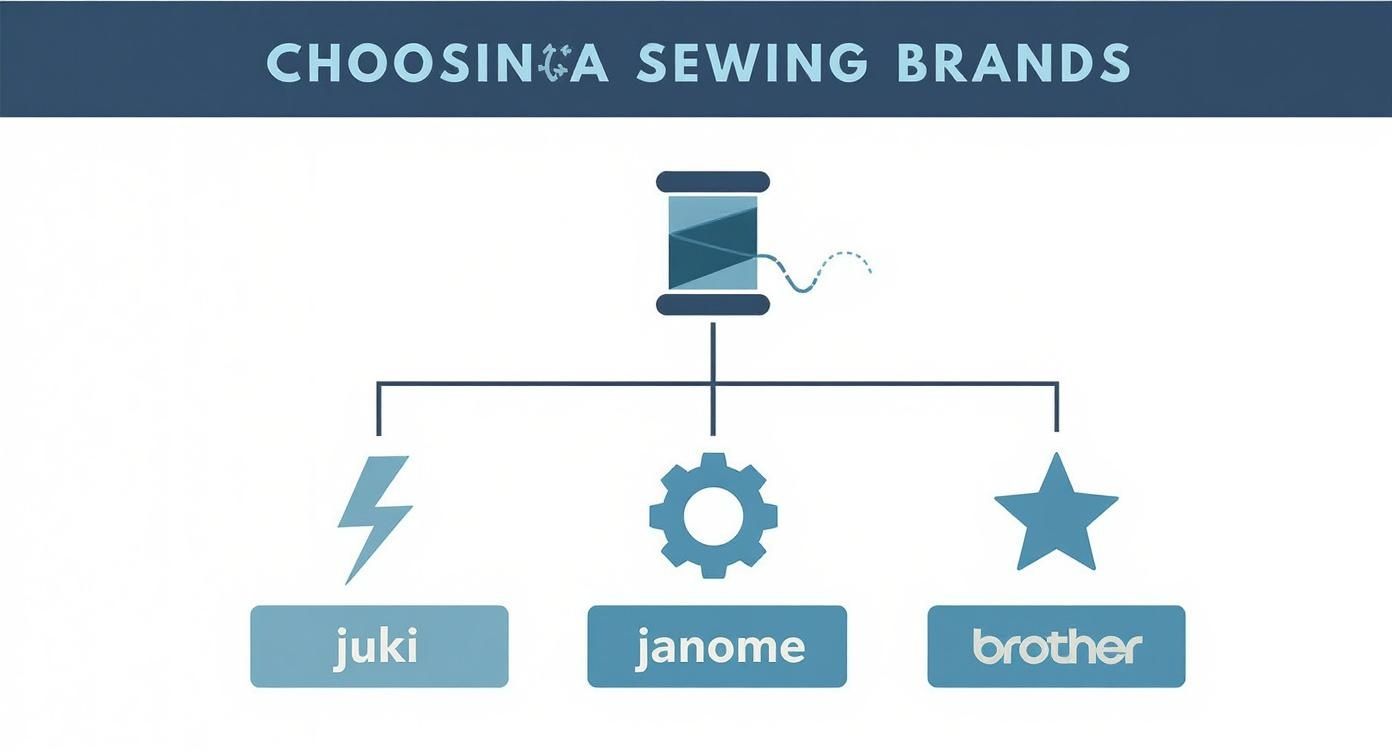
The infographic below offers a simple way to think about how your main priority—be it raw power, smart features, or all-around versatility—can point you toward the right family of machines.
To make it even clearer, this table matches different quilting needs with the type of machine that’s best suited for the job.
| Your Quilting Focus | Key Features to Prioritize | Recommended Machine Type |
|---|---|---|
| Primarily Piecing & Small Projects | Flawless straight stitch, accurate 1/4" seam guide, robust motor, needle up/down function. | Mechanical or Computerized Heavy Duty |
| Free-Motion & Large Quilts | 11"+ throat space, high SPM (1,500+), excellent stitch regulation, large extension table. | Semi-Industrial or Straight Stitch Machine |
| Mixed-Use (Piecing & Quilting) | Good throat space (9"-11"), versatile stitch options, strong feed system, dual feed capability. | High-End Computerized Heavy Duty |
| Professional Finishes & Speed | Highest SPM (2,000+), industrial-grade motor, built-in table, advanced stitch regulation. | Longarm or Sit-Down Longarm |
By understanding what you value most, you can confidently choose a machine that not only meets your needs today but also has the capacity to grow with you for years to come.
Making the leap to a heavy duty sewing machine is a big deal, but where you buy it is just as important as which one you choose. It's easy to get lured in by a slick online deal, but the real value comes from the person who sells you the machine. Think of it this way: buying a machine is just the beginning of a long-term relationship.
I like to compare a high-end sewing machine to a performance car. You wouldn't invest in a luxury vehicle without a trusted, certified mechanic to keep it in peak condition, right? Your local dealer is that expert mechanic for your sewing machine. They're your go-to for expert service, repairs, and tune-ups that will keep you quilting happily for years.
One of the biggest perks of shopping local is the "test drive." Reading reviews and watching videos can only tell you so much. You need to sit down at the machine, feel its hum, and see how it responds to your touch.
Is the pedal responsive? Are the controls laid out in a way that makes sense to you? A few minutes stitching on a demo model can tell you more than hours of online research. This hands-on experience ensures you’re not just buying a machine with great specs, but one that truly feels right for you.
Plus, a good dealer won't just shove a box at you and wish you luck. They'll help you get it set up and walk you through the basics, saving you from that initial frustration of trying to figure everything out from a dense manual.
A local dealer isn't just selling you a machine; they're investing in your success as a quilter. They offer the training, service, and community that help you make the most of your investment, year after year.
Once you get your new machine home, the real learning begins. This is where a great dealer truly shines. The best ones offer classes and workshops specifically for the machines they sell, helping you move beyond the basics and master your new creative tool.
Before you commit, ask the dealer a few key questions:
Choosing the right dealer means you're not just buying a product. You're plugging into a support system that will be there to help you grow and troubleshoot for the entire life of your machine.
Even after digging into all the details, you probably still have a few questions rolling around in your head. That's completely normal! Here are some of the most common things quilters ask when they're considering a heavy-duty machine.
Absolutely. Don't let the "heavy-duty" label fool you into thinking it's only for tough jobs. These machines are incredible all-rounders.
Think of it like having a high-performance SUV. You can haul heavy loads when you need to, but it's just as smooth and capable for a quick trip to the grocery store. Just swap out your needle and thread for the right type, and you can go from quilting through multiple layers to hemming a delicate blouse without missing a beat.
Not at all, but it is one of the most important habits you can build. Consistent, simple maintenance is the secret to keeping your machine humming along for years—or even decades.
Most heavy-duty sewing machines just need a single drop of oil in the bobbin area after every 8-10 hours of sewing. This tiny step is crucial for preventing friction and wear on all those hard-working metal parts.
It's a lot like changing the oil in your car. It’s a small, non-negotiable task that prevents catastrophic failures and keeps everything running at its best.
Your user manual will have a super clear diagram showing you exactly where the oil goes. For everything else, bringing it in for a professional tune-up every year or two is a great idea to keep the timing and tension perfectly calibrated.
Stitches Per Minute, or SPM, is all about raw speed. Your standard home machine might chug along at around 800 SPM. A heavy-duty model? It can fly, often reaching 1,500 SPM or even higher.
For a quilter, that speed is a game-changer. Imagine piecing long sashing strips or stitching in the ditch on a king-sized quilt. All those long, straight seams get done in a fraction of the time, letting you move on to the more creative parts of your project much faster.
Ready to find a machine that can keep up with your creativity? At High Country Quilts, we live and breathe this stuff. We can help you find the perfect model and even let you take it for a spin. Visit our store in Colorado Springs to get some hands-on guidance and meet your new quilting partner.
At High Country Quilts we care deeply about community. With our experiences in retail, we know that a store is not only a place to shop but also a place for the community to gather and share. During this busy...

Hi! We’re Adam and Renee Wheaton, the new owners of High Country Quilts! For more than 40 years, we’ve owned and operated vacuum and sewing businesses. Following in Renee’s father’s footsteps after he retired from All Discount Vacuum and Sewing in Colorado...


Leave a comment