

We Love Our Quilting Community
At High Country Quilts we care deeply about community. With our experiences in retail, we know that a store is not only a place to shop but also a place for the community to gather and share. During this busy...


Choosing between hand and machine quilting really comes down to what you want to get out of the process. It's a classic debate of artistic tradition versus functional efficiency. Are you looking for a slow, meditative craft that results in a soft, heirloom-quality piece? That’s hand quilting. Or do you need a durable, precisely stitched quilt finished in a fraction of the time? That's where a machine shines.
Your decision pivots on whether you value the journey more than the destination.
Picking your method feels a lot like choosing between a paintbrush and a high-resolution printer. One gives you a uniquely personal touch, with all the charming imperfections that make it one-of-a-kind. It connects you directly to the centuries-old history of the craft. The other delivers speed, flawless execution of complex patterns, and the ruggedness needed for a well-loved, everyday quilt.
Neither method is "better" than the other; they just serve entirely different masters. The first question to ask yourself is about intent. Are you making a decorative wall hanging that tells a family story, or a cozy bedspread for your kid's room that needs to survive weekly trips through the washer? Knowing your project's end-use is the most critical first step.
Before we get into the nitty-gritty of skills and tools, let's look at the big picture. The hand quilting vs. machine quilting discussion goes far beyond just looks—it involves major differences in your time commitment, budget, and the final texture of the quilt. Hand quilting is famous for its gentle, puffy texture and soft drape, a signature look that a machine can't quite replicate.
On the other hand, machine quilting lays down tight, uniform stitches that create a crisp, modern feel. Those stitches lock all three layers together with serious strength, making for a much more durable quilt. It's like the difference between a cozy, hand-knit sweater and a sleek, store-bought one; both are wonderful, but they have a completely different character.
Key Takeaway: Your goal should guide your hand. Pick hand quilting for artistry, personal expression, and creating a timeless heirloom. Go with machine quilting when you need speed, durability for heavy use, and intricate, precise patterns.
To help you see the trade-offs clearly, I've put together a quick comparison table. Think of this as your starting point for figuring out which method fits your current project best.
This table offers a quick summary of the main differences between the two quilting styles, covering the key factors you'll want to consider.
| Factor | Hand Quilting | Machine Quilting |
|---|---|---|
| Primary Goal | Artistic expression, heirloom creation, meditative process | Efficiency, durability, design precision |
| Finished Look | Soft, gentle puckering, visible "human touch" | Crisp, uniform stitches, sharp geometric lines |
| Time Investment | High (weeks to months, or even years) | Low (hours to days) |
| Durability | Moderate; best for decorative or lightly used items | High; ideal for items needing frequent washing |
| Skill Curve | Focus on stitch consistency and patience | Focus on machine control and tension management |
| Best Use Case | Wall hangings, special occasion quilts, heritage pieces | Bedspreads, baby quilts, tote bags, modern designs |
As you can see, the right choice is less about which technique is superior and more about which one is the right tool for the job you have in mind. Now, let's dig deeper into what each method actually involves.
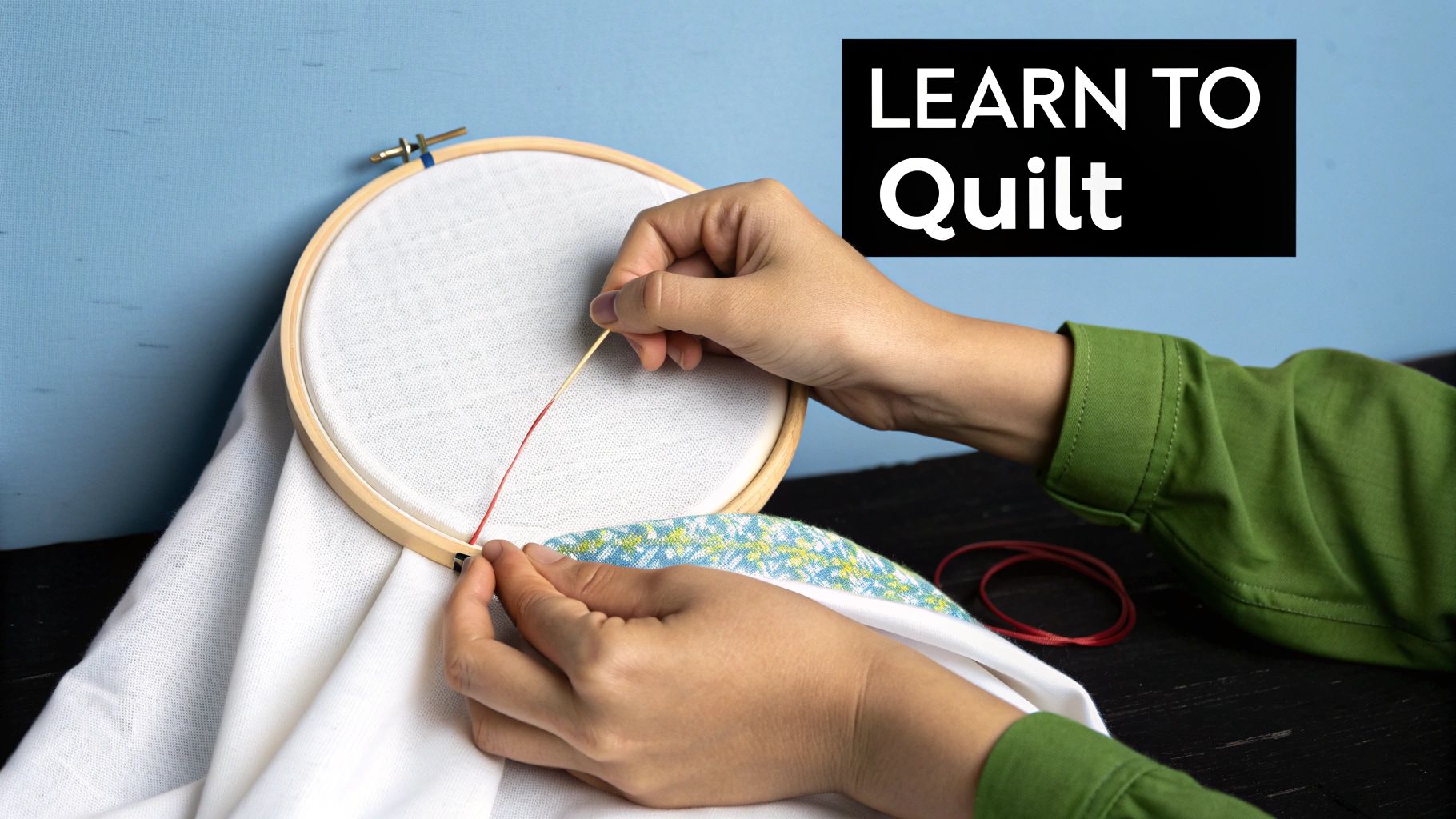
For many, hand quilting is where the true soul of the craft resides. It’s a slow, rhythmic process that connects you directly to centuries of tradition, turning a simple blanket into a work of art with a story in every stitch. This isn't about speed or perfect precision like machine quilting; it's about celebrating the journey and the meditative experience just as much as the beautiful finished quilt.
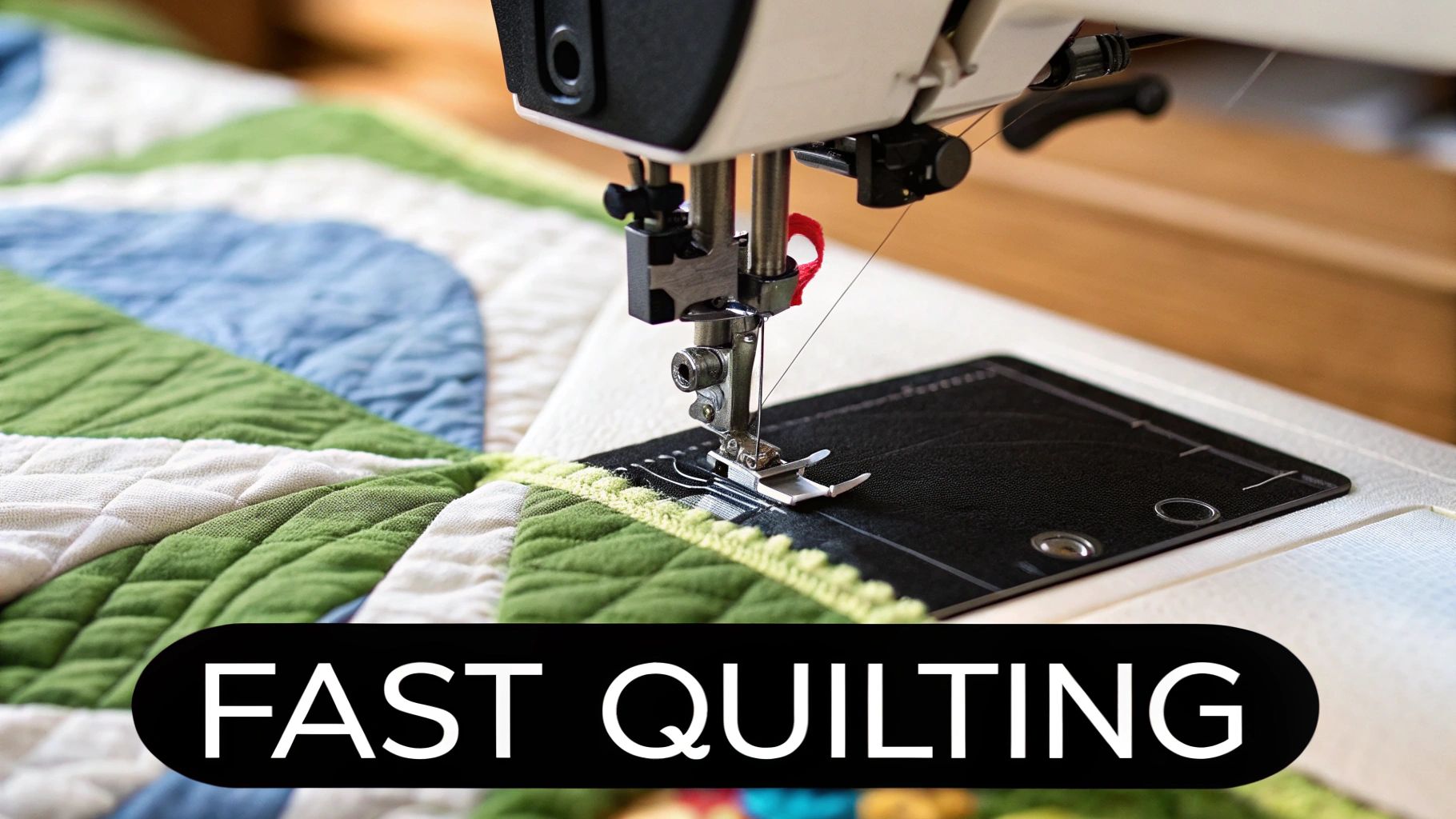
What really draws people to this technique is its unique look and feel. Hand quilting creates a signature aesthetic defined by a soft, gentle pucker around each stitch. This texture gives the quilt a wonderful drape and an inviting, heirloom quality that machines just can't seem to replicate. Every single stitch is a small testament to the maker's patience and care, making the final piece feel deeply personal and alive.
One of the best things about hand quilting is that you don't need a lot to get started. Its portability and minimal setup mean you can work almost anywhere without a large, dedicated space.
Here’s what your basic kit should include:
Since hand quilting is so tactile, personal preference plays a huge role. The thimble or needle that works for one quilter might not feel right for another, so a little experimentation is all part of finding your groove.
The most defining feature of a hand-quilted piece is its incredible texture. The stitches create a gentle rise and fall across the fabric's surface, a quality we often call "puff" or "pucker." This happens because the hand stitches naturally have a slightly looser tension than a machine's lockstitch, allowing the batting to loft beautifully between them.
The result is a quilt with an unmatched softness and flexibility. The slightly imperfect, human quality of the stitches adds so much character and charm, making each piece a one-of-a-kind creation that just begs to be touched and cherished.
This distinctive feel makes hand quilting the perfect choice for creating heirlooms, wall hangings, and special-occasion quilts where artistry is the main goal. It’s the method for anyone who wants to pour their time and heart into a project, creating something that will be passed down for generations. If you're looking to dive deeper into traditional creative methods, exploring various Arts and Crafts resources can offer fantastic context and inspiration.
Many quilters describe the process itself as meditative. The repetitive motion of the needle rocking through the fabric can be incredibly calming and satisfying. It’s a quiet escape and a tangible connection to the long history of artisans who came before us. In a world that’s always rushing, hand quilting is a welcome invitation to slow down, focus, and create something truly meaningful with your own two hands.
If hand quilting is a slow, meditative art form, machine quilting is its powerful, modern counterpart. It’s all about efficiency, strength, and getting that crisp, professional finish. For many quilters, the machine is what makes it possible to turn a pile of fabric into a finished quilt in a matter of days or weeks, not months or years.
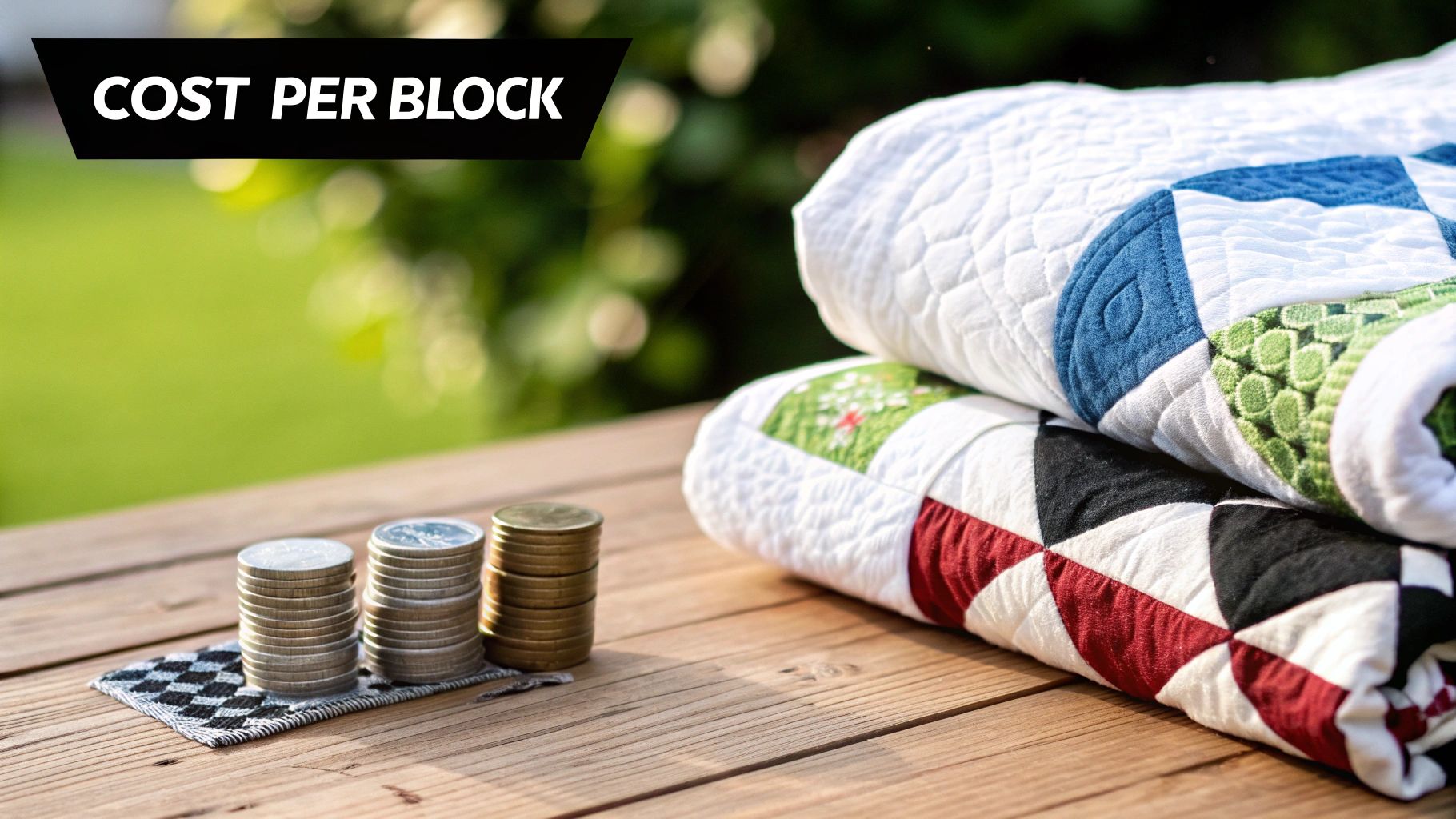
The biggest draw here is, without a doubt, the speed. Machine quilting opens up the craft to anyone who loves making quilts but simply doesn't have the time for hand stitching every single project. But it's not just about getting it done fast. Machine quilting fosters a different kind of artistry—one focused on sharp geometric lines, complex all-over patterns, and a satisfyingly uniform stitch that gives quilts a clean, contemporary look.
Your setup for machine quilting can be anything from your trusty home sewing machine to a dedicated long-arm beast. What you use will shape what you can do.
Here's the essential gear you'll want to have:
The shift to machine quilting really changed the game. Hand quilting will always be about that personal, artisanal touch, but the machine brought durability and modern function to the forefront. As technology has improved, this has only accelerated. The global market for industrial quilting machines hit USD 2.1 billion in 2023, a number expected to climb as computerized systems get even more efficient. You can dig into the market trends over at Dataintelo.com.
You can spot a machine-quilted piece a mile away. The stitches are uniform, tight, and incredibly strong. The lockstitch a sewing machine creates is built to last, making it the perfect choice for quilts that are meant to be used and loved. This is what you want for bedspreads, baby quilts, and throw blankets—anything that will face a lot of washing and daily life.
Machine quilting provides the structural integrity needed for functional textiles. The tight, consistent stitches secure the layers firmly, ensuring the quilt remains beautiful and intact for years, even with constant use.
This durability goes hand-in-hand with design precision. Techniques like ruler work let you execute geometric patterns with razor-sharp accuracy, while free-motion quilting opens up endless possibilities for flowing, artistic motifs. The result is a quilt that can be both a rugged, practical item and a stunning piece of modern textile art. For quilters who value function, speed, and the clean look of a perfectly executed pattern, the machine is the way to go.
When you get right down to it, the choice between hand and machine quilting comes down to a few key things that will completely shape your final project. This isn't just about how it looks; it's about the entire experience from start to finish. Let's really dig into the core differences in time, texture, skill, and how the quilt will hold up over the years.
This side-by-side view really puts the debate into perspective, zeroing in on the big three: speed, cost, and strength.
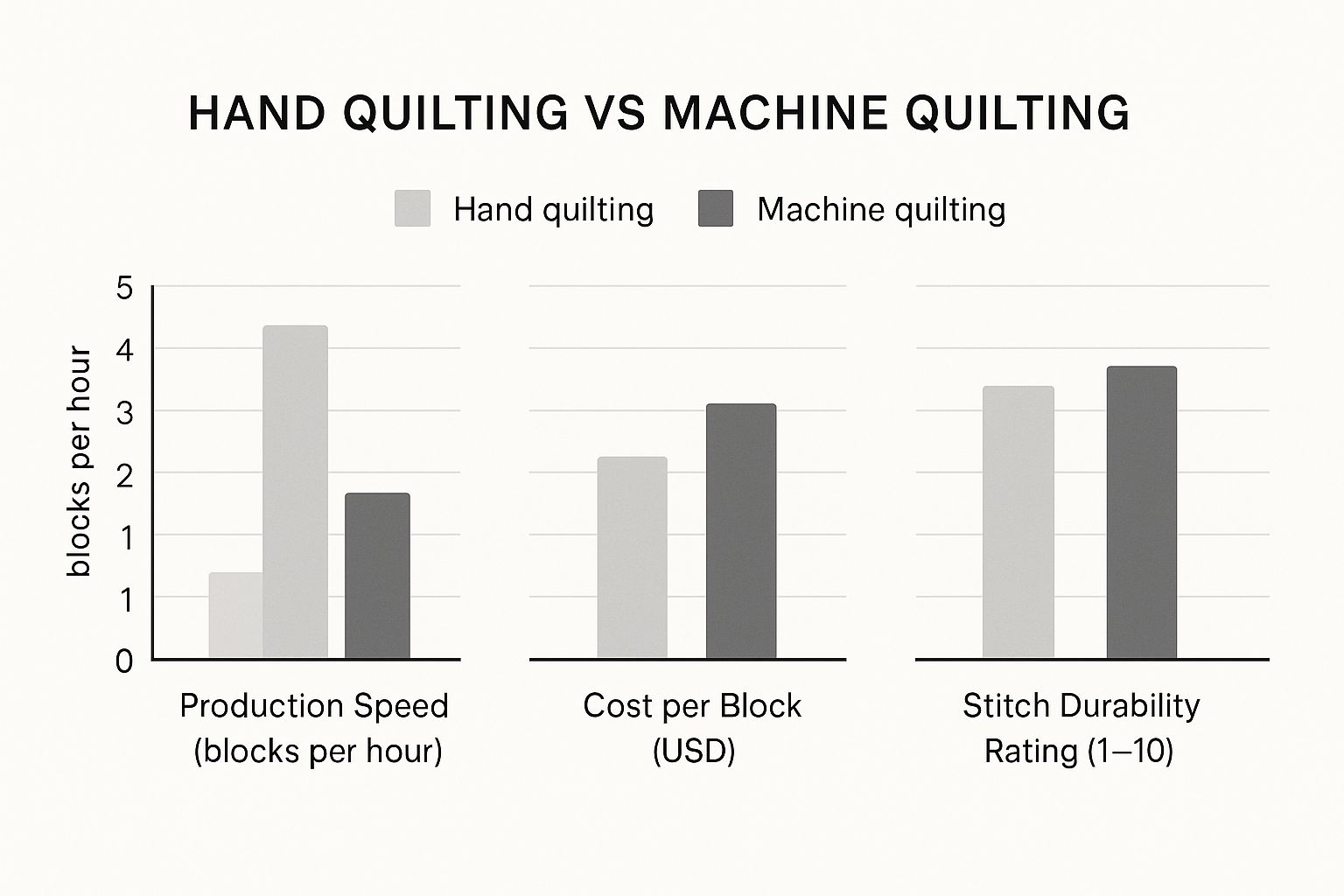
What we see is a classic trade-off. Machine quilting gives you speed and a rock-solid finish, but hand quilting's higher cost per block reflects the massive time investment—and the personal touch—that goes into it.
The most shocking difference between the two is the time you'll spend. Hand quilting is a slow, meditative art. A queen-sized quilt isn't a weekend project; depending on the detail, you could be looking at anywhere from a few hundred to over a thousand hours. We're talking months, sometimes even years.
Machine quilting, on the other hand, is all about efficiency. You could knock out that same queen-sized quilt on your home machine in a busy weekend. A professional with a long-arm machine? They could have it done in just a few hours. This speed is what makes quilting possible for people with tight schedules or those wanting to create a lot of quilts.
Your most valuable resource is time. If your goal is to finish a functional quilt for a specific occasion, like a baby shower next month, machine quilting is your only practical choice. If the process is a form of relaxation and the deadline is flexible, hand quilting offers a rewarding, meditative journey.
The look and feel you get from each method couldn't be more different. Hand quilting is famous for that soft, gentle pucker it creates. The stitches have a naturally looser tension, which lets the batting loft up and gives the quilt a supple drape. It’s a cozy, heirloom texture that just begs to be touched, and you can see the human hand in every single stitch.
Machine quilting gives you a much crisper, more defined look. The lockstitch pulls the layers together tightly, creating a flatter surface with sharp, precise lines. This is perfect for modern, geometric designs where you want the pattern to pop. The finished quilt usually feels a bit stiffer and more substantial.
Now, let's explore these differences more deeply. The following table breaks down the nuances you'll encounter with each method, from the initial setup to the final aesthetic.
A detailed breakdown comparing the nuances of each quilting method across key practical and artistic considerations.
| Consideration | Hand Quilting (Nuanced Analysis) | Machine Quilting (Nuanced Analysis) |
|---|---|---|
| Tools & Setup | Minimalist: a hoop or frame, needles, thimble, thread. The setup is portable and can be done almost anywhere. | Requires a significant investment in a reliable sewing machine (domestic or long-arm), specific feet, and a dedicated workspace. |
| Texture & Drape | Creates a soft, crinkly "antique" texture. The stitches are less taut, allowing the quilt to be incredibly soft and flexible. | Produces a flatter, stiffer finish. The tight lockstitch provides excellent definition for intricate patterns but reduces the overall softness and drape. |
| Design Flexibility | Best for organic, flowing lines and traditional patterns. While intricate designs are possible, they are extremely time-consuming. | Excels at both geometric, straight-line quilting and complex free-motion designs. Computerized systems offer perfect, repeatable patterns. |
| The "Process" | A quiet, meditative, and portable craft. Many find the slow, repetitive motion to be a form of therapy or relaxation. | A more technical and physically engaged process. Involves managing the bulk of the quilt and controlling the machine's speed and tension. |
| Repair & Longevity | Individual stitches can sometimes snag or break over time, but they are relatively easy to repair by hand. | The strong lockstitch is incredibly durable. However, if a section of stitches comes undone, it can unravel quickly and is more complex to repair seamlessly. |
This analysis shows there's no "better" method—only the one that's better for your specific project and your personal goals as a quilter.
The learning curves for these two methods focus on completely different muscles. For a beginner hand quilter, it's all about developing consistent stitches. It takes a ton of patience to master the "rocking stitch" and get all your stitches evenly sized and spaced. It’s a quiet discipline built on pure muscle memory.
For machine quilters, the challenge is more mechanical. You have to learn how to control the machine's speed, wrangle thread tension, and physically wrestle a big, bulky quilt through a small space. Add free-motion quilting to the mix, and now you’re essentially "drawing" with the needle, coordinating your hand movements with the machine’s rhythm.
These different approaches appeal to distinct groups within the wider quilting world. The U.S. quilting market, valued at $4.5 billion in 2025, is a perfect example of this split among its 9 to 11 million quilters. Hand quilting draws in hobbyists who cherish heritage and artistry, while machine quilting is the go-to for those who need efficiency. With the total market projected to hit $7.8 billion by 2031, there's clearly room for both. You can find more fascinating quilting industry trends over at mrsquilty.com.
Think hard about what this quilt is for. That’s your best guide. Machine quilting creates an incredibly durable product. The strong lockstitch can handle frequent trips through the washing machine, making it the clear winner for anything that’s going to get a lot of use.
Hand quilting stitches are secure, but they are more delicate. They’re perfect for decorative quilts where the artistry is the main point, but they might not hold up to the rough-and-tumble of everyday life. A hand-quilted bedspread is a beautiful treasure, but it probably belongs in the guest room, not a kid's playroom.
Deciding between hand and machine quilting isn't just about speed or style. It really comes down to the story you want your project to tell and the job you need it to do. It’s about matching the process to the quilt's ultimate purpose.
Let's get practical and walk through some common quilting scenarios. Seeing how each method shines in a real-world situation is the best way to figure out which approach is the right fit for your next quilt.
Scenario: You’re making a once-in-a-lifetime quilt for a wedding or a new baby, something you hope will be cherished for decades and passed down through the family.
Recommendation: This is where hand quilting truly belongs. The goal here isn’t just to finish a quilt; it’s to pour your love and history into every stitch. Those small, charming imperfections are what tell the story, creating a soft, crinkly texture that just begs to be cuddled.
The gentle drape and classic puckering from hand quilting give a piece that unmistakable heirloom quality. It’s a meditative process where the journey of making it is just as meaningful as the beautiful quilt you have in the end.
Scenario: Your quilt top is all about a bold, graphic design. You've got sharp angles and crisp lines that absolutely need to be the star of the show.
Recommendation: Go with machine quilting. The precision you can get with a machine, especially using a walking foot or quilting rulers, will complement and enhance that geometric pattern instead of competing with it. Straight lines will be perfectly straight, and curves will be smooth and uniform.
Machine quilting gives a modern quilt the clean, structural finish it needs to make the piecing pop. The tighter stitches create a flatter, more defined look that feels polished and professional.
Key Insight: When your design hinges on precision and sharp graphics, machine quilting provides the perfect framework. But for projects where you want to emphasize texture, softness, and a human touch, hand quilting adds an irreplaceable layer of artistry.
Scenario: You're making a quilt for a new baby, and you know it needs to be as tough as it is beautiful. It’s destined for tummy time, messy spills, and countless trips through the washing machine.
Recommendation: Machine quilting is the practical choice for durability. A machine’s lockstitch is fundamentally stronger and far more secure than a hand stitch. This ensures the quilt can withstand the reality of daily use and frequent washing without you having to worry about stitches pulling out.
While a hand-quilted baby blanket is a lovely idea, its delicate stitches just aren’t built for the kind of wear and tear a well-loved baby quilt will endure.
Scenario: Your quilting group has committed to donating 10 quilts to a local shelter, and you need them finished by the end of the month.
Recommendation: This is a clear-cut case for machine quilting. Here, speed and efficiency are everything. Trying to hand quilt that many projects on a tight deadline would be a recipe for stress and burnout.
With a machine, you can finish several quilts in the time it would take to hand quilt just a small section of one. It’s the only realistic option for high-volume, time-sensitive projects where the main goal is to get warm, comforting quilts into the hands of those who need them.
Scenario: You want a project you can bring with you—something to work on during your commute, in a waiting room, or just while relaxing on the couch in the evening.
Recommendation: Hand quilting is built for portability. All you really need is a small hoop, your needle, a thimble, and thread. You can tuck the whole project into a tote bag and make a little progress whenever you find a spare moment.
This method is perfect for weaving your creative time into the small, quiet pockets of your day, no matter where you are.
When it comes down to it, the hand quilting versus machine quilting debate isn't about finding a "winner." It’s about figuring out what feels right for you and the specific quilt you’re dreaming up. Both paths lead to a gorgeous finished quilt, but the journey—and the final result—are distinctly different.
What do you want out of the quilting process itself? Are you looking for a quiet, almost meditative craft that creates a soft, heirloom-style piece with that one-of-a-kind handmade charm? If the slow, deliberate process is just as important as the finished quilt, then hand quilting is calling your name.
Or maybe you’re after a durable, functional quilt that needs to be ready sooner rather than later? If you love the look of crisp, precise lines and intricate patterns that pop, then the power and speed of machine quilting will be a perfect fit.
Plenty of quilters I know refuse to pick a side. Why would you, when you can combine the best of both worlds? Taking a hybrid approach is a fantastic way to play to the strengths of each method.
It often works like this:
This way, you get a sturdy quilt that can stand up to everyday life, but you still get to infuse it with the artistry and soul of hand quilting. There are no rules set in stone. The best choice is the one that helps you make a quilt you truly love. Trust your gut, have fun with it, and enjoy the process, one stitch at a time.
Deciding between hand quilting and machine quilting often brings up a lot of questions. It's a classic debate, and the "right" answer really depends on your project and your personal style. Let's tackle some of the most common queries I hear from quilters.
Absolutely! In fact, many modern quilters do exactly this. A hybrid approach lets you harness the best of both techniques—the strength of the machine and the artistry of your own hand.
A really popular way to do this is to machine quilt the structural lines, like stitching "in the ditch" along your seam lines. This secures the quilt sandwich beautifully. Then, you can go back and add your decorative hand-stitching in the open spaces. You get the durability for a well-loved quilt with that gorgeous, handcrafted feel.
This is a common misconception. Machine quilting is definitely stronger and more durable. The lockstitch a sewing machine makes is incredibly secure because it interlocks the top and bottom threads right in the middle of the fabric layers. This makes it the go-to choice for quilts that are going to see a lot of action and regular washing.
Hand quilting stitches are lovely and can certainly hold a quilt together, but they are more delicate. They're perfect for wall hangings, heirloom pieces, or quilts that will be handled with gentle care.
A machine's lockstitch is engineered for resilience, making it ideal for everyday items like baby quilts and bedspreads. Hand stitches offer an artistic touch but have less structural strength against wear and tear.
You don't need to go out and buy a massive long-arm machine to get started! A good, sturdy domestic sewing machine is all a beginner really needs to create beautiful machine-quilted projects.
Here’s what you should look for:
Oh, yes. The time difference is probably the single biggest factor separating the two methods. It’s not just a little longer—it’s a lot longer.
A quilt that you could knock out over a weekend on your machine could easily take months, maybe even a year, to finish by hand. That time commitment is part of the process and the appeal; it's a slow, meditative craft.
At High Country Quilts, we believe the best method is the one that brings you joy. Whether you're drawn to the meditative rhythm of hand stitching or the precise power of a machine, we have the tools, fabrics, and expert advice to support your creative journey. Visit us to explore our wide selection and find everything you need for your next masterpiece at https://hcquilts.com.
At High Country Quilts we care deeply about community. With our experiences in retail, we know that a store is not only a place to shop but also a place for the community to gather and share. During this busy...

Hi! We’re Adam and Renee Wheaton, the new owners of High Country Quilts! For more than 40 years, we’ve owned and operated vacuum and sewing businesses. Following in Renee’s father’s footsteps after he retired from All Discount Vacuum and Sewing in Colorado...


Leave a comment