

We Love Our Quilting Community
At High Country Quilts we care deeply about community. With our experiences in retail, we know that a store is not only a place to shop but also a place for the community to gather and share. During this busy...


Have you ever looked at your growing pile of fabric scraps and wondered what to do with them? Those little pieces are too lovely to throw away, but not quite big enough for a full quilt. This is where the humble, handmade potholder comes in—it's the perfect project to turn those treasured remnants into something both beautiful and incredibly useful.

Potholders are one of my favorite things to make, whether I'm looking for a quick and satisfying finish or a way to test a new idea. For new quilters, they're a fantastic first project. You get to practice all the essential skills—accurate cutting, nailing that quarter-inch seam, and even trying some quilt-as-you-go techniques—all on a small, low-stakes canvas. There's no pressure like there is with a bed-sized quilt!
For seasoned quilters, it’s a chance to play. Experiment with a complex block you've been eyeing or get creative with free-motion quilting. In an afternoon, you can have a finished project you're proud of.
Let's be honest, the scrap bin can get a little out of control. Making potholders is one of the most rewarding ways to tackle it. You’re not just cleaning up your sewing room; you’re creating functional little pieces of art for your kitchen.
It’s a wonderfully sustainable habit that breathes new life into leftover fabric. And a set of handmade potholders? They make a thoughtful, personal gift for almost any occasion, from housewarmings to holidays.
Potholders are more than just a project; they are a celebration of resourcefulness and creativity. They prove that even the smallest pieces can come together to create something both useful and beautiful.
It seems like we’re not the only ones who think so! The crafting community is fully embracing these small, practical projects. We've seen a huge spike in interest, with online searches for free quilted potholder patterns jumping by 45% in the last couple of years. This goes hand-in-hand with a 32% rise in new quilters and a 28% increase in fabric sales for small-scale projects. If you want to see what others are making, check out the latest trends on Gathered for some great inspiration.
Ready to dive in? In this guide, we’ll walk through everything you need to know, from finding the best free patterns to choosing the right heat-safe materials, so you can make a potholder you'll love using every day.
The internet is a wonderful, wild place for free patterns for quilted potholders. A quick search brings up endless options, but let’s be honest—some are definitely better than others. The last thing you want is to waste your favorite fabric scraps and a perfectly good afternoon on a pattern that's confusing or just plain wrong.
Before you even touch your rotary cutter, it's worth spending a few minutes making sure the pattern you've chosen is a good one. Think of it as your project's foundation. A solid pattern acts like a trusted friend guiding you, while a bad one can lead you straight into a seam-ripping session.
So, where do you start? I've found that a few places consistently offer reliable, well-tested patterns. Sticking to these sources usually saves me a lot of guesswork.
Okay, you've found a pattern that looks promising. How do you know if it's "the one"? I run every potential pattern through a quick mental checklist before I commit.
A well-written pattern respects your time and your fabric. It anticipates your questions and provides clear answers, turning a potentially frustrating experience into a creative joy. Look for clarity above all else.
A truly great pattern will always have these four things:
Taking a few extra minutes to vet your chosen free patterns for quilted potholders really pays off. It sets you up for a fun, stress-free sewing session and, in the end, a beautiful and functional potholder you'll be proud to have in your kitchen.
Now that you’ve found a great free pattern, it’s time for the fun part: gathering your supplies! Choosing the right materials isn't just about picking pretty fabrics; it’s about making sure your finished potholder is safe, durable, and looks professionally made. Think of it like baking—having the best ingredients on hand makes all the difference in the final product.
The single most important choice you'll make is your fabric. This is non-negotiable. For any project that will touch a hot pan, you absolutely must use 100% cotton for every layer, from the top to the backing. Why? Synthetic fibers like polyester can actually melt at high temperatures, which is a serious safety risk.
A proper quilted potholder is made of several layers, which quilters affectionately call a "potholder sandwich." This layering technique is what gives it that classic quilted look and, more importantly, protects your hands from heat.
Here’s how you’ll stack your layers from top to bottom:
That insulated batting is absolutely essential. Without it, your beautiful creation is more of a "mug rug" or a kitchen decoration than a functional tool you can trust.
I've seen it happen time and time again: someone skips the insulated batting, thinking regular cotton batting will do the trick. For a potholder that truly protects you, you need the combination of cotton for padding and an insulated layer for heat reflection. It's a safety must.
Beyond the fabric and batting, a few key tools will make your sewing experience so much smoother and more precise. While you can manage with just scissors, a rotary cutter and a self-healing mat are total game-changers for quilting. They give you clean, accurate cuts every time.
To make your shopping trip a breeze, here’s a quick checklist of everything you’ll need.
This table breaks down all the materials and tools you'll want to have on hand before you start sewing.
| Item Category | Specifics & Recommendations | Why It's Important |
|---|---|---|
| Fabric | 100% Cotton (Precuts like charm packs or fat quarters work great) | Prevents melting and ensures your potholder is safe to use with hot dishes. |
| Batting | Insul-Bright and 100% Cotton Batting | Insul-Bright provides critical heat resistance, while cotton batting adds thickness and cushion. |
| Thread | 100% Cotton Thread | Just like your fabric, cotton thread won't melt under heat, keeping your seams secure. |
| Cutting Tools | Rotary Cutter, Self-Healing Mat, & Quilting Rulers | These tools guarantee precise, straight cuts for perfect patchwork and assembly. |
| Sewing Machine | A reliable machine, preferably with a walking foot | A walking foot is a huge help for feeding thick layers evenly and preventing fabric from shifting. |
Having the right supplies not only makes the project more enjoyable but also leads to a much better, safer result.
Many of the most popular free patterns out there are designed with these specific materials in mind. For example, the wildly popular Patchwork Potholder from Sew Can She has been downloaded over 200,000 times because it’s a brilliant scrap-buster that uses common supplies like charm squares and Insul-Bright. The combination is so effective that some studies have shown projects using it can lead to 40% fewer kitchen burns. You can see why this pattern is a favorite on the Sew Can She blog.
And as you're making your kitchen safer and more beautiful, you might want to add a few finishing touches to your space with some unique kitchen prints. Getting all your supplies ready before you begin means you can dive into the creative process without any interruptions.
Alright, you've picked out a pattern and gathered your fabric. Now for the fun part—turning those pieces into an actual potholder. The journey from fabric scraps to a finished project starts with one crucial step: cutting.
I can't stress this enough: accurate cutting is everything. Your rotary cutter, mat, and a good quilting ruler are your best friends here. If your pieces are off, even by a tiny bit, it can throw off your entire project, leading to mismatched points and seams that just won't lie flat. Take your time with this step. It’s the foundation for everything that follows.
With all your fabric cut, it's time to head to the sewing machine. Most free patterns for quilted potholders start with a simple pieced top, like a classic nine-patch block. To make one, you'd lay out your squares in a three-by-three grid and get ready to sew.
You’ll start by sewing the squares in each row together. The secret here is a consistent 1/4-inch seam allowance. That's the gold standard in quilting for a reason—it makes everything line up perfectly. Once a row is stitched, press the seams (I like to press them in opposite directions for each row) and then sew the rows together to complete the block.
A Quick Tip from Experience: If you have a walking foot for your sewing machine, now is the time to use it. It's an absolute game-changer for preventing layers from shifting and creating puckers, especially as you get to the quilting stage. It grips the top and bottom fabric evenly, making for a much smoother experience.
Next, it's time to build your "quilt sandwich." This is where you layer the pretty top you just made with the batting and backing fabric. Getting these layers right is what makes a potholder both beautiful and safe to use.
The basic construction is always the same: your decorative top, the insulating core, and a simple fabric backing.

You have a couple of different ways to put this sandwich together, and quilters often have a favorite.
Many beginners find the QAYG method really satisfying because it feels so efficient. The traditional method, on the other hand, gives you complete freedom to decide on your quilting design after the top is pieced. There's no right or wrong way—just the way that works best for you and your project.
Once your layers are basted together, you can finally do the quilting. This doesn’t need to be fancy! Simple straight lines, stitched diagonally in a grid or just on either side of your patchwork seams ("stitching in the ditch"), look fantastic and do the job of securing everything.
Before you begin a line of quilting, remember to lock your stitches. You can do a quick backstitch or drop your stitch length to zero for a few stitches to create a tiny knot. This simple step ensures your quilting won't start to unravel after a few trips through the washing machine.
After the quilting is done, all that's left is to trim the excess batting and backing flush with your potholder top. Now, you’ve got a quilted square just waiting for the finishing touch: the binding.

This is where the real magic happens. Those final finishing touches are what take your quilted square from a simple project to a durable, handmade treasure you'll be proud to use or gift. A polished binding, in particular, is the difference between "homemade" and "handcrafted." We'll also tuck in a hanging loop and do one last, crucial safety check.
Binding can seem a little intimidating at first, but it's a foundational quilting skill. Once you get the hang of it, you'll be able to apply it to countless other projects. Most free patterns for quilted potholders have great visuals for this part, but the key is just to take it slow.
First things first, you'll need to create your binding. Most patterns call for a fabric strip cut to 2.5 inches wide, and I find that's the perfect width. It gives you enough fabric to comfortably wrap around the thick layers of the potholder without being too bulky. Make sure it's 100% cotton, just like the rest of your project.
To attach it, you’ll start by sewing the raw edges of your binding strip to the back of the potholder with a standard 1/4-inch seam allowance. This is where you’ll be so glad you have binding clips. They’re much easier to wrestle with than pins when you're dealing with all that thickness.
I cannot recommend binding clips enough. They securely hold bulky layers without distorting the fabric, making it easier to feed the potholder through your machine and achieve a straight, even seam. It’s a small tool that makes a huge difference.
Once the binding is sewn to the back, you simply fold it over to the front, which neatly encases all the raw edges of your potholder sandwich. The final step is topstitching it down close to the folded edge. This is what creates those sharp, mitered corners that give quilts their crisp, professional look.
And don't forget the hanging loop! It's such a small detail, but it makes the potholder so much more functional. Before you even start attaching the binding, baste a little loop made from a folded fabric strip or a piece of twill tape to one corner.
Before you set your new potholder loose in the kitchen, take a moment for one final, critical safety inspection. This is non-negotiable. Every single part of your potholder must be made from 100% cotton.
Speaking of insulated batting, its placement is critical for it to work correctly. Make sure the shiny, metallic side of a product like Insul-Bright is facing the heat source—that usually means it should face the pretty, decorative top of your potholder. That reflective layer is what bounces intense heat away from your hand. Some quilters have even reported up to 40% fewer burns when they get this layering right.
One last thing to remember: even with all-cotton materials, these potholders are not microwave-safe. That metallic film inside the insulated batting can spark and cause a fire.
By taking the time for these finishing touches, you’ve made something that’s not just beautiful but also truly safe and built to last. You’ve officially turned a few fabric scraps into a functional piece of art, all with a little help from some great free patterns for quilted potholders.
Even with the best free patterns for quilted potholders, it's normal for a few questions to pop up. I've heard just about all of them over the years, so let's walk through some of the most common hurdles. Getting these details straight will help you sew with confidence and end up with potholders you're truly proud of.
The first question I always get, especially from new quilters, is about materials. We've touched on it, but it’s so important for safety that it's worth talking about again.
Let me be crystal clear on this one: absolutely not. It's essential to use 100% cotton for every single piece of your potholder. That includes your top fabric, the backing, all the batting, and even your thread.
Why am I so firm on this? Because polyester and other synthetic fibers can literally melt when they touch a hot pan. This creates a serious burn risk and a fire hazard right in your kitchen. Before you even start cutting, take a moment to double-check the labels on your fabric and thread to make sure everything is pure cotton.
Have you ever finished a potholder that feels more like a board than a flexible kitchen tool? It’s a common issue, but luckily, it’s an easy fix for your next project. The culprit is almost always one of two things: your batting combination or how densely you quilted it.
If you’ve layered two pieces of cotton batting on top of insulated batting, you'll get a very thick, rigid result. For a much softer and more pliable potholder, try using just one layer of cotton batting with one layer of Insul-Bright.
On top of that, quilting lines that are packed too tightly together will make the whole thing feel stiff. I've found that spacing my quilting lines 1 to 2 inches apart gives the perfect balance of stability and a nice, flexible feel.
This small change makes a world of difference in how your potholder actually handles in the kitchen.
If you're just starting out, the sheer volume of free patterns for quilted potholders online can feel a bit overwhelming. My best advice? Start with a classic patchwork or "nine-patch" design.
These simple patterns are a fantastic starting point for a few reasons:
You can find wonderful, beginner-friendly tutorials on blogs like A Beautiful Mess or Sew Can She. They break things down step-by-step, making it easy to dip your toes into quilting and create something useful right away.
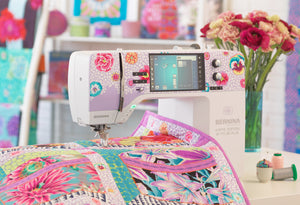
Feeling inspired to start your next project? At High Country Quilts, we have all the high-quality 100% cotton fabrics, batting, and notions you need to create safe and beautiful potholders. Explore our full selection of quilting supplies and BERNINA sewing machines online or stop by the shop
At High Country Quilts we care deeply about community. With our experiences in retail, we know that a store is not only a place to shop but also a place for the community to gather and share. During this busy...

Hi! We’re Adam and Renee Wheaton, the new owners of High Country Quilts! For more than 40 years, we’ve owned and operated vacuum and sewing businesses. Following in Renee’s father’s footsteps after he retired from All Discount Vacuum and Sewing in Colorado...


Leave a comment