

We Love Our Quilting Community
At High Country Quilts we care deeply about community. With our experiences in retail, we know that a store is not only a place to shop but also a place for the community to gather and share. During this busy...


You’ve got a stack of pretty precuts on the shelf, a fresh needle in the machine, and that familiar question in your head. What should I make that looks impressive but won’t make me regret starting?
A free missouri star quilt pattern earns its place. It gives you a classic star look without asking you to master complicated piecing. If you’ve been wanting a project that feels achievable, useful, and satisfying, this is a strong place to begin.
The Missouri Star design has become a favorite for good reason. The Missouri Star Quilt Block is the 3rd most visited block in the Scissortail Quilting Quilt Block Library (Scissortail Quilting). Quilters keep coming back to it because it’s striking, flexible, and friendly to precuts.
A lot of first quilts begin the same way. You buy a layer cake because the fabrics are too good to leave behind, then you wait for the right pattern. You want something with movement and contrast, but you don’t want to spend the whole project fighting tiny pieces.
The Missouri Star block fits that moment beautifully. It gives you an eight-point star feel, strong visual shape, and plenty of room to play with color. It also works well for quilters who like clear construction and repeated units.

Some blocks are beautiful on paper but fussy at the machine. This one isn’t. It balances bold shape with approachable piecing.
A few reasons quilters love it:
The best beginner-friendly quilt blocks are the ones that teach accuracy without making every seam feel stressful.
This isn’t a “sew random pieces and hope” project. The shape depends on orientation, which sounds intimidating at first, but it’s helpful. The structure teaches you to slow down, lay out units, and watch direction.
That’s a useful quilting skill.
If you’ve made basic patchwork before, this pattern helps you build the next layer of confidence. If you haven’t, it still works because the block relies on familiar units rather than unusual templates.
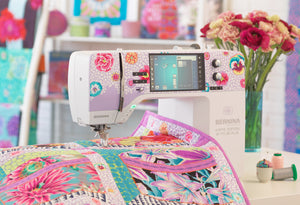
If you sew on a BERNINA, you’ve already got one of the biggest helps for this pattern. Precision matters more than speed when star points need to meet cleanly. A stable quarter-inch seam, even feeding, and good visibility at the needle make the process calmer.
That’s true when you’re handling precuts. They’re convenient, but they can shift if your setup isn’t tuned well. A BERNINA with the right foot and feed support gives you a cleaner start and fewer surprises later.
Good quilts start before the first cut. A little planning saves a lot of seam ripping.
For this kind of free missouri star quilt pattern, the first choice is your fabric format. Do you want the speed of precuts, the variety of fat quarters, or the freedom of pulling from your stash? All three can work. The important part is contrast. Your star points need to stand apart from your background.
Quilters get stuck here. They choose fabrics they love individually, then the block disappears because everything blends together.
Look for this mix:
If you’re using layer cakes, keep a few aside for auditioning. Lay them next to your background before cutting anything. The star should show up from a few feet away, not when you’re standing over the table.
You don’t need a giant tool collection, but you do want the basics within reach.
If you save a lot of digital patterns, it helps to organize them before sewing day. One easy trick is adding bookmarks to your pattern PDF, especially if you want quick jumps between the cutting page, block layout, and finishing notes.
Many free patterns don’t give much help when you want to resize or loosely adapt the project. That’s frustrating, especially since a 2025-2026 American Quilter’s Society report says 68% of quilters prioritize low-waste scrap projects (Missouri Star free quilt patterns collection). A little pre-planning makes that easier.
Here’s a simple planning chart for a throw-size approach.
| Fabric | Precut Source | Cutting Instructions | Total Pieces |
|---|---|---|---|
| Star prints | Layer cake or fat quarters | Cut squares and triangle units according to your chosen block size | Varies by block count |
| Background | Yardage | Cut background squares and side units for each block | Varies by block count |
| Centers | Optional from scraps or precuts | Cut center squares if your version uses them | One per block |
| Sashing | Yardage or stash strips | Cut strips to frame blocks if desired | Depends on layout |
| Border | Yardage | Cut border strips after measuring quilt center | Depends on final size |
| Binding | Yardage | Cut binding strips to preferred width | Enough to go around quilt perimeter |
Machine setup makes a visible difference here.
For piecing, many BERNINA owners like the Patchwork Foot #97D because the guide helps maintain a steady quarter-inch seam. If your machine has Dual Feed, use it for precuts and for any unit with bias edges. It helps the top layer move evenly with the lower layer, which reduces creeping and distortion.
A few setup habits worth keeping:
Practical rule: If your block looks “right” before assembly, stop and measure your seam allowance before recutting fabric.
If you want a baby quilt, wall hanging, or a larger bed quilt, don’t guess your way through. Decide first how many blocks you want across and down. Then build from the finished block size.
That sounds obvious, but many quilters reverse the order. They cut first, then try to force a layout later.
A notebook page helps here. Write down:
That simple sketch becomes your map. It’s easier to adjust on paper than after fabric is cut.
The Missouri Star starts to feel real in this part. A stack of squares becomes movement, direction, and shape.
The block depends on half-square triangle units, called HSTs. If you’ve made them before, you know the basic rhythm. If you haven’t, they’re one of the most useful quilt units to learn. They show up everywhere, and this pattern gives you plenty of practice.
A quick visual helps before you sew.

The heart of this block is consistency. If your units vary, your star points won’t line up well.
A common method uses two squares, one light and one dark. Place them right sides together, mark a diagonal line, sew on both sides of that line with a quarter-inch seam, and cut down the center. That gives you two HST units.
Keep your process tidy:
If your pattern version uses mirrored triangle units rather than standard repeated HST orientation, keep left and right versions separated immediately. Don’t toss them in one pile and hope you’ll sort them later.
This presents the biggest point of confusion in a Missouri Star block. The pieces can all be the correct size and still create the wrong shape if they face the wrong direction.
That’s why layout matters before sewing rows.
Analysis of quilter feedback on Missouri Star tutorials found that 35% of first-time failures come from mismatched mirrored units, which creates twisted stars (YouTube tutorial reference). The same source notes that taking a photo of the layout before sewing can virtually eliminate that mistake.
Take a photo of every block layout before you stitch the rows. Your phone catches orientation mistakes faster than tired eyes do late at night.
Don’t assemble directly from a stack. Lay out each block on a table or design wall first.
Use this visual sequence:
If your pattern includes pairs that must be mirror images, place both versions next to each other before sewing. You should see the star shape clearly before a single seam is stitched.
This short video can help if you like seeing movement and hand placement while piecing.
Pressing isn’t cleanup. It’s construction.
If you press carelessly, seams bulk up, rows shift, and points stop matching. For star blocks, press with intention. Finger press at the machine if you like, then use the iron to set the seam and finish the job.
Try this routine:
Sliding can distort bias edges. That matters a lot with triangle units.
A Missouri Star block rewards control. On a BERNINA, that means slowing slightly and using the machine’s strengths rather than rushing through chain piecing.
A few machine-specific habits help:
If you notice the top fabric inching ahead of the bottom layer, don’t compensate with your hands. Let the feed system do the work. Pulling to “help” bends the unit off grain.
You don’t need perfection. You do need consistency.
Check these signs as you go:
A good quilt block doesn’t have to be flawless. It does need to stay square, lie flat, and repeat predictably.
If one block is noticeably off, stop there. Don’t make ten more the same way. Fix the process before you multiply the error.
A stack of finished blocks is one of the best sights in quilting. It also brings a new challenge. Individual blocks can look great on their own and still need a little rearranging before they work well together in a full top.
Spread everything out where you can step back. A floor works. A design wall is better. Distance helps you notice color clumps, repeated prints, and blocks that need to trade places.

A straight set is the simplest option. It lets the stars carry the design.
An on-point arrangement gives the quilt more motion, but it also adds setting triangles and a little more planning. If this is your first time with a free missouri star quilt pattern, a straight set makes the sewing more relaxed.
You can also add:
Once you’ve settled on the arrangement, label the rows. Painter’s tape or small paper notes work well.
Sew row units together in a consistent order. Don’t rely on memory halfway through.
A few habits keep row assembly cleaner:
Patience is helpful here. Long rows can stretch if handled roughly.
When stars meet at seams, bulk shows up fast. Careful pressing solves a lot of that before quilting ever begins.
Jenny Doan advises pressing seams toward the printed fabrics to reduce bulk at star points, which helps achieve blocks that measure with less than a 1/16-inch variance when handled precisely (YouTube tutorial reference). That’s an excellent benchmark when you want a crisp top.
If one intersection feels thick, try spinning the seam allowance at the center on the back. That small adjustment can flatten a stubborn join.
Press toward the printed fabric when it helps reduce shadowing and bulk. Your block will usually settle more neatly.
Borders should fit the quilt. The quilt shouldn’t be stretched to fit the border.
Measure through the center vertically and horizontally, then cut border strips to those measurements. If the outer edge of the quilt is a bit wavy, don’t trim the border longer to “make it fit.” Ease the quilt to the border instead.
That one choice makes a big difference in how the finished quilt hangs.
For finishing, gather your quilt top, batting, and backing. Press the top and backing first so you’re not trapping folds inside.
Then layer:
Smooth each layer well. Pin baste or use your preferred securing method. If you plan to quilt on your domestic machine, keep the quilting design manageable. Straight-line quilting, gentle echoing around the stars, or simple walking-foot lines all suit this design.
Binding finishes the quilt and protects the edge from wear. Cut your strips, join them, press the binding in half lengthwise, and attach it evenly around the quilt.
Miter the corners carefully. They’re small details, but they give the whole piece a tidy finish.
If binding feels awkward, that’s normal. Most quilters need repetition before it becomes comfortable. The good news is that every quilt gives you another chance to improve it.
Generic tutorials are helpful, but they don’t always tell BERNINA users how to get the best from the machine sitting right in front of them. That gap matters. A 2025 Quilt Market survey reported that 42% of U.S. quilters using BERNINA machines faced compatibility or optimization issues when following generic video tutorials (YouTube reference).
That doesn’t mean the pattern is the problem. It means the machine has features the tutorial never addresses.
A Missouri Star block asks for two things over and over. Accurate feeding and repeatable seams.
That’s why BERNINA features aren’t nice extras here. They answer specific piecing problems.
If your rows keep coming out slightly off, don’t assume your cutting is bad. Check whether your fabric is shifting under the foot.
Precuts are convenient, but they can distort more easily than neatly subcut yardage if they’re handled roughly. Star blocks also include bias edges, and bias edges love to stretch at the worst moment.
Dual Feed helps the top and bottom layers move together. That reduces the urge to tug fabric through the machine, which is one of the fastest ways to distort points.
If you’ve ever sewn a row perfectly at the start and found the top layer creeping forward by the end, this feature is for that exact problem.
A few practical combinations work well:
The key is choosing the tool based on the step. Don’t piece with the same setup you use for quilting the sandwich.
Your BERNINA can be more precise than a generic tutorial assumes. Use that to your advantage instead of sewing around the machine’s features.
If your stitches look balanced on plain quilting cotton, keep going. If not, test before piecing the full project.
A few reminders help:
That last one matters. Too many changes at once make troubleshooting harder.
Once the top is complete, think about how much control you want. If you prefer straight-line quilting, use a walking-foot style setup or your machine’s even-feed support. If you want more movement around the stars, the BERNINA Stitch Regulator can help maintain stitch consistency while you focus on path and spacing.
For a first Missouri Star quilt, simple quilting is the best match. Let the piecing shine.
Once you’ve made one Missouri Star quilt, you start noticing how many directions the design can take. The block itself stays recognizable, but the mood changes fast with fabric choice and layout.
That’s one reason this pattern sticks around in so many sewing rooms.
A single block can read traditional, modern, or scrappy depending on what you feed into it.
Try one of these directions:
Missouri Star Quilt Company also promotes 10 totally free scrap-friendly patterns for stash-busting (easy quilt patterns article). If you’ve been saving leftovers because they’re too pretty to toss, this block gives them a job.
You can make the exact same block and get a different quilt by changing only the arrangement.
A few options:
A design wall is helpful here. Move blocks around and step back. The best arrangement usually reveals itself when you stop staring from six inches away.
Charm-square versions can become a mini quilt or wall hanging. Larger pieces can create a faster lap quilt with bold stars.
You don’t need to overcomplicate the redesign. Sometimes the most personal version of a free missouri star quilt pattern is the one that uses fabrics from your shelf, your favorite background, and the size that fits your home.
Finishing a Missouri Star quilt teaches more than one pattern. You practice contrast, seam accuracy, block orientation, pressing, layout, and finishing. Those skills carry into almost every other quilt you’ll make.
That matters, especially if this project felt like a turning point. Many quilters start with uncertainty and finish with a quilt that changes how they see their own sewing.
Videos are useful. Printed patterns are useful too. But some quilting problems are easier to solve when another quilter can look at your block, your seam, or your machine setup and say, “Here’s what’s happening.”
That’s true for:
A local quilting community shortens the learning curve. You spend less time guessing and more time sewing.
Once you’ve made a Missouri Star quilt, a lot of other patterns open up. Half-square triangles won’t seem mysterious anymore. Layout planning gets easier. Pressing choices start to feel intentional.
That’s how quilting grows. One block leads to another. One finished quilt gives you the confidence to start the next one.
If you’re sewing on your own at home, keep notes on what worked. Write down the foot you used, the needle that gave you clean results, and the pressing choices that kept things flat. Those little records become your personal instruction manual.
If you’ve finished your top, great. If you’re stuck on mirrored units, that’s fine too. Quilting gets easier when you can ask questions before frustration builds.
And if you’re sewing on a BERNINA, hands-on help can make a huge difference. A machine with that much precision is worth learning well.
If you’d like help choosing fabric, dialing in your BERNINA for cleaner piecing, or building confidence in your next quilt, visit High Country Quilts. Our team in Colorado Springs works with new and experienced quilters every day, and we’d love to help you turn your next project into one you’re proud to finish.
At High Country Quilts we care deeply about community. With our experiences in retail, we know that a store is not only a place to shop but also a place for the community to gather and share. During this busy...

Hi! We’re Adam and Renee Wheaton, the new owners of High Country Quilts! For more than 40 years, we’ve owned and operated vacuum and sewing businesses. Following in Renee’s father’s footsteps after he retired from All Discount Vacuum and Sewing in Colorado...


Leave a comment