

We Love Our Quilting Community
At High Country Quilts we care deeply about community. With our experiences in retail, we know that a store is not only a place to shop but also a place for the community to gather and share. During this busy...


You’re standing in front of a wall of fabric, holding one bolt in each hand, and suddenly every print starts to look right and wrong at the same time. One floral feels too busy. One stripe feels too plain. A whole quilt’s worth of choices starts to feel bigger than the quilt itself.
That’s where Fat Quarter bundles for quilting make life easier.
For a new quilter, a bundle turns fabric shopping from a puzzle into a starting point. Instead of building a palette from scratch, you begin with a coordinated stack that already works together. Then you can focus on the part you want to do. Cutting, sewing, arranging blocks, and watching a real project take shape.
If you’ve been curious about precuts but unsure how to choose them, how many to buy, or what to make first, you’re in the right place. I’ll walk you through it the same way I would if we were standing together in the shop, bundle in hand, talking through your first project.
You pick up a bundle, flip through the prints, and for the first time the fabric decision feels manageable. Instead of asking, “Do these ten fabrics go together?” you can ask a much easier beginner question. “What could I make with this?”
A fat quarter is a piece of fabric that usually measures 18" x 22". Compared with a long quarter-yard strip, that squarer shape gives you more flexibility. You can cut larger patchwork pieces, several smaller units, or a mix of shapes from one cut without painting yourself into a corner too early.
A fat quarter bundle is a group of those cuts chosen to coordinate. Fabric companies and designers usually group them by collection, color family, or print style, which gives you a starting palette before you ever make your first cut.

According to Fat Quarter Shop’s fat quarter bundle guide, bundle sizes range from 6 fat quarters to 42 fat quarters. New quilters often like them for a simple reason. The bundle has already done part of the choosing for you.
That confidence boost is real, especially on a first quilt. A good bundle usually includes some visual contrast, such as lighter prints, darker prints, busier designs, and calmer ones. It works like walking into the fabric aisle with a helpful friend who has already narrowed the options to fabrics that belong in the same conversation.
Here’s why bundles are so useful for beginners:
The first smart move after buying a bundle is not cutting right away. Spread the fabrics out. Sort them into lights, mediums, and darks. Set aside any print that feels very dominant and decide whether you want it used in every block or only as an accent. That simple step prevents one common beginner mistake: falling in love with the whole bundle, then realizing one or two fabrics take over the quilt once everything is cut small.
Bundles also help with project choice. A smaller bundle can become a table runner, pillow, or baby quilt. A larger one gives you room for repeated blocks, borders, or a scrappier throw. At High Country Quilts, we often tell beginners to choose the bundle first, then choose a pattern that suits its scale and variety, not the other way around.
Used well, a fat quarter bundle gives you more than coordinated fabric. It gives you a clear place to begin.
A good bundle makes your first quilt feel manageable. A poor one can make every step harder, even if your cutting and sewing are careful. Beginners often blame themselves when blocks stretch, edges fray, or fabrics refuse to press flat. Sometimes the bundle is indeed the problem.

The easiest way to judge a bundle is to check three things in order. Start with feel. Then look at the cuts. Last, study the print mix. That sequence works well in a fabric aisle because it helps you rule out trouble before you fall in love with the colors.
Good quilting cotton usually feels smooth, stable, and substantial. It should bend easily, but it should not feel limp or slippery. If you unfold a fat quarter and it collapses like a scarf, piecing can become frustrating. If it feels papery and overly stiff, the finish may wash out and leave you with a very different fabric than the one you bought.
A simple test helps. Gently pinch the fabric, finger-press a fold, and smooth it back out. Quality quilting cotton tends to hold shape well enough for accurate cutting and pressing.
Lower-quality fabric often shows warning signs right away:
As noted earlier from the Mrs Quilty source, pre-shrunk fabric with minimal shrinkage helps blocks stay closer to size after washing. Patchwork relies on repeatable shapes and consistent seam allowances, so stable fabric saves beginners a lot of frustration.
Cut quality matters more than many new quilters expect. A bundle with uneven cuts can throw off your planning before you make a single block. If the pieces are stacked neatly and look close to uniform, cutting your pattern pieces becomes much simpler.
Then study the print mix like a teacher sorting students into groups. You want variety, but you also want balance. A beginner-friendly bundle usually has a few quieter fabrics, a few medium prints, and only a small number of very bold prints. If every fabric shouts, the finished quilt can look busy, and it becomes harder to see your block design.
Use this quick checklist:
That last step is where many beginners get stuck. A print that looks beautiful in a folded bundle may become awkward once cut into 2 1/2-inch squares or narrow strips. Large novelty prints, extra-directional designs, and scattered motifs often need bigger pieces to look their best.
Well-known quilting brands are often a safer starting point because they are made for piecing, pressing, and regular washing. You may see names such as Moda, Art Gallery, and Riley Blake Designs on bundles that are popular with quilters. Still, brand should support your decision, not replace it. Feel the fabric. Check the cut. Review the print balance.
At High Country Quilts, we often encourage beginners to ask one practical question before buying: “Can I see where this bundle will rest?” In other words, which fabrics can act as background or quiet support? Every bundle needs a few team players, not just stars.
Better fabric makes learning calmer. It helps your first project behave more predictably, which gives you a fair chance to build skill and confidence.
One of the first questions new quilters ask is simple. “How many fat quarters do I need?” That question matters because the wrong answer leads to one of two frustrating outcomes. You either buy too little and stall halfway through, or you buy a random extra pile of fabric that never gets used.
The good news is that standard quilt sizes give you reliable planning benchmarks.

According to Missouri Star’s quilting fat quarters guide, a throw or lap quilt measuring about 70" x 82" needs 12 to 16 fat quarters. The same guide says a twin-size quilt needs 24 to 30, a queen requires 36 to 45, and a king needs 48 to 56 fat quarters. It also notes that a crib or baby quilt measuring about 36" x 52" requires 9 to 20 fat quarters.
| Quilt Size | Approx. Dimensions | Fat Quarters Needed |
|---|---|---|
| Crib or Baby | 36" x 52" | 9 to 20 |
| Throw or Lap | 70" x 82" | 12 to 16 |
| Twin | 64" x 88" | 24 to 30 |
| Queen | 84" x 92" | 36 to 45 |
| King | 98" x 106" | 48 to 56 |
Start with the project, not the bundle.
If you want a first quilt that feels manageable, a throw, lap, or baby quilt is usually a more comfortable place to begin than a bed quilt. The cutting is lighter, the layout is easier to control, and you get to the satisfying part, seeing a finished top, much sooner.
Use this checklist when shopping:
A bundle count tells you whether you can begin. The pattern tells you whether you can finish.
A bundle may have enough pieces for your quilt size, but that doesn’t always mean it includes every fabric category your pattern expects. Some patterns need background fabric, a binding fabric, or extra contrast fabric that isn’t part of the main bundle.
That’s why it helps to ask two separate questions:
If a bundle has many medium-value prints and very few lights, your patchwork may look flatter than you expected. For a first project, choose a bundle with visible contrast. It’s easier to cut, arrange, and appreciate from a distance.
You have your bundle on the table, your pattern nearby, and enough excitement to start cutting right away. This is the moment when a beginner either feels calm or feels clumsy. The difference is often the setup.

With fat quarters, your tools do more than help you sew. They help you protect fabric. A crooked first cut can turn a usable piece into one that no longer fits the pattern, and beginners usually notice that problem too late.
You do not need a crowded sewing room. You need a few reliable tools that help you cut accurately, keep pieces organized, and correct mistakes before they multiply.
If you are choosing only one ruler to start, buy the one your first pattern will use most. Some beginners buy a ruler because it looks useful, then find out it is too short for strips or too large to handle comfortably. Match the ruler to the job.
Precuts save time, but they do not remove the need for accuracy. Fat quarters are like ingredients measured close to the amount a recipe needs. If you trim carelessly at the beginning, you have less room to recover later.
That is why a sharp blade matters so much. Dull blades drag at the fabric instead of slicing cleanly, which can leave fuzzy edges or slightly shifted layers. A clear ruler matters for the same reason. If you can read the markings quickly and line them up with confidence, cutting feels much less intimidating.
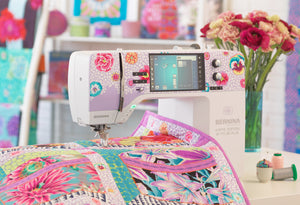
High Country Quilts carries BERNINA machines and quilting supplies for quilters building a first sewing setup or replacing tools that no longer cut accurately.
A short visual walkthrough can help if the cutting setup still feels abstract:
A beginner toolkit works best when every item solves a real problem you are likely to face on your first project.
Organization tools matter more than many beginners expect. Once several fabrics are cut into similar shapes, they can start to look alike. Keeping stacks separated by block, color, or size saves a lot of second-guessing later.
The goal is a setup that helps you cut confidently, keep pieces in order, and stay relaxed enough to enjoy the project.
Once your bundle is chosen and your pieces are cut, the next challenge is consistency. New quilters often think the hard part is learning to sew straight. In patchwork, the harder part is sewing the same seam allowance over and over so the pieces fit together later.
That’s why sewing with fat quarters works best when you create a routine before you race ahead.
Quilters have different opinions about pre-washing precuts. There isn’t one universal answer, but there is a sensible way to decide.
If you want to preserve the cleanest possible edges for cutting and piecing, many quilters prefer to work with fat quarters before washing. The fabric stays crisper, and the cut size remains easier to handle. If you’re concerned about shrinkage, softness, or the way the finished quilt will behave after laundering, you may prefer to pre-wash.
A practical beginner approach is to be consistent. Don’t mix pre-washed and unwashed fabrics in the same project unless you understand how that difference may affect the result.
The verified data notes that quilting commonly relies on a 1/4 inch seam allowance. That tiny measurement has a big job. If your seams are even slightly inconsistent across many pieces, your blocks may stop lining up.
Try these habits:
If your machine accepts specialty feet, a quarter-inch presser foot can help you build muscle memory. On a BERNINA, that kind of accessory is especially useful for repetitive piecing because it gives you a consistent visual guide.
If your blocks are coming out small, check the seam allowance before you blame the cutting.
For most quilting cotton, a Universal or Quilting needle in 80/12 is a comfortable place to start. Pair that with 50 wt cotton thread for piecing if that’s what you like to use. The exact combination can vary by machine and fabric, but the principle is steady. Use a fresh, appropriate needle and a thread that won’t add unnecessary bulk to your seams.
If stitching suddenly looks uneven, don’t assume you’re doing something wrong. Check the needle first. A dull or damaged needle can cause all sorts of fussy behavior.
When a project needs variety, bundles solve a problem that yardage doesn’t solve as neatly. The verified data from Shabby Fabrics’ fat quarter bundle page notes that while yardage can sometimes be cheaper per square inch for a single color, fat quarter bundles offer stronger value for projects that need multiple coordinating fabrics. Buying many separate quarter-yard cuts can cost more than purchasing a curated bundle, and it adds more decision-making along the way.
That matters most for quilts with lots of patchwork variety. If your pattern shines because each block looks a little different, a bundle often gives you the look you want with less shopping fatigue.
Some bundles sit on a shelf because the owner thinks they need the perfect quilt pattern to deserve them. You don’t. You need a project that helps you use the fabric and learn something useful along the way.
A first project should give you practice, a visible finish line, and enough excitement to keep sewing.
A baby quilt is a kind first finish. It’s small enough to manage on a home machine, but large enough to teach real quilting habits like fabric placement, pressing, and joining rows.
A simple square or rectangle patchwork layout works especially well with fat quarters because you can cut a range of pieces without trying to squeeze every last scrap into a complex plan. If you want quick variety and an achievable finish, this is a strong option.
A table runner teaches accurate cutting and seam matching without asking for a full quilt’s worth of stamina. It’s also easier to audition fabrics because you can lay the whole project out on a table and see the balance right away.
This is a smart project if you’re still nervous about committing a favorite bundle to a big quilt. You get experience with piecing and pressing, and you end up with something useful.
Placemats are excellent confidence builders because each one is a repeat. After you make the first, the second usually feels smoother, and by the last one you can see your skills improving.
They also give you room to test fabric pairings. Use one side for the bundle prints and the other for calmer coordinating fabrics. That contrast helps you understand how busy and quiet fabrics work together in everyday sewing.
Small projects are not lesser projects. They’re training grounds for better quilts.
If your bundle isn’t large enough for the quilt you had in mind, don’t force it. A tote bag is a satisfying way to use favorite prints and practice basic piecing, quilting, and construction in one project.
This is also a good answer to a common beginner problem. You buy a bundle because you love it, then realize you’re not ready for a bed-size quilt. A bag, pillow, or small home project lets you use the fabric now instead of storing it for later.
Fat quarter bundles take a lot of pressure off the beginning of quilting. You don’t have to build a fabric plan from nothing. You don’t have to guess how much variety is enough. You can start with a coordinated group of fabrics, pair it with a realistic project, and focus on learning one step at a time.
That’s what makes them such a friendly entry point for new quilters. They give you structure without taking away creativity.
If you’re still deciding, keep it simple. Choose a bundle with colors you enjoy looking at, make sure it suits the size of project you want to sew, and use tools that help you cut and piece accurately. Your first quilt doesn’t need to be ambitious. It needs to be finishable.
And if you want help in person, that’s where a local quilt shop becomes part of your quilting life. Seeing fabric up close, comparing quality by touch, and asking questions before you cut can shorten the learning curve in a very practical way.
Ready to begin? Browse fabric, tools, and classes at High Country Quilts and choose a fat quarter bundle that makes you want to start sewing today.
At High Country Quilts we care deeply about community. With our experiences in retail, we know that a store is not only a place to shop but also a place for the community to gather and share. During this busy...

Hi! We’re Adam and Renee Wheaton, the new owners of High Country Quilts! For more than 40 years, we’ve owned and operated vacuum and sewing businesses. Following in Renee’s father’s footsteps after he retired from All Discount Vacuum and Sewing in Colorado...


Leave a comment