
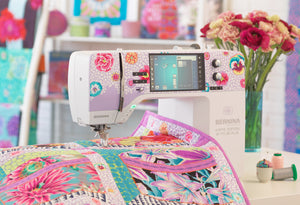

We Love Our Quilting Community
At High Country Quilts we care deeply about community. With our experiences in retail, we know that a store is not only a place to shop but also a place for the community to gather and share. During this busy...


You're standing in a fabric store, one hand on a bolt that feels glamorous, the other holding a pattern you're not fully sure will work. You want something that looks polished, not bulky. You want help choosing fabric without wandering for an hour. And if you're searching for fabric stores in Colorado Springs, you probably want more than an address list. You want to know where different kinds of shopping make sense, and how to turn that fabric into a project that gets a real “you made that?” reaction.
That's especially true if your dream project is a coat.
Coat sewing asks more from your materials than a pillowcase or simple tote. The outer fabric has to drape, the lining has to feel good against your clothes, and your machine setup matters more than most beginners expect. The happy part is that Colorado Springs has a strong sewing culture, with a mix of outlet-style and specialty fabric shopping that gives you options depending on your project goals.
You pull a bolt off the shelf, hold it up to your shoulder, and for a second you can already see the finished coat. Then the practical questions start. Will it hang with some shape? Will the backing fight your machine? Will the lining make the sleeves easy to slip on over a sweater?
That moment matters more than many newer sewists expect. Coat fabric has a job to do. It needs to look good across a full garment, hold up to wear, and cooperate with the pattern you chose. In Colorado Springs, that shopping process gets easier because you can compare two very different styles of stores. Large outlets such as Mill Outlet Fabric Shop give you range and surprise. Curated specialty shops narrow the field and help you focus on fabrics that suit a specific project.

I teach students to use their hands before they use their eyes. Color catches you first. Your fingers tell you whether the fabric can carry a coat.
Check these three qualities right away:
A simple comparison helps here. Fabric works like the framing in a house. The surface may be what everyone notices, but the structure underneath decides how the whole thing stands.
One more tip I wish more sewists knew. Crush a section in your hand, then release it. If it stays heavily wrinkled, that fabric may look tired by lunchtime unless a rumpled finish is part of the design.
The outer fabric and the lining are partners. If one is heavy and sticky and the other is clingy, the coat can twist, bunch, or feel awkward every time you put it on.
Here are a few pairings that behave well:
| Outer fabric feel | Best lining direction | Why it works |
|---|---|---|
| Plush faux fur | Smooth rayon or silky lining | Helps the coat slide on easily |
| Wool coating | Stable slippery lining | Supports structure and reduces drag |
| Textured jacquard | Lightweight smooth lining | Keeps the inside comfortable and less bulky |
Practical rule: If your outer fabric has a lot of texture or visual drama, keep the lining smooth, quiet, and easy to wear.
Readers sometimes wonder whether a casual coat can skip the lining. For a polished result, lining usually earns its keep. It covers seam allowances, helps the coat move over your clothes, and improves how the finished piece hangs on the body.
Colorado Springs is especially useful for coat shopping because you can match the store to your stage of sewing. If you are still learning what wool coating, faux fur, bouclé, and jacquard feel like in real life, an outlet setting lets you compare many options side by side. If you already have a pattern and a clear goal, a specialty shop can save a surprising amount of time because the choices have already been filtered.
That matters when you are standing under fluorescent lights holding your fifth fabric bolt and your judgment starts getting fuzzy.
Bring a small plan with you:
If you are shopping at High Country Quilts, this is also where machine planning can start early. A BERNINA owner has an advantage with specialty fabrics because presser foot control, stitch consistency, and clean feeding become more noticeable on thick layers and textured surfaces. Even before you cut, choosing fabric with your machine in mind can save hours of frustration later.
Colorado Springs has a long fabric-retail history. Mill Outlet Fabric Shop celebrated its 60th anniversary in February 2025 after being founded in 1965, and its 12,000-square-foot sales floor reflects the staying power of dedicated fabric retail in the region, according to The Gazette's coverage of Mill Outlet Fabric Shop.
For coat sewing, that local depth is useful in a very practical way. You can compare texture, weight, recovery, and lining options in person, ask project-specific questions, and leave with materials that suit both your pattern and your machine.
A beautiful coat starts there. With fabric that matches the vision, the shape, and the way you sew.
You are standing in a Colorado Springs fabric store with a gorgeous coat fabric over one arm, and every pattern envelope suddenly looks possible. This is the moment to slow down a little. The right pattern makes thick, textured fabric feel manageable. The wrong one can turn even beautiful materials into a wrestling match.
For a first coat, choose a pattern with clean structure and fewer places where bulk can build up. Faux fur, coating, and plush textures already ask more from your scissors, your machine, and your pressing routine. A simpler shape gives you room to learn the process and still end up with a coat you will wear.
Patterns with these features are usually the friendliest place to start:
One helpful habit is to compare the pattern pieces to a coat you already own and like. Lay your favorite coat flat, measure key areas like chest, hip, shoulder width, and finished length, then compare those numbers to the pattern. Finished garment measurements matter more than the size printed on the envelope. That little check saves a lot of guesswork.
If you sew on a BERNINA, this is also a good planning stage for your machine setup. Bulky coat projects often sew more smoothly when you choose a pattern that does not ask your machine to climb over too many stacked seam intersections at once.
Good prep works like pinning a hiking route on a map before you head into the mountains. You still get the adventure. You just avoid the wrong turns.
A few small steps make a big difference:
That last tip is a sanity-saver. I wish every new coat maker learned it sooner.
You do not need a giant supply haul, but a few well-chosen tools remove a lot of friction.
That last machine tip is especially helpful with coat projects. On slippery lining paired with a heavier outer fabric, even feeding is what keeps the layers from shifting out of alignment by the time you reach the hem.
Clear more space than you think you need. Coat pieces are large, and cramped layout leads to careless mistakes. Spread out the fabric, place every pattern piece, confirm direction marks, and check that paired pieces are mirrored correctly.
Then pause and look again.
In a class at High Country Quilts, this is often the moment when someone catches a piece turned the wrong way or a sleeve placed to save fabric but ruin the nap. A two-minute review is much cheaper than replacing a whole coat front.
Sewing faux fur can be intimidating, but the primary difficulty lies in cutting it poorly.
That's good news, because the fix is simple.

Lay the faux fur pile side down. You'll work from the backing side, not the furry side. Instead of slicing through everything with scissors, use a sharp craft knife or razor blade to cut only the backing.
That protects the long fibers and keeps the edges fluffy instead of hacked off.
Cut the backing, not the fur.
If you cut straight through the pile with scissors, the result is usually messy edges, floating fluff everywhere, and seams that look choppy instead of full.
Nap matters. The pile has a direction, and your coat pieces need to agree on it. Brush your hand over the fabric to see which way the fibers naturally smooth down. Mark that direction on the backing before you start layout.
Here's the part that trips people up: two mirrored pattern pieces still need the nap running the same way on the finished garment. Don't rotate one piece just to save fabric.
A careful cutting routine looks like this:
Yes, you'll still get some fluff. That part is normal.
Keep a lint roller nearby. Vacuum your cutting area after each major piece. Some sewists like to shake pieces outdoors before bringing them back to the machine. That's not overkill if the pile is long.
This demonstration can help if you want to watch the movement of the cut before trying it yourself:
Cutting isn't just about getting pieces separated. It sets up every seam that follows.
Try these habits:
| Habit | Why it matters |
|---|---|
| Label each piece immediately | Thick fabrics make fronts, backs, and facings look similar |
| Clip notches shallowly on backing only | Deep cuts weaken seam edges |
| Keep scraps with nap arrows | Useful for testing stitches and pressing methods |
If your first cut feels awkward, that's normal. The second piece usually feels better, and by the third you'll understand why experienced sewists are so picky about this method. Clean cutting is what lets the seams blend and the coat keep that plush, high-end look.
You sit down to sew the first long seam of your coat, and suddenly the project feels different from a quilt block or a simple blouse. The fabric is thicker. The layers want to shift. The pile can hide your stitching one minute and trap itself in the seam the next. That moment is where good assembly habits make the whole coat look more polished.

Machine setup has a huge effect on how your coat seams behave. A machine can form stitches and still leave you with ripples, shifting layers, or fabric that bunches at the presser foot.
Start with a few practical adjustments:
If you sew heavy fabrics often, the machine itself matters too. At High Country Quilts here in Colorado Springs, this is one of the most helpful BERNINA conversations we have with garment sewists. A BERNINA with steady feeding power, good presser foot pressure control, and the right accessories can make bulky seams far easier to manage. Local support also helps when you want your machine adjusted for the kind of projects you sew, not just basic cotton tests.
Build the outer shell with calm, deliberate seams. Speed tends to flatten the pile and push layers out of alignment.
Before stitching, finger-comb the fur away from the seam line. Then pin or clip inside the seam allowance so the hold points stay hidden in the finished coat. Sew slowly enough to spot shifting early.
After each seam, turn the piece right side out and use a pin, awl, or blunt point to tease trapped fibers back to the surface. That little rescue step is one of the best professional tricks for faux fur. The seam blends into the texture much more naturally, and the coat keeps its full, plush look.
A walking foot works like an extra set of hands guiding the top layer at the same pace as the lower one. That matters with coat fabrics, because thick or slippery layers rarely feed evenly on their own.
It is especially helpful for:
If you sew on a BERNINA, ask specifically about walking foot options that match your model. That is one of those location-specific advantages of shopping in Colorado Springs. You can bring in your fabric, test the setup, and see how the foot handles your exact project before you commit to a method.
Bulk behaves a lot like traffic at a busy intersection. If every layer arrives at the same place with the same width, everything stacks up fast.
Use this order on heavy seams:
Some coat fabrics respond better to steam held above the surface than to direct pressing. Others shape beautifully with finger pressure alone. I wish more beginners knew this, because many “pressing problems” are really heat problems.
Treat the lining as a separate garment that lives inside the coat. That mindset helps you keep it tidy, balanced, and pleasant to wear.
Sew the lining carefully, check that the seams stay smooth, and confirm that it has enough ease to move with the shell. The lining should help the coat slide on easily and hang well across the shoulders, sleeves, and hem.
Watch for these common issues:
| Lining problem | What causes it |
|---|---|
| Pulling at the hem | Lining cut too short or attached under tension |
| Twisting sleeves | Pieces mixed up or sleeve orientation not marked clearly |
| Bubbles inside coat | Too much lining fullness in the wrong place |
“Bagging the lining” sounds complicated the first time you hear it. In practice, it is a method for enclosing the inside edges so the coat looks neat and finished when you open it.
Most patterns follow the same basic logic:
Halfway through, the coat often looks twisted and slightly ridiculous. Keep going. That bundled stage is part of the process, and it catches many beginners off guard.
These areas shape the coat's personality. They also collect layers quickly, so precision matters.
For collars and cuffs, reduce hidden bulk by trimming enclosed seam allowances carefully and grading where several layers meet. Check both sides often. A collar point that is even a little longer than its match will show.
Facings need enough structure to support the front edge and help it roll nicely. Test any interfacing on scraps first, especially with plush or thick fabrics. On many BERNINA machines, a clean edge here also depends on choosing the right presser foot and resisting the urge to over-handle the fabric as it feeds.
When the coat starts to feel awkward, stop and name the exact problem. That habit saves time and fabric.
A lot of coat frustration comes from using everyday sewing habits on fabrics that need slower handling, better support, and more thoughtful bulk control. Once you adjust for that, the project becomes much easier to manage, and the finished coat starts to look like the kind of piece people ask about in the grocery store.
You put the coat on, turn toward the mirror, and something finally clicks. The shape looks right. The fabric has presence. Now the last 10 percent decides whether the whole project feels polished every time you wear it.

Closures do more than keep a coat shut. They affect drape, stress points, and the first impression your coat gives from across the room.
Big buttons can be beautiful on a winter coat, especially with a simple silhouette. On thick wool, faux fur, or heavily textured fabric, give each button a thread shank so it can sit over the fabric thickness instead of straining against it. That one small detail changes how the front hangs.
Hooks and eyes are useful when you want the fabric to stay the star. They are especially handy on plush surfaces where buttonholes can sink into the pile or stretch out of shape. Toggles fit relaxed, casual coats and can add personality without asking the fabric to behave like a structured suiting.
If you shop locally in Colorado Springs, this is one of those moments when it helps to handle the closure in person. Weight matters. Scale matters. A button that looks perfect in your hand can feel too small once it meets a substantial coat front.
A good hem supports the coat's shape and lets it move comfortably. The lining needs a little ease so the coat can bend, sit, and swing without strain at the bottom edge.
Here is the part that confuses many newer garment sewists. If the lining lies completely flat and tight inside the coat, it is usually too short or too snug. A small amount of extra room acts like slack in a well-made curtain. It lets the outer fabric hang the way you intended.
Before you stitch the final hem, let the coat hang for a bit and check it from the front, back, and side. Heavier fabrics can drop slightly after handling. Sleeves can settle into a different position once the full weight of the coat is on the hanger. I wish more sewists knew this before trimming a hem too soon.
If you sew on a BERNINA, this is a smart place to use the machine's stitch control to your advantage. Test the hem on scraps that include the outer fabric and lining together. A slightly longer stitch often looks calmer on thick layers, and careful presser foot choice helps the layers feed evenly without shifting.
Coats usually need less cleaning than everyday garments. That is good news, because many specialty fabrics last longer when they are cleaned gently and only when needed.
Start with spot cleaning for small marks. If professional cleaning becomes necessary, tell the cleaner what the shell and lining are made of, and mention any interfacing, hidden closures, or trim. That information helps protect the structure you worked so hard to build.
For storage, a few habits make a real difference:
| Storage habit | Why it helps |
|---|---|
| Use a sturdy hanger | Supports the coat's weight and helps the shoulders keep their shape |
| Give it breathing room | Reduces crushed pile and flattened areas |
| Avoid tight plastic cover storage | Helps limit trapped moisture and surface flattening |
Lofty fabrics need space. Faux fur, boucle, and other textured coat fabrics can look tired fast if they are packed tightly in a closet.
A gentle shake after wearing can lift the surface again. A soft clothing brush can also freshen the pile, but test any method first in a hidden area. That quick test is one of those instructor habits that saves heartache later.
A coat is an ambitious project, and that's exactly why it teaches so much. You learn how fabric choice changes the outcome, how careful cutting saves cleanup later, and how machine setup can turn a difficult seam into a smooth one. By the time you finish, you're not just holding a coat. You're holding proof that your skills grew.
That's one reason fabric stores in Colorado Springs matter beyond shopping. They support real learning. The Pikes Peak region hosts over 10,000 active quilters and sewists, and local shops play an important role in classes and community events that keep that creative energy going, according to the Colorado Springs fabric store overview on Walmart's local page.
Some sewing problems are hard to solve from a pattern envelope alone. You might need help matching a lining to a heavy outer fabric, choosing a better presser foot, or deciding whether a seam is bulky because of the fabric or because of the technique.
A good class shortens that learning curve. So does being around other makers who ask the same questions you're asking.
That kind of support is especially useful if you're:
If your coat is still in the dreaming stage, start by choosing the pattern and collecting swatches. If you've already cut your pieces, keep moving and don't let one awkward seam convince you the whole project is off track. Coat sewing is full of moments that look strange before they look right.
And if this project lit a spark for the next one, follow it. Maybe that's a lined vest, a quilted jacket, a better understanding of your machine, or a workshop that helps you skip months of trial and error.
If you'd like hands-on help with your next project, explore classes, machines, fabrics, and sewing support at High Country Quilts.
At High Country Quilts we care deeply about community. With our experiences in retail, we know that a store is not only a place to shop but also a place for the community to gather and share. During this busy...

Hi! We’re Adam and Renee Wheaton, the new owners of High Country Quilts! For more than 40 years, we’ve owned and operated vacuum and sewing businesses. Following in Renee’s father’s footsteps after he retired from All Discount Vacuum and Sewing in Colorado...


Leave a comment