
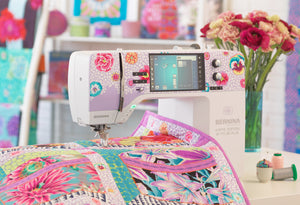

We Love Our Quilting Community
At High Country Quilts we care deeply about community. With our experiences in retail, we know that a store is not only a place to shop but also a place for the community to gather and share. During this busy...


A good fabric flowers pattern is the secret sauce behind any beautiful, lasting bloom you create from fabric. Think of it as your blueprint for turning simple materials like cotton, silk, or felt into everything from delicate quilt embellishments to bold cosplay accessories. It’s the guide that helps you transform a flat piece of cloth into a stunning, dimensional piece of art.

Welcome to the wonderful world of making fabric flowers! It’s a craft where a few basic tools and a splash of creativity can turn your leftover fabric scraps into a bouquet that never fades.
Maybe you're a quilter in Atlanta wanting to add a 3D pop to your next project, or a cosplayer who needs a custom accessory that can withstand a busy convention floor. Whatever your reason for being here, the right pattern is where the magic begins. This guide is here to help you find it.
The real beauty of fabric flowers is their incredible versatility and staying power. They don't wilt or die, which makes them a fantastic, permanent choice for home decor, fashion, and special events. This durability has made them a go-to for crafters and designers alike.
There's a huge shift happening toward personalized, lasting decorative items. People want that unique warmth and character that you just can't get from mass-produced decor. Fabric flowers are right at the heart of this movement, giving creators the power to perfectly match colors, textures, and styles to any project or theme.
This trend isn't just a feeling; the numbers back it up. The global artificial flowers market was valued at $1.78 billion in 2025 and is expected to climb to $2.91 billion by 2034. That growth comes from the demand for low-maintenance, durable decor for weddings, homes, and events—all areas where fabric creations shine. If you're interested in the data, you can find detailed insights on the artificial flowers industry and see the trends for yourself.
A well-chosen fabric flowers pattern is so much more than a set of instructions. It’s a creative key. It unlocks endless ways to express yourself, guiding your hands as you make anything from a simple rolled rose to a complex, multi-layered peony, while still leaving plenty of room for your own artistic flair.
I’ve put together this tutorial to give you everything you need to get started. This isn't just about handing you a template; it’s about sharing a complete crafting experience. Here’s what you’ll get:
It's time to turn that fabric stash into some breathtaking floral art. Let's get started
Before you even think about cutting out your first petal, let’s talk about setting yourself up for success. Getting your supplies in order is the first real step in making a beautiful fabric flower. Having the right tools and fabrics ready to go makes the whole process so much more enjoyable and seriously affects how your finished bloom turns out.
Think of it like baking a cake from a treasured recipe—the better your ingredients, the better the final result. Your workspace doesn't have to be a professional studio, but getting a few key items organized will make a world of difference, no matter which flower pattern you're tackling.
The fabric you choose is basically the soul of your flower. Its texture, how it drapes, and even its weight will give your creation its unique personality. A flowy silk will give you soft, romantic roses perfect for a bridal hairpin, while a stiff cotton canvas is what you want for a bold, graphic flower that needs to hold its shape on a quilt.
If you're just starting out, I always point people toward quilting cotton. It’s incredibly forgiving, easy to cut and sew, holds a crease beautifully, and doesn't fray like crazy. Felt is another fantastic beginner-friendly option since the edges don't need any finishing at all, making it a dream for quick, no-sew projects.
My Favorite Tip: Don't forget about your scrap bin! Some of the most interesting and charming flowers I've ever made came from using up leftover fabric. It's a great way to be sustainable and adds a personal story to your work.
To help you pick the perfect material, I've put together this quick comparison of common fabrics and what they're best for.
| Fabric Type | Best For Flower Style | Ideal Projects | Pro Tips & Considerations |
|---|---|---|---|
| Quilting Cotton | Structured, full-bodied flowers like poppies or daisies. | Quilt appliques, wreaths, durable home decor. | Super easy to work with, holds its shape, and comes in endless colors. |
| Silk or Satin | Delicate, lustrous flowers such as roses or peonies. | Bridal accessories, high-end cosplay, formal wear. | Can be slippery! Use very sharp scissors. You may need to heat-seal the edges. |
| Felt (Wool or Craft) | Simple, stylized flowers with clean, crisp edges. | Children's crafts, brooches, beginner-friendly projects. | Doesn't fray one bit, which is perfect for patterns using fabric glue. |
| Organza or Chiffon | Ethereal, translucent blooms like layered ranunculus. | Delicate hairpieces, costume embellishments. | Fraying is a real issue here. Keep Fray Check or a heat tool handy. |
Thinking through these options will help you match your fabric to your vision, ensuring your flower looks exactly how you imagined it.
With your fabric picked out, it's time to gather the tools that will bring your pattern to life. Getting clean, precise cuts is everything, so good tools are a worthy investment.
Now for the fun part: putting it all together. Your choice of glue really matters. A hot glue gun is my go-to for speed and for adding chunky, dimensional bits like buttons or beads. But if I want a more flexible, invisible bond without any hard lumps, I'll always reach for a quality fabric glue like Fabri-Tac.
Don't forget the finishing touches! The center of the flower is where you can really let your creativity shine. If you're wondering where to find a good variety of little treasures, a guide on sourcing crafting beads in bulk can be a goldmine for finding pearls, seed beads, or other decorative bits. Keeping a little stash of different threads, embroidery floss, and beads on hand means you'll always have options to make your flower one-of-a-kind.
Alright, you’ve gathered your supplies. Now for the fun part: turning that pile of fabric and your chosen fabric flowers pattern into something truly beautiful. This is where the magic happens, transforming flat pieces into a dimensional flower. Getting a great result really comes down to being careful with your prep work and thoughtful during assembly.
First, we'll focus on getting the pattern onto your fabric cleanly and accurately. A perfectly cut petal is the foundation for everything that follows. Then, we’ll get into the actual construction, exploring how to assemble the pieces to create different styles of blooms, even from the same basic shapes.
The whole process really boils down to three simple actions.

As you can see, it all hinges on these fundamentals: choosing your fabric, cutting the shapes, and then gluing them together.
Before you even think about cutting, let’s get your pattern ready. If you've downloaded a template, the single most important thing is to check your printer settings. Make sure it's set to 100% scale or "Actual Size." If "Fit to Page" is checked, your pattern will shrink, and you'll end up with petals that are too small to fit together properly.
Here’s a pro tip I swear by: once printed, trace the pattern pieces onto something sturdier, like cardstock or a thin plastic sheet from an old report cover. This little bit of extra work pays off big time. A durable template won't tear or get flimsy, giving you a much cleaner line to trace, especially if you're making a whole bouquet.
Finally, give your fabric a quick press with an iron. Getting rid of wrinkles ensures a perfectly flat surface, which means your cut pieces will be true to the pattern's shape without any distortion.
Clean cuts are everything. Jagged, frayed edges can make even the most gorgeous fabric look messy. Your best tool for the job really depends on your fabric and how intricate the petal shape is.
I often see people struggling to cut slippery fabrics like satin or silk because the material shifts all over the place. The trick is to stabilize it first. You can pin the fabric to a sheet of tissue paper or use a temporary spray adhesive on a backing paper. This gives it just enough grip to stay put for a perfect cut.
A little prep work here makes all the difference, ensuring your petals are uniform and symmetrical for a balanced, believable flower.
Let's walk through putting together a classic layered bloom. This is a super versatile style that, depending on your petal shape, can look like a peony, a dahlia, or a camellia. For this example, let's say our pattern has three petal sizes: small, medium, and large.
Start with your largest petals. Arrange them in a circle on a small felt or fabric base, overlapping their edges just a bit. A dot of hot glue at the base of each petal secures it to the circle. This first layer sets the flower's overall size and shape.
Next, grab your medium-sized petals and build the second layer. You'll want to place these on top of the first layer, but stagger them so they cover the gaps between the bigger petals. This layering is what gives the flower its realistic depth and fullness.
Keep going with the smallest petals, working your way toward a tighter, more compact center. As you get closer to the middle, you can start giving the petals more shape. Try adding a small fold or a pinch at the base right before you glue them down. This simple move lifts the petal up, giving the flower a much more organic, three-dimensional look.
The center is the final touch that really makes your flower pop. You can dramatically change the whole vibe of the bloom just by what you put in the middle.
For a completely different look, the rolled rosette is one of the easiest flowers to master, which makes it perfect for beginners.
You’ll start with a long, straight strip of fabric. The width of the strip determines the height of your rose. Fold the strip in half lengthwise and give it a quick press with an iron.
Put a small dot of hot glue at one end and roll the fabric tightly for two or three turns to create the very center of the bud. Now, you’ll continue wrapping the fabric strip around this central point.
The secret to a realistic rose is to twist the strip away from you as you wrap it. After every half-turn or so, add a little dab of glue at the base to hold the layer in place. This twisting motion is what creates the illusion of overlapping petals opening up.
Keep twisting and wrapping until you run out of fabric, then secure the end with a final dot of glue on the bottom of the flower. It's a surprisingly quick method that produces a beautiful rosette you can use on anything from headbands to gift boxes.

Alright, you’ve mastered the basic flower. Now for the fun part. A good fabric flowers pattern is never just a one-and-done project; it’s a launchpad. The skills you’ve just learned can be twisted, tweaked, and transformed to elevate everything from quilts and costumes to your favorite jacket.
This is where you get to break the rules a little. Think of these flowers as your new creative building blocks. You can resize them, play with the shapes, and reimagine them for just about any project you can dream up.
Quilting is all about texture and depth, and this is where 3D fabric flowers really shine. Forget flat appliqué for a moment. A dimensional flower can take a simple quilt block and turn it into a tactile, eye-catching centerpiece.
Imagine a garden-themed quilt where lush, layered peonies made from soft cotton actually pop off the fabric. Or, you could create a stunning embellished border, using smaller rolled rosettes and simple Kanzashi-style flowers to frame your masterpiece. It adds a delicate, handmade touch that’s hard to beat.
For my fellow cosplayers, fabric flowers are an absolute game-changer. Why? They’re incredibly lightweight, surprisingly durable, and you can customize the color and material to perfectly match any character design. A well-made fabric flower will survive a crowded convention floor way better than fragile real ones or clunky plastic alternatives.
Think about creating custom hairpieces—a whimsical floral crown for a fairy, or a single, dramatic red rose for a flamenco-inspired look. They’re also perfect for adding detail to gowns, accenting armor, or even decorating props. It’s a great way to introduce a soft, organic element to an otherwise rigid costume.
One of the biggest wins for cosplayers is the weight. I can tell you from experience that a large headpiece made from real or even nice plastic flowers gets heavy and painful after a few hours. Fabric flowers give you the same visual punch with almost none of the weight, making them perfect for all-day wear.
It's not just us crafters, either. The entire artificial flower industry is booming, projected to hit a market value of $2,111.6 million by 2025, with weddings and interior design leading the charge. For creators, this means patterns for trendy, complex flowers are becoming more common, which is great news for both our cosplay and quilting projects.
You don’t have to go big. Your fabric flower skills can bring a personalized, handmade touch to your home and wardrobe in countless small ways.
A plain grapevine wreath from the craft store can become a seasonal showpiece. Add some burlap and plaid flowers for a rustic autumn vibe, or switch to bright silks and cottons for spring. You can also arrange them on a canvas or in a shadow box for unique wall art that will never wilt. If you want ideas on arranging blooms, check out this beautiful floral wreath design to see how different elements can be grouped for maximum impact.
For fashion, a small, beautifully made flower can become:
Here’s the secret: you don’t need a new pattern for every single flower you want to make. One of the best things about a fabric flowers pattern is how easy it is to modify.
Try these simple adjustments and see what you can invent:
By playing with these variables, you stop being just a crafter following instructions and become a designer. Your pattern is now a flexible tool that invites you to experiment and make every creation truly your own.
It’s the little things that really make a difference, right? The small finishing touches can take a charming handmade flower and turn it into something that looks truly professional. Once you have the basic assembly down from your fabric flowers pattern, these are the techniques I use to give my own creations that extra wow factor.
We'll get into the nitty-gritty of solving common frustrations—like those pesky frayed edges—and adding the subtle details that bring a flower to life. Think realistic petal shapes and secure attachments, so your bloom looks perfect whether it’s on a quilt, a cosplay outfit, or a delicate hair accessory.
Nothing is more deflating than watching your beautifully cut petals start to unravel before your eyes. How you tackle this really comes down to the fabric you're working with.
For natural fibers like cotton or linen, a liquid seam sealant is a game-changer. My go-to is Fray Check. I just apply a tiny amount along the raw edge with a toothpick. It dries clear and stops fraying in its tracks. A word of caution: use it sparingly! Too much can make your fabric a little stiff.
If you’re using synthetics—think satin, organza, or polyester—heat is your best friend. You can carefully pass the fabric edge about an inch above a candle flame. The heat melts the fibers just enough to seal them. Just be sure to work quickly and in a well-ventilated space to avoid scorching your petals.
A fantastic alternative for heat-sealing is a wood-burning tool with a fine tip. It gives you incredible precision, allowing you to trace the edge of each petal with controlled heat for a perfectly sealed, clean finish every time.
Flat, lifeless petals are the number one giveaway of a DIY flower. To get that organic, realistic form, you need to introduce some curves and dimension.
An easy way to do this is by gently curling the petal edges over a warm iron (not scorching hot!) or the barrel of a curling iron. This creates a beautiful, natural cup shape. For tinier petals, I often just roll the edges tightly around a pin or toothpick and hold it for a few seconds. Another simple trick is to pinch the base of each petal as you glue it into place, which forces it to pop up and away from the layer below it.
The crafting world is seeing a huge return to artisanal, high-quality fabric flowers. Industry trends for 2026 point to a major surge in demand for artistic, lifelike blooms made from materials like silk and velvet. With Europe holding a 28.32% market share in 2025 and 45% of buyers now prioritizing sustainability, reusable fabric flowers are right on trend. For crafters, this is a huge opportunity—durable, handcrafted arrangements can slash event decor costs by up to 60% while aligning with these eco-conscious values. You can dive deeper into these trends and explore more insights about the future of artificial flowers.
Even a subtle touch of color can add incredible depth and make your flowers look much more realistic. You don't have to be a master painter to get stunning results.
No matter which method you choose, always test it on a scrap piece of your fabric first. This will show you exactly how the color will absorb and spread before you commit to your actual petals.
When you're in the middle of a project, questions always seem to pop up, right? Whether you're a seasoned quilter or tackling your first cosplay piece, getting a quick, clear answer can be a lifesaver. I've gathered some of the most common questions I hear from fellow crafters to help you get those professional-looking results with every fabric flowers pattern.
Think of this as your personal troubleshooting guide. Let's tackle those little hurdles so you can keep your creative flow going and enjoy the process just as much as the beautiful flower you're making.
If you're just starting out, my go-to recommendation is always a medium-weight, non-stretchy cotton, like quilting cotton. It’s an absolute dream to work with. Why? It's easy to cut, doesn't fray like crazy, holds its shape well, and won't break the bank. You get predictable results, which is a massive confidence booster when you're learning.
Felt is another fantastic choice for newcomers. Its best quality is that the edges don't fray—at all. This makes it perfect for no-sew patterns where you’re relying on fabric glue, letting you focus on getting the shape right without stressing about messy edges.
My personal advice? Steer clear of slippery or sheer fabrics like silk charmeuse or chiffon until you've got the hang of the basics. They can be a real pain to handle, cut, and glue, which can easily lead to frustration when you're just trying to master the fundamentals.
The secret to a truly lifelike flower is all in the little details. You can take your creation from "crafty" to "botanical art" by focusing on three key areas.
This is a big one, especially for things like quilts or wearable art. The short answer is: it depends entirely on your materials and how you attached the flower.
If both the flower and your project are made from washable fabrics (like cotton) and you sewed the flower on securely, you can usually get away with a gentle hand wash. Use cold water, be careful, and always lay the item flat to dry. I'd avoid the washing machine entirely—the agitation can crush the petals and ruin their shape for good.
But if you used glue or worked with delicate materials like silk or organza, it’s much safer to spot-clean the item only. For any project that might need regular, thorough cleaning, I always suggest making the flowers detachable. Just sew a pin back or a small snap onto the flower, and you can easily remove it before washing.
Ready to dive into your next floral project with confidence? At Famcut.com, we have a huge range of high-quality fabrics, tools, and sewing classes perfect for any skill level.
Explore our collection and find the perfect materials at Famcut.com.
At High Country Quilts we care deeply about community. With our experiences in retail, we know that a store is not only a place to shop but also a place for the community to gather and share. During this busy...

Hi! We’re Adam and Renee Wheaton, the new owners of High Country Quilts! For more than 40 years, we’ve owned and operated vacuum and sewing businesses. Following in Renee’s father’s footsteps after he retired from All Discount Vacuum and Sewing in Colorado...


Leave a comment