
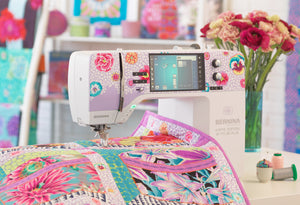

We Love Our Quilting Community
At High Country Quilts we care deeply about community. With our experiences in retail, we know that a store is not only a place to shop but also a place for the community to gather and share. During this busy...


You’re standing at the cutting table with fabric you love, a rotary cutter that still feels a little intimidating, and a sewing machine waiting for its first real job. The first question is usually simple: which block gives me a good start without setting me up for frustration?
Begin with blocks that teach one skill at a time. Early quilt blocks are small lessons in disguise. One block helps you keep an accurate quarter inch seam. Another teaches how rows line up. Another shows you how triangles behave once they are sewn and pressed. That steady progression is what helps a beginner move from "I hope this works" to "I know what to do next."
This guide is set up like a mini class for each block. You’ll see the shape, the skill, the common trouble spots, and the tools that make the work easier, including BERNINA presser feet, precuts, and printable templates you can use right away. If you like learning with guided instruction, a beginner-friendly online quilting course can also help you practice the same skills in order. And if you are still deciding which fabrics to buy, understanding fabric quality and weight will help you choose materials that cut cleanly, press well, and behave predictably under the needle.
Most beginner blocks come from a short list of building pieces: squares, rectangles, and simple triangle units. Quilt blocks work like recipe cards. Once you learn a few base ingredients and how they fit together, you can make far more than one project. A good beginner block is not only easy to sew. It also teaches a habit you will use again in nearly every quilt that follows.
That is the ultimate goal here. You are not just picking a pretty pattern. You are learning the skills behind it so your first project feels doable, useful, and enjoyable from the start.
You sit down with nine small squares, line them up on the table, and for the first time a quilt block starts to make sense. Nothing is set on a point. No tricky curves. Just a simple grid that shows how small pieces become a finished block.

That is why the Nine Patch is such a good first lesson. It works like graph paper in fabric. You cut squares, sew them into rows, then join the rows. Along the way, you learn the habits that show up in almost every quilt you make after this one.
A classic Nine Patch alternates light and dark fabrics so the checkerboard effect is easy to see. A scrappy version made from precuts feels playful and takes away some of the pressure of choosing fabrics. If you are shopping at High Country Quilts, this is a smart place to start with charm packs and a basic BERNINA patchwork foot, because the block lets you focus on accuracy instead of complicated construction.
Nine Patch teaches two beginner skills at once. First, you practice keeping a consistent 1/4 inch seam. Second, you learn how rows line up at intersections.
That seam allowance matters because every seam changes the final size of the unit. The National Quilters Circle explanation of quarter-inch seam allowance shows why even small differences can throw off a finished block. For a beginner, the easiest way to see that lesson is in a Nine Patch. If one square is a little narrow, the whole row tells on you.
Practical rule: Press seams in opposite directions on neighboring rows so the intersections nest and the corners meet more cleanly.
If that sounds technical, here is the plain version. You are training the block to fit together like stacked bricks. One seam goes left, the next goes right, and the rows settle into place with less shifting under the needle.
Start by laying out all nine squares before you stitch anything. This quick pause helps you catch mixed-up color placement before it becomes a seam ripper problem.
Then sew the top row, the middle row, and the bottom row. Press each row carefully, match the intersections, and pin where the seams meet if you want extra control. Beginners often try to match the raw edges only, but in a Nine Patch the real checkpoint is where the seam lines cross.
If you want guided project ideas while you build those first skills, browsing beginner maker platform comparisons and creative learning resources can help you find structured formats that fit the way you like to learn. The same goes for https://ugccreator.com/course/ if you want added practice outside your sewing room.
A few tools make this block feel much more manageable:
Chain piecing is also worth trying here. Sewing several Nine Patches in one sitting gives you repetition, and repetition is how accuracy starts to feel natural. By the third or fourth block, many beginners notice that their seams are straighter and their corners match with much less effort.
You cut into a favorite print, then pause because you want that fabric to stay visible instead of disappearing into tiny pieces. Square in a Square solves that problem. One center square holds the spotlight, and the surrounding corners frame it like a mat around a photo.
That framing effect is why this block is such a good early win. You get the look of triangles and points, but the construction still begins with a plain square, which feels more familiar to a beginner.
Square in a Square teaches controlled triangle placement. You learn how to line up a corner piece so it lands where you expect, how a 1/4 inch seam affects the point, and why trimming at the end can rescue a block that is a little too generous.
It also helps to start bigger here. A larger version gives you room to see where the triangle should sit and whether the point will survive the seam allowance. Small blocks ask for tighter accuracy, which can feel frustrating on a first try.
One helpful rule sits behind many point problems: if the point looks chopped off, the seam was usually a little too deep.
That makes this block feel like a mini class in precision. You are not just sewing shapes together. You are learning how quilt blocks are engineered.
Start with one center square. Add two opposite corners first, press, then add the remaining two corners. Working in pairs keeps the block balanced and makes it easier to spot a triangle that shifted before all four sides are attached.
If matching the center of the square edge feels confusing, fold the triangle in half and finger press the midpoint. Do the same with the square edge if needed. Those little center marks work like alignment notches on a sewing pattern.
A few tools make this process easier:
If you like having organized project ideas while you practice new techniques, this guide to creative project planning tools for makers can give you another way to collect layout and color inspiration.
Press away from the center so the frame stays crisp. Then trim the finished block to size only after all four corners are attached. That final trim is not cheating. It is part of the process, and beginners often gain confidence fast once they see how a slightly uneven block can still be squared up neatly.
You sew two squares together, open them up, and suddenly the block looks like something from a real quilt pattern. That moment is why so many beginners enjoy Half Square Triangles. HSTs are simple units, but they show up in pinwheels, stars, zigzags, and chevrons, so learning them gives you a lot of mileage fast.
They also teach a habit that matters in quilting. Precision at the start makes the rest of the quilt easier to assemble.
The basic method is straightforward. Put two squares right sides together, mark a diagonal line corner to corner, sew a quarter inch away from that line on both sides, then cut on the marked line. After that, press the units open and trim them to size.
Before the trimming step, it helps to see the process in motion:
What usually trips up beginners is not the sewing. It is the handling. The diagonal edge is on the bias, which means it can stretch more easily than a straight grain edge. Fabric on the bias behaves a bit like a knit sleeve that wants to grow if you tug on it. A light touch helps. Press the unit flat before trimming so the shape stays true.
This block is your mini-class in diagonal piecing, trimming, and checking size. Many quilters use the cut-size rule of adding 7/8 inch to the finished HST size, although plenty of beginners prefer to cut a little larger and trim down for accuracy. If your first units run small, the problem is usually one of two things. The seam allowance drifted wider than a true quarter inch, or the starting squares were cut a hair off.
A BERNINA Patchwork Foot is helpful here because repeated seams stay more consistent from unit to unit.
If you want a low-pressure first project, make four HSTs and turn them into a pinwheel. It feels like a puzzle. Rotate the units until the points spin, then sew them together in pairs. That small exercise teaches you how layout changes the look of the block without asking you to learn a whole quilt at once.
A few beginner-friendly practice ideas work well:
If you like having printable planning sheets for block layouts and first-project notes, this gifted collaboration application resource for organizing maker project details shows one way to keep ideas in one place.
If High Country Quilts has precut squares in stock, they can make HST practice easier because you get to focus on sewing, pressing, and trimming instead of cutting everything from yardage first. Printable templates help too, especially when you are still training your eye to spot whether a unit needs a small trim.
HSTs reward repetition. The first pair often feels fussy. By the second or third set, most beginners start to feel the rhythm.
You sit down at your machine with a stack of fabric strips and want something that looks like a real quilt block before your coffee gets cold. Rail Fence is perfect for that moment. It gives beginners quick progress, but it also teaches a method you will use again and again.
Instead of building the block from lots of little pieces, you sew long strips together first. Then you cut that sewn strip set into smaller units. It works like slicing a loaf of bread after it is baked. One set of seams gives you several block parts at once.

A classic Rail Fence block often uses three strips per unit, such as light, medium, and dark. Once you rotate those units, the block starts to suggest movement without any tricky piecing. That makes it satisfying for a first project because the design looks more advanced than the sewing feels.
Rail Fence is your mini-class in strip piecing. You learn how to sew straight, consistent seams over a longer distance, how to keep strip edges aligned, and how pressing affects the accuracy of every cut that comes after. If your strips start even and your seam allowance stays close to 1/4 inch, the crosscut units usually behave nicely.
This block also introduces size planning in a gentle way. Many beginners like working with larger blocks, including 12-inch versions, because the pieces are easier to handle and small errors are less noticeable. If you are shopping at High Country Quilts, jelly rolls, strip packs, and a BERNINA Patchwork Foot can make this lesson much simpler because you spend less time cutting and more time practicing the sewing itself.
Sew the strips together lengthwise. Press the seams flat, then to one side. After that, square up one end and cut equal segments across the strip set.
That order matters.
Beginners sometimes want to cut first and organize later, but Rail Fence rewards a tidy workflow. Accurate strip sets lead to accurate segments, and accurate segments make block assembly much less frustrating. Printable cutting guides or project sheets can help you track strip width, segment size, and layout ideas. If you like keeping those project notes in one place, a creator signup form for organizing quilting content plans shows one example of a simple form-based system.
A few habits make this block easier:
Rail Fence builds momentum fast. You finish one block, then another, and soon you can see a quilt top taking shape. For a beginner, that early success matters. It turns practice into something you want to keep doing.
You open a fresh charm pack, spread the little squares across the table, and realize you can start sewing before you ever pick up a rotary cutter. For many first-time quilters, that is a relief. Charm pack squares let you practice the sewing part of quilting with fabric that already works together.
That makes this section less of a pattern lesson and more of a first quilt class. Your job is to arrange the squares, sew them into rows, join the rows, and keep everything straight and flat as the top grows.
Precut 5-inch squares remove a common beginner stumbling block: cutting accuracy. Instead of worrying about making every square match, you can put your attention on skills that matter in every quilt, such as keeping a steady 1/4 inch seam, feeding fabric evenly, and pressing so the rows stay square.
Layout practice matters here too. A charm pack is like a box of crayons that already matches. You still decide where each color goes. Spread out dark prints so they do not pile up in one corner. Separate similar fabrics so they do not blend together. If the quilt feels busy, add a few solid squares or narrow sashing strips to give the eye a place to rest.
If you are shopping for a first project, this is one of the easiest places to pair precuts with a practical tool. A patchwork foot with a guide, such as the BERNINA Patchwork Foot #37 or #57, helps many beginners keep that 1/4 inch seam more consistent, and charm packs and basic notions are often easy to find at shops like High Country Quilts.
Charm pack squares teach row construction and visual balance. You also learn a lesson every quilter meets early: unfinished pieces shrink once seams are sewn. That is why a quilt that looks perfectly lined up at the start can finish smaller than expected.
Your ruler becomes part measuring tool, part map. Clear 1/4-inch markings help when you check whether rows are staying even, trim a border strip, or add sashing that finishes at the size you planned. You may not need specialty trimming tricks for this project, but getting comfortable reading ruler lines now will help with later blocks.
If the quilt top starts to wave, check seam allowance and pressing first. Fabric usually is not the real problem.
A few beginner-friendly ways to use charm packs:
Printable layout sheets can help you audition arrangements before you sew, and a simple signup form for organizing quilting project notes and inspiration is one way to keep those ideas together.
For a first project, charm pack squares offer quick wins without feeling childish. You get a real quilt top, real practice, and a clear path into the next set of beginner blocks.
Log Cabin looks intricate, but the construction is wonderfully logical. You begin with a center square and build around it with strips, adding one side at a time in sequence. Once you understand the order, the block becomes almost meditative.
This is also one of the best blocks for seeing how value works. Put lighter strips on one side and darker strips on the other, and the finished quilt can create dramatic secondary patterns when blocks are arranged together.
Log Cabin teaches sequence, strip control, and trimming. It’s less about matching lots of tiny intersections and more about staying organized as the block grows.
It also reinforces why foundational block families matter. Quilting instruction often treats the four-patch and nine-patch as basic architectural categories that support many more designs. Understanding those foundations, along with half-square triangles, gives beginners a toolkit that opens the door to far more variation as discussed in this quilting video reference.
That idea applies to Log Cabin too. Even though it isn’t just a simple grid, it still depends on the same core habits: accurate cutting, a steady seam allowance, and pressing with purpose.
Lay your strips out in sewing order before you start. That prevents the classic beginner mistake of adding the right strip to the wrong side.
A shop class setup for Log Cabin often works best like this:
If you’re sewing on a BERNINA, a quarter-inch foot is the main helper here. Since every strip builds on the last, tiny seam differences can accumulate if you aren’t consistent.
Log Cabin is a strong second or third project. It still uses straight seams only, but it begins teaching the discipline of following a build sequence carefully.
You sit down at your machine with four small squares, and in less time than it takes to choose thread colors for a bigger project, you have a finished block in your hands. That quick win matters. A Four Patch gives a beginner a real success early, and it does it without asking you to manage triangles, curves, or a long sewing sequence.
The block is a 2 by 2 grid of equal squares. Simple does not mean empty, though. Four Patch works like a practice sampler for two skills that show up in quilt after quilt: keeping an even quarter-inch seam and matching seams so corners meet cleanly in the center.
Four Patch keeps your attention on the habits that matter most at the beginning. If your cutting is a little off, or your seam allowance wobbles, you can spot the problem quickly because the block is so straightforward. That makes it a useful teaching block in a mini-class setting. You sew a small number of pieces, then immediately see what changed the result.
It is also a good block for learning strip piecing. Instead of cutting four separate squares, sew two fabric strips together, press, and cut the unit into segments. Then pair those segments to build the block. Beginners usually find this method easier to repeat, and it introduces an efficient technique you will use again in many other patterns.
If you are sewing on a BERNINA, this is a practical place to use a quarter-inch foot and notice how that foot assists your sewing. It is not magic. It gives you a consistent guide, which is exactly what a new quilter needs while building muscle memory. Pair that with a small precut bundle or a few fat quarters from High Country Quilts, and you have an easy first setup that does not require a complicated fabric plan.
The biggest lesson in Four Patch is seam matching at the center join. When two pairs of squares come together, the seams need to nest so the intersection stays neat. If that phrase is new, here is the plain version: press one unit’s seam to one side and the other unit’s seam to the opposite side. The seam allowances then fit together like two puzzle tabs, helping the center line up without a fight.
That one little meeting point teaches a lot. You begin to see why pressing direction affects accuracy, why pins can help at key intersections, and why a careful first project builds confidence for more detailed blocks later.
A few beginner-friendly versions work especially well:
If your shop or class provides printable templates, keep one beside your cutting mat as a visual check. Four Patch is small, familiar, and very forgiving, but it also teaches the kind of accuracy that carries into more advanced piecing. That is why it belongs in a beginner guide like this one. It is not just a pattern to copy. It is one of the clearest first lessons in quilting.
Dresden Plate is the most decorative block on this list, and it often surprises beginners because it looks harder than it feels. The shape is made from wedge-like pieces arranged in a circle, often with a center circle added on top.
It has a classic look, but fabric choice can make it feel very traditional or very modern.

Dresden Plate introduces template use, wedge piecing, and light appliqué. That makes it a nice bridge between strict patchwork and more decorative quiltmaking.
It also offers a helpful reminder that beginner quilting doesn’t have to stay entirely square. Some quilting commentary has pointed out that many beginner resources heavily favor square-based blocks and give far less attention to non-square designs, even though varied shapes can create visual interest without automatically making a project harder as discussed in this YouTube playlist reference.
That’s part of Dresden’s appeal. It broadens your skills while still being approachable if you use a template and work patiently.
Don’t think of Dresden Plate as “one big circle.” Think of it as a set of repeated wedges.
Sew two wedges together, then two more. Join pairs into larger sections. Soon you’ve got the full ring. After that, you can appliqué the plate to a background square and add the center circle.
A few practical habits help:
Dresden Plate is a satisfying “first fancy block.” It still relies on repetition, but the finished result feels special enough to frame, gift, or build into a statement quilt.
| Block | 🔄 Complexity | ⚡ Resources & Efficiency | 📊 Expected outcomes | ⭐ Learning value | 💡 Key advantages / Tips |
|---|---|---|---|---|---|
| Nine Patch | Very low, simple 3x3 grid, straight seams | Minimal fabric & tools; quick to make | Versatile, traditional-looking quilts with predictable results | Excellent for basic cutting, straight seaming, pressing | Chain-piece blocks, press seams consistently; great for scrap use |
| Square in a Square | Low–Medium, triangle corners require care | Requires rotary cutting and accurate triangle tools | Framed centers that showcase focal fabrics; can be set on point | Teaches triangle cutting and diagonal seaming | Use clear rulers, fold diagonally to cut matching triangles, pin points |
| Half Square Triangle (HST) | Medium, diagonal seams and precision pressing | Efficient fabric use; may need HST rulers and seam guides | Highly versatile units enabling complex secondary patterns | High, essential diagonal seaming and unit construction | Chain-piece, use ¼" foot, try 8-at-a-time methods for speed |
| Rail Fence | Very low, straight seams, strip piecing | Extremely efficient with strips or precuts; fast assembly | Strong diagonal/striped secondary patterns from simple parts | Teaches strip piecing and value planning | Use precut strip packs, press seams same direction, mock up layout |
| Charm Pack Squares | Very low, no cutting; simple grid sewing | Minimal tools; fastest way to quilt with coordinated fabrics | Quickly produces balanced, color-harmonized quilts | Basic piecing and row assembly for absolute beginners | Start small, add sashing for polish, chain-piece rows |
| Log Cabin | Low–Medium, many straight seams, sequence matters | More strips and time required; uses scraps well | High visual impact with dramatic secondary designs | Teaches spiral strip assembly and precise pressing | Use templates, trim blocks square, press after each added strip |
| Four Patch | Very low, 2x2 unit assembly, repeatable | Minimal fabric/tools; quick production | Simple, modular designs that support many layouts | Teaches unit piecing, nested seams, color contrast | Maintain accurate ¼" seams, alternate with plain squares for interest |
| Dresden Plate | Medium–High, wedge cutting and curved/ appliqué work | Requires templates, possible applique supplies; more time | Decorative, flower-like plates with vintage/novelty appeal | Teaches curved seaming and appliqué basics | Sew wedges in pairs, use starch and templates, consider precut wedges |
You’ve now got eight solid options, and, significantly, you’ve got eight different ways to build quilting skills without feeling overwhelmed. That’s the part I want every beginner to hear clearly. You do not need to master everything before you start. You just need one block, one fabric pull, and one sewing session.
If you like order and symmetry, start with the Nine Patch or Four Patch. Those blocks teach the habits that show up in almost every quilt you’ll make later. If cutting makes you nervous, choose Charm Pack Squares or Rail Fence and let precuts do part of the work for you. If you want to branch into triangles, Half Square Triangles or Square in a Square are natural next steps. If you want a block that looks impressive while still relying mostly on straightforward sewing, Log Cabin is a great confidence builder. And if you’re ready for something decorative and a little more expressive, Dresden Plate is a lovely stretch project.
There’s also no rule that says your first quilt must use only one block. Many beginners enjoy making a few practice blocks first, almost like quilting exercises. A Four Patch can teach you seam matching. A Rail Fence can teach strip piecing. A few HSTs can teach trimming and diagonal handling. Once your hands start to recognize those motions, a full quilt feels much less intimidating.
Keep your first project simple in scale and generous in spirit. Use quilting cottons that feel stable and easy to press. Choose fabrics with enough contrast that your pieces don’t disappear into each other. Give yourself permission to unpick a seam or make a block twice. That’s not failure. That’s how quilting is learned.
The technical details matter, but they become easier with repetition. A scant quarter-inch seam, steady pressing, and accurate cutting will do more for your finished quilt than any complicated pattern ever could. Larger beginner blocks can be especially helpful because they’re easier to handle and more forgiving when you’re still building control. If you’ve been hesitating because quilting seems too math-heavy or too precise, start with one of the blocks above and let the process teach you. Most of the confidence comes after the first few seams, not before them.
If you’re shopping in person, asking questions at a local quilt shop can make the learning curve feel much friendlier. High Country Quilts in Colorado Springs offers quilting fabrics, BERNINA machines and accessories, classes, and sewing support, which can be useful if you want hands-on help with tools, feet, fabric selection, or your first project plan.
The biggest step is still the smallest one. Pick a block. Thread the machine. Sew the first seam. Every experienced quilter you admire started exactly there.
If you’d like help choosing fabric, precuts, BERNINA accessories, or a beginner-friendly class, visit High Country Quilts. It’s a practical place to get started, ask questions, and keep building your quilting skills.
At High Country Quilts we care deeply about community. With our experiences in retail, we know that a store is not only a place to shop but also a place for the community to gather and share. During this busy...

Hi! We’re Adam and Renee Wheaton, the new owners of High Country Quilts! For more than 40 years, we’ve owned and operated vacuum and sewing businesses. Following in Renee’s father’s footsteps after he retired from All Discount Vacuum and Sewing in Colorado...


Leave a comment