
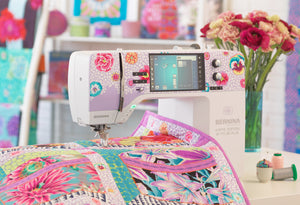

We Love Our Quilting Community
At High Country Quilts we care deeply about community. With our experiences in retail, we know that a store is not only a place to shop but also a place for the community to gather and share. During this busy...


So, you’re ready to dive into the world of quilting! Welcome. Starting with an easy beginners quilt is the absolute best way to get your feet wet. We’ll be focusing on simple, classic patterns like the Rail Fence or a Nine-Patch, which rely on straight-line sewing and are incredibly satisfying to make.
The goal here is to build your confidence one stitch at a time, creating something beautiful along the way.

Making your first quilt can seem like a monumental task, but I promise you, it’s just a series of small, completely manageable steps. This guide breaks everything down so you can see that creating a cozy heirloom is absolutely within your reach. We’ll stick to forgiving and fun patterns to make sure you have a great time.
You're also joining a massive and wonderfully creative community. The quilting industry has exploded from $1.8 billion in 2000 to an estimated $4.5 billion by 2025—that's a jump of over 150% in just a quarter-century! This boom really speaks to quilting's lasting appeal, especially for newcomers who want to create something personal and beautiful. You can read more about the quilting market's impressive growth if you're curious.
What really separates a simple first project from a more complex one? It comes down to a few key things that are designed to set you up for success right from the start.
The goal of your first quilt isn't perfection; it's completion. Every stitch is a lesson, and the finished product will be a testament to your brand-new skill. Embrace the process and just enjoy making something with your own two hands.
I’ve structured this guide to help you learn naturally. A good tutorial needs effective instructional design to make sure the learning experience is smooth. We'll walk through everything together, from picking out your first fabric to that final, satisfying stitch, giving you the confidence to jump right in.
Before you even think about making that first stitch, let's talk about setting yourself up for success. Getting the right tools together from the start is the difference between a fun, creative experience and a frustrating one. You absolutely don't need a fancy studio to make a gorgeous quilt—just a few key items that will help you get clean cuts and straight seams.
Think of it this way: the right equipment helps you sidestep the most common beginner headaches. Sure, you could use a pair of scissors, but let me tell you, the combination of a rotary cutter, a self-healing mat, and a clear acrylic ruler is a total game-changer. This trio lets you slice through multiple layers of fabric with incredible precision. For a simple beginner quilt where all the blocks need to line up, that accuracy is everything.
Your fabric is really the star of the show. For a first project, the single best piece of advice I can give is to stick with 100% cotton. It doesn't slip and slide, it holds a press beautifully, and it just behaves well under the needle. Save the slinky, stretchy, and synthetic fabrics for later—they introduce a level of difficulty you just don't need right now.
As you get more comfortable, expanding your knowledge by understanding different fabric types will be really helpful, but for now, just look for good-quality quilting cotton.
Then you have your batting (the fluffy stuff in the middle) and your backing fabric, which make up the rest of the quilt "sandwich." A low-loft cotton or an 80/20 cotton-poly blend batting is perfect for beginners because it's nice and easy to quilt through. For the back, just grab another 100% cotton fabric that you think looks good with your quilt top.
Here’s a quick rundown to help you navigate the fabric aisle.
| Fabric Type | Pros for Beginners | Cons to Consider |
|---|---|---|
| 100% Quilting Cotton | Stable, easy to cut and sew, holds a press well, huge variety of prints. | Can shrink (pre-washing is recommended), can fray. |
| Flannel | Soft and cozy, forgiving with stitches, great for baby quilts. | Stretches easily, frays a lot, creates extra lint in your machine. |
| Linen/Cotton Blends | Beautiful texture, durable, gets softer with washing. | Wrinkles easily, can be more expensive, can be slippery to cut. |
| Rayon/Viscose | Silky smooth, drapes beautifully. | Very slippery and stretchy, not recommended for a first quilt top. |
Ultimately, 100% cotton is the undisputed winner for your first project. It’s the most straightforward and will give you a great result without any extra headaches.
Beyond your cutting setup, a few other items are pretty much non-negotiable. Having these on hand means you can stay in the creative zone and just focus on the fun part.
A Quick Tip from Experience: Pressing is not the same as ironing. When you iron, you slide the iron back and forth, which can easily stretch your carefully cut fabric pieces out of shape. Instead, just press the iron straight down, hold for a second, and lift it straight up. This one little habit makes a massive difference in your quilt's accuracy.
Investing in these core tools from the get-go will save you so much time and frustration. You can often find beginner kits that bundle many of these items, which is a great, cost-effective way to start. Don't feel like you need everything at once; your toolkit will grow as your skills do. With these essentials ready, you're all set to make that exciting first cut.
Alright, let's turn that beautiful fabric into an actual quilt block. This is where the magic really starts to happen. We're going to tackle the classic Nine-Patch block, a true cornerstone for any beginner quilter.
Don't let its simplicity fool you. It's just nine squares sewn together in a three-by-three grid, but it’s a design that has been used in countless quilts for a reason—it’s versatile, fun, and a fantastic skill-builder.
The whole process is pretty straightforward, breaking down into a few key stages.

We've already picked our fabric, so now it's time to dive into the "Cut" and "Sew" parts of the journey.
I can't stress this enough: your success as a quilter starts with an accurate cut. Before you even think about touching your sewing machine, this is the step that sets you up for success.
For our Nine-Patch block, you'll need two contrasting fabrics. Let's call them Fabric A and Fabric B. The pattern alternates to create that timeless checkerboard look. To make a standard 12-inch finished block, each square needs to be cut to 4.5 inches. That extra half-inch gives you the crucial ¼-inch seam allowance on all four sides.
Here’s your cutting list for a single block:
Take your time here. Seriously. Lay your fabric flat on your self-healing mat, line up your ruler, and apply firm, even pressure with your rotary cutter. Clean, precise cuts now will save you a world of frustration later.
With your nine perfect squares ready to go, the first thing you should do is lay them out on a table exactly how they’ll be sewn. Trust me, this simple step prevents you from accidentally sewing the wrong pieces together in the heat of the moment.
Your layout should look like this:
| Row 1 | A | B | A |
|---|---|---|---|
| Row 2 | B | A | B |
| Row 3 | A | B | A |
We're going to build this block one row at a time. Start with Row 1. Place the first two squares (A and B) right sides together, making sure the edges are perfectly aligned. Now, sew along the right edge with a consistent ¼-inch seam allowance.
Take the joined pair over to your ironing board and press the seam. Most quilters press towards the darker fabric, which helps prevent it from showing through the lighter side. Now, attach the third square (A) to the unit you just made.
Repeat this exact process for Row 2 and Row 3. Soon enough, you'll have three beautifully pieced strips of fabric.
Pro Tip for Straight Seams: A consistent seam allowance is everything in quilting. Many sewing machines have a special ¼-inch foot that makes this a breeze. If yours doesn't, a seam guide is a great tool. No guide? No problem. A piece of painter's tape carefully placed on your machine's throat plate works just as well to keep your stitches perfectly straight.
This next little trick is what separates good blocks from great ones. To get those crisp, sharp corners where your squares meet, you'll want to nest your seams. It sounds fancy, but it's incredibly simple and makes a huge difference.
Take a look at your pressed rows. If you pressed the seams in Row 1 to the right, you'll want to press the seams in Row 2 to the left. This opposing direction is the key. It allows the seams to lock together perfectly when you place the rows right sides together.
Here’s how to put it into practice:
Attach Row 3 to Row 2 using the same technique. By nesting your seams, your block will lie much flatter and those corner points will line up beautifully. It’s what gives a quilt that professional, polished look.
Give your finished block one last, gentle press, and take a moment to admire your work. You've just made your first Nine-Patch block
Alright, you’ve done the hard work of piecing all your blocks, and now you have a beautiful, complete quilt top. It's gorgeous, but it's not quite a quilt yet. The next step is turning that flat top into what we quilters call the "quilt sandwich"—the three essential layers that create the cozy, textured blanket you’ve been dreaming of.
It sounds technical, but it’s really just three simple layers:
The goal is to get these three layers perfectly smooth and wrinkle-free. Find a clean spot on the floor and lay your backing fabric down, wrong side facing up. A little painter's tape on the corners can work wonders to keep it taut and stop it from shifting around. Next, carefully smooth the batting over it, and finally, place your quilt top, right side up, on the very top.
With your sandwich layered, you need to "baste" it. Basting is just a temporary way to hold everything together so the layers don't slip and slide while you're quilting. Trust me, skipping this step leads to frustrating puckers and wrinkles on your finished quilt. It’s worth the time.
You've got a few options for how to do this:
For a first-timer, pin basting is probably the most foolproof method. It’s cheap, effective, and if you spot a wrinkle as you go, you can just unpin and smooth it out. Easy.
Now for the magic—the actual quilting! This is the stitching that goes through all three layers, locking them together for good and adding all that beautiful texture. For your first quilt, simple straight-line quilting is the perfect way to get a fantastic result without a lot of stress.
The absolute best tool for this job is a walking foot for your sewing machine. This special foot has little "teeth" that grip all three layers of your quilt sandwich and feed them through the machine evenly. It's a game-changer for preventing the top layer from stretching or bunching up.
If you already love to sew, you'll find this step feels pretty natural. Sewing is a common gateway to quilting—there were 33 million active sewists in 2021, a 10% jump from the previous year, and many of them eventually make the leap. Visuals are a huge help, too; in 2021, 25.4% of quilters reported using YouTube for tutorials. You can dig into more stats in this insightful overview of 2021 quilting trends.
A great place to start is to "stitch in the ditch," which means sewing your lines directly in the seam lines where your blocks are joined. This cleverly hides your stitches while securing the quilt. Another classic approach is to create a simple grid by quilting straight lines across the quilt, spaced about two inches apart, in both directions. It’s clean, timeless, and perfect for a first finish.

You’ve made it to the home stretch! Binding is that beautiful fabric frame that covers all the raw edges, giving your quilt a clean, durable finish. This is the step that officially turns your project from a "quilt top" into a real, honest-to-goodness quilt.
First thing's first: you need to create the binding itself. For most projects, cutting your fabric into 2.5-inch wide strips is the sweet spot. You'll sew these smaller strips together to create one very long piece that can go all the way around your quilt.
A little pro tip: sew the strips together on a diagonal (a 45-degree angle). This distributes the bulk of the seam so you don't end up with a lumpy spot in your binding. Once they’re all connected, press the entire strip in half lengthwise with the wrong sides of the fabric facing each other. Just like that, you have a professional-looking binding ready to go.
Time to attach this fabric frame to your quilt. Start somewhere in the middle of one side, not right at a corner. Line up the raw edges of your folded binding with the raw edge of your quilt top.
Before you start sewing, leave a loose "tail" of about 8-10 inches of binding. You’ll need this later to join the ends neatly.
Using your walking foot (it’s a lifesaver here!), begin sewing the binding to the quilt with a ¼-inch seam allowance. Stitch all the way down the first side, but stop when you’re about a ¼-inch away from the corner.
Mastering the Mitered Corner Don’t let corners scare you! A perfect mitered corner is all in the fold. When you get to that ¼-inch stopping point, lift your presser foot (with the needle down), and pivot the quilt. Fold the binding strip straight up, creating a 45-degree angle. Then, fold it back down along the next side of the quilt, making sure the raw edges are aligned again. You’ll have a little triangle of fabric tucked in there—that's the magic. Start sewing from the very edge of this new side.
After you’ve sewn around all four sides and navigated all the corners, you’ll be left with the two tails you started with. This is where you'll join them to create a seamless loop. Overlap the two ends, trim them so they meet perfectly, and sew them together. Then, simply stitch that final open section of binding onto the quilt.
All that's left is to wrap the folded edge of the binding around to the back of the quilt, covering up your stitch line. You’ve got a couple of choices for how to secure it:
Your quilt isn't truly done until you've signed your work. Adding a label is so important—it turns your beautiful creation into a piece of history. It can be as simple as writing your name and the date on a scrap of fabric with a permanent pen and stitching it to a back corner. Trust me, you'll be glad you did this years from now.
Finally, it's time for the first wash. This is where the quilt gets that wonderful, crinkly, soft texture we all love. Use a gentle cycle with cold water, and it's always a good idea to toss in a color catcher sheet to prevent any fabric dyes from bleeding. You can tumble dry on low or let it air dry.
Every single quilter I know has a well-loved seam ripper, and for good reason. Mistakes are just part of the process! Hitting a snag on your first quilt isn’t a sign you’re failing—it’s a sign you’re actually learning. Let's walk through a few common hiccups and how to fix them without the frustration.
Sooner or later, you'll probably end up with a "wonky" block, where the squares just don't want to line up. This problem often starts right at the cutting mat. Even a tiny slip of the ruler can throw everything off down the line. Don't toss the block, though! Just grab your acrylic ruler and rotary cutter to "square it up." This simply means you’re trimming the edges to get it back to a perfect square. You might lose a fraction of an inch, but you gain a block that plays nicely with its neighbors.
Ever sewn on your borders only to have them ripple like a flag in the wind? That’s a classic sign that the border strip was a bit longer than the quilt top. To prevent this, always measure your quilt top through the center first. Then, cut your border strips to that exact length before you even think about sewing them on.
And what about those tricky points where four corners are supposed to meet perfectly? Getting them to line up is a skill that takes practice. This is where nesting your seams, a technique we touched on earlier, really becomes your secret weapon.
Here are a few other totally normal issues you might run into:
Your first quilt will have character—and that's a beautiful thing! A slightly mismatched point or a wobbly stitch line is proof that it was made with love, by human hands. Embrace these little quirks as part of your unique quilting story.
Thankfully, you're never truly stuck. The quilting world is incredibly generous with its knowledge online, and you can find a video tutorial for just about any problem you encounter. It's no surprise that by 2025, 30% more quilters were shopping online than the year before, and the community saw an 18% rise in newcomers, thanks in large part to all the amazing online resources. If you're curious about this trend, you can explore insights on the modern quilt market.
Here at Famcut.com, we're passionate about helping you succeed on your creative journey. Whether you need the right tools, beautiful fabrics, or a local class to build your skills, we’ve got you covered. Explore our full range of supplies and classes at https://famcut.com.
At High Country Quilts we care deeply about community. With our experiences in retail, we know that a store is not only a place to shop but also a place for the community to gather and share. During this busy...

Hi! We’re Adam and Renee Wheaton, the new owners of High Country Quilts! For more than 40 years, we’ve owned and operated vacuum and sewing businesses. Following in Renee’s father’s footsteps after he retired from All Discount Vacuum and Sewing in Colorado...


Leave a comment