
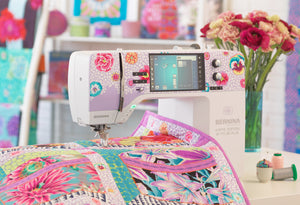

We Love Our Quilting Community
At High Country Quilts we care deeply about community. With our experiences in retail, we know that a store is not only a place to shop but also a place for the community to gather and share. During this busy...


Have you ever stood in a home decor aisle, searching for the perfect table runner, only to come up empty-handed? It's a common frustration. But what if you could create a stunning centerpiece that perfectly captures your home's personality, using just a simple piece of fabric?
That's the real beauty of making your own do it yourself table runners. This guide is your starting point for creating a piece that’s more than just decor—it’s a true reflection of your personal style.

When you make your own table runner, you step into the designer’s seat. You get to pick the exact fabrics and add personal touches, turning a straightforward sewing project into a genuinely rewarding experience. Whether you're a seasoned quilter or just finding your way around a sewing machine, you'll see just how simple it is to craft something beautiful for your dining space.
This is about more than just sewing; it's about infusing your home with a piece of unique, handmade art that tells your story. You're not just making a runner; you're joining a movement. In fact, 65% of home decorators now say they prefer handmade items over mass-produced ones.
The trend for do it yourself table runners has taken off right alongside the booming table runner market. The market itself was valued at USD 3.388 billion in 2024 and is expected to hit an incredible USD 5.494 billion by 2035. A lot of that growth comes from sewing communities and our collective shift toward wanting more authentic, customized decor in our homes.
Diving into this project brings some pretty fulfilling benefits beyond just the gorgeous final product:
The real joy of a DIY project is seeing a piece of your own personality come to life in your home. It’s that final touch that makes a house feel like a home.
The goal here is to create something that feels like you. Your runner becomes a statement piece, something that ties your existing decor together and makes even a simple weeknight meal feel a little more special.
Once you see how a custom runner can elevate your dining room, you might feel inspired to bring that personal touch to other parts of your home. For more great ideas on making your whole space feel uniquely yours, check out these expert tips on how to make your home cozy.
Alright, let's talk fabric. This is where the fun really begins, and your choices here will define the entire look and feel of your finished table runner. It’s about more than just finding a pattern you love; it’s about picking a material that will lay beautifully on the table, cooperate with your sewing machine, and hold up over time.
Think of the fabric as the personality of your project. A crisp quilting cotton can feel clean and modern, while a soft linen brings a more relaxed, rustic vibe to the room. Let's dig into a few of my go-to choices for a project like this.
Each of these materials behaves a little differently, so knowing what to expect is key to getting the result you're picturing.
Here's a tip I've learned the hard way: Always, always pre-wash and dry your fabric before you even think about cutting. Fabric can shrink a surprising amount, and doing this first ensures your finished runner won't turn into a mini version of itself after its first real wash.
Once you have your fabric, the next step is figuring out how much you actually need. There is truly nothing worse than getting halfway through a project only to realize you're a few inches short.
First, you need to decide on the "drop"—that’s the length of fabric you want hanging over each end of your table. A classic, tidy look is a 6-inch drop. If you want something a bit more grand and dramatic, you could go for a drop of 10 or even 12 inches.
The math is simple: Table Length + (Desired Drop x 2) + 1 inch (for hemming).
Let's say you have a 72-inch table and want that classic 6-inch drop. The calculation would be: 72 + (6 x 2) + 1 = 85 inches of fabric length.
This little bit of math up front guarantees a perfect fit.
To make it even simpler, I've put together a quick reference chart for common table sizes, using that standard 6-inch drop. Most quilting and home decor fabrics come on bolts that are 42-44 inches wide, which is the perfect width for creating a finished runner that's about 14-16 inches wide.
| Table Size (Seats) | Typical Table Length | Required Fabric Length (for 6" drop) | Total Fabric Yardage Needed |
|---|---|---|---|
| 4-Person | 48 inches (4 ft) | 61 inches | 1.75 yards |
| 6-Person | 72 inches (6 ft) | 85 inches | 2.5 yards |
| 8-Person | 96 inches (8 ft) | 109 inches | 3.25 yards |
Buying the correct amount of fabric from the get-go will save you a headache and a potential second trip to the fabric store. With your fabric picked out and your measurements double-checked, you're all set for the really exciting part: cutting and sewing
Okay, let's get sewing! You've got your fabric picked out, pre-washed, and neatly cut. Now for the fun part—turning those pieces into a gorgeous do it yourself table runner at your machine. We'll walk through this together, focusing on the little details that make all the difference.
Before we start stitching, it's worth taking one last look at how we got our measurements. Getting this right is the bedrock of a great-looking project.

With those perfect cuts ready to go, it's time to head to the sewing machine.
First things first, grab your two main fabric pieces—the top and the backing. Lay them out on a flat surface, making sure the right sides of the fabric are facing each other. The "right side" is just the pretty, printed side you want to see on the finished runner.
Line up all the corners and edges as perfectly as you can. Taking a moment to get this right prevents a twisted or wonky runner later on.
Now, pin everything in place. I know pinning can feel like a chore, but it’s your best friend for preventing fabric from slipping and sliding as you sew. I like to place my pins perpendicular to the edge, spacing them about every 5 to 6 inches around the entire perimeter.
Here's a crucial tip: before you even think about sewing, you need to leave an opening. On one of the long sides, mark off a gap of about 4 to 5 inches where you won't sew. This is how you’ll turn the runner right-side-out.
To make sure I don't forget and sew it shut, I always place two pins together at the start and end of the gap as a visual "stop sign."
Time to fire up the machine! Go ahead and set it to a basic straight stitch. For most cottons, a stitch length of about 2.5 mm is perfect.
You'll want to start sewing right at one edge of the opening you just marked. And don't forget to backstitch for a few stitches! This locks your thread in place so your hard work doesn't unravel.
Your goal here is a consistent seam allowance. We're using a 1/4-inch seam allowance for this project, which is pretty standard. Most presser feet have a guide, but a magnetic seam guide can be a real game-changer for keeping your lines perfectly straight.
Sew all the way around the runner, removing the pins as you go so you don’t hit one with your needle. When you get to the other side of your marked opening, remember to backstitch again to secure the end of the seam.
Sharp corners are the secret to a project that looks polished, not "homemade." It's all in the pivot. As you approach a corner, sew until you're 1/4 inch from the edge (the same as your seam allowance).
Stop with the needle down in the fabric. Lift the presser foot, pivot the fabric a clean 90 degrees, and then lower the presser foot again. Now you can just continue sewing down the new side. It’s that simple.
After you've sewn all the seams, you’ll do one more thing for crisp corners. Snip the fabric off each of the four corners at a diagonal. Be very careful not to cut your stitches! This simple trim removes extra bulk and makes a world of difference when you turn the runner out.
The Power of Pressing I can't say this enough: your iron is just as important as your sewing machine. Pressing your seams as you work is the key to a flat, professional finish. Don't skip it!
This is the magical part. Gently reach into the 4- to 5-inch gap you left and start turning the whole runner right-side-out.
Once it's turned, you’ll need to poke out the corners to get them nice and sharp. I often use a chopstick or a special point-turner tool for this. Just be gentle!
Now, take your runner over to the ironing board for a final, critical press. You want to press the entire thing flat, making sure the seams are pushed right to the very edge.
When you get to the opening, tuck the raw fabric edges inward by 1/4 inch, so they line up with the rest of the seam. Press that fold with your iron to create a sharp crease. This makes the opening practically disappear. Pin it closed.
One last step! We're going to topstitch all the way around the runner. This closes that gap for good and adds a beautiful, high-end detail that helps the runner lay flat and hold its shape.
I recommend setting your stitch line very close to the edge—about 1/8 inch is perfect. To get the cleanest look, start sewing along one of the long sides, not right on a corner.
Go slowly and keep your line as straight as possible, since this stitch will be visible. When you make it all the way back to where you started, do a small, neat backstitch to lock it in.
Give your finished do it yourself table runner one last press, and you're done. Stand back and admire it—you just made a beautiful, custom piece for your home
Alright, this is where the magic really happens. The final finishing touches are what separate a project that looks homemade from one that looks professionally crafted. Once you've turned your runner and given it a good press, you have a few ways to close that final opening and add a polished edge.
Don’t just think of this as closing a hole! A well-finished edge makes your do it yourself table runner far more durable, helping it hold up beautifully through countless dinners and trips to the washing machine.
My go-to finish for most table runners is a simple, clean topstitch around the entire piece. It’s quick, it seals the turning gap, and it gives the runner a crisp, defined border that I just love.
After pressing your runner and tucking in the raw edges of the opening, you’re ready to sew. I aim for a stitch line about 1/8 inch from the edge. This small distance is the key to a subtle, high-end look.
Here's a tip from my own experience: lengthen your stitch. I usually set my machine to a 3.0 mm stitch length. It looks more intentional and decorative, and it helps prevent the fabric from puckering. If you have a walking foot, now is the time to use it! It's a lifesaver for keeping all the layers moving together smoothly, so you won't get any frustrating waves or shifts.
If you want a slightly more decorative look without adding a separate binding, the self-binding technique is a brilliant choice. It uses the backing fabric to create a neat little frame around the front of your runner. It looks impressive but is surprisingly straightforward to pull off.
The trick happens right at the beginning, during the cutting stage.
This method is fantastic for reversible runners where both fabrics deserve a moment in the spotlight. The little pop of color from the backing creates a lovely, integrated frame.
For those of you with some quilting under your belt, applying a traditional quilt binding will feel like coming home. This is, without a doubt, the most durable and professional-looking finish you can give a runner.
This technique involves creating separate binding strips from fabric, sewing them to the raw edge of your runner, and then folding them over to the back to be hand-stitched for a nearly invisible finish.
It’s definitely the most time-consuming option, but it's the absolute best choice for thicker runners, especially if you've added batting. The result is a sturdy, beautifully framed piece that truly looks and feels like a high-quality heirloom.
Don't have a sewing machine, or just want to skip that final line of stitching? No problem at all. You can get a perfectly sealed edge using fusible hem tape. This is my favorite no-sew trick for finishing a do it yourself table runner.
After you've turned your runner and pressed it flat, just snip a piece of fusible hem tape and tuck it inside the opening, hidden between the folded-in seam allowances. Grab your iron and, following the tape's instructions, press the opening shut. The heat activates the adhesive, bonding the layers together seamlessly. It’s fast, easy, and you’d never know it wasn’t stitched.

Alright, you've mastered the basic construction. Now for the fun part! Think of your finished runner as a beautiful blank canvas. Adding your own creative touches is what makes do it yourself table runners so satisfying, turning a simple project into something that’s uniquely you.
This is your chance to go beyond a basic two-fabric runner and play with techniques that match your home's decor, celebrate a season, or just show off your personality.
If you have a quilting background or a stash of fabric scraps you just can't bring yourself to toss, a patchwork runner is an incredible project. It's the perfect way to give those smaller, beloved pieces of fabric a new purpose, creating something with a ton of history and texture.
You could meticulously plan a repeating pattern of squares or strips, or you could just go for it with a more improvisational, "scrappy" design. A "quilt-as-you-go" method is brilliant for this. With this technique, you piece your fabric scraps directly onto the batting and backing fabric, quilting each little section as you go.
The result is a fully finished, quilted runner that comes together piece by piece. It's a fantastic way to practice your quilting on a manageable scale, and the finished piece has that wonderful, cozy heirloom feel right from the start.
Adding trim is probably the fastest way to take a table runner from simple to stunning. These little details can have a massive impact, bringing in color, texture, and a sense of playfulness or elegance.
Here are a few ideas to get you started:
When you're picking out embellishments, always think about the overall style you're going for. A single, well-placed tassel can feel very chic and minimalist, while a whole row of colorful pom-poms screams fun and festive.
If your taste is more modern, you don't need complicated piecing to make a statement. It's all about bold fabric choices and clean, graphic designs.
One of my favorite approaches is color-blocking. This is where you use solid-colored fabrics sewn together in simple, geometric sections. Imagine a wide central stripe of a deep charcoal gray flanked by two thinner stripes of a vibrant mustard yellow. The effect is intentional, sophisticated, and incredibly striking.
Another option is to let a showstopper fabric do all the talking. Look for fabrics with large-scale graphic prints, oversized botanicals, or bold abstract designs. When the fabric itself is a work of art, the simple, clean lines of the runner act as the perfect frame. If you're looking for inspiration on how a handmade runner fits into a larger theme, check out these modern dining table decor ideas that show how powerful layered textiles can be.
For a truly personal, one-of-a-kind piece, nothing beats appliqué or embroidery. This is where you can add monograms, motifs, or designs that hold special meaning for you and your family.
With appliqué, you can add festive shapes for different holidays—think charming pumpkins for autumn or holly leaves for the winter season. Just cut your shapes from a contrasting fabric, secure them with fusible web, and stitch around the edges to make them permanent and decorative.
Hand or machine embroidery opens up a whole universe of possibilities. You could stitch a family monogram, a favorite quote, or a delicate floral spray along the ends of the runner. The demand for personalized home goods has skyrocketed, with some analysts noting a 30% rise in custom orders since 2022. Imagine stitching a runner with family crests or motifs from your favorite fandom using beautiful threads. These are the details that turn a simple sewing project into a future heirloom.
Whenever you start a new project, a few questions always seem to come up. This is especially true with do it yourself table runners, where the little details can really make or break the final piece. Let's tackle some of the most common questions I hear from fellow sewists.
If you're just starting out, my number one recommendation is always 100% quilting cotton. It's just so easy to work with. It doesn't stretch or slide around on you, and it takes a press beautifully, giving you those nice, crisp seams that make a project look professional.
Working with a stable fabric like cotton means you can relax and focus on your sewing skills instead of wrestling with slippery material. Save the satins and rayons for later—once you’ve got a project or two under your belt, you'll be ready for them. The incredible range of colors and prints available in quilting cotton is just a happy bonus!
Ah, the dreaded wavy seam. Puckering is incredibly frustrating, but thankfully, it's usually something you can fix. Most of the time, the culprit is either uneven fabric feeding through your machine or your thread tension being a bit off. Before you get too discouraged, give these three things a try.
A Quick Tip on Tension: If you’ve tried everything else and still see puckers, take a look at your machine’s thread tension. If the top thread is too tight, it will pull on the bobbin thread and cause the fabric to bunch. Try lowering the tension setting by one number at a time and see if that smooths things out.
Of course! A no-sew table runner is a great project if you're short on time or don't have a sewing machine. The key is to use a good quality fusible hem tape. This is basically an adhesive strip that melts when you iron it, creating a strong, clean bond between fabric layers.
All you have to do is fold and press your hems just like you would for sewing. Then, you tuck a strip of the tape inside the fold and press it firmly with a hot iron. It creates a surprisingly sharp edge that looks every bit as polished as a stitched hem.
How you wash your runner really comes down to the fabric you used. For most cotton projects, I stick to a gentle cycle with cold water to prevent shrinking and keep the colors from fading. You can toss it in the dryer on a low setting, but I often prefer to lay my handmade pieces flat to air dry. This helps them keep their shape perfectly.
A quick pass with the iron will bring back that brand-new crispness. If you've used any delicate trims or embellishments, hand washing is always the safest route to protect all your hard work.
Ready to dive into your next creative project? At Famcut.com, we stock high-quality fabrics, essential quilting supplies, and all the tools you need. Find the perfect materials for your own DIY table runner by exploring our collection at https://famcut.com.
At High Country Quilts we care deeply about community. With our experiences in retail, we know that a store is not only a place to shop but also a place for the community to gather and share. During this busy...

Hi! We’re Adam and Renee Wheaton, the new owners of High Country Quilts! For more than 40 years, we’ve owned and operated vacuum and sewing businesses. Following in Renee’s father’s footsteps after he retired from All Discount Vacuum and Sewing in Colorado...


Leave a comment