
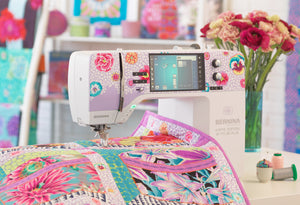

We Love Our Quilting Community
At High Country Quilts we care deeply about community. With our experiences in retail, we know that a store is not only a place to shop but also a place for the community to gather and share. During this busy...


A table runner is one of my favorite projects because it delivers such a big impact with a relatively small amount of effort. It’s the perfect way to add a splash of color and personality to your dining space, and it’s a project any quilter can tackle with confidence.
Forget complicated patterns and overwhelming instructions. We're going to break down the simple art of selecting your fabric, cutting it to the perfect size, sewing it all together, and adding a beautiful, polished finish. This guide will give you everything you need to create a custom piece you'll be genuinely proud to show off.

Have you ever admired a gorgeous table runner in a home decor magazine and thought, "I could make that"? Well, you absolutely can, and it’s probably easier than you think. We’ll move past the generic advice and get into the practical tips that give your projects that professional, handmade-with-love quality.
Choosing your own fabrics isn't just a step in a project; it's where you get to infuse your personal style directly into your home. We'll walk you through the entire journey, from picking out the perfect bolts at High Country Quilts to making that final stitch.
Making a custom piece is so much more rewarding than just buying something off the shelf. It's a chance to build your skills and create something that is uniquely you.
For anyone who loves giving and receiving meaningful handmade craft gifts, a custom table runner is a perfect project to make for yourself or someone else.
Creating your own home decor isn't about saving money—it's about making your space a true reflection of you. A handmade table runner tells a story that mass-produced items simply can't.
And you’re not alone in this creative pursuit! The market for table runners was a US$1.4 billion industry in 2022 and is expected to hit US$2.3 billion by 2031. North America accounts for a huge 45% of that market, all driven by a shared passion for customizable, personal interiors. You can read more about this trend over at OpenPR.com.
So let's get that sewing machine humming, build your confidence, and create a beautiful piece you’ll love for years to come.
Before you even think about threading your machine, let's talk about where the real magic of a beautiful table runner begins: with the fabrics and tools you choose. I’ve seen it time and time again—the right materials can take a project from feeling just "homemade" to looking truly handcrafted and special.
Your fabric choice really sets the entire mood. For projects like this, especially if you're just starting out, you can't go wrong with high-quality quilting cotton. It’s a dream to work with because it’s stable, presses like a charm, and is wonderfully forgiving.
When you're ready to pick your fabrics, you'll find an incredible variety at High Country Quilts, both in our Colorado Springs shop and online. We have everything from timeless solids to cheerful seasonal prints that are perfect for any holiday table.
Staring at a wall of fabric can feel a little overwhelming, but I have a simple trick that always works. Just start by finding one "hero" print—that one fabric that makes you go, "I have to have that!" It could be a gorgeous floral, a fun holiday design, or even a simple, modern geometric.
Once you have your hero, the rest is easy. Just pull two or three coordinating colors directly from that main print. These will be perfect for your other patchwork pieces, the binding, or even the backing. This simple method guarantees a polished, cohesive look every time. For instance, if you pick a Christmas poinsettia print, you might pull a rich evergreen and a soft cream from the design for the surrounding blocks.
A quick but crucial tip from experience: always, always pre-wash your fabric. A quick trip through the washer and dryer prevents surprise shrinkage and stops colors from bleeding all over your beautiful work later. Trust me, it’s a small step that can save you a world of frustration.
Alright, with your gorgeous fabrics chosen, it's time to gather your trusty tools. Having the right gear on hand makes the whole process so much smoother and more accurate. Honestly, it just makes it more fun. You don’t need a ton of fancy equipment, but the right basics make all the difference.
Here's the checklist of what I always have by my side:
If you’re missing any of these essentials, we’ve got you covered. You can find all the notions you need at High Country Quilts. Investing in good tools isn’t just for one project; it’s building a solid foundation for every quilt you’ll make from here on out.
I always say the difference between a project you like and a project you love happens before you even sit down at your sewing machine. Taking the time to be precise with your measuring and cutting is what sets a truly handcrafted piece apart. This is where you lay the foundation for a beautiful table runner.
It's also where you get to make your mark. Did you know the table runner market was valued at a whopping $3.388 billion in 2024? That’s because people are craving unique, personal touches in their homes. A stunning 70% of consumers actually prefer one-of-a-kind designs, which explains why U.S. home textile spending hit $38 billion in 2023, with handmade items like ours commanding a 50% higher perceived value. For us quilters, that’s a huge validation of our craft!
First things first, let's figure out the perfect size for your runner. The golden rule is to have it hang over each end of your table by about 6 inches.
A reliable tape measure is your best friend here—and a fun one like this plush cat measuring tape just makes the process more enjoyable! Once you have your final dimensions, it’s time to grab your rotary cutter. For those wonderfully crisp, accurate cuts, you'll want a sharp blade, a clear acrylic ruler, and a self-healing mat. No exceptions!
As a handy reference, here are some common sizes to get you started.
Use this table as a starting point for determining the right size for your DIY table runner, based on standard dining table lengths.
| Table Length | Recommended Runner Length | Standard Runner Width |
|---|---|---|
| 48 inches (4 ft) | 60 inches | 10-14 inches |
| 60 inches (5 ft) | 72 inches | 12-16 inches |
| 72 inches (6 ft) | 84 inches | 14-18 inches |
| 96 inches (8 ft) | 108 inches | 16-20 inches |
Remember, these are just guidelines! Feel free to adjust the width or length to get the exact look you’re going for.

Okay, now we get to play with fabric! This is where your vision comes to life. For a simple patchwork runner that looks incredible, cutting your fabric into uniform squares is a great way to begin. I find that a 5-inch square (what we quilters call a "charm square") is the perfect size to work with, especially for a quick project.
Spread your squares out on a large table, the floor, or a design wall if you have one. Move them around until you land on a layout that makes you happy. You can alternate light and dark fabrics, create a cool diagonal effect, or go for a wonderfully scrappy, anything-goes vibe.
My Go-To Tip: Once you have a layout you love, snap a quick picture of it with your phone. Trust me, having that visual reference is a lifesaver when you start sewing your rows and inevitably get interrupted.
With your design set, it's time to sew. The quarter-inch seam is the absolute standard in quilting for a reason—it’s the key to making sure all your points and pieces line up perfectly. Your BERNINA machine likely came with a quarter-inch foot, which makes sewing a consistently accurate seam practically foolproof.
Start by sewing your squares into rows. Press your seams as you go (I like to press them to one side to reduce bulk). Then, sew those completed rows together to create your finished table runner top. And just like that, the main part of your project is done
You’ve pieced your top and it looks fantastic! Now for the part that feels a little like magic—turning that flat patchwork into a real, three-dimensional quilted runner. We’re going to build what quilters call a "quilt sandwich" and then get to the actual quilting.
The quilt sandwich is just your three essential layers: the backing fabric, the batting, and your finished top. Start by finding a large, flat surface (a clean floor works great!) and lay your backing fabric down, wrong side facing up. Take a moment to smooth it out completely. Any wrinkles you leave now will be permanently quilted in later, so get it as taut and flat as you can.
Next, lay your batting down smoothly over the backing. Finally, place your pieced runner top on the very top, right-side-up. A good rule of thumb is to have your backing and batting extend beyond your quilt top by about 2-3 inches on all sides. This little bit of extra fabric is your safety net, giving you wiggle room as you quilt so nothing shifts out of place.
Before you can fire up your sewing machine, you have to secure these three layers together. This process, called basting, is what keeps everything from shifting, bunching up, or puckering while you sew. Trust me, there’s nothing more heartbreaking than finishing your quilting only to flip it over and find a big, ugly fold stitched into the back.
You’ve got a couple of solid options for basting:
Here's the most important tip for a flat, pucker-free finish: Always, always start basting from the center of your project. Smooth the layers outward toward the edges as you go. This pushes any slack or potential wrinkles out to the sides instead of trapping them in the middle.
Alright, time to quilt! The quilting stitches are what hold the sandwich together permanently and add all that lovely texture. For a table runner, you really can’t go wrong with simple, clean straight lines. It’s elegant and lets your fabric choices and patchwork shine.
The most straightforward approach is called "stitching in the ditch." This means you’ll be sewing directly in the existing seam lines of your patchwork. It’s a beautifully subtle technique. Your best friend for this is a walking foot. This special foot grips all three layers simultaneously and feeds them through your machine evenly, which is the key to getting perfectly straight lines without any puckers.
If you’re sewing on a BERNINA, the Walking Foot #50 is an absolute workhorse. It makes quilting through thick layers feel smooth and effortless.
Want to add a little more definition? Try quilting straight lines about a quarter-inch away from your seams on one or both sides. This creates a really nice framing effect around each piece of fabric. Or, for a more modern vibe, you can quilt a simple grid of horizontal and vertical lines across the entire runner. The possibilities are endless, so just have fun with it

Now for the detail that truly frames your beautiful work. The binding is what turns a pieced top into a finished, heirloom-quality piece ready for your table. Think of it as the perfect picture frame for your mini-masterpiece—getting it right elevates the entire project.
This is a skill you'll use on countless quilts to come, so let's walk through how to create and attach a binding that looks clean, professional, and is built to last.
First things first, we need to figure out how much fabric you'll need for the binding. It’s a pretty simple calculation. Just measure the entire perimeter of your runner (that’s length + length + width + width). Once you have that number, add an extra 10-12 inches. This gives you plenty of wiggle room for joining the ends and squaring things up.
For a durable, flat binding on a project like a table runner, my go-to is cutting 2.5-inch width straight-grain strips. This width is a dream to work with and creates a gorgeous half-inch binding on the finished edge. Go ahead and cut enough 2.5-inch strips from your chosen fabric to add up to the total length you just calculated.
To create one continuous piece, you'll join these shorter strips with a diagonal seam. This is key for reducing bulk. Place two strips right sides together at a 90-degree angle, then sew diagonally from one corner to the other. Trim the excess fabric about a quarter-inch from your seam line and press the seam open.
The most satisfying part of this process is pressing the long, joined strip in half lengthwise with your iron, wrong sides together. This creates a crisp, folded edge that makes attaching the binding so much easier and more accurate.
With your binding strip prepped and pressed, it’s time to sew it to your quilted runner. A walking foot is your best friend here.
Start by lining up the raw edges of your folded binding with the raw edge of your runner top. Leave a loose "tail" of about 8-10 inches of unsewn binding at the beginning—we'll come back to that later to join the ends. Begin sewing the binding to the runner using a quarter-inch seam.
As you get close to a corner, slow down. The secret to a perfect mitered corner is a simple fold, something our instructors at High Country Quilts teach in every finishing class. Here’s how it’s done:
That little fabric tuck is what magically creates a sharp, professional corner on the front when you’re done.
Once you’ve sewn the binding all the way around the front and joined the ends, it’s time for the final, meditative step.
Flip your runner over to the back. The folded edge of your binding should neatly cover the stitch line you just made. Press it in place and secure it with binding clips or pins.
For a truly invisible, heirloom-quality finish, nothing beats hand-stitching the binding to the back. Use a single strand of matching thread and a simple blind stitch. This small, hidden stitch catches the backing fabric and the very edge of the binding's fold, creating a finish so clean and seamless it almost looks like it just appeared there.
Even with the best instructions, you're bound to have a few questions once the fabric is on your cutting mat. It happens to all of us! Think of this as your personal cheat sheet for those little "what if" moments that pop up mid-project.
We get these questions all the time in the shop, so let’s walk through them. A little bit of know-how can make all the difference between a frustrating afternoon and a project you truly love.
If you're just getting started, my answer is always the same: go with a 100% high-quality quilting cotton. There's simply nothing better for learning.
It’s a wonderfully forgiving fabric. It doesn’t stretch or slide around while you’re cutting, and it holds a crisp press, which is the secret to getting those perfect, sharp seams. Honestly, it does half the work for you. Plus, with the incredible variety of prints and colors available, you’ll find exactly the look you want.
Save the slinky silks or rayons for another day. Once you have a few cotton projects under your belt, you’ll be ready for them.
A quick tip from my own experience: always pre-wash your fabric. It’s a step some people skip, but it’s crucial. It not only preshrinks the material to prevent puckering later but also washes out any finishing chemicals and lets you check for color bleeding before it can ruin your finished runner.
The goal for a table runner is for it to lie nice and flat, so the batting you choose is key. You don't want something so puffy that a wine glass could tip over!
Which batting is best? I almost always reach for a low-loft batting. A thin cotton or an 80/20 cotton-poly blend is perfect. It gives your runner just enough body and lets the quilting show without making it bulky. Brands like Warm & Natural or Hobbs Heirloom are my go-to choices for reliable results.
How do I care for my finished runner? Don't be afraid to use it! A well-made cotton runner can handle real life. Just toss it in the machine on a gentle cycle with cold water and your favorite mild detergent. To keep it looking its best, lay it flat to air dry. If you're short on time, a quick tumble on low heat works, too. A quick pass with the iron, and it's ready for the table again.
Creating your own do it yourself table runners is supposed to be enjoyable, and hopefully, these answers help smooth out any bumps along the way.
At High Country Quilts, our passion is helping you succeed. Whether you're searching for that perfect fabric, need some friendly advice, or your BERNINA machine needs a tune-up, we're here for you.
Come see what’s new and explore our full range of products and classes over at HighCountryQuilts.com.
At High Country Quilts we care deeply about community. With our experiences in retail, we know that a store is not only a place to shop but also a place for the community to gather and share. During this busy...

Hi! We’re Adam and Renee Wheaton, the new owners of High Country Quilts! For more than 40 years, we’ve owned and operated vacuum and sewing businesses. Following in Renee’s father’s footsteps after he retired from All Discount Vacuum and Sewing in Colorado...


Leave a comment