
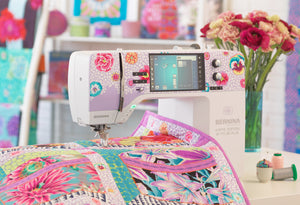

We Love Our Quilting Community
At High Country Quilts we care deeply about community. With our experiences in retail, we know that a store is not only a place to shop but also a place for the community to gather and share. During this busy...


You’ve pieced the top. The blocks are square, the seams are pressed, and the colors look exactly the way you hoped they would. Then you spread that quilt sandwich across a table and hit the part many quilters dread: keeping a large quilt smooth, supported, and comfortable enough to hand quilt for more than a few minutes.
That’s the moment a diy quilt frame starts to make sense.
A good frame doesn’t need to be fancy. It needs to hold tension evenly, stay out of your way, and let your hands work without fighting the weight of the quilt. The best homemade versions do all three. They also store more easily than many people expect, and they’re far more forgiving to build than a lot of new woodworkers fear.
Many quilters start looking for a frame after the same experience. The quilt top is done, batting and backing are ready, and hand quilting sounds appealing right up until the project is draped over your lap, sliding off the table, and pulling at your shoulders.

A frame changes the whole rhythm of the work. Instead of wrestling fabric, you can focus on stitch length, hand position, and the feel of the needle. That’s why so many traditional hand quilters stay loyal to frame quilting once they’ve used one that’s properly built and properly tensioned.
A quilt frame helps in a few practical ways:
Those benefits matter whether you pieced the top by hand or on a BERNINA. The frame isn’t replacing the machine side of quilting. It’s finishing the job in a way that gives hand stitching room to shine.
Commercial frames can be beautifully made, but they aren’t the only route to a solid setup. A homemade frame lets you control the size, the height, and how easily it comes apart for storage. It also teaches you what matters most: straight lumber, smooth surfaces, good leader cloth, and dependable clamping.
Practical rule: A simple frame with straight boards and smooth edges will outperform a more elaborate frame built from warped lumber.
There’s also a long tradition behind the homemade approach. The resurgence of quilting tied to the 1976 American Bicentennial sparked strong renewed interest in DIY quilting culture, and that broader revival helped position quilts as a recognized art form, echoing the significance of the Whitney Museum’s 1971 exhibit featuring 61 quilts as described by Discover Concord’s history of quilting resurgence.
Building your own frame is satisfying for the same reason piecing a quilt is satisfying. You make the tool that fits the work. You stop waiting for the perfect setup to appear in a catalog and start using one that suits your room, your body, and your quilting style.
That’s a practical win. It also feels good.
A diy quilt frame is simple enough that you can build one with basic tools, but the details still matter. Straight boards matter. Smooth sanding matters. Clamp size matters. If you choose the materials carefully at the start, the build goes faster and the frame behaves better when it’s loaded with an actual quilt.

For the classic board-style frame, start with straight pine boards. Pine is easy to find, easy to cut, and light enough to move around without turning the frame into a chore.
What I’d gather first:
A practical overview of essential woodworking tools for beginners can help you sort what you need from what can wait.
At the home center, don’t grab the first four boards from the top of the stack. Sight down the length of each board from one end to the other. You’re checking for bowing, twisting, and crook.
A board can look fine lying flat and still be troublesome once you clamp it into a rectangle.
Use this quick check:
Not all hardware choices are equal on a quilt frame. Bigger isn’t always better.
A small to medium clamp gives you holding power without crowding your hands. A bulky clamp can turn every quilting pass near the corner into an annoyance. The same logic applies to fasteners. The neatest attachment is the one that holds the leader securely and stays flush so thread doesn’t catch.
The best hardware on a quilt frame is the hardware you stop noticing while you quilt.
Here’s a practical split between the minimum setup and the nicer setup.
| Build level | Tools |
|---|---|
| Basic build | handsaw, tape measure, pencil, sanding block, hammer or staple gun |
| Cleaner and faster build | miter saw, drill, random-orbit sander, clamps, square |
| Freestanding upgrade | jigsaw or table saw for leg notches, drill, sanding tools |
Leader cloth gets less attention than the wood, but it’s part of what makes the frame usable. You want fabric with enough body to pin into repeatedly without shredding or stretching out too quickly. Old high-thread-count flat sheets work well and are easy to cut into long strips.
Skip pieced-together scraps if you can. Extra seams create lumps right where you want the sandwich to roll and pin smoothly.
A lap frame earns its keep fast. Set it across two solid supports, clamp the corners, and you have a workable quilting station that stores flat when the room has to become something else again.

For the classic four-board version, cut four straight 1" x 4" pine boards to 8' to 8.5' long. That size is large enough for lap quilts and many twin-size projects without making the frame awkward to move or store. Sweet Petal Stitchery’s detailed quilting frame tutorial notes that a frame in this range can handle quilts up to 7' x 9', works best with sanding from 100-grit to 240-grit, and is typically assembled with 2" to 3" C-clamps at the corners: Sweet Petal Stitchery’s quilting frame tutorial.
For the leaders, cut sturdy sheet fabric into:
That longer 10-foot pair gives you enough extra length to wrap, tension, and trim without fighting for every inch.
The layout is simple, but the board roles matter.
The result is a rectangle that behaves like a lightweight quilting table. It is not as rigid as a standing frame, but that is the trade-off that makes it cheap, portable, and easy to stash behind a door or under a bed.
Many first builds go wrong at this stage. If the boards feel only "pretty smooth," keep sanding.
Start with 100-grit to remove mill roughness and soften the cut edges. Follow with 240-grit so the backing and thread slide cleanly over the wood. Pay extra attention to the long top edges, the board ends, and any place your leader cloth will sit flat. One missed splinter is enough to snag fabric every time you advance the quilt.
If you want this frame to last more than one season, break the sharp corners slightly with sandpaper. A tiny roundover by hand makes the frame nicer to handle and reduces wear on the leader cloth.
Lay each folded leader strip along one long edge of a board. Keep the strip straight, then fasten it with staples, tacks, or flathead nails that sit fully flush.
Leave a little clearance at both ends of each board so the clamps have room. Crowded corners are frustrating once the quilt is loaded.
The best method is slow and repetitive. Fasten the center first, smooth the fabric outward, then fasten toward each end while checking for twist. Crooked leaders cause uneven loading, and uneven loading is the reason many beginners think their frame tension is the problem when the issue originated during setup.
Set the two long roller boards parallel to each other. Place the two shorter boards across the ends to form the rectangle, then clamp all four corners.
Support the frame on chairs, stools, or sawhorses that match in height. If the supports wobble, the frame will wobble. A lap frame does not hide bad furniture underneath it.
Use this layout as a guide:
| Part | Placement |
|---|---|
| Long roller board 1 | left side |
| Long roller board 2 | right side |
| Short cross board 1 | top end |
| Short cross board 2 | bottom end |
| C-clamps | one at each corner |
The common problems are easy to spot once you know them.
A lap frame does not forgive sloppy prep. The upside is that every one of these mistakes is easy to prevent with careful cutting, sanding, and dry-fitting before you load fabric.
Here’s a useful visual reference before you start cutting and assembling:
If the frame is annoying to load, quilting on it will be worse.
Quilters keep returning to this design because it works. It teaches the mechanics of loading, tensioning, and advancing a quilt without asking you to build a full standing setup first.
It is also the best place to compare frame styles before committing to a bigger build. Once you have used a lap frame, the measurements and diagrams for a standing or rolling version make more sense, because you already know what you want more of: height, stability, floor mobility, or all three.
You finish an hour at a lap frame, stand up, and feel it in your shoulders first. That is usually the point when a quilter knows the next build should solve comfort, not just hold fabric. A standing frame gives you a fixed working height and better stability. A rolling frame keeps those benefits while letting you move the setup when the room has to do double duty.
The upgrade is in the base, not in the quilting method. You still load rollers, pin to leaders, and advance the quilt in sections. What changes is how those rollers are supported and how much control you have over height, stance, and floor space.
A proven freestanding approach uses four plywood leg pairs with U-shaped notches to carry the rollers, with a working height around 32 to 36 inches for seated quilting, as described in Mother Earth News’ homemade quilting frame plan. That style has stayed popular because it is simple to cut, easy to repair, and forgiving if you need to tweak the height after a test setup.

Here is the practical difference between the three frame types.
| Frame type | Best for | Strengths | Trade-offs |
|---|---|---|---|
| Lap frame | trying frame quilting for the first time | low complexity, stores flat, easy to move in pieces | relies on chairs or supports, less ergonomic for long sessions |
| Standing frame | regular hand quilters | stable, better working height, dedicated setup | larger footprint, more cutting work |
| Rolling frame | shared sewing spaces | same benefits as standing frame, easier to move | wheels add another build decision, needs reliable locking casters |
If you already know you enjoy hand quilting, a standing frame usually gives the best return on the extra effort. If the frame needs to slide against a wall between sessions, build for casters from the start instead of trying to retrofit them later.
Use the same roller spacing and overall quilt width you settled on in the lap frame, then build a base that supports that span without racking. For most home shops, 3/4-inch plywood for the leg assemblies and straight hardwood or clear pine for the rails is a sensible balance of cost, stiffness, and ease of cutting.
Each corner typically uses a paired leg assembly:
I prefer dry-fitting the leg pairs with a scrap dowel or offcut in the notch before final assembly. Beginners often cut the notch too wide, assuming extra clearance will help. It does the opposite. The roller shifts under tension, and that small movement is enough to make quilting feel fussy.
The notch controls more than roller placement. It affects how easily you can lift a roller out for loading, whether the frame chatters when you tighten the quilt, and how confident the whole setup feels when you rest your forearms on it.
Height matters just as much. Start with your actual chair or stool, not a guessed measurement. Sit down, place your hands where they will quilt, and check your shoulder position. Relaxed shoulders and bent elbows are the goal. If your elbows float upward, lower the frame. If your back rounds forward, raise it.
That small fitting step saves a lot of frustration.
A rolling frame is a standing frame with stricter hardware requirements. Casters need to match the weight of the frame and lock firmly enough that the base stays put while you stitch. Cheap casters are one of the fastest ways to ruin a good build. They introduce wobble, and wobble shows up immediately in your hands.
Add wheels if your setup needs one of these advantages:
Skip wheels if the floor is uneven, thick carpet is involved, or the frame will live in one spot full-time. In those cases, fixed feet are steadier and simpler.
Room size matters, but habits matter more. A dedicated sewing room can handle a standing frame with a wider stance and a little more weight. A shared room often benefits from a narrower base and locking casters. If you tend to avoid projects that require setup every time, build the freestanding version now. You are more likely to use it.
This guide includes diagrams and measurements for lap, standing, and rolling frames because there is no single best plan for every quilter. The right choice depends on how you work, where you store the frame, and whether you want portability, stability, or both. If you are unsure which direction to take, High Country Quilts is a good place to compare materials, ask about leader cloth, and talk through what local quilters are using in their sewing spaces.
A frame can be built correctly and still perform poorly if the finishing and tensioning are off. That’s the difference between a frame that feels homemade in a good way and one that keeps creating small irritations every time you sit down to quilt.
You don’t need a thick glossy finish. You need a surface that’s smooth, dry, and unlikely to transfer anything to fabric.
A practical approach is:
If you choose any finish at all, let it cure completely before leader cloth or quilt fabric comes near it. A frame that smells “almost dry” isn’t ready.
The backing goes on first. Pin it to the leader straight. Then roll it on evenly so one side doesn’t creep ahead of the other. Add batting and quilt top, then baste as needed for your method.
The goal is steady support, not drum-tight strain.
One of the major gaps in diy quilt frame tutorials is guidance for delicate fabrics. The advice from hand-quilting specialists is to use looser tension than with slate frames so the fabric retains some give and doesn’t get stressed or damaged, as explained in the Plain Stitch FAQ on hand quilting in a flat frame.
Good frame tension feels controlled, not rigid. The surface should be smooth enough for consistent stitching but not stretched so hard that the fabric is under stress.
Watch for these signs:
Delicate fabric needs support, not force.
Quilters often ask how often to re-tension, and that’s exactly where many tutorials go vague. There isn’t one universal schedule because fabric, batting, stitch density, and humidity all change the feel.
What works is checking tension regularly as you advance the quilt and after you’ve stitched enough in one area to alter the balance of the sandwich. If the work starts to ripple, resist the urge to crank everything tighter. First check whether the loading is still even.
A few habits make a frame feel more efficient from the first session.
If you’re quilting reproduction prints, older fabric, lightweight backing, or anything you’d classify as precious, treat the frame more gently than you think you need to. A delicate quilt benefits from patience.
Use smooth leaders, keep fasteners flush, and avoid harsh pulling when repositioning. If you’re testing the setup for the first time, load a practice sandwich first. That small step can save a lot of regret.
Building a diy quilt frame is a strong step, but it doesn’t answer every question that comes after the build. Most quilters discover that quickly. The frame is ready, the quilt is loaded, and then the next layer of questions shows up: how firm should the tension feel, how do you advance a large quilt smoothly, what do you change for lighter fabric, and how do you improve your stitch consistency without fighting the setup?
That training gap is real. Heritage craft organizations have noted the lack of structured instruction around frame quilting techniques, which is exactly why local quilt shops can play such an important role in keeping those skills alive, as noted by Heritage Crafts in its discussion of hand quilting in a frame.
Frame quilting is easier to learn when someone can watch your setup and point out the one thing that’s off. Sometimes it’s tension. Sometimes it’s posture. Sometimes it’s that the quilt was loaded slightly crooked from the start.
That kind of help is hard to get from a supply list alone.
Once your frame is assembled, the smartest move is to use it with real support around you:
A good frame opens the door to more hand quilting. A good quilting community helps you keep using it.
A diy quilt frame is simple in principle, but a few questions come up almost every time someone finishes the build. These are the ones worth solving right away.
Yes, if it’s straight, smooth, and not overly heavy. Pine is common because it’s easy to find and easy to work. A heavier hardwood can feel nice, but it also makes the frame harder to move and store.
For most first builds, lighter lumber is the better trade-off.
No. Start with the lap frame if you’re unsure how often you’ll hand quilt. It teaches you the core mechanics without taking over your sewing room.
If you already know hand quilting is going to be part of your regular practice, the standing version is often worth building first.
High-thread-count sheet fabric is a dependable choice. It’s wide, stable, and easy to fold into long clean strips. Try to avoid pieced sections if possible because seams in the leader can create uneven bulk.
Firm enough to stay smooth under the needle, loose enough that the fabric still has some give. If the quilt feels strained, it’s too tight. If it sags or wrinkles when you stitch, it’s too loose.
That balance gets easier to judge after one or two practice loadings.
Check the boring things first because they’re usually the answer:
A frame rarely becomes unstable for mysterious reasons. Something is usually uneven, loose, or twisted.
Absolutely. That’s one of the best reasons to build your own. If you mostly quilt wall hangings, baby quilts, or table runners, scale the frame to suit the work and the room.
Just keep the same priorities: straight lumber, smooth edges, and a layout that allows even loading.
The lap frame stores the easiest. Unclamp the corners and stack the boards flat. Keep the leader cloth rolled or folded neatly so it doesn’t crease sharply.
A freestanding frame can also be designed for disassembly, which is worth planning for if your sewing room has to do double duty.
Not always. A rolling frame is better only if you’ll move it. If the frame is going to live in one spot, wheels can add complexity without much payoff.
For a permanent quilting corner, a stable standing frame is often the more straightforward choice.
If you’re ready to turn your diy quilt frame into a setup you’ll use, visit High Country Quilts. It’s a great place to find quilting supplies, BERNINA...com). It’s a great place to find quilting supplies, BERNINA support, and the kind of hands-on community that helps quilters move from “I built it” to “I’m quilting on it with confidence.”
At High Country Quilts we care deeply about community. With our experiences in retail, we know that a store is not only a place to shop but also a place for the community to gather and share. During this busy...

Hi! We’re Adam and Renee Wheaton, the new owners of High Country Quilts! For more than 40 years, we’ve owned and operated vacuum and sewing businesses. Following in Renee’s father’s footsteps after he retired from All Discount Vacuum and Sewing in Colorado...


Leave a comment