

We Love Our Quilting Community
At High Country Quilts we care deeply about community. With our experiences in retail, we know that a store is not only a place to shop but also a place for the community to gather and share. During this busy...


You've got the invitation. The dress is sorted, or at least narrowed down. Then the practical question pops up. What are you putting over your shoulders once the sun drops and the evening cools off?
That's where a handmade stole feels so satisfying. Instead of settling for whatever's on a rack, you can sew something light, elegant, and personal. If you've been searching for a Creative Grids rulers local stockist, you may already be at that stage where you want better tools, clearer guidance, and a project that feels achievable in an afternoon or weekend.
This stole is a lovely place to begin. It's simple enough for a hobby sewist, polished enough for a wedding or summer event, and useful for practicing careful cutting, pressing, and narrow hems. Along the way, I'll point out where beginners usually get stuck, how to avoid the wobbly parts, and how quality tools and fabric make the whole experience calmer.
A summer wedding invitation has a way of changing your sewing plans.
You might start by thinking about a dress, shoes, or jewelry. Then you realize what's missing is that soft extra layer that looks dressy without feeling heavy. A stole fills that gap beautifully. It drapes over bare shoulders, tucks into a handbag, and still feels special when the photos start.

A stole gives you room to focus on a few core skills without battling a complicated pattern.
That's why this project pairs so naturally with the search for a Creative Grids rulers local stockist. You're not only looking for a ruler. You're looking for the confidence that comes from using tools that help your fabric stay where you put it.
A small project can teach big habits. Careful measuring, patient pressing, and clean finishing carry into every other sewing project you try next.
One sewist might choose airy chiffon for a floaty look. Another may prefer voile because it feels easier to control under the machine. Someone else may pick a soft print that echoes the wedding flowers. The shape stays simple, but the result still feels like your own.
And that's the nice thing about making an accessory instead of buying one. You get something beautiful, and you build sewing skills at the same time.
You will enjoy this project more if your supplies are ready before the fabric ever hits the cutting table. Soft, lightweight cloth has a way of turning small delays into crooked folds, slipping layers, and extra frustration.

A stole is a simple project, but it still rewards good preparation. That is part of the value of starting at a local sewing shop instead of piecing things together from random listings online. You can match the fabric to the project, choose tools that suit delicate yardage, and get the kind of practical advice we share every day at High Country Quilts classes and the cutting counter.
For a summer stole, drape matters most. The fabric should fall softly at the shoulders and move easily as you walk.
A few reliable choices:
If you'd like to compare options for this project, browse lightweight apparel and quilting fabrics.
If you are unsure which fabric to choose, use this simple rule. Pick the fabric that matches both the look you want and the amount of handling you feel ready for. A beginner can absolutely sew a lovely stole from chiffon, but voile often gives you a calmer first experience.
This project does not ask for many notions. Each one has a clear job, and that is good news for beginners.
| Supply | Why it matters |
|---|---|
| Matching thread | Helps seams blend into the fabric |
| New sharp needle | Reduces snags and skipped stitches |
| Fine pins or clips | Holds layers without leaving rough marks |
| Iron | Sets folds and keeps edges crisp |
| Rotary cutter and mat | Give you cleaner cuts on delicate fabric |
One more tool deserves special attention. A dependable ruler helps you mark a clean rectangle before the fabric has a chance to drift off line. It works a bit like a straight edge in a drawing lesson. If the starting line is true, the rest of the work feels much easier to control.
Beginners often focus on fabric first and treat the ruler as an afterthought. For a project like this, the ruler affects your result from the first measurement onward. Clear markings are easier to follow. A ruler that grips the fabric better is less likely to slide while you line up a long edge.
That matters even more with fine fabrics, because they show every small error. A tiny shift at the cutting stage can turn into a hem that looks wavy later.
Many sewists prefer buying a Creative Grids ruler from an authorized local stockist for exactly that reason. You can handle the ruler in person, compare sizes, and make sure you are getting a tool you can trust for future projects too. This guide is meant to help you do more than locate a specific ruler. It helps you turn that purchase into a finished stole, with the same kind of fabric and machine tips you would get from an experienced instructor standing beside you.
Practical rule: If your fabric shifts while you measure, your hem usually reveals it later.
Before you start, set up your space so the project feels calm and manageable:
A few quiet minutes of setup can save a lot of second-guessing later.
You smooth the fabric, line up the ruler, and make the first cut. This is the moment a soft piece of fabric starts becoming a finished stole.
A straight, squared rectangle makes every later step easier. If the first cut is off, the folds and hems tend to show it. Good measuring is a lot like building on a level foundation. The project feels steadier from the start.

This project gives you room to choose. Some sewists like a stole that sits close to the shoulders for a lighter, dressier look. Others prefer more width for coverage and drape.
If you are unsure, start by auditioning the size before you cut. Hold the fabric up in front of a mirror, wrap it loosely around your shoulders, and pin the width with your fingers. That quick test often answers questions faster than trying to find one perfect measurement.
Then cut in a calm order:
Slow matters here. A careful cut saves much more time than fixing a wavy hem later.
Brand pages often mention grip, visibility, and accuracy. A beginner usually has a more practical question. Which ruler will help me cut this project cleanly without buying three more tools first?
Creative Grids offers many options in its product catalog, which is helpful once you know your sewing habits. For a stole, though, one long straight ruler usually does the most work. It helps you square an edge, keep the width consistent, and guide a long rotary cut without wandering.
For this project, start simple. A long straight ruler covers the jobs you will do at the table.
A local stockist can help in a way a product grid often cannot. You can bring your actual project into the conversation. At High Country Quilts, that often sounds like, "I'm making a stole from a lightweight fabric. Which ruler will be easiest to read and hold steady?" That kind of question leads to better choices than buying by size alone, and it turns a tool search into a finished project plan, with the same sort of fabric and machine guidance you would get in class.
Here's a closer look at ruler handling before you cut your own fabric:
Keep your non-cutting hand flat on the ruler, not perched at the top edge. More surface contact usually means less shifting.
Many beginners pause at the sewing stage, especially with lightweight fabric. It can shift under your fingers, stretch at the edge, or ripple after a few stitches. That does not mean you are doing it wrong. Fine fabric requires a gentler pace and a little more setup.
A stole is a good project for building that control because the construction stays straightforward. You are finishing four edges with a narrow hem, then repeating the same careful steps until your hands settle into the rhythm. In class, this is often the moment when a project starts to feel less like a stack of supplies and more like something you will wear.
A double-fold narrow hem is a dependable choice for beginners. It encloses the raw edge, looks neat from both sides, and does not require complicated shaping.
Work on one edge at a time:
Pressing between steps matters here. A good press works like basting with heat. It gives the fabric a memory, so your stitching line has something stable to follow.
Corners often raise the first big question. If they start to feel thick, trim a tiny bit of bulk before the final fold. The goal is not to remove a lot. You just want the layers to lie flat enough that the corner does not form a lump.
Stop at the first sign of waviness and press again. Sewing farther usually locks the problem in place.
These habits help keep the edge calm:
A rolled hem foot can also be useful on this project once you have practiced on scraps. It curls the edge under as you sew, which can produce a delicate finish on soft fabric. Compare options among BERNINA sewing machine accessories at your local shop if you want to test whether that style of foot suits the way you sew.
Slow sewing is often more accurate sewing. On fine fabric, that usually means fewer puckers and less unpicking.
Machine setup affects results more than many beginners expect. Fine fabric shows every small mismatch in needle, thread, tension, and presser foot pressure. That can sound intimidating, but it is also good news. Small adjustments often fix the problem.
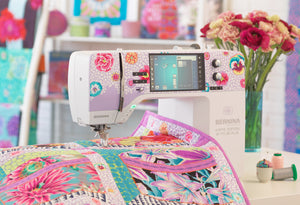
Some machines feed delicate fabric more evenly than others. Features such as steady fabric feeding and precise speed control can make hemming feel smoother and more predictable. Compare BERNINA sewing machines in person if you sew scarves, garments, or dressy accessories often and want to feel the difference at the machine rather than guessing from a product page.
Creative Grids is sold through independent quilt shops and online retailers worldwide, according to the brand's About Us page. That shop-based model matters for a project like this. You may come in asking for a ruler, then leave with a clearer plan for fabric, needle choice, and hemming method. That is the kind of project support local sewing hubs are especially good at providing.
High Country Quilts carries Creative Grids quilt rulers, including long rectangle rulers and specialty options, with store pickup available for local shoppers who prefer to order online and collect in person.
Start with one long side. Press it. Sew the opposite long side next.
That order gives you room to learn the fabric before handling the shorter ends, where corners can feel fussier. It also helps you check whether your fold width is staying even from one side to the other.
Beginners often try to sew the whole perimeter in one pass. A stole usually turns out better when you treat each side as its own small task. Sew, check, press, then continue. That slower rhythm builds confidence, and confidence shows in the finished piece.
Once the stitching is done, give your stole a careful final press. Use the heat setting that suits your fabric, and press gently rather than dragging the iron across the edge. That keeps the hem smooth and the stole looking crisp.

A handmade stole is surprisingly flexible. You can style it to match the event and the weather.
This is also where fabric choice really shows. A soft voile sits differently from chiffon, and that difference becomes part of the finished look. One project teaches you a lot about what you like to wear, not just what you like to sew.
Most lightweight fabrics do best with gentle care. Hand-washing in cool water with mild detergent is a safe starting point for many fibers, though you should always check the needs of the specific fabric you used. Dry it flat or hang it carefully so the shape stays neat.
If you enjoyed making this stole, you've already practiced several skills that transfer beautifully into other projects. Straight cuts, clean hems, patient pressing, and fabric control are all building blocks for garments, wraps, and even more polished quilt finishing.
You may also find that your next search for a Creative Grids rulers local stockist feels a little different. Instead of asking, “Which ruler do people buy?” you'll ask, “Which ruler helps me make the kinds of projects I want to sew?” That's a much more useful question.
If you want more hands-on practice after this project, you can explore sewing and quilting classes.
If you're ready to make your stole, choose a ruler you'll use, or get help with fabric and machine setup, visit High Country Quilts. You can shop online, use local pickup if you're in Colorado Springs, or stop in for practical guidance from people who work with these tools every day.
At High Country Quilts we care deeply about community. With our experiences in retail, we know that a store is not only a place to shop but also a place for the community to gather and share. During this busy...

Hi! We’re Adam and Renee Wheaton, the new owners of High Country Quilts! For more than 40 years, we’ve owned and operated vacuum and sewing businesses. Following in Renee’s father’s footsteps after he retired from All Discount Vacuum and Sewing in Colorado...


Leave a comment