
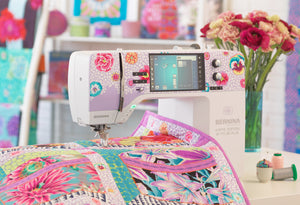

We Love Our Quilting Community
At High Country Quilts we care deeply about community. With our experiences in retail, we know that a store is not only a place to shop but also a place for the community to gather and share. During this busy...


You pull an antique-style quilt from a shelf, or stop scrolling when one appears on your screen, and the reaction is immediate. The colors feel quieter. The prints don't compete. The whole quilt has that settled, layered look that seems impossible to fake with random modern fabrics.
That's usually the moment quilters start looking at Civil War reproduction fabrics.
They offer a practical bridge between history and making. You get the character of mid-19th-century textiles without hunting for damaged yardage or cutting into fragile antiques. For many quilters, that's the appeal. You can stitch something new that still carries the visual language of an older quilt.
The good news is that this style is learnable. Once you understand why these fabrics look the way they do, choosing them gets much easier. You stop shopping by vague “old-fashioned” instinct and start seeing the actual rules behind the look: muted color, smaller prints, restrained contrast, and block choices that support the fabric instead of fighting it.

A first reproduction quilt doesn't need to be museum-perfect. It does need a clear point of view. If you can recognize what belongs, what clashes, and what gives a quilt that unmistakable period feeling, you're already on solid ground.
Some quilts impress you because they're bold. Others hold your attention because everything works together so subtly that you keep looking. Historical quilts often fall into the second group. Their depth comes from restraint.
That's part of the enduring appeal of Civil War reproduction fabrics. They don't rely on oversized prints or dramatic contrast to create interest. Instead, they build richness through many small choices that support one another.
A good reproduction quilt rarely looks loud on the cutting table. It comes alive after the blocks start joining.
For beginners, that can feel unfamiliar. Modern quilting cotton often teaches us to choose a hero print first and build around it. Reproduction quilting usually works differently. You're composing a conversation among many prints, not spotlighting one fabric.
That's also why this style is so satisfying. It rewards patience, editing, and attention to value.
A Civil War-inspired quilt can feel historical without feeling stiff. It can look collected rather than coordinated, and that's a big part of its charm. Many quilters love the way these fabrics blend into a surface that looks lived with, not staged.
There's also a practical advantage. Reproduction specialists often base designs on surviving textiles from the era rather than inventing entirely new motifs, which is one reason quilters use them when they want an authentic 1800s appearance without relying on antique fabric, as described in Nancy's Notions' overview of Civil War reproduction fabric.
You don't need a large stash to begin. You need a reliable eye for what belongs together. That means learning to favor subtle scale, softer contrast, and classic blocks that let the prints do their work.
If you start there, your quilt won't just use reproduction fabric. It will look like it belongs to the style.
Civil War reproduction fabrics have a recognizable visual grammar. Once you know it, you can spot prints that fit and prints that only look vaguely old-timey.
The strongest clue is the palette. These fabrics are designed to mirror the mid-19th-century textile look with muted browns, grays, blues, and reds rooted in natural dyes such as indigo, madder, and walnut, and the prints tend to stay small-scale because period printing technology couldn't reliably produce the large, high-contrast motifs common in modern quilting cottons, according to Nancy's Notions on Civil War reproduction fabric characteristics.

When quilters say a fabric “reads Civil War,” they're usually responding to color before anything else.
Look for shades that feel slightly weathered or softened:
What usually doesn't work is anything too sharp. A clear neon, a candy pink, or a bright white background can break the illusion immediately. Even if the print itself is small, the color can push it out of period.
Many first-time shoppers focus only on color and miss the more important clue. Reproduction prints are usually small. Tiny florals, vines, stars, dots, and compact calicoes create the visual texture associated with the era.
That small scale does real work in a quilt:
A modern floral can share the right color family and still feel wrong because the motif is too large and too crisp. That's one of the most common mistakes I see in “almost reproduction” fabric pulls.
Practical rule: If a print announces itself from across the room, it's probably too bold for a traditional Civil War look.
The best reproduction fabrics don't need gimmicks. Their motifs tend to be familiar and modest: little leaves, tiny blossoms, dots, stars, trailing vines, and geometric calicoes. They were made to blend.
That's why this category works so well for quilters who love complex patchwork. The fabrics create depth without visual chaos.
If you're ready to shop with a more informed eye, explore Civil War reproduction fabrics and study how the strongest prints balance muted color, small scale, and understated motif.
Pulling individual fabrics is one skill. Building a quilt palette is another. A successful reproduction quilt usually looks as if it grew from a scrap basket over time, even when the fabrics were chosen with care on a single afternoon.
That “scrap bag” feeling comes from variety held together by discipline.

If a reproduction quilt feels flat, value is usually the reason. You may have beautiful fabrics, but if every piece sits in the same middle range, the blocks won't separate.
I prefer to sort reproduction fabrics into simple groups before I cut anything.
| Value group | What it does in the quilt | What to look for |
|---|---|---|
| Light | Gives the eye a place to rest | Shirtings, creams, pale grays, subtle tan prints |
| Medium | Connects the palette | Small florals and calicoes in softened reds, blues, browns |
| Dark | Adds shape and definition | Deep indigo, rich brown, darker red grounds |
That doesn't mean every block needs all three. It means the full quilt does.
New quilters often underestimate the role of quieter fabrics. Shirtings and near-neutral prints give reproduction quilts breathing room. Without them, everything becomes equally busy.
A useful approach is to let your stronger prints appear in measured doses, then support them with fabrics that almost disappear at first glance. Those quieter pieces are often what make the bolder choices look more authentic.
If you enjoy learning visually, this walkthrough is a helpful companion while you sort fabrics and think through combinations.
Historical accuracy isn't only about fabric. Construction matters too. Quilts meant to represent earlier 19th-century work should be hand pieced, while machine piecing is generally acceptable for Civil War-era reproductions and later because sewing machines were not widely used until around 1850, as noted in Sherri Quilts A Lot's discussion of reproduction quilt construction.
That gives you a practical decision point. If your goal is “inspired by the era,” machine piecing is completely workable. If your goal is a more historically faithful earlier look, hand piecing changes the character of the project.
Some mismatches are subtle. Others jump out immediately.
The clearest example is using anachronistic blocks or motifs. Sunbonnet Sue doesn't fit a Civil War setting, even if the fabrics do. The block language and the fabric language need to belong to the same world.
Keep asking one question as you plan: would this block have supported these fabrics, or am I forcing two different quilt stories together?
If you want an easy start, a coordinated bundle can simplify the process. Shop Civil War fat quarter bundles when you want variety without guessing at every print. If a particular reproduction designer's style catches your eye, browse reproduction fabric collections and compare how different lines handle red, indigo, and shirting balance.
Reproduction quilting rewards careful finishing. The fabric choice gets the quilt into the right visual family, but sewing decisions determine whether the final piece feels crisp, relaxed, heavy, or convincingly traditional.
One reason this niche stays strong is simple. It isn't a tiny novelty corner of quilting. One reproduction-focused retailer says it carries more than 1,000 different cotton reproduction designs across historical eras, and it identifies the Civil War period as 1861 to 1865, which gives the style a defined reference window instead of a vague “vintage” label, according to Hancock's of Paducah's historic reproduction fabric category.
Quilters disagree about pre-washing, and this is one of those decisions where your project goal matters more than blanket rules.
If you want maximum cutting accuracy and a crisp piecing experience, many quilters prefer to work with unwashed quilting cotton. If you're concerned about how fabrics will behave later, pre-washing can give peace of mind. The important part is consistency. Don't pre-wash half the quilt and leave the other half untreated.
For reproduction projects, I lean toward choosing one method and sticking to it across the whole pull. Mixed handling is what causes trouble.
Thread color matters more than people think. Bright white thread can look harsh against a reproduction palette, especially on darker piecing. A softer neutral often blends more gracefully.
A few practical choices usually help:
That last point makes a visible difference. Loft changes the whole silhouette of a quilt.
Small prints and muted colors look most convincing when the finished quilt drapes softly instead of standing up like a comforter.
Reproduction quilts often use many small units, and they don't forgive casual pressing. Press as you go, keep seam allowances consistent, and trim anything that starts to wander before it multiplies across the block.
This is also where notions matter. Good pins, a reliable iron, sharp blades, and accurate rulers do more for a reproduction quilt than any trendy shortcut. If you need tools for piecing and finishing, browse quilting notions for thread, rulers, batting, and other project basics.
The best first project isn't the most elaborate one. It's the one you'll finish.
Civil War reproduction fabrics shine in straightforward blocks because the fabric variety becomes the main event. A complicated block can be beautiful, but for a first attempt, simple piecing usually gives a better result. You'll see the palette working, and you won't spend the whole project wrestling tiny units.
A few classic options are especially forgiving:
These blocks also suit the fabric scale. Small prints settle into them naturally.

A wall hanging, table topper, or lap quilt is often the smartest place to begin. You'll make all the important decisions once, fabric selection, contrast, piecing style, border choice, quilting density, without committing to a massive bed-sized project.
That smaller scale also teaches you what you enjoy. Some quilters discover they love the fabric curation most. Others fall in love with handwork. Some want stricter historical accuracy, while others prefer a softer interpretation.
Start with a project small enough that you can stay curious all the way through.
If you're ready to move from admiration to making, explore beginner-friendly quilt patterns and kits and choose a design that lets the fabrics speak. A simple block, a thoughtful fabric pull, and steady piecing are enough to create something that feels rooted in history and fully your own.
If you'd like help choosing Civil War reproduction fabrics, matching a pattern to your skill level, or selecting the right tools and supplies, visit High Country Quilts online or stop by the shop in Colorado Springs. A good first reproduction quilt starts with the right fabric in your hands.
At High Country Quilts we care deeply about community. With our experiences in retail, we know that a store is not only a place to shop but also a place for the community to gather and share. During this busy...

Hi! We’re Adam and Renee Wheaton, the new owners of High Country Quilts! For more than 40 years, we’ve owned and operated vacuum and sewing businesses. Following in Renee’s father’s footsteps after he retired from All Discount Vacuum and Sewing in Colorado...


Leave a comment