

We Love Our Quilting Community
At High Country Quilts we care deeply about community. With our experiences in retail, we know that a store is not only a place to shop but also a place for the community to gather and share. During this busy...


When you picture a quilt, what comes to mind? Is it the vibrant pattern on top, or is it that cozy, slightly crinkled, and oh-so-inviting feel? That feeling—the warmth, the weight, the hug-like quality—comes from the batting, the unsung hero tucked inside. Cotton quilting batting is a classic choice, a natural, breathable fiber loved for the traditional character it brings to every project.
Think of batting as the soul of your quilt. It’s the essential middle layer sandwiched between your beautiful quilt top and the sturdy backing fabric. While it's hidden from view, its impact is undeniable. This soft, natural fiber is what gives a quilt its warmth, its drape, and its personality.
Without batting, you just have two pieces of fabric sewn together—a light coverlet, perhaps. But once you add that layer of high-quality cotton batting, it transforms into a quilt. It’s this middle layer that creates the structure, dimension, and heirloom quality that makes quilts so cherished for generations.
So, what exactly does cotton batting do? It's more than just a filler. Its primary jobs are to:
This simple infographic shows exactly where the batting fits in, acting as that soft, insulating core.
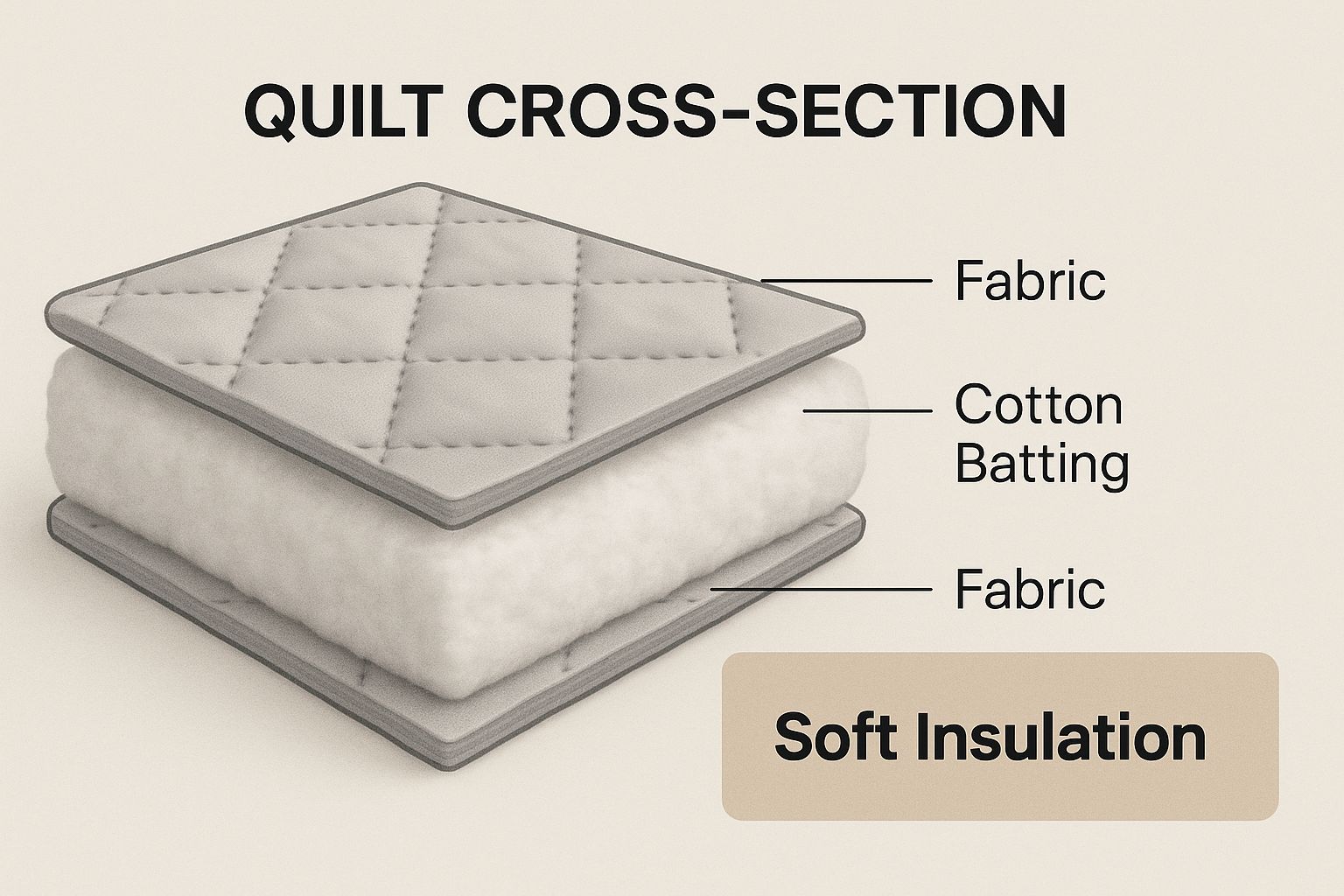
As you can see, the batting is truly the component that gives a quilt its plush, inviting feel.
The right batting doesn’t just fill your quilt—it defines it. The choice between a flat, vintage-style wall hanging and a plush, comforting bedspread often comes down to this single component.
Getting a handle on the fundamental role of cotton quilting batting is the first step toward making your creative vision a reality. It puts you in control of the final look and feel, ensuring your finished piece is not just beautiful but also perfectly suited for its purpose.
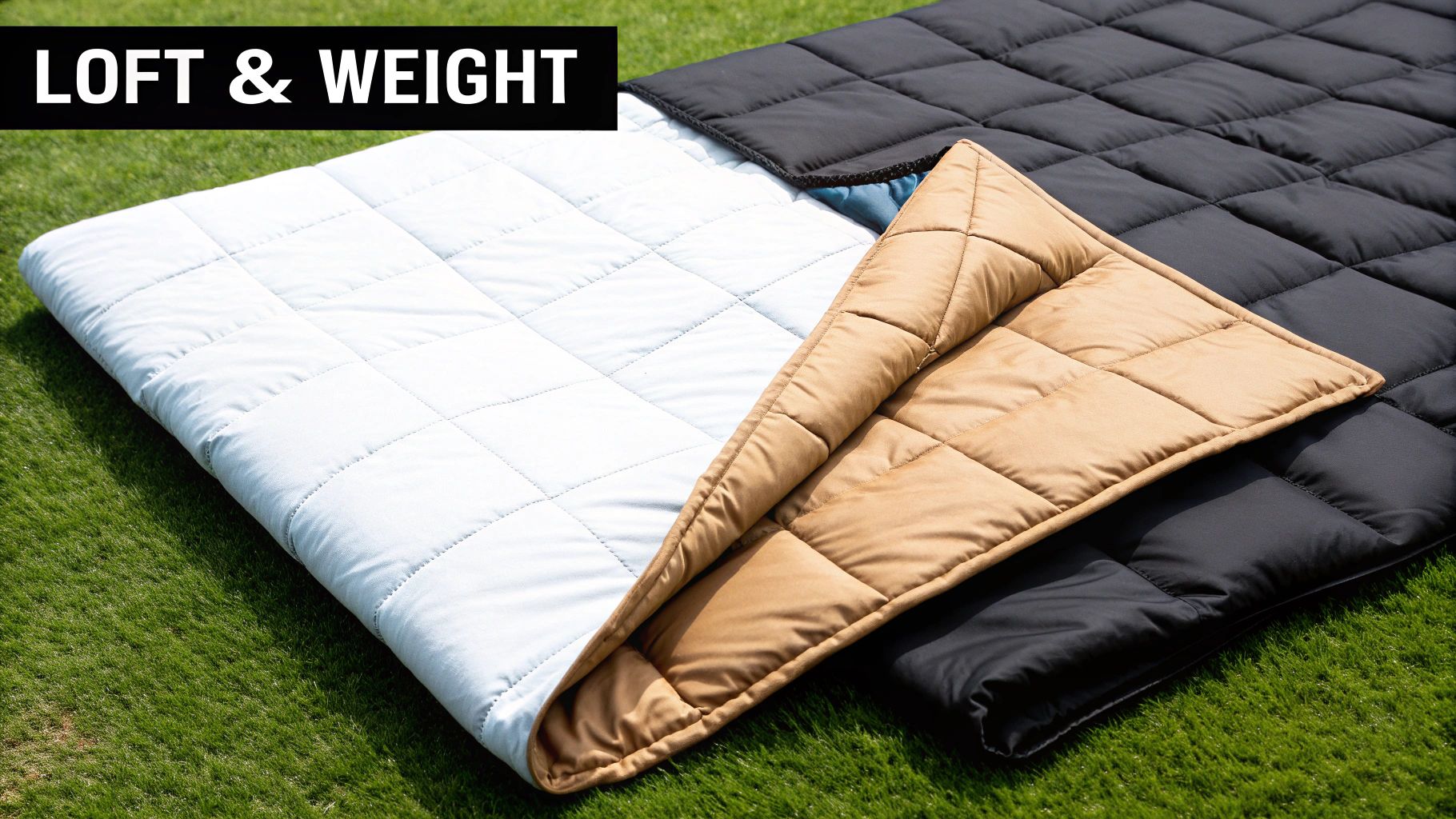
When you're standing in front of a wall of batting options, two words will pop up again and again: loft and weight. Getting a handle on what these mean is your secret weapon for controlling how your quilt will ultimately look, feel, and drape. They're the dynamic duo that defines everything from a quilt's puffiness to its cozy warmth.
Think of loft as the batting's fluff factor—its thickness. It's the most visible choice you'll make, directly impacting your quilt's texture and dimension. A low-loft batting is sleek and dense, while a high-loft batting is thick, airy, and cloud-like.
Weight, on the other hand, is all about the batting's density and how warm it will be. Cotton is a naturally heavier fiber than something like polyester, so even a thin cotton batting gives a quilt that comforting, substantial feel we all love.
The loft you pick will dramatically shape your quilt's final personality. There’s no "right" choice here; it's all about the story you want your quilt to tell.
Low-Loft Batting: This is your go-to for a flat, traditional look. Typically only 1/16 to 1/8 of an inch thick, it lets your intricate piecing and fancy stitchwork take center stage. If you adore that classic, crinkly, well-loved look that appears after the first wash, low-loft cotton batting is your best friend. It’s also perfect for things like wall hangings and table runners where you want to avoid extra bulk.
High-Loft Batting: Want a big, puffy, comforter-style quilt? High-loft is the answer. At 1/4 to 1/2 inch thick (or even more), it creates a plush, pillowy surface. Your quilting stitches will sink right in, creating beautiful shadows and touchable texture. This makes it a fantastic choice for tied quilts or any project where maximum coziness is the goal.
It's easy to see why so many quilters reach for natural fibers. Cotton batting is a clear favorite, making up about 40% of all batting used. With the global quilt batting market valued at around USD 1.8 billion, the demand for natural, breathable materials continues to drive its popularity. You can dive deeper into these trends by checking out some quilt batting market insights.
Choosing the right loft can feel like a big decision, but this table breaks it down to help you match the perfect batting to your project's needs.
| Loft Type | Typical Thickness | Best For | Quilting Distance | Final Look |
|---|---|---|---|---|
| Low Loft | 1/16" - 1/8" | Intricate piecing, machine quilting, wall hangings, table runners | Closer (up to 4") | Flat, defined stitches, vintage crinkle after washing |
| Medium Loft | ~1/4" | All-purpose quilts, both hand and machine quilting, throws | Moderate (4" - 8") | Soft definition, lightly puffy, good drape |
| High Loft | 1/2" or more | Tied quilts, comforters, projects needing dramatic texture | Farther apart (up to 10") | Deep, puffy, cloud-like, stitches create deep shadows |
Ultimately, the best choice comes down to your personal vision. Do you want your stitches to pop or your quilt to feel like a warm hug? Answering that question will point you to the right loft every time.
While loft gives a quilt its puff, weight gives it its soul. The weight of cotton batting is what contributes to that beautiful, heavy drape that settles so comfortably around your shoulders.
A quilt's weight is its warmth and its hug. A heavier cotton batting will provide more insulation, making it perfect for a winter quilt, while a lighter-weight option is better suited for warmer climates or decorative throws.
This relationship between loft and weight is where you get to be the artist. A low-loft but heavy-weight cotton can give you serious warmth without a lot of bulk. On the flip side, a high-loft batting might look incredibly puffy but offer less insulation if it's a lighter blend. By balancing both of these factors, you gain total control over your quilt's final character, ensuring it turns out exactly as you imagined.
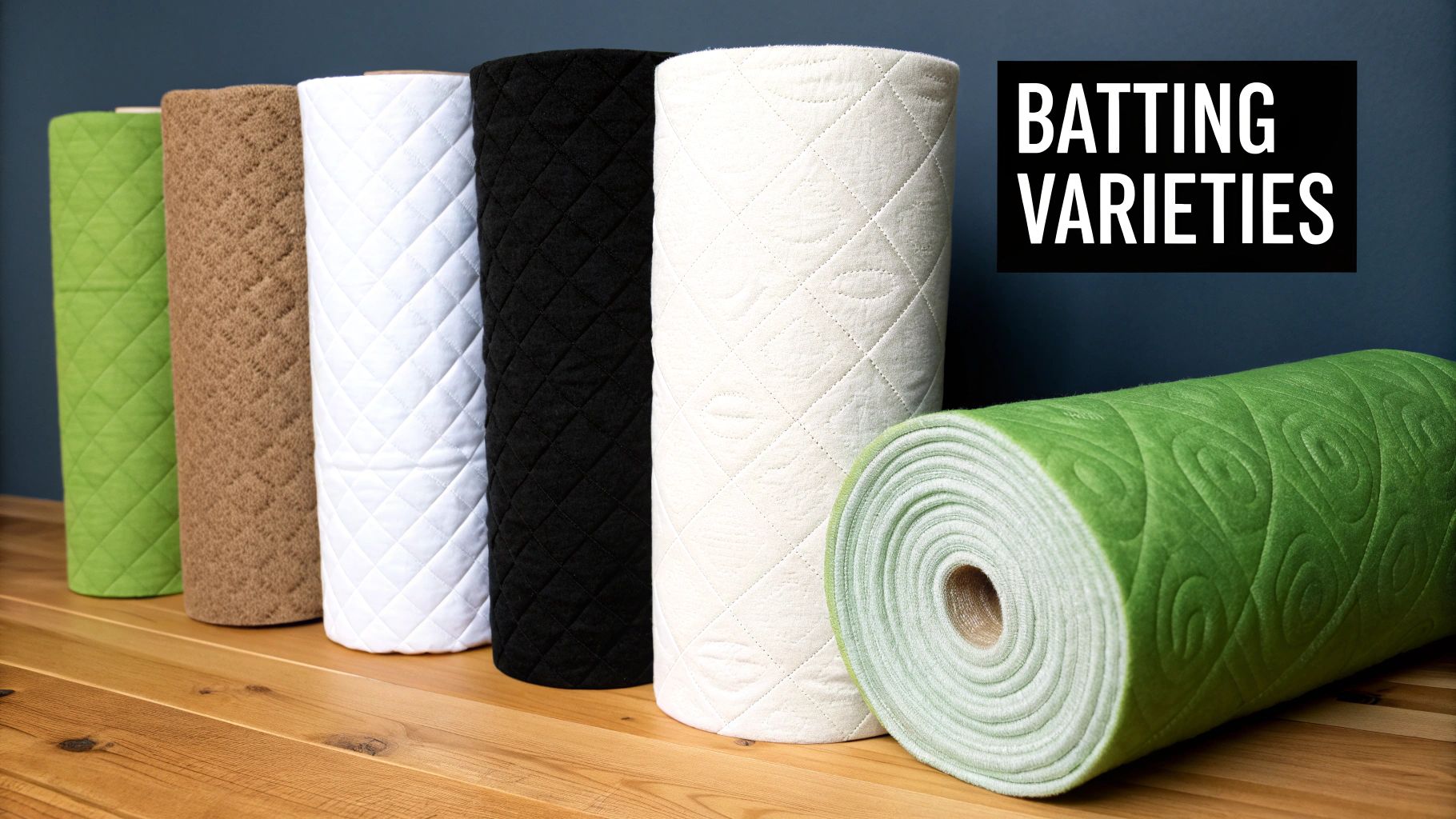
When you first get into quilting, you quickly learn that not all batting is created equal. Diving into the world of cotton quilting batting is a bit like a chef learning their ingredients—each type has a unique personality and is perfect for a certain kind of project. Figuring out these differences is the first step to getting the exact look and feel you're going for.
Your journey will almost certainly start with 100% cotton batting. This is the classic, the go-to for many quilters. It’s loved for its natural softness and the way it breathes. After that first wash, it gives your quilt that wonderful, slightly crinkled, vintage look that so many of us adore. It feels substantial, almost like a cozy flannel blanket, making it a fantastic choice for those heirloom-quality quilts.
If you’re making something for a little one or have sensitive skin in the family, you might want to look into organic cotton batting. This is simply cotton grown without any synthetic pesticides or fertilizers. You get all the same great qualities of traditional cotton, but with the added peace of mind that comes from a purer material.
Step beyond pure cotton, and you’ll find blends. The most common one you'll see on the shelves is the 80/20 cotton/polyester blend, and for good reason. It’s a true workhorse. You get the soft, natural feel from the 80% cotton, but the 20% polyester brings some serious benefits to the table.
This hybrid approach really gives you the best of both worlds:
While the quilting world is full of different fibers like wool, bamboo, and silk, cotton continues to be a top contender. Its premium, natural qualities are a big reason why. You can read more about these quilting material trends to see how things are shifting in the industry.
It’s not just what’s in the batting, but also how it's held together. The manufacturing process makes a huge difference in how the batting behaves under your needle and in the finished quilt. The two main methods you’ll come across are needle-punching and bonding.
Needle-punched batting is created by using thousands of tiny needles to mechanically tangle the cotton fibers together, often through a very thin internal fabric called a scrim. This process creates a dense, stable batting that’s less likely to shift or beard. A huge plus is that it allows for more space between your quilting lines—sometimes up to 8-10 inches apart!
Bonded batting, on the other hand, uses a resin or heat to lightly glue the fibers together. This results in a much loftier, lighter, and fluffier batting. The trade-off is that it generally requires your quilting stitches to be closer together to keep it from separating over time.
Knowing these little details helps you see past the packaging. Whether you need the tough, low-maintenance nature of a needle-punched blend for a kid’s bed quilt or the pure softness of organic cotton for a special gift, picking the right batting is what sets your project up for success from the very beginning.
Picking the perfect cotton quilting batting isn't about finding a single "best" option. It's more like a conversation with your project—matching the right materials to what you want to create. Instead of getting bogged down in all the choices, just ask yourself three simple questions.
Answering these will help you confidently sift through the options and find the one that will make your finished quilt look and feel exactly the way you've pictured it.
First up, what’s this quilt’s job? Is it going to hang on a wall like a piece of art, or is it destined to be a cozy, well-loved workhorse for the family couch? The answer really changes what you need from your batting.
For Wall Hangings and Table Runners: Here, you want a flat, crisp finish that lets your piecing and stitching be the star of the show. A low-loft, stable 100% cotton quilting batting is your best bet, especially a needle-punched one. It hangs beautifully without adding any extra bulk or distortion.
For Baby Quilts and Bedspreads: These projects are all about comfort and durability. An 80/20 cotton/poly blend is a fantastic choice for anything that will see a lot of use and frequent washing. The cotton keeps it soft and breathable, while that little bit of polyester adds the strength it needs to stand up to daily snuggles.
Next, picture the finished quilt. Are you dreaming of that crinkly, time-worn charm, or are you after a sleek, smooth, modern vibe? Your batting is the secret ingredient to getting either look just right.
If you love that classic, puckered texture that just whispers "vintage heirloom," go for a 100% cotton batting and—this is the important part—don't pre-wash it. That lovely crinkle comes from the cotton's natural shrinkage of about 3-5% after its first trip through the washer and dryer.
On the other hand, if you want a quilt that lies perfectly flat with a smooth, unwrinkled surface, you'll want to do things a bit differently. You can either choose an 80/20 cotton/poly blend, which shrinks very little, or you can pre-wash and dry your 100% cotton batting before you start quilting. This one simple step takes care of the shrinkage ahead of time, locking in that clean, modern finish.
Finally, think about how you’ll be stitching it all together. The way you quilt—whether by hand or machine—plays a huge role in which batting will cooperate with you.
Your quilting style and the batting's construction have to be a good team. A dense, stable batting is a dream for machine quilting but a total nightmare for hand quilters. A lofty, soft batting is a joy to hand stitch but might slip and slide too much under a machine.
For hand quilting, you need a batting that your needle can glide through easily. A low-loft cotton or a soft wool blend will be much kinder on your hands and wrists than a dense, needle-punched batting with scrim.
For machine quilting, especially if you're using a longarm, stability is your best friend. A needle-punched cotton batting or an 80/20 blend with scrim will hold its shape beautifully, preventing frustrating shifts and puckers. This stability also gives you more creative freedom, allowing you to place your quilting lines further apart—sometimes up to 8 inches!
By walking through these simple questions, you can cut through the noise and choose the perfect batting for your project, every single time.
A beautiful quilt doesn’t just happen. The real magic starts before you even think about making that first quilting stitch, and it all comes down to how you handle your cotton quilting batting. Getting this part right is the secret to a quilt that lies flat and looks absolutely stunning.
Right off the bat, you'll run into one of quilting's oldest debates: to pre-wash or not to pre-wash?
Honestly, there's no single right answer. It all depends on the look you’re going for. If you dream of that cozy, crinkled, lived-in look of a vintage quilt, then you should absolutely skip the pre-wash. That gentle pucker comes from the batting shrinking just a little bit—usually 3-5% for 100% cotton—the first time you wash the finished quilt. It’s that shrinkage that gives it all the charm.
On the other hand, if your goal is a crisp, modern quilt that stays perfectly smooth, pre-washing is the way to go. Washing the batting first gets all the shrinking out of the way, so your finished quilt will look exactly the same after a wash as it did the day you finished it.
If you do decide to wash, remember that batting is incredibly delicate before it’s quilted. You have to be gentle, or it can stretch, tear, or even fall apart.
Once your batting is prepped, it's time to build your "quilt sandwich"—the quilt top, the batting in the middle, and the backing fabric. The key here is to make sure these three layers stick together perfectly while you work. We call this process basting.
A well-basted quilt is a joy to work on. Taking the time to properly secure your layers prevents frustrating wrinkles and puckers, allowing you to focus on the creative act of quilting.
There are a few tried-and-true methods for basting, and most quilters have a favorite:
Nailing your basting technique is what sets your project up for success. It ensures your cotton quilting batting behaves itself, staying perfectly smooth from the first stitch to the last.
You've poured hours of love and creativity into your quilt, and now it's finished. That beautiful piece of art deserves to last a lifetime, maybe even for generations to come. The good news is that quilts made with quality cotton quilting batting are built to last and surprisingly easy to care for with a little know-how.
That very first wash can be a nerve-wracking moment, especially when you've used bold, saturated colors. To keep those colors from running, I always recommend tossing in one or two color catcher sheets. Think of them as little magnets for any loose dye in the water, protecting your crisp whites and pale fabrics from getting stained.
When it comes time for a wash, the golden rule is to be gentle. You put so much care into piecing it, so treat it with that same gentle touch in the laundry room. This preserves not just the fabric but the delicate cotton fibers of the batting inside.
If you're short on space or time and need to use a machine, choose the lowest heat setting possible. Pull the quilt out when it's still just a little damp and lay it flat to finish drying. This simple step helps prevent those deep, set-in wrinkles.
How you store your quilt is just as important as how you wash it. The goal is to protect it from its enemies: dust, sunlight, and humidity. Steer clear of plastic bags or bins, as they can trap moisture and create a breeding ground for mildew. Nobody wants that.
A much better approach is to fold it gently, placing acid-free tissue paper between the layers to soften the creases. Even better? Roll your quilt around a cardboard tube (make sure to wrap the tube in acid-free paper or muslin first).
Store your quilt in a cool, dark, and dry spot—think a closet shelf or under a bed. A breathable cotton or muslin bag is perfect for keeping it dust-free. And here’s a pro tip: take it out every few months and refold it a different way. This keeps any single crease from becoming a permanent part of the quilt.
Even after you've picked out the perfect batting, a few practical questions always seem to come up once you get down to work. Let's tackle some of the most common ones I hear from quilters all the time. Getting these sorted out will help you move forward with confidence.
First up: shrinkage. Does cotton batting shrink? You bet it does. You can expect 100% cotton batting to shrink by about 3-5% the first time it's washed. Many quilters actually love this—it’s what creates that soft, puckered, lived-in look we associate with vintage quilts. If you’re aiming for a perfectly flat, modern quilt, just pre-wash and dry your batting before you sandwich it.
Another thing that often trips people up is the "quilting distance" you see on the package. This is simply the manufacturer's rule for how far apart your quilting lines can be.
For example, if it says "quilt up to 8 inches apart," stick to it. This isn't just a suggestion; it’s what keeps the cotton fibers from shifting or bunching up inside your quilt over years of use and washing.
Finally, let's talk about a really popular project: microwaveable bowl cozies. You absolutely can use cotton batting, but there’s a huge safety rule here: it must be 100% cotton. In fact, everything that goes into that cozy has to be pure cotton.
Why? Because synthetic fibers like polyester can melt or even catch fire in the microwave. Always check your labels carefully to make sure your project is safe before you gift it or use it. Answering these little questions ahead of time makes for much smoother, happier quilting.
Ready to start your next masterpiece? Find the perfect foundation with high-quality fabrics and batting from High Country Quilts. Explore our wide selection and get expert advice at https://hcquilts.com.
At High Country Quilts we care deeply about community. With our experiences in retail, we know that a store is not only a place to shop but also a place for the community to gather and share. During this busy...

Hi! We’re Adam and Renee Wheaton, the new owners of High Country Quilts! For more than 40 years, we’ve owned and operated vacuum and sewing businesses. Following in Renee’s father’s footsteps after he retired from All Discount Vacuum and Sewing in Colorado...


Leave a comment