

We Love Our Quilting Community
At High Country Quilts we care deeply about community. With our experiences in retail, we know that a store is not only a place to shop but also a place for the community to gather and share. During this busy...


Your current machine still sews well, but you've probably hit the point where “good enough” is slowing you down. Bigger quilts feel cramped, free-motion consistency takes more effort than it should, and the designs in your head don't always translate cleanly onto the quilt top. That's usually when quilters start looking seriously at computerized quilting machines for home use.
The good news is that home options are much better than they used to be. A major shift in quilting technology was the move from manual control to stitch-regulated automation, which became a defining feature of premium domestic and longarm systems in the 2010s and 2020s. Modern systems can automatically control stitch length as you move the fabric, which matters most in free-motion work and repeatable edge-to-edge quilting, as noted by Gammill's quilting systems overview.
At High Country Quilts, we help quilters sort through this every day. The right machine isn't just about throat space or a flashy screen. It's about how you quilt at home, how much room you have, how much support you want after the sale, and whether you're buying for today's projects or the next stage of your quilting life.

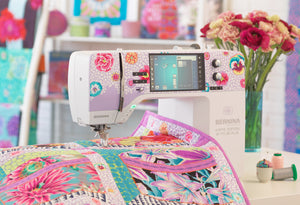
You sit down to quilt after dinner, pull a larger project under the needle, and want the machine to respond cleanly without turning your sewing room into a longarm studio. At our shop, High Country Quilts, the BERNINA B770 QE PRO is the model we keep recommending to serious home quilters who want premium control in a domestic format.
What makes it stand out is how well it handles real quilting tasks day after day. The BERNINA Stitch Regulator helps keep free-motion stitches consistent. The pinpoint laser helps with placement work. The large color touchscreen keeps key settings easy to reach, which matters when you switch between piecing, quilting, and decorative work in the same session.
The B770 QE PRO suits quilters who want one machine to do more than one job well. It has the space, stitch options, and control you need for piecing quilt tops, quilting them, and finishing details without constantly changing your whole setup. For many home studios, that flexibility is the point.
Some of the most useful features are the ones people underestimate at first. Automatic needle threading saves time and strain. KickStart helps during longer quilting sessions if foot control becomes tiring. Those are practical quality-of-life features, especially for quilters who sew often, not showroom extras.
Practical rule: If you want one premium machine for a home studio and you care about quilting precision, this machine makes more sense than rushing into a frame system before you are ready.
Dealer support is part of the value on a machine like this. We see the difference every week. A buyer who gets training, setup help, and service support usually gets much more from a BERNINA than someone ordering from a generic online listing and trying to sort it out alone. That is one reason authorized dealer guidance matters more in this category than it does on entry-level machines.
I also like this model for quilters who are still growing into advanced techniques. It gives you room to improve your free-motion control, try more decorative applications, and build a stronger workflow before making the jump to a dedicated frame machine. If you are comparing premium buying paths, a dealer-guided research process usually leads to a better fit than hopping between random roundups, much like choosing curated platforms for evaluating specialized options instead of guessing from scattered lists.
The trade-off is straightforward. This is a premium domestic machine, so the price reflects that. It also will not replace a frame-mounted longarm for quilters planning high-volume edge-to-edge quilting on large projects.

A common shop conversation starts like this: the quilter wants a frame machine at home, but does not want to buy a larger setup than their space, budget, or current quilting volume can justify. The BERNINA Q 16 PLUS on Studio Frame fits that in-between stage well. It gives you a true frame-quilting experience in a size that many dedicated sewing rooms can handle.
The 16.5-inch throat is the practical draw. You get more working room than a domestic sit-down machine, but the system still feels manageable for home use. That matters more than spec-sheet bragging rights. A machine can be impressive on paper and still be awkward in an actual quilting room.
A key advantage is the upgrade path. Quilters can start with free-motion quilting using BERNINA Stitch Regulator modes, then add Q-matic later if computerized quilting becomes part of the plan. At High Country Quilts, that matters because we regularly help customers choose machines they can grow with instead of replacing too soon.
I also like this model for buyers who want premium build quality and want training with the purchase. Frame setup, loading technique, tension adjustment, and software learning all go better with dealer support. That is one of the biggest differences between buying a premium system from an authorized BERNINA dealer and ordering a crate online. The machine is only part of the purchase.
The decision process is similar to choosing a more structured application process for creative collaborations. A clear path tends to produce a better fit than rushing into the biggest option.
If you are comparing ways to move into frame quilting without starting over later, the BERNINA Q Series details are worth reviewing.
The Handi Quilter Moxie XL is one of the more approachable ways to move from domestic quilting into frame quilting at home. It's especially appealing for hobbyists who want true stitch regulation and a path to computerized quilting, but still need to keep the overall system manageable.
Its 18-inch throat gives you more room than a compact midarm, and the front touchscreen keeps operation straightforward. The optional Pro-Stitcher Lite setup is where this model becomes especially interesting for home users. It creates a practical on-ramp to computer-guided quilting without forcing you immediately into the most advanced automation package.
This machine usually fits quilters who've already proven they quilt enough to want a frame. That distinction matters. One home-buying guide advises that if you're only quilting 10 or 20 quilts a year, a midarm or domestic sit-down option may be enough. I think that's a useful reality check before anyone jumps to a longarm.
If you are quilting more regularly, the Moxie XL starts to look practical. You get a hobby-friendly machine with a broad dealer network and a recognizable upgrade path. You also avoid some of the intimidation factor that can come with larger, more expensive longarm platforms.
For shoppers looking at entry points into longarm automation, it's smart to compare machine feel, frame size, and software comfort instead of shopping by throat size alone. A good guided buying comparison resource can help you narrow that list before you commit to a frame.
The Handi Quilter machine comparison page puts the Amara 20 in the category I'd call “serious home studio.” This is the kind of machine people buy when they know quilting isn't a passing phase and they want a setup with room for both speed and more advanced design work.
A 20-inch throat changes how quilts flow through the frame. You get more usable quilting area, fewer interruptions, and a better experience on larger projects than you'll get from smaller longarm classes. Add Pro-Stitcher Premium, and the system becomes much more capable for edge-to-edge, borders, and custom placement.
There's a difference between wanting a longarm and wanting a longarm that won't feel limiting in a year. The Amara 20 sits in that second group. It's popular because it has a solid support ecosystem, familiar accessories, and a big enough working area to satisfy quilters who are doing frequent home quilting or quilting for others.
If you already know you like frame quilting, buying too small often costs more in the long run than buying once into a machine you can stay happy with.
The downside is space and commitment. A frame in this class asks for a dedicated studio mindset. It also asks you to be honest about whether you'll use the automation features enough to justify the added cost and learning curve.
If you're comparing larger longarm platforms and trying to decide how much automation depth you really need, a buyer research guide for premium machine shoppers can help frame the decision before you invest in the full setup.

The Baby Lock Gallant XL lands in a useful spot for home quilters who want an 18-inch longarm feel with a more accessible path into computerized quilting. It comes stitch-regulated and pairs with Pro-Stitcher Lite, which keeps the upgrade story fairly simple.
This machine tends to appeal to quilters who want a cleaner jump into longarm work than a domestic machine can offer, but who still want a system that feels manageable. The front touchscreen helps, and the Villa 2 frame option gives a modular approach that many home studios need.
One of the under-discussed issues with computerized quilting machines for home is whether automation fits the way a typical quilter works. Coverage often focuses on what the technology can do, not whether it fits your room, your project volume, or your patience for setup. Quilting Daily's discussion of hand-guided versus computer-guided longarms is useful here because it speaks to those everyday trade-offs.
That's where the Gallant XL earns its place. It doesn't pretend to be the biggest or most advanced system on the market. It offers a realistic route into guided longarm quilting for quilters who want structure and support without jumping all the way to a heavier premium platform.
If you're exploring longarm learning before stepping into automation, a focused quilting education resource can help you think through workflow, software tolerance, and whether computer guidance fits the projects you make.

The Grace Q'nique 16X Elite is one of the better value-oriented entries in this category. It's a compact 16-inch machine, but that smaller footprint is exactly why many home quilters can readily incorporate it into their spaces.
Pair it with Grace frames and Quilter's Creative Touch automation, and you get a modular system that can grow over time. For quilters with limited room, that flexibility matters more than headline specs.
A lot of shoppers focus too heavily on the machine head and forget the full system. Frame style, software comfort, room dimensions, and setup tolerance matter just as much. The Q'nique 16X Elite works because it gives you several ways into frame quilting instead of one all-or-nothing package.
The trade-off is workflow. A 16-inch throat means more advancing on larger quilts compared with 18-inch or 20-inch machines. QCT also asks for software patience. Some quilters enjoy that control. Others want a more appliance-like experience.
Smaller home systems often get used more consistently because they fit the room, fit the budget, and don't overwhelm the owner.
There's also a broader market reason these systems are worth paying attention to. One market estimate put computerized quilting machines at $1.0366 billion in 2021, rising to $1.26 billion by the end of 2025, with another projection showing 6.8% CAGR from 2025 to 2034 to reach $2.05 billion. That growth helps explain why more brands now offer modular computerized options for home users instead of limiting automation to top-tier commercial setups.
The JUKI Miyabi J-350QVP has a feature that makes it stand out immediately. You can start with it as a sit-down machine and later convert to a framed system with QCT automation. That's a rare path, and for the right buyer, it's a smart one.
If you're not ready to dedicate your whole room to a frame yet, this kind of convertibility gives you breathing room. You can build skill and confidence first, then expand later as budget, space, and quilting habits become clearer.
I like this machine for quilters who know they're serious, but don't want to make every expensive decision at once. The sit-down use case is practical. The later frame conversion keeps the platform from becoming a dead end. Automatic thread trimming also adds convenience you don't always see on competing quilting systems.
This is also a good reminder that computerized quilting isn't always a one-step purchase. Some quilters are better served by a machine they can grow into rather than a full automated frame they aren't ready to use well from the start.
There's a broader benchmark for that kind of thinking. Mid-range computerized quilting machines can already offer meaningful automation and stitch variety. One example highlighted by Suzy Quilts features 170 built-in stitches and an advanced start-stop function at about $1,500. That doesn't make the Miyabi a budget machine. It does reinforce the idea that buyers should compare workflow features and growth path, not just assume bigger always means smarter.
A comparison table helps once the individual reviews start to blur together. In the shop, this is usually the point where a quilter says, "I know what I like, but I need to see what I'm giving up if I choose one path over another." That is the right question.
From our perspective at High Country Quilts as an authorized BERNINA dealer, the biggest differences are rarely on the spec sheet alone. Training time, floor space, service access, software learning curve, and whether the machine fits the way you quilt matter just as much as throat size or top speed.
| Model | Setup and learning curve | Space and budget reality | What it does well in practice | Best fit | Main reason buyers choose it |
|---|---|---|---|---|---|
| Bernina B770 QE PRO, High Country Quilts | Easier to get running than a frame system, but owners still need time to learn BSR modes, stitch settings, and the touchscreen workflow | Fits a sewing room or dedicated sewing cabinet. Premium domestic pricing, with dealer training and support part of the value | Handles piecing and quilting on one machine. Delivers controlled stitch length in free-motion work and gives home quilters many of the convenience features they ask for most | Quilters who want one premium machine for piecing, quilting, and daily sewing | It gives advanced quilting features without committing to a frame, and dealer support shortens the learning curve |
| BERNINA Q 16 PLUS on Studio Frame | More setup than a domestic machine. Frame alignment, loading, and stitch regulation take practice, especially for first-time longarm owners | Needs dedicated floor space and a larger budget. Works best in a room where the frame can stay assembled | Gives the open workspace longarm users want, with smoother quilt handling than wrestling a large quilt through a domestic throat | Quilters ready for a true longarm experience at home, with the option to add automation later | It is a compact longarm platform with a clear upgrade path and strong dealer-led education |
| Handi Quilter Moxie XL with optional Pro-Stitcher Lite | Fairly approachable for a first frame system, though computer-guided quilting adds another layer to learn | Lower entry cost than many premium longarms, but still requires frame space and room to move around it | Good for edge-to-edge quilting, learning frame workflow, and getting into computerized quilting without starting at the highest price tier | Hobby quilters who want a frame machine and can accept a simpler feature set | It is one of the more accessible ways to start frame quilting with optional automation |
| Handi Quilter Amara 20 with Pro-Stitcher Premium | Steeper learning curve. Larger machine, larger frame, and more software capability mean more to set up and maintain well | Higher investment and a real space commitment. Best in a home studio, not a shared sewing corner | Extra throat space helps on larger blocks and denser pantographs. The software supports edge-to-edge, block, and border work with fewer workarounds | Quilters with steady project volume who want more room and more computerized control | Buyers choose it for throat space, higher-end automation tools, and a platform that supports frequent use |
| Baby Lock Gallant XL with optional Pro-Stitcher Lite | Reasonable learning curve for quilters stepping into longarming for the first time | Mid-range longarm cost, plus frame footprint and accessory costs to plan for | Gives an 18 inch class machine feel without pushing into top-tier pricing. A practical choice for quilts that outgrow a domestic machine | Cost-conscious home studios that still want a true longarm setup | It offers a sensible balance of reach, price, and a straightforward path into computer-guided quilting |
| Grace Q'nique 16X Elite with QCT automation | Software takes some patience, especially for quilters who are less comfortable with tablets and setup menus | Often easier on the budget, with flexible frame choices that can work in smaller rooms | Useful for buyers who want automation features and can work within a smaller throat. Good value if space is tight | Quilters who want to keep costs lower and build a system in stages | It keeps computerized quilting within reach for smaller rooms and smaller budgets |
| JUKI Miyabi J-350QVP with QCT | Highest complexity of the group in day-to-day decision-making because the platform can evolve from sit-down use to a framed system | Lower starting cost if purchased for sit-down quilting first, but total investment rises once frame and automation are added | Offers flexibility. Owners can quilt now in a sit-down setup and expand later if their space, budget, or quilting volume changes | Quilters who want a gradual path instead of buying a full frame system all at once | The convertible design appeals to buyers who want growth options more than a fixed setup from day one |
A quick read of the table points to one practical truth. The right machine is usually the one that matches your room, your quilting volume, and how much setup you are willing to manage before you ever stitch the first border.
That is also where dealer guidance makes a measurable difference on premium machines. For many BERNINA buyers, especially those comparing the B770 QE PRO and Q 16 PLUS, seeing the machine in person and getting training after delivery leads to a better fit than shopping by specifications alone.
A lot of quilters reach this point after one too many projects where the machine, the room, or the setup gets in the way. They are ready to quilt more, but they do not want to spend premium-machine money on the wrong format.
The decision usually comes down to fit. Fit for your space. Fit for the size and number of quilts you make. Fit for how much setup, maintenance, and software learning you want in regular use.
From the dealer side, I can tell you that the happiest buyers are rarely the ones who chose the machine with the longest feature list. They are the ones who matched the machine to their sewing habits and had solid training from the start. That matters even more with premium systems, where good setup and a few guided sessions can shorten the learning curve and help you use the machine with confidence.
For some home quilters, that points to a premium domestic machine such as the BERNINA B 770 QE PRO. For others, a dedicated longarm is the better investment. Both can be the right answer.
At High Country Quilts, we help customers sort that out in person, with honest conversations about budget, floor space, service, and what support looks like after delivery. As an authorized BERNINA dealer, we also see the difference dealer education makes on machines like those featured at BERNINA. Buyers are not just choosing hardware. They are choosing training, service, and a shop they can call when questions come up.
If you are ready to compare BERNINA quilting machines, talk through longarm options, or get expert help choosing the best computerized quilting machine for your home, visit High Country Quilts. As an authorized BERNINA dealer in Colorado Springs, High Country Quilts offers trusted guidance, training, service, and a welcoming quilting community that helps you buy with confidence.
At High Country Quilts we care deeply about community. With our experiences in retail, we know that a store is not only a place to shop but also a place for the community to gather and share. During this busy...

Hi! We’re Adam and Renee Wheaton, the new owners of High Country Quilts! For more than 40 years, we’ve owned and operated vacuum and sewing businesses. Following in Renee’s father’s footsteps after he retired from All Discount Vacuum and Sewing in Colorado...


Leave a comment