
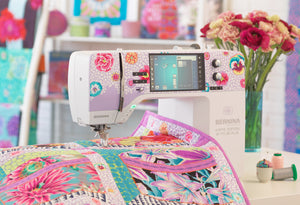

We Love Our Quilting Community
At High Country Quilts we care deeply about community. With our experiences in retail, we know that a store is not only a place to shop but also a place for the community to gather and share. During this busy...


Cold air has a way of clarifying a sewing decision. You step outside in Colorado Springs, feel that sharp winter edge on your ears, and suddenly a handmade faux fur aviator hat sounds less like a whimsical side project and more like the exact thing your sewing table has been waiting for.
That’s also how many people drift into Colorado Springs quilting community events. They start with one practical project. A warm hat. A baby quilt. A tote bag that needs sturdier seams. Then they realize the local sewing scene isn’t abstract or intimidating. It’s people trading pattern advice, comparing presser feet, and helping each other avoid the mistakes that waste a Saturday.
A faux fur aviator hat is a satisfying winter make because it asks just enough of you. It teaches bulk management, nap direction, neat topstitching, and clean lining insertion. At the same time, it gives you a result you’ll wear.

Winter sewing works especially well in a city where handmade skills already circulate through guilds, classes, and charity work. In November 2025, local quilters, including members from the Colorado Springs Quilt Guild, handmade and donated over 300 quilts to children with disabilities through a collaboration with Quilts for Kids and Special Kids Special Families, as reported by KRDO’s coverage of the quilt donation effort. That kind of follow-through matters. It tells you this is a community that proves its commitment.
A faux fur aviator hat also fits the rhythm of local crafting life. It’s small enough to finish without needing a dedicated quilting frame or a full weekend retreat. But it still gives you enough technique to discuss at a class table or bring to a sew day without feeling like a beginner exercise.
The trade-off is that faux fur isn’t forgiving if you rush the prep. Cotton lets you pin casually and trim later. Faux fur punishes that habit. If the pile runs the wrong way, if the seam allowance stays too furry, or if you cut from the front, the project can look homemade in the bad sense of the word.
A good winter project should warm you twice. First at the machine, then when you wear it outside.
That’s why Colorado Springs quilting community events matter even for garment-adjacent projects like this one. You don’t have to be making a bed quilt to benefit from local sewing energy. You benefit when other makers normalize test swatches, pattern adjustments, and tool-specific advice.
If you’re the kind of sewist who likes to explore adjacent creative spaces online while planning a project, this roundup of UGC creator platforms shows how other craft and maker communities organize collaboration and visibility. The lesson carries over to sewing. People learn faster when they can see process, not just finished photos.
A student walks into High Country Quilts with a cute hat idea and the wrong fabric, and I can usually spot the problem before the bolt hits the cutting table. Faux fur asks for different judgment than quilting cotton. Color still matters, but hand, backing, pile direction, and bulk decide whether the project feels satisfying or fussy from the first seam.

For a first aviator hat, short-pile faux fur gives you the cleanest learning curve. You can see your seam lines more clearly, trim bulk without fighting a deep nap, and shape curved pieces with less guesswork. Long-pile fur creates a dramatic winter look, especially for a hat you plan to wear to a Colorado Springs maker event or holiday market, but it slows down every step after cutting.
Backing matters just as much. A supple knit or woven backing folds and turns more easily than a stiff one. Dense fur gives better warmth and presence, yet that density also adds bulk at the crown and earflap joins. On a home machine, that trade-off is real. The fabric that looks richest on the bolt can become the fabric you dread feeding under the presser foot.
Aviator hats spend hours against your forehead, ears, and hairline. If the lining feels sticky, scratchy, or too stiff, the whole project will feel homemade in the wrong way no matter how good the outside looks.
Use this comparison when you shop:
| Fabric Type | Best For | Pros | Cons |
|---|---|---|---|
| Short-pile faux fur | First faux fur hats | Easier cutting, lower seam bulk, cleaner shaping | Less dramatic texture |
| Long-pile faux fur | Statement looks | Plush finish, strong visual texture | Harder seam control, more shedding |
| Fleece lining | Maximum warmth | Soft, stable, comfortable against skin | Can add bulk inside a close-fitting hat |
| Flannel lining | Everyday winter wear | Breathable, cozy, easy to sew | Less slick when turning |
| Quilting cotton lining | Lightweight structure and print variety | Crisp finish, many design options | Less warmth, can feel cooler on skin |
Fleece works well for deep winter wear, especially if the hat is meant for cold mornings rather than indoor events. Flannel is easier to manage for many beginners because it stays put during assembly. Quilting cotton can work, but it needs the right partner. Pair it with a medium-weight fur, not the thickest plush in the store, or the inside and outside will fight each other.
If you like comparing materials before you commit to a project plan, this review of platforms that organize product gifting and selection workflows shows a similar principle from another field. Good results come from matching the tool or material to the actual use, not just the look.
You do not need a specialty kit, but a few smart choices save time and keep frustration low.
Materials rule: If the fabric resists folding in your hands, expect resistance at the machine too.
The best beginner combination is usually medium-density faux fur, a stable lining, polyester thread, and clips. That setup gives you warmth without impossible seam bulk and enough structure to keep the hat from collapsing at the sides.
A common failure point is mixing the heaviest faux fur available with a stiff lining and bargain thread. The pieces still sew, but turning gets harder, the crown looks lumpy, and topstitching loses accuracy. At High Country Quilts, it helps to handle those materials side by side before you buy. Students make better choices when they can compare drape, thickness, and needle recommendations in person, especially if they plan to sew the hat on a BERNINA and want the machine setup to match the fabric.
The cutting stage decides whether the finished hat looks polished or slightly off in a way you can’t quite fix later. Faux fur is one of those materials that rewards patience before it rewards stitching.

A simple aviator hat pattern usually includes a crown, side band, earflaps, and lining duplicates. If you draft your own, measure around the fullest part of the head and build in enough ease for the lining and seam bulk. If you adapt a commercial pattern, compare the finished measurement to the wearer’s real head size instead of trusting the envelope category.
What works for a first attempt is a pattern with fewer crown segments and generously shaped earflaps. What doesn’t work is an overcomplicated vintage-style draft with many tiny pieces, narrow seam allowances, and no clear nap markings.
Faux fur has a direction. Stroke it one way and it lies flat. Stroke it the other and it pushes back. That direction is the nap, and every visible outer pattern piece should respect it.
For most aviator hats, you want the pile running downward when the hat is worn. That means the fur on the crown and earflaps should all flow toward the floor, not toward the top of the head and not sideways.
Cut faux fur from the wrong side and mark the nap before you place a single pattern piece. If you skip that step, the hat can look mismatched even when every seam is accurate.
Lay the fabric wrong side up. Use pattern weights if the backing is stable enough, or pin inside the seam allowance if you must. Trace carefully, then cut only the backing layer with a craft knife or the tip of small scissors.
Do not slice through the pile from the front the way you would cut fleece.
That habit leaves blunt, chopped edges that shed more and refuse to blend into the seam after sewing.
For a visual walkthrough mindset, this embedded demo format is useful when you want to compare hand positioning and cutting control:
Before anything goes to the machine, transfer notches, center points, and earflap placements onto the backing side. Chalk, removable marker, or thread tracing all work better than trying to create deep notches in bulky fabric.
Use a small prep checklist:
Beginners often resist making a test version because it feels slow. With faux fur, a quick muslin or even a paper test of the crown shape saves more time than it costs. Fit errors in a hat are hard to disguise. A crown that is too shallow lifts upward, and one that is too wide makes the side panels buckle.
Once faux fur reaches the machine, control matters more than speed. Sew too fast and the layers drift. Sew with a short stitch and the seam turns stiff. Use the wrong foot and the top layer creeps while the lower layer bunches.
A longer stitch length, often around 3.5 to 4.0 mm, usually handles faux fur better than a standard garment stitch. The longer stitch bridges the thickness more cleanly and avoids perforating the backing too densely.
Use a walking foot if your machine setup benefits from one. If you’re sewing on a BERNINA model with Dual Feed, engage it when the layers want to shift in opposite directions. That built-in control is especially useful on curved earflap seams and the crown where bulk changes from one inch to the next.
Needle choice matters just as much. A Jeans or Microtex needle is often a stronger starting point than a universal needle because it penetrates dense backing more reliably. Pair it with polyester thread and test on scraps before you commit.
This is the part many sewists skip, and it’s the part that often separates a plush result from a lumpy one. Use small scissors to trim the pile out of the seam allowance only. Leave the backing intact. You’re not thinning the whole fabric. You’re clearing the path where the seam must sit.
When the pile stays inside the seam allowance, the machine has to compress too much bulk. The seam can wobble, stitch formation can become uneven, and the turned edge may refuse to lie smoothly.
Bench habit: Trim the fur from the seam allowance, sew slowly, then pull trapped hairs out of the seam with a pin or awl after stitching.
Rather than pinning the whole hat at once, work in controlled units.
Local sewing education proves to be more than a nice extra. Sewists are actively looking for machine-specific instruction, and hands-on events like the Handi Quilter workshops on May 14 to 15, 2026 and embroidery classes on June 12 to 13, 2026 point to that demand for advanced machine skills, as noted in this roundup of Colorado quilting and machine-focused events. That matters if you’re trying to understand feed behavior, foot choices, or how to manage bulky seams without fighting your machine blindly.
If you want structured machine education alongside project skills, this catalog of creator course options is a useful reminder that people learn best when the instruction is specific to the tool in front of them. Sewing is no different. General advice gets you started. Model-specific guidance gets you unstuck.
Most faux fur seam problems come from one of four things:
If you keep the seam allowances clean, the stitch length slightly longer, and your pace steady, the hat starts to feel manageable rather than fussy.
Assembly is where the project finally stops looking like a pile of strange curved scraps. It starts to read as a real winter hat. Keep your pieces organized and resist the urge to attach everything in one burst.

Construct the faux fur outer shell first. Match center fronts, center backs, and side seams carefully, then check symmetry before moving on. A hat can technically go together with slight mismatch, but the earflaps will expose that error immediately once worn.
Build the lining the same way, but leave a turning opening in one seam if you plan to bag the lining. That opening should be wide enough to pull the full hat through without stressing the stitches.
Earflaps are where function and style meet. If they sit too far forward, the hat can crowd the face. Too far back, and the profile looks awkward while the hat loses warmth where it should cover most.
A practical sequence helps:
Don’t trust the table alone. Faux fur shifts visually once it’s on a head, and earflaps that looked balanced flat can hang differently when worn.
With right sides together, place the lining inside the outer shell so the hat edges align. Sew around the perimeter that joins the shell and lining, usually around the lower edge and front sections depending on the pattern.
Clip or notch curves where needed, but keep your cuts controlled. Then turn the hat through the opening left in the lining. Push out the curves gently with a blunt point turner or your fingers. After that, stitch the lining opening closed by machine or hand.
This method works because it hides the raw edges and gives the interior a cleaner finish. What doesn’t work is trying to attach the lining piece by piece after most of the hat is already closed. That route often traps bulk and produces awkward visible seams.
You can leave the earflaps loose, add fabric ties, or install snaps or buckles depending on the look you want. Soft ties are easier for a first project. Snaps feel practical. Buckles give the strongest aviator look but add more precision work.
If you’re choosing closures and trim details for wearable sewing projects, this look at a gifted collaboration application process shows another version of matching components to purpose. In sewing terms, that means choosing hardware based on wear, stress, and user comfort rather than appearance alone.
For the final polish:
A finished aviator hat should feel secure around the head, smooth inside, and full but not bulky at the seams.
You finish the aviator hat, pull it on for a cold Colorado Springs morning, and immediately learn whether your choices worked. A slightly deeper brim feels warmer at the bus stop. A softer tie is easier under a scarf. Faux fur that seemed dramatic on the cutting table suddenly makes sense in January.
That is why I tell new sewists to wear the project right away. A hat like this teaches you more in one windy afternoon than it does on a dress form.
Treat faux fur like outerwear. Spot clean first, shake out grit, and let the hat dry naturally if snow or sleet catches it. Crushed pile usually comes back with gentle finger fluffing or a soft brush. High heat usually makes the problem worse, especially on synthetic fur where the fibers can distort or fuse.
Storage matters too. Give the hat enough space that the earflaps and crown are not packed under heavier coats or bags. If you made yours on a BERNINA, this is often the stage where the machine advantage shows up. Even stitching and controlled bulk age better, especially around curved seams and closure points.
An aviator hat fits Colorado Springs better than many first-time makers expect. It works with a quilted jacket, a wool coat, or everyday winter layers for school drop-off, Saturday errands, or a walk through Old Colorado City. If the fur has strong texture or color, keep the rest of the outfit quiet. If the lining is the part you love most, let a narrow edge show or fold the flap back on a milder day.
The useful part is not only style. It is confidence. Once you have sewn something with pile, bulk, and curved construction, you stop showing up to local sewing events as someone only collecting ideas. You arrive with better questions, and that changes how much you learn.
Colorado Springs quilting community events have real working sessions, not only display tables. The Colorado Springs Quilt Guild hosts monthly Community Projects/Charity Quilt sew-ins on the first Saturday of each month from 10 a.m. to 3 p.m. at Central United Methodist Church, and its current community efforts support Colorado Springs Quilts for Kids, TESSA of Colorado Springs, Quilts of Valor Foundation, and Comfort Quilts, according to the guild’s community quilts information.
For a newer sewist, that format helps. You can watch how experienced makers organize a station, control fabric drift, or simplify repetitive steps without turning the day into a formal class. The same guild page also notes the Colorado Japanese Women’s Quilt Project, which records the stories of 84 Japanese-American families from Colorado, Nebraska, and Wyoming across nine rectangular quilts, each 2 feet by 3 feet. That kind of project reminds people that local sewing is practical and historical at the same time.
If you prefer a clearer task list and a steady work pace, Piecing Partners Quilt Guild offers bi-weekly Community Outreach sew workdays on the 2nd and 4th Tuesdays from 9 a.m. to 3 p.m. at Firestation 20 for Children’s Hospital sewing. The value for beginners is simple. The workflow is already defined, so you can focus on accuracy, consistency, and finishing instead of deciding what to make next.
Shared workdays are also where technique sticks. You see how one person reduces seam bulk, how another handles slippery layers, or why a certain needle choice solves skipped stitches. Those are the same small decisions that make a faux fur aviator hat wearable instead of frustrating.
Groups that keep people involved usually do a few things well. They make the invitation clear, give members a useful role, and follow through. That same pattern shows up in this explanation of an outreach process that depends on clear roles and follow-up, even though it comes from a different field.
Your hat can be the start of that local rhythm. Wear it to class. Bring it to a sew day if you want feedback on closures, topstitching, or fit. If you are ready for the next project, High Country Quilts is a practical place to compare faux fur-friendly notions, ask BERNINA setup questions, and choose a class that builds on what this hat taught you.
At High Country Quilts we care deeply about community. With our experiences in retail, we know that a store is not only a place to shop but also a place for the community to gather and share. During this busy...

Hi! We’re Adam and Renee Wheaton, the new owners of High Country Quilts! For more than 40 years, we’ve owned and operated vacuum and sewing businesses. Following in Renee’s father’s footsteps after he retired from All Discount Vacuum and Sewing in Colorado...


Leave a comment