

We Love Our Quilting Community
At High Country Quilts we care deeply about community. With our experiences in retail, we know that a store is not only a place to shop but also a place for the community to gather and share. During this busy...


You pull out your holiday fabric bin meaning to make one quick table runner, and suddenly you're holding six reds, three greens, a snowy print, a plaid, and a panel you forgot you bought last year. That’s usually the moment when christmas quilting fabric feels less magical and more like a puzzle.
I’ve been there. Most quilters have. Holiday fabric is cheerful, but it can also be loud, busy, and oddly hard to coordinate once it’s off the bolt and on your cutting table.
A good christmas quilt doesn’t start with buying everything that looks festive. It starts with knowing what each fabric is supposed to do. Some prints carry the theme. Some calm the eye. Some make piecing easier. Some are better for a tree skirt than a wall hanging. And some bundles save your whole project when time gets short in November.
There’s something special about sewing for the holidays. You aren’t just making a quilt. You’re making the table runner that comes out every December, the throw that lives on the couch during movie nights, or the tree skirt that gets folded and saved with the ornaments year after year.

That sense of tradition is part of why quilting holds so much meaning. Quilting traces its origins to ancient Egypt around 3400 BCE, later became a marker of wealth in colonial America, expanded dramatically when the Industrial Revolution in the 1840s made cotton prints widely affordable, and saw a major revival in the 1970s that helped establish today’s themed fabric collections. Seasonal prints can account for 20 to 30% of a quilt shop’s annual sales, according to the history of quilting overview on Wikipedia.
Christmas projects often carry more emotion than everyday sewing. A baby quilt is precious. A wedding quilt is memorable. But holiday quilts get woven into family rhythm. They show up in photos. Kids remember them. Guests notice them.
That’s also why fabric choice matters so much. If a quilt is going to come back into your home every winter, you want colors you’ll still love and fabric that can hold up over time.
Practical rule: Treat holiday fabric like decorating a room, not filling a cart. You need a focal point, supporting pieces, and a little breathing room.
Most confusion comes from three places:
A calmer approach works better. Start with the project. Then choose the material. Then choose the print scale. Then edit.
If you do that, christmas quilting fabric becomes much easier to manage. You don’t need more fabric. You need a clearer job description for each piece.
Walking into a holiday fabric section can feel like stepping into a candy store. Everything sparkles. Everything seems useful. But not every fabric behaves the same way under a needle, and not every festive print belongs in every quilt.
For most projects, quilting cotton is the workhorse. High-quality quilting cotton typically has a tight, even weave of 60 to 70 threads per inch, which helps minimize puckering and stand up to repeated washing. That weave density also reduces yarn slippage by 20 to 30% during high-speed sewing compared with broadcloth, and it’s smart to prewash for the 3 to 5% shrinkage common in reactive dyes used for festive prints, as noted in this quilting cotton guide from Hancocks of Paducah.
That’s the fabric I recommend for pieced tops, patchwork blocks, bindings, and most holiday decor. It presses crisply, cuts cleanly, and behaves predictably.
Flannel gives a softer, warmer finish. It’s lovely for throws, pillow backs, and cozy seasonal quilts that will be used on cold evenings. But it can shift more than quilting cotton, so accurate cutting and a little extra patience matter.
Linen blends can be beautiful for a quieter holiday look. They often suit modern projects, table toppers, and wall hangings where texture is part of the design. They don’t always give the same crisp point definition as quilting cotton, so I usually save them for simpler piecing or accent use.
Holiday collections usually fall into a few practical groups:
Traditional prints carry the clearest Christmas message. Blenders do the balancing work. Panels save time. Winter prints often stretch a project beyond December and into the rest of winter.
| Christmas Fabric Material Comparison | Best For | Sewing Considerations |
|---|---|---|
| Quilting cotton | Patchwork quilts, table runners, tree skirts, stockings, bindings | Presses well, cuts accurately, ideal for precise piecing |
| Flannel | Cozy throws, quilt backs, pillow backs, winter lap quilts | Can shift more, may need careful handling and accurate seam consistency |
| Linen blends | Modern decor, placemats, wall hangings, simple patchwork | Adds texture, but may fray more and feel less crisp in detailed blocks |
| Metallic-accent holiday cotton | Accent blocks, borders, special feature areas | Can feel stiffer, so use thoughtfully rather than everywhere |
| Panels | Fast gifts, wall hangings, children’s quilts, center medallions | Great shortcut, but coordinate supporting fabrics carefully |
If you’re choosing christmas quilting fabric in person, pause before you buy and ask a few practical questions.
The best holiday fabric isn’t the one that shouts the loudest. It’s the one that still looks good after cutting, pressing, and quilting.
One more point matters here. A fabric may be labeled “Christmas,” but that doesn’t automatically make it useful. Some prints are wonderful for backing, borders, or fussy cutting, yet overwhelming in a small block. Others look plain on the bolt and become essential once the quilt starts coming together.
That’s why experienced quilters often buy with roles in mind: one focal print, one supporting print, one geometric, one small blender, one solid or near-solid. Once you start thinking that way, the holiday aisle gets much less overwhelming.
You pull out your holiday pattern in late November, glance at the calendar, and realize the gift needs to be quilted, bound, and wrapped soon. That is when pre-cuts earn their place. They shorten the setup time, reduce decision fatigue, and help you get to the satisfying part faster.

Holiday projects often ask for speed and variety at the same time. You may want holly, plaid, stars, snowflakes, and one or two novelty prints, but you may not need a half yard of each. Pre-cuts solve that problem neatly.
A pre-cut bundle works like a cookie tray someone already arranged for a party. The assortment is there, the colors belong together, and you can start serving right away. You still choose the recipe for the quilt, but the fabric matching is much easier.
Here’s a helpful visual if the names all blur together.
Each format has a job. Picking the right one is less about trend and more about matching the cut to the project.
If you are unsure which one to buy, start by looking at the first cutting step in your pattern. If the pattern begins with strips, jelly rolls make sense. If it begins with a variety of squares and rectangles, fat quarters or layer cakes usually fit better.
A table runner is a good example. Many holiday runners rely on repeated strip sets or fast pieced units, so a jelly roll can save a surprising amount of time.
A couch throw usually asks for larger pieces so the prints can breathe. Reindeer, wreaths, winter villages, and large poinsettias often disappear when cut too small. Layer cakes help you keep more of that character.
Fat quarter bundles are the pantry staple of christmas quilting fabric. They give you enough room to change your mind, trim around a favorite motif, or cut a mix of block parts without feeling boxed in.
Buy the pre-cut that matches the cutting job you would least like to do yourself.
That one rule prevents a lot of frustration.
Pre-cuts save time, but they are not right for every task. Directional prints can become awkward if you need all the trees, words, or candy canes facing the same way. Borders, backing, and any fabric that needs to make a big visual statement often work better as yardage.
Waste matters too. A layer cake is efficient for patterns built around ten-inch squares. If the pattern only uses thin strips, you may spend extra time trimming and leave more leftovers than you expected.
Many experienced quilters mix formats for that reason. They use a pre-cut for the patchwork, then choose yardage for sashing, borders, binding, and backing. It is a practical middle path. You get speed where it helps most and control where it matters most.
Choosing holiday fabric is a little like decorating a Christmas tree. You don’t hang the largest ornaments on every branch and call it done. You mix statement pieces, smaller accents, and quiet sparkle so the whole tree feels balanced.
The same idea works beautifully with christmas quilting fabric.

A strong holiday palette usually has three layers:
That structure matters because premium Christmas fabrics often use reactive dye printing, which bonds color at a molecular level for stronger fastness. Large motifs in the 12 to 18 inch repeat range tend to work best when paired with small-scale prints in the 1 to 3 inch range, and using more than 60% busy prints can increase perceived chaos by 25% in viewer eye-tracking tests, according to this reactive dye and print scale overview.
If that sounds technical, here’s the simple version. Your eye needs places to rest.
Some quilters love the classic Christmas look. Others want something softer or more rustic. Both are valid. The key is choosing a mood before you start buying.
Use crimson, evergreen, cream, and a touch of gold. Add one clear holiday print, one plaid or stripe, and one small neutral blender. This palette works well for stockings, tree skirts, and quilts meant to feel unmistakably festive.
Try aqua, navy, silver-gray, white, and soft metallic accents. Snowflakes, stars, and winter woodland prints fit this mood beautifully. It’s perfect for a quilt that can stay out after Christmas without feeling out of season.
Think barn red, pine, oatmeal, charcoal, and tan. Plaids, tiny florals, branch prints, and simple checks help this style feel grounded instead of sugary. It works especially well in cabins, farmhouse interiors, or homes with natural wood tones.
When I help someone build a holiday bundle, I don’t start by asking what’s cutest. I start by asking what the room looks like and where the quilt will live.
Try this:
If two reds are equally pretty, choose the one that contrasts better with your background. Quilts need distinction more than they need perfect matching.
The most common mistake is using too many medium and large prints together. Nothing stands out because everything is competing. Another is skipping the quiet fabrics because they seem boring in the store.
They aren’t boring in the quilt. They’re the visual pause.
A good blender is like plain wrapping paper around a beautiful ribbon. It makes the special parts look more special. Solids, subtle dots, tiny textures, and calm tone-on-tones do that work.
If you’re unsure, lay your picks out and squint. The focal should still stand out. If everything turns into one busy blur, remove one print and replace it with something calmer.
Some holiday fabrics are so charming that quilters buy them first and decide what to make later. That can work, but a project idea gives your fabric a destination. Once you know where the quilt is headed, the decisions get easier.
A table runner is one of the easiest ways to enjoy christmas quilting fabric without committing to a full quilt. It lets you use a favorite print, practice accurate seams, and finish something in a weekend.
Placemats are another friendly entry point. They’re small, useful, and forgiving. If you’re trying a new collection or testing whether certain reds and greens really work together, placemats give you a low-pressure trial run.
You can also make patchwork pillow covers or simple stockings. Those projects teach useful skills like lining up patchwork, topstitching, or working with hanging loops and cuffs.
Once you’re comfortable with basic piecing, holiday sewing gets more expressive. An appliqué wall hanging gives you room for trees, stars, ornaments, or a seasonal phrase without requiring a bed-size commitment.
A throw quilt made from repeated blocks is a natural next step. For these, pre-cuts, coordinated blenders, and a clear palette really pay off. Repeating one or two blocks keeps the process manageable while still looking intentional.
A tree skirt is another satisfying project for this level. It combines utility with tradition, and it becomes part of the holiday room in a way many quilts don’t.
Start with the holiday item you’ll actually use this year. Finished and used beats ambitious and unfinished every time.
If you love the look of classic red and white, there’s a lovely bit of history behind it. The Victorian custom of decorating Christmas trees increased interest in handmade fabric ornaments, and Turkey red fabric later became a quilting staple that helped spark the first red-and-white quilt craze, shaping the holiday palette many quilters still love today, as described in this history of handmade Christmas ornaments article from Victoria Sampler.
That history makes a red-and-white quilt, ornament-themed mini quilt, or vintage-inspired wall hanging feel connected to something older than trend. It’s one reason those color combinations still feel fresh.
Advanced quilters often enjoy:
If you want your project to last beyond December, winter motifs help. Stars, plaids, evergreen branches, and red-and-white designs often stay beautiful well into January and February.
A Christmas quilt doesn’t have to include Santa, holly, or candy canes to feel festive. In fact, many quilters want holiday projects that match their homes better than the standard red-and-green formula does.
That interest is growing. An underserved area in quilting content is the “non-Christmasy Christmas quilt,” and 2025 trend reports show a 25% rise in searches for “eclectic holiday quilting,” signaling stronger demand for modern holiday designs using florals, geometrics, and other non-traditional prints, according to this discussion of non-traditional holiday quilting ideas on YouTube.

It usually comes down to one of three things:
A floral in soft red and sage can read more elegant holiday than a loud novelty print. A navy and gold geometric can feel like candlelight and evening sky. A quilt made from cream, olive, and muted blush can look beautiful beside a tree without shouting “December.”
If you want a modern holiday quilt, try building it the same way you’d style a winter room.
Choose one dominant mood. Keep the prints controlled. Repeat colors across the quilt so the design feels intentional. Let texture and contrast do some of the festive work instead of relying on obvious icons.
Some of the most memorable Christmas quilts are the ones that whisper instead of sing carols at full volume.
This approach is especially useful if you decorate with neutrals, jewel tones, Scandinavian-inspired decor, or modern farmhouse elements. It also makes your quilt easier to enjoy after the holidays, which many quilters appreciate.
You pull a few holiday bolts from the shelf, and suddenly every red looks different. One leans berry, one leans brick, one is brighter than you expected. A local quilt shop helps you sort that out quickly, with the fabric in your hands instead of guessing from a screen.
That kind of help matters during holiday sewing, especially when your project has a deadline and your fabric choices need to work together the first time. In Colorado Springs, many quilters want more than a place to buy yardage. They want a shop that can help them choose fabric, match a pattern to their skill level, and solve problems before they turn into wasted time.
Good in-store guidance makes fabric decisions clearer. You can hold quilting cotton next to flannel and feel how each one will behave. You can compare print scale the way you compare ingredients before baking. A tiny print blends into the background. A large print takes over the block. Seeing that in person saves a lot of second-guessing.
Holiday collections can be especially tricky. A print that looks charming on the bolt may crowd a small patchwork design. A quiet plaid or snowy blender may be the fabric that gives the whole quilt room to breathe.
Helpful support often includes:
At High Country Quilts, those pieces come together in one place. You can choose fabric, ask questions, learn in class, and get help with the machine side of the project too.
Holiday quilting often asks for accuracy under pressure. You may be piecing repeated blocks, matching points, adding borders, and trying to finish before gifts need wrapping. A machine that is set up well makes that work smoother.
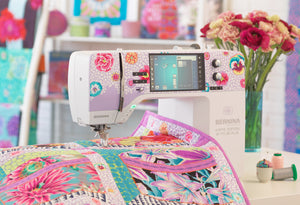
BERNINA owners often want help with the details that shape the finished quilt. A steady quarter-inch seam, the right foot for patchwork, and settings that handle layers cleanly can make a table runner feel straightforward instead of fussy. For a newer quilter, that support shortens the learning curve fast.
Sometimes the question is simple. Is this fabric too thick for the pattern? Does this panel need a border? Why are my seams drifting? It helps to ask someone who has seen the problem before and can show you the fix.
Holiday sewing is more fun when you are not solving every design question alone at the kitchen table. In a quilting community, you see color combinations you would not have tried on your own. You hear practical tips that never make it into the pattern. You also get the quiet encouragement that helps a project move from "maybe later" to finished and folded under the tree.
That is part of what makes a local shop useful. It is a place to return to for fabric, classes, troubleshooting, and machine guidance as your skills grow. High Country Quilts serves that role for many Colorado Springs quilters, especially during the busy holiday season when good advice can save both fabric and time.
If you are planning a holiday quilt, table runner, tree skirt, or handmade gift, High Country Quilts is a helpful place to start. You can look at seasonal fabrics, ask about classes, explore BERNINA machine options, and get practical guidance for turning a stack of christmas quilting fabric into a project you will be glad to bring out each December.
At High Country Quilts we care deeply about community. With our experiences in retail, we know that a store is not only a place to shop but also a place for the community to gather and share. During this busy...

Hi! We’re Adam and Renee Wheaton, the new owners of High Country Quilts! For more than 40 years, we’ve owned and operated vacuum and sewing businesses. Following in Renee’s father’s footsteps after he retired from All Discount Vacuum and Sewing in Colorado...


Leave a comment