

We Love Our Quilting Community
At High Country Quilts we care deeply about community. With our experiences in retail, we know that a store is not only a place to shop but also a place for the community to gather and share. During this busy...


Finding the best thread for machine quilting isn't about finding one magic spool. It’s about matching the right thread to the quilt you’re pouring your heart into. Think of it like this: you wouldn't use the same tires for a race car as you would for a rugged off-road truck. The thread you choose has to be right for the journey your quilt is about to take.
The perfect choice is a balancing act between the thread's fiber (like cotton or polyester), its weight, and what you ultimately plan to do with the finished quilt.
A delicate wall hanging just doesn't have the same demands as a cozy bedspread that will see years of use and countless trips through the washing machine. The thread is quite literally the glue holding your work together, and the right one is what makes a quilt last for generations. Let's walk through these choices together, step by step, to take the guesswork out of the equation.
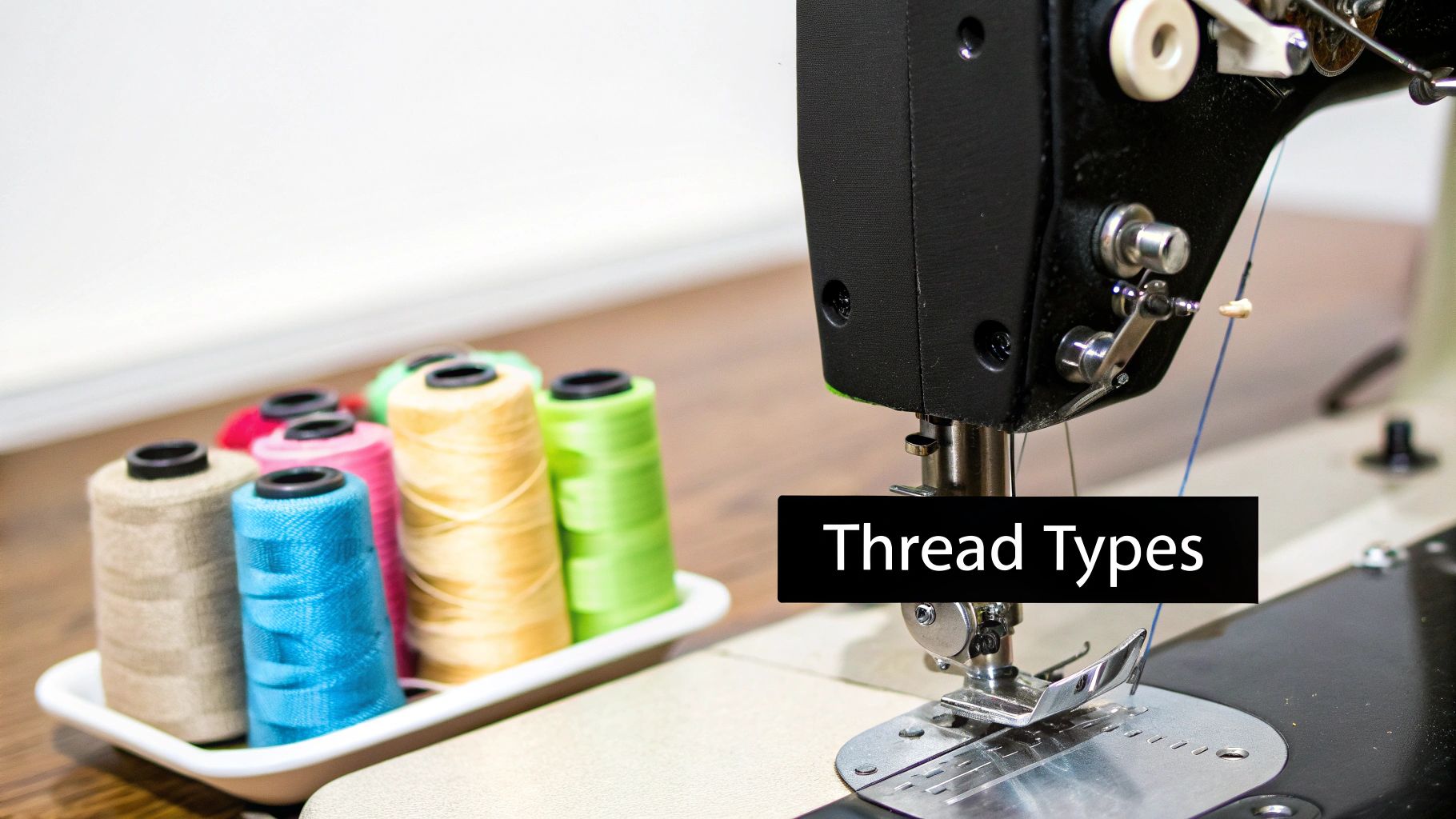
As quilting has exploded in popularity, the market for high-quality, specialized threads has grown right along with it. In 2024 alone, the quilting thread market was estimated at a whopping USD 189 million, and it's only expected to get bigger. This just goes to show how many incredible options we have at our fingertips today. If you're curious about the industry side of things, you can learn more about quilting thread market trends and see where things are headed.
To get us started, here’s a quick comparison of the most common thread types you’ll run into. It’s a great way to get a feel for where each one shines, helping you make a confident choice right from the get-go.
This table is your cheat sheet for the most popular thread fibers. It breaks down what they’re good at, what they’re best for, and what you need to watch out for, making it easy to see which one fits your project.
| Thread Fiber | Key Strengths | Best For | Considerations |
|---|---|---|---|
| Cotton | Soft, natural finish; blends well with cotton fabrics; low sheen. | Traditional quilts, heirloom projects, piecing, and quilting where stitches should blend in. | Produces more lint; not as strong as polyester; can shrink slightly with fabric. |
| Polyester | Extremely strong and durable; colorfast; low lint; slight stretch. | Quilts that will be used heavily and washed often, like bedspreads and baby quilts. | Has a higher sheen; stretch can sometimes cause fabric puckering if tension is off. |
| Monofilament | Transparent or smoke-colored; virtually invisible stitches. | "Stitch in the ditch" quilting, invisible appliqué, or when you want texture without color. | Can feel stiff; may become brittle over time with sun exposure; requires careful tensioning. |
| Silk | Beautiful high sheen and luster; very strong and fine. | Art quilts, wall hangings, and decorative quilting where a luxurious finish is desired. | More expensive; requires delicate handling and specific needle types for best results. |
Think of this table as your starting point. As you get a feel for how each type of thread behaves with your machine and your fabrics, you'll quickly develop your own personal favorites for different kinds of projects.
Picking the right thread fiber is a bit like choosing an actor for a part in your quilt's story. Every fiber has its own personality, bringing something unique to the final performance. The best thread for machine quilting isn't just about what's strongest; it's about finding a perfect match for your fabric, your design, and how the quilt will be used.
Let's start with the two superstars of the quilting world: cotton and polyester. Think of them as the tried-and-true headliners. They're reliable, versatile, and quilters everywhere trust them to get the job done. Getting to know their core differences is your first step to making a great choice.
Cotton thread is the traditionalist's go-to, and for good reason. Being a natural fiber, it has a lovely, soft matte finish that just melts into cotton fabrics. It almost becomes part of the fabric itself.
One of its biggest selling points is that it ages gracefully right alongside your quilt. Since it has very little stretch, cotton creates wonderfully flat and secure stitches, making it a fantastic choice for piecing. It locks your seams together without any fear of future puckering, which is exactly what you want for a timeless quilt where texture is the goal.
Cotton thread is celebrated for its ability to "become one" with the fabric. The low-sheen finish respects the quilt's design, letting the piecing and patterns take center stage while providing beautiful, subtle texture.
If cotton is the classic leading lady, polyester is the unstoppable action hero. This stuff is engineered for pure strength and durability. If you're making a quilt that's going to be loved hard—dragged around by a toddler or snuggled under on the family couch—polyester is your friend.
Polyester brings a few other great perks to the table:
That impressive strength also makes polyester an ideal candidate for the best thread for machine quilting on high-speed longarm machines. It can handle the intense tension and friction without snapping. For a wider look at how different fibers are used, exploring a guide to different types of embroidery floss can offer some interesting parallels.
Once you move past the two big names, you'll find a whole cast of supporting characters in the world of specialty threads. These are perfect for adding unique effects or solving specific quilting challenges.
Silk: Pure luxury. Silk is known for its incredible sheen and surprising strength. It glides through fabric like a dream and is perfect when you want to add a touch of elegance or decorative flair to an art quilt or wall hanging.
Monofilament: This is your invisible thread. It’s a single, fine strand of nylon or polyester that comes in clear or smoke tones. It’s the perfect choice for stitch-in-the-ditch quilting when you want the stitches to vanish, or for quilting on a very busy print where any colored thread would just get lost.
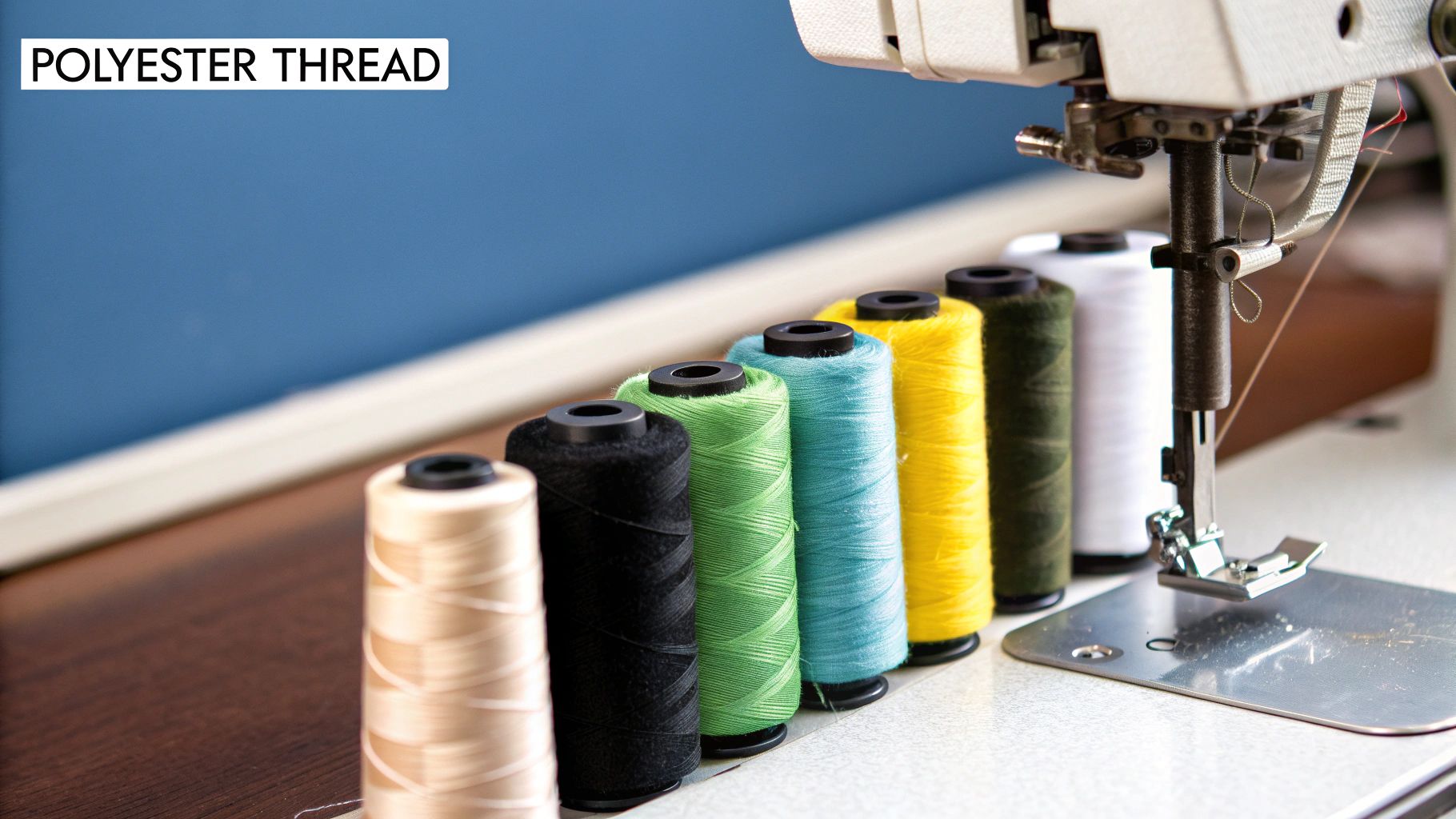
Learning about thread weight is like an artist choosing the right pen for a drawing—it's all about controlling the final look. While it might seem a bit technical, understanding this one concept gives you incredible power over your quilt's personality. The "weight" (wt) of a thread simply refers to its thickness, but the numbering system can feel a little backward at first.
Here’s the key: a lower number means a thicker, heavier thread, and a higher number means a thinner, finer thread. This is probably the most important thing to remember when choosing thread because it directly impacts how much your quilting stitches will stand out.
Think of it this way: are you drawing with a bold marker or a delicate fineliner? A modern, graphic quilt might call for a thick thread that pops, while a traditional quilt with intricate piecing often looks best with a thread that blends in.
30 wt or 40 wt Thread (The Bold Marker): These are your statement threads. They create thick, pronounced stitches that are meant to be seen. Use them when you want your quilting to be a major design element, adding bold texture and definition.
50 wt Thread (The All-Purpose Pen): This is the workhorse of the quilting world. It strikes a beautiful balance, being strong enough for piecing and quilting yet fine enough not to overwhelm your design. If you're just starting, this is the perfect weight to begin with.
60 wt or 80 wt Thread (The Fine-Liner): When you want your stitches to disappear, reach for these. They create delicate, barely-there stitches perfect for detailed work like micro-stippling, heirloom quilting, or appliqué where you want the texture, not the thread, to steal the show.
This kind of creative control is a big reason why the sewing thread market is booming, with a global value of around USD 2.15 billion in 2023. Polyester threads are the undisputed leader, making up about 80% of that market because they offer fantastic strength and versatility. If you're curious, you can explore more about the global sewing thread market to see how these materials impact our craft.
Your needle and thread are a team—they have to work together. If you try to force a thick thread through a needle with a small eye, you’ll get nothing but friction, shredding, and frustrating breaks. On the flip side, using a needle that's too big for a fine thread can leave noticeable holes in your fabric.
A simple rule of thumb: The thicker the thread, the larger the needle size you'll need. Always, always test your thread and needle combination on a scrap quilt sandwich before you start on your actual quilt.
For example, a 40 wt thread works beautifully with an 80/12 or 90/14 quilting needle. But a super-fine 80 wt thread would be much happier with a smaller 70/10 Microtex needle. Getting this pairing right is one of the most critical steps for achieving smooth, flawless stitches and turning a simple spool of thread into a powerful artistic tool.
You can have the most beautiful, expensive thread in the world, but if your machine’s tension is off, it won’t do you any good. Getting the tension just right is the key to creating those smooth, professional stitches that make a quilt look incredible. It’s all about finding the perfect balance between the thread on top and the thread in your bobbin.
Think of it like a perfectly matched game of tug-of-war. When the tension is balanced, neither your top thread nor your bobbin thread wins. The little knot they form locks neatly into the middle of your quilt sandwich (the batting), completely hidden from view. The result is a beautiful, identical stitch on both the front and back of your quilt.
But what happens when one side starts pulling too hard? That's when tension problems pop up. Thankfully, they're pretty easy to spot once you know what to look for.
If you flip your quilt over and see tiny loops of the top thread showing on the back, you’ve got a classic case of "eyelashing." This is a dead giveaway that your top tension is too loose. The bobbin thread is winning the tug-of-war, pulling loops of the top thread down to the bottom.
On the other hand, if you see little dots of your bobbin thread peeking through on the top of your quilt, your top tension is too tight. In this scenario, the top thread is yanking the bobbin thread all the way up through the fabric.
Here’s a golden rule of quilting: never start quilting your actual project without testing your tension first. Always, always begin with a practice "quilt sandwich" made from scraps of the exact fabric and batting you'll be using. This is your playground for getting the settings dialed in perfectly.
Ready to get it right? Just follow these steps.
Just remember the simple quilter's mantra: "Righty tighty, lefty loosey." Turning the tension dial to a higher number (to the right) tightens the top thread. Turning it to a lower number (to the left) loosens it.
Keep stitching and tweaking until your stitches look perfect on both sides, with no sign of the other thread peeking through. It might take a few minutes, but this little bit of prep work will save you from a world of frustration and ensure your final quilt is something you can be proud of.
Theory is great, but the real magic happens when you’re standing in front of your fabric stash, ready to bring a new quilt to life. All that knowledge about fibers and weights boils down to one practical decision: what is the best thread for machine quilting for this specific project?
The answer always starts with one simple question: what is this quilt’s purpose?
Thinking about the quilt’s future life is the most important step. A quilt destined for a gallery wall has vastly different needs than one made for snuggling on the couch during movie nights. One requires finesse and artistry; the other demands sheer durability.
Let's walk through a few common examples to see how this plays out.
The Everyday Bed Quilt: This workhorse quilt will see constant use, friction from sleeping, and frequent trips to the washing machine. Strength and colorfastness are your top priorities. A 40 wt or 50 wt polyester thread is the undisputed champion for this job.
The Heirloom Baby Quilt: While it needs to be washable, the goal here is longevity and softness. A high-quality 50 wt mercerized cotton is a beautiful choice. It’s strong enough for regular washing but will soften beautifully with the quilt over time.
The Artistic Wall Hanging: Here, aesthetics are everything. The quilting is a primary design element meant to be admired up close. This is the perfect place for a luxurious 50 wt silk thread to add a subtle sheen or a fine 60 wt cotton for dense, intricate stitching that creates texture without overwhelming the design.
It's clear that while cotton is a traditional favorite, polyester's performance is hard to beat for quilts that need to endure. In fact, global industry data shows that polyester thread accounts for about 80% of all threads used in sewing and quilting, largely due to its superior strength and elasticity.
For high-speed machine quilting, studies have even shown it can reduce thread breakage by up to 50% compared to cotton. You can discover more insights about the sewing machine threads market to see why it's such a popular choice.
Once you’ve landed on the right fiber and weight, it’s time to pick a color. This decision can either make your quilting pop or let it blend seamlessly into the background.
This helpful decision tree can guide your choice based on your fabric and desired effect.
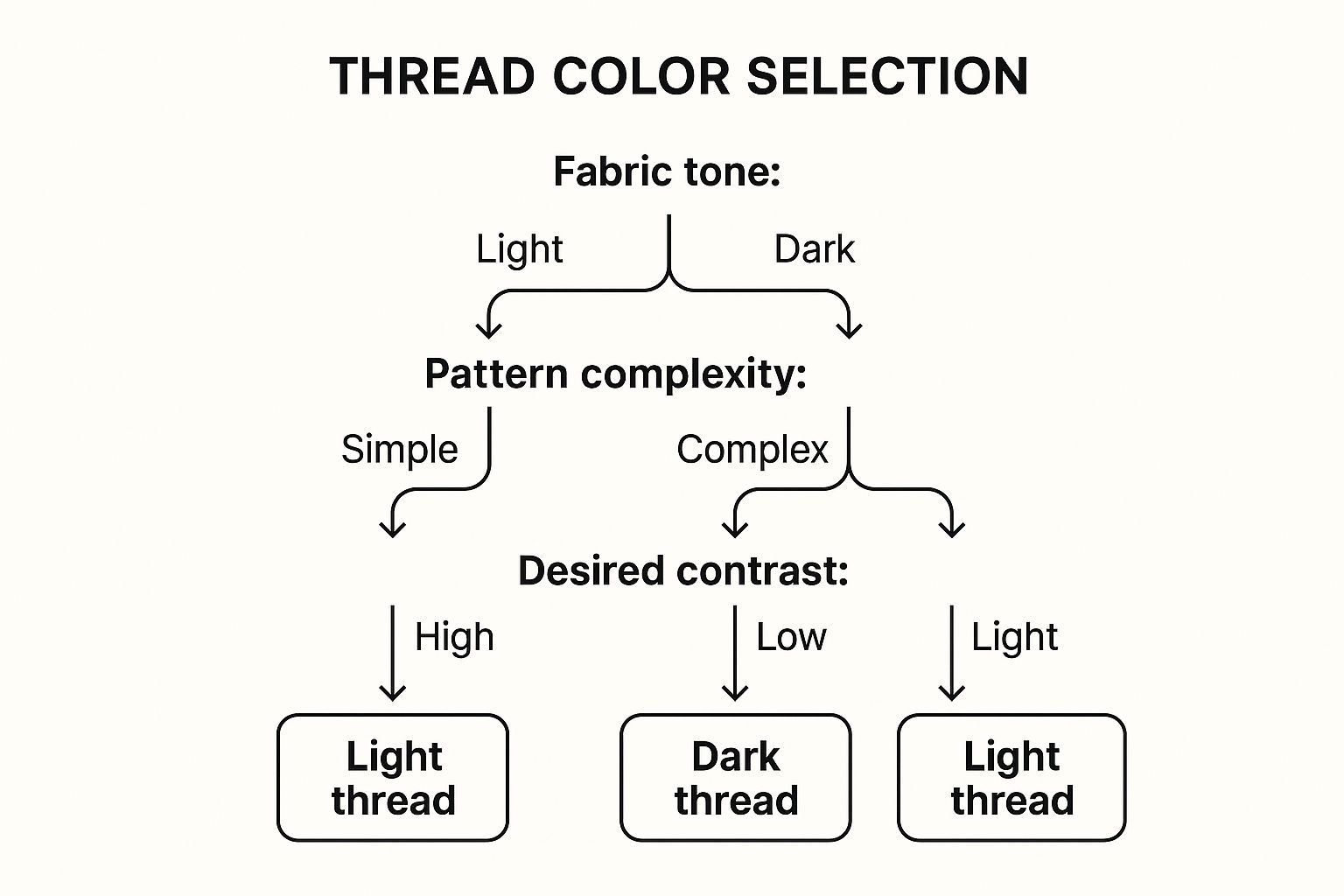
The infographic simplifies the process by breaking it down into key factors like fabric tone and pattern complexity, leading you to the ideal color choice for achieving either high or low contrast in your stitches.
A quilter's pro tip for color selection: If you're unsure, pull out a few feet of thread from the spool and lay it across your quilt top. Auditioning the thread this way gives you a much better sense of how it will look stitched than just looking at the spool.
To help tie all this information together, here’s a quick-reference table for some common projects.
| Quilt Project Type | Recommended Thread Fiber | Recommended Thread Weight | Best Needle Choice |
|---|---|---|---|
| Heavy-Use Bed Quilt | Polyester or Poly-Cotton Blend | 40 wt | 90/14 Topstitch or Quilting |
| Baby or Toddler Quilt | High-Quality Cotton | 50 wt | 80/12 Quilting or Microtex |
| Decorative Wall Hanging | Cotton, Silk, or Rayon | 50 wt or 60 wt | 70/10 or 80/12 Microtex |
| Custom Free-Motion Art Quilt | Varies (Cotton, Polyester, Silk) | 40 wt to 100 wt | Needle matches thread weight |
| Quick T-Shirt or Memory Quilt | Polyester | 50 wt | 90/14 Stretch or Jersey |
This table serves as a great starting point, but don't be afraid to experiment to achieve the perfect look for your project.
Ultimately, every choice you make is a creative one. By matching the thread to the project’s end use, you ensure your quilt will not only look beautiful on day one but will also stand the test of time, fulfilling its purpose perfectly for years to come.
Even after you’ve picked out the perfect fabric and pattern, a few practical questions about thread always seem to pop up. Getting a handle on these common sticking points can be the difference between a frustrating afternoon of skipped stitches and a truly joyful quilting session. Let's walk through some of the questions I hear most often from fellow quilters.
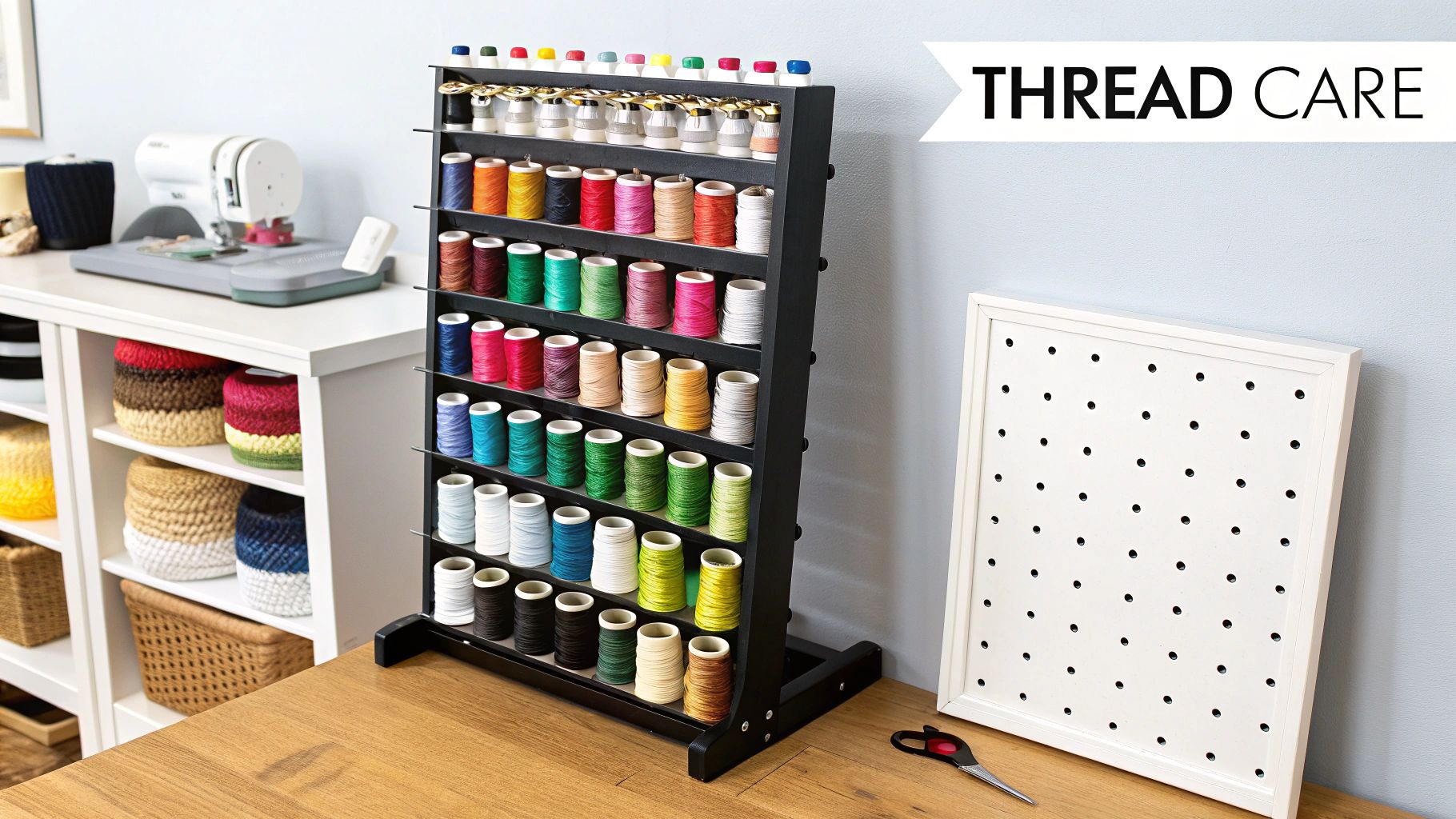
Think of this as your cheat sheet for quilting with more confidence and success.
You technically can, but I almost always advise against it. Your standard all-purpose thread is typically a medium-weight polyester made for sewing clothes, where the seams are hidden away and don't face much friction.
Quilting thread is a whole different animal. It’s engineered to be stronger, glide smoother, and produce far less lint. This is crucial because it has to stand up to the high speeds and intense friction of punching through three layers: your top, batting, and backing. Investing in a quality quilting thread means fewer breaks, less gunk building up in your machine, and a quilt that will last for generations.
This is a great question! They don't always have to match in color, but they absolutely must be compatible in terms of tension. In fact, many seasoned quilters swear by using a finer thread in the bobbin (like a 60 wt) with a slightly heavier thread on top (like a 40 or 50 wt).
Why do they do this? It can make dialing in your tension much easier and creates less bulk on the back of your quilt, giving it a beautifully smooth finish. That said, using the exact same thread on top and in the bobbin is the simplest route and works perfectly well for most projects.
The Golden Rule: Always—and I mean always—test your stitch on a practice quilt sandwich before you start on the real thing, especially when using different threads. That quick test is the secret to ensuring your stitches are balanced and beautiful from the get-go.
Oh, the dreaded thread snap! It’s one of the most maddening things that can happen at the machine, but it’s usually caused by just a handful of culprits. Think of troubleshooting it as being a detective and working through a process of elimination.
Here’s my checklist of the usual suspects:
You'll see the word mercerized on a lot of high-quality cotton thread spools. It’s a finishing process where the cotton is treated with a chemical solution that permanently changes its structure. This process makes the thread significantly stronger, gives it a beautiful luster, and helps it take dye more vividly.
Basically, mercerization gives the thread a silky-smooth finish that helps it glide effortlessly through your fabric and machine with less friction.
Because it’s stronger and produces less lint, mercerized cotton is a fantastic, reliable choice for machine quilting. Un-mercerized cotton has a softer, matte finish that's lovely for a vintage or hand-sewn look, but it just won't be as durable or run as cleanly through your machine. When you choose mercerized cotton, you’re getting stitches that are as tough as they are beautiful.
Ready to find the perfect thread for your next masterpiece? At High Country Quilts, we stock a beautiful selection of high-quality quilting threads from the best brands in the industry. Visit us in-store or explore our collection online to get the expert advice and supplies you need. Find your perfect match today at https://hcquilts.com.
At High Country Quilts we care deeply about community. With our experiences in retail, we know that a store is not only a place to shop but also a place for the community to gather and share. During this busy...

Hi! We’re Adam and Renee Wheaton, the new owners of High Country Quilts! For more than 40 years, we’ve owned and operated vacuum and sewing businesses. Following in Renee’s father’s footsteps after he retired from All Discount Vacuum and Sewing in Colorado...


Leave a comment