
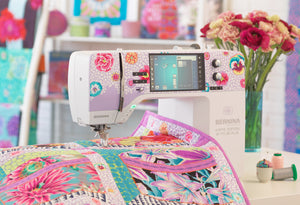

We Love Our Quilting Community
At High Country Quilts we care deeply about community. With our experiences in retail, we know that a store is not only a place to shop but also a place for the community to gather and share. During this busy...


Walking into a quilt shop and seeing that wall of thread can be overwhelming. But here's the good news: choosing the best thread for hand quilting is much easier than it looks. If you want those beautiful, chunky stitches that define "big stitch" quilting, you'll want to reach for a 12wt cotton thread. For more traditional work where your stitches are meant to be subtle, a 40wt or 50wt cotton is a timeless choice.

The real secret isn't about finding one "perfect" brand; it's about matching the thread to your creative vision. This single choice will shape everything from the quilt's final look to how it holds up over the years. Think of it like the final brushstroke on a painting—it can either blend into the background or become a powerful part of the design itself.
So, what story do you want your quilt to tell? Are you making a modern quilt where chunky, decorative stitches add texture and a pop of personality? Or are you carefully crafting a family heirloom where the stitches need to be fine, strong, and nearly invisible, letting your beautiful piecing take center stage? Each of these goals calls for a different kind of thread.
Before you even think about color, step back and consider the style you're aiming for. The most important decision is about the visual weight of your stitches.
I once saw a quilter finish a stunning, intricately pieced top she had spent months on. For the quilting, she defaulted to a fine thread that matched the background fabric. It was lovely, of course, but all those hours of beautiful hand-stitching just disappeared. On her next quilt, she tried a thicker, contrasting 12wt thread. The difference was night and day. The stitches popped, creating a whole new layer of design and giving the quilt a vibrant, handcrafted soul.
This choice—between blending in and standing out—is the heart of selecting your hand quilting thread. It defines the texture, character, and story of your finished piece.
That desire for stitches to be seen and celebrated isn't just a personal choice; it's a huge movement in the quilting world. In fact, a 2026 Quilting Trends Survey noted that the global quilting market is on track to hit $5 billion by 2027. A big part of that is the growing number of quilters—over 25% now—who prefer heavier threads to make their handiwork a key feature. You can find more great insights into modern quilting at SnugglesQuilts.com.
To help you get started, here’s a quick way to think about it:
For a clearer picture, this table breaks down the most common thread types and what they do best.
This table gives you a quick-glance comparison of the most common hand quilting threads. Use it to help you make an initial choice based on the look you want to achieve.
| Thread Type | Best For | Stitch Appearance |
|---|---|---|
| Cotton (40wt-50wt) | Traditional quilting, heirloom work, blending stitches | Fine, subtle, and classic. Creates texture, not color. |
| Cotton (12wt-28wt) | Big stitch quilting, decorative work, modern designs | Bold, visible, and decorative. Adds a strong design element. |
| Perle Cotton | Highly decorative "big stitch," embroidery-style quilting | Very bold with a high-sheen, rounded look. Makes a statement. |
| Silk | Heirloom quilting, appliqué, delicate fabrics | Exceptionally fine and strong with a beautiful luster. |
| Polyester | All-purpose quilting, tying quilts, durable utility quilts | Strong and smooth, but can feel synthetic. Less traditional. |
Ultimately, each of these threads has a place in your sewing box. The fun part is experimenting to see how each one can bring a different kind of life to your projects.
Picking the right thread is about more than just matching a color swatch. The fiber your thread is made from is its DNA—it dictates how the thread behaves, how it feels in your hands, and how your quilt will look and last for years to come.
Think of it this way: you're deciding on the very personality of your stitches. Do you want them to be soft and traditional, melting into the fabric? Or are you looking for a crisp, strong line that adds a bit of sheen? Let's talk about the main options you’ll find on the spool.
For most of us, cotton is home base. It’s the classic, the go-to, and the fiber we can always count on. Since our quilt tops and backings are almost always cotton, it just makes sense to use a cotton thread.
When you pair cotton with cotton, everything in your quilt—the fabric and the thread—will wear, wash, and age together. It creates a beautiful, cohesive piece that stands the test of time. A 100% cotton thread gives you a lovely, soft matte finish, letting your stitches build texture without screaming for attention with a high shine.
It also has almost no stretch, which is exactly what you want for hand quilting. That stability gives you incredible control, helping you form those perfect, evenly spaced stitches. It's a big reason why both newcomers and seasoned quilters keep coming back to it.
If cotton is the traditional staple, polyester is the modern workhorse of the thread world. This stuff is engineered for strength. Polyester is incredibly tough and durable, making it a fantastic choice for quilts that are meant to be used and loved hard—think kids' bed quilts, couch throws, and picnic blankets.
One of the things I love about polyester is how little lint it produces. It keeps your sewing space cleaner and your stitches looking sharp. Now, there’s been a long-standing debate in the quilting community about polyester.
The old wisdom was that a strong polyester thread could, over many decades, actually saw through and shred softer cotton fabric. This was a real concern with older threads, but the game has changed. Today's high-quality polyesters are much finer and smoother, making this risk practically non-existent.
You'll also see a lot of cotton-wrapped polyester threads. These are a brilliant hybrid, giving you a strong polyester core wrapped in a soft cotton outer layer. You get the strength of poly with the classic look and feel of cotton. It's the best of both worlds.
When a project calls for something truly special, silk is in a league of its own. It is impossibly fine yet surprisingly strong, and it has a beautiful, subtle luster that no other fiber can match. Silk glides through fabric like a hot knife through butter, which makes for a truly joyful and friction-free hand-quilting experience.
Its natural sheen catches the light just so, making it the perfect choice for:
Silk is definitely an investment, but for those quilts that are destined to be showstoppers, its performance and beauty are well worth it. This fiber also has deep roots in a fascinating history of thread-making that goes back an incredible 40,000 years. The standards developed in the 19th-century by makers like Sellers and Thury really set the stage for the amazing variety we have now. You can dive deeper into this rich history and its modern-day importance over at baer.tools.
Ultimately, knowing what these fibers can do gives you control. You're not just picking a thread off a rack anymore; you're making an intentional choice about the look, feel, and future of your quilt.
Ever looked at a spool of thread and wondered what those numbers like 12wt or 50wt actually mean for your quilting? They’re your key to controlling the look and feel of your stitches. It can seem a little backward at first, but the golden rule is simple: the higher the weight number, the finer the thread.
Think of it like you're drawing on your quilt top. A thick, bold marker—that’s your 12wt thread—makes a powerful statement that’s impossible to miss. On the other hand, a fine-tipped pen—your 50wt thread—is perfect for creating delicate lines and subtle texture. The weight you choose directly impacts how much your quilting stitches stand out.
So, why the inverse numbering? The "wt" stands for weight, and the system is based on how much thread it takes to weigh one kilogram. It takes 12 kilometers of a heavy 12wt thread to reach that kilogram. But for a gossamer-fine 50wt thread, you'd need a whopping 50 kilometers to equal the same weight.
That’s why a small number like 8wt or 12wt means you’re working with a thick, beefy thread, while a large number like 50wt or 60wt tells you the thread is incredibly fine. Once you get the hang of that, you can start making really intentional choices about your quilt's final look.
To get a better sense of the materials themselves, here’s a quick breakdown of the fiber families we often work with.

This visual shows how threads like cotton, silk, and polyester fit into different categories. Each type brings its own unique character and handling properties to your project.
Heavy threads are the heart and soul of the popular "big stitch" quilting style. Their thickness creates chunky, decorative stitches that are meant to be seen and admired, becoming a central feature of the design.
12wt Thread: This is the go-to for modern hand quilting. Its substantial weight creates a gorgeous, rustic stitch that adds both texture and a strong graphic line. It’s bold enough to stand on its own as a design element.
Perle Cotton (Size 8 and 12): Even thicker, perle cotton has a distinctive roundness from its tight twist. A size 8 Perle is roughly equivalent to a 3-ply 12wt thread, making an exceptionally bold mark that’s perfect for folk art styles or any highly decorative work.
When you use these heavier threads, your quilting stops being just functional and becomes truly artistic. You’re essentially drawing with thread, adding personality directly onto the quilt top.
On the flip side, we have the finer threads. These are your best friends when you want the stitches to blend in, creating a subtle, all-over texture that lets your fabric and piecing take center stage.
For heirloom and traditional quilting, the goal is often to create texture from the shadows cast by the stitches—a technique sometimes called "quilting in the negative space." Fine threads are absolutely essential for achieving this elegant effect.
A 40wt or 50wt thread is perfect for this. When you match the thread to your fabric color, the stitches nearly disappear, letting the puffiness of the batting and the indentations in the fabric create a rich, touchable surface. They are the workhorses for intricate stippling, classic feather motifs, and any design where the overall texture matters more than the individual stitch.
Finally, let’s quickly touch on a related concept: ply. Ply simply refers to the number of individual strands twisted together to make the final thread. You’ll often see threads labeled as 2-ply or 3-ply.
Think of it like making a stronger rope. A single strand is easy to snap, but twisting two or three together creates something much more durable.
A 3-ply thread is far less likely to shred or break while you work, which makes for a much more pleasant and frustration-free quilting session. When you're picking a thread, paying attention to the ply gives you another layer of control over your project’s long-term durability.
Alright, we've gone through the nitty-gritty of fibers and weights. Now for the fun part: putting all that knowledge to work on a real quilt. The secret to picking the right thread isn't some complicated formula; it’s actually about starting with the end in mind. What kind of quilt are you making?
Think of this as your roadmap. We’ll connect the dots between the threads we've talked about and the specific projects you have in your queue. You'll see not just what to grab, but why it’s the perfect choice to bring your vision to life.
When you're pouring your heart into a quilt you hope will become a family treasure, every single material matters. For traditional and heirloom pieces, the goal is almost always timeless elegance. The thread shouldn't steal the show; it should work quietly in the background, letting your piecing and the beautiful texture of the quilting take center stage.
This is where 100% cotton thread is the undisputed star. It has a beautiful, organic relationship with cotton fabric—they wear and age together. This ensures your quilt softens and settles gracefully over the decades, without a stronger synthetic thread eventually cutting into the delicate cotton fibers.
For this kind of work, I always reach for a finer weight thread:
Using a fine cotton thread means the intricate feather wreaths or echo quilting you spent hours perfecting are what people will notice first, resulting in a truly elegant and classic finish.
Modern quilting is a whole different ballgame. It often throws tradition out the window, celebrating the quilting stitch itself as a major design element. If you've ever admired a quilt with a chunky, visible "big stitch," this is the style we're talking about.
If you want your hand quilting to make a statement, you need a thread with some personality and heft. My go-to is a 12wt cotton thread. It’s thick enough to create that satisfyingly chunky stitch that adds incredible texture and a charming, handcrafted look.
The rise of big stitch quilting is all about letting your handiwork be seen and celebrated. A 12wt thread isn't just a functional tool holding the layers together; it becomes a core part of the quilt's artistic voice.
When you’re leaning into this bold, modern aesthetic, these are your top contenders:
Art quilts are all about pure expression. Texture, dimension, and visual pop are the names of the game. Since these pieces are destined for a wall instead of a bed, they don't need to withstand heavy use and frequent washing. This gives you incredible freedom to play with more decorative and delicate threads.
This is the perfect opportunity to bring in some luxury fibers. Silk thread is an absolute dream for art quilts. Nothing else has that gorgeous, natural luster that catches the light and adds a touch of sophistication. Silk is also surprisingly strong for its fine diameter, so you can create incredibly detailed quilting without adding any bulk.
Don't stop at silk, either. This is your chance to experiment with shimmering metallics, variegated threads that shift in color, or even fine wools for a fuzzy, textural effect. Here, your thread choice is an artistic decision, first and foremost.
To help you pull all this information together, I've put together a quick-reference table. It’s a great starting point for matching your next project with the perfect thread.
| Quilting Project | Recommended Thread Weight | Recommended Fiber | Reasoning |
|---|---|---|---|
| Traditional & Heirloom | 40wt - 50wt | 100% Cotton | Creates fine, subtle stitches that blend in and age gracefully with the fabric. |
| Modern & Big Stitch | 12wt or Perle Cotton | Cotton | Makes a bold, decorative statement. The stitches are a key design element. |
| Art Quilts & Wall Hangings | 40wt or finer | Silk, Specialty | Adds luxurious sheen and texture. The focus is on visual artistry over durability. |
| Utility & Kids Quilts | 28wt or 40wt | Cotton-Wrapped Polyester | Provides superior strength and durability for quilts that will be heavily used and washed. |
Choosing the right thread might seem like a small detail, but as you can see, it has a huge impact on the final look, feel, and longevity of your quilt. Keep this guide handy, and you'll be making confident choices in no time.

You’ve found the perfect thread for your project, which is a fantastic start. But as any hand quilter knows, even the best thread for hand quilting can turn into a frustrating, knotted mess if you’re not careful. Nothing grinds a peaceful stitching session to a halt faster than a tangled thread.
Thankfully, most of those common headaches—knots, shredding, and excessive lint—are surprisingly easy to prevent. It all comes down to a few simple habits that will help you manage your thread, so you can get lost in the beautiful, rhythmic motion of your stitching.
A smooth quilting experience really begins the moment you pull that thread from the spool. This is your chance to set yourself up for success and avoid inviting those pesky knots to your quilting party.
First, let's talk about length. We've all been tempted to cut a super long piece of thread to avoid re-threading, but it almost always backfires. Stick to a manageable length of about 18 to 24 inches—the classic rule of thumb is the distance from your fingertips to your shoulder. Any longer, and the thread is bound to twist, drag, and tie itself in knots.
Here's another pro tip: thread has a natural grain or twist from how it's wound on the spool. To work with that twist instead of against it, thread the end you just cut from the spool. This little trick helps the thread glide through the fabric the way it wants to, dramatically reducing friction and fraying.
If I could recommend just one tool to prevent tangles, it would be thread conditioner. Think of it as a smoothing balm for your thread. Traditional beeswax has been a quilter's favorite for generations, and for good reason, but modern silicone conditioners also work wonders.
Using it couldn't be simpler. Just lay your cut piece of thread over the block of wax or conditioner and pull it through a couple of times. This light coating calms down any fussy fibers, minimizes lint, and makes the thread just slick enough to slide through your quilt layers without grabbing or knotting.
A quick pass through a thread conditioner is a tiny step with a huge payoff. It does more than just stop tangles—it also strengthens the thread, making it far less likely to fray or snap under the stress of being pulled through the fabric over and over.
Even with the best preparation, you might still hit a snag now and then. Don't let it discourage you! Most issues have a quick fix. Here’s how to handle the most common frustrations.
Problem 1: My thread keeps shredding or breaking. This is almost always a sign of too much friction, and the thread itself might not be the problem.
Problem 2: My thread is always tangling up near the needle. This is the classic hand-quilting headache, but you can fight back!
With these simple tricks up your sleeve, you'll spend a lot less time wrestling with your thread and more time enjoying the craft you love.
Choosing the perfect thread is a huge step, but even the best thread can’t do its job alone. To really enjoy the process of hand quilting, it helps to think of your supplies as a complete team, where every tool supports the others. When they all work together, every stitch feels effortless.
Your thread’s most important partner? The needle. I can't stress this enough: the needle's eye has to be big enough for your thread to glide through without a fight. Trying to force a beautiful, thick 12wt thread through a tiny eye is a surefire way to end up with shredded, fraying floss and a whole lot of frustration. A good rule of thumb is to match heavier threads with larger needles, something like a size 90/14.
Beyond the needle and thread, a few other essentials will make a world of difference in your hand-quilting experience. A high-quality thimble is an absolute must-have. It not only saves your finger but also gives you the leverage to push the needle through thick quilt sandwiches with confidence.
You'll also want a pair of small, sharp scissors for clean snips and maybe even some thread conditioner to keep your thread smooth and tangle-free.
Ultimately, your tools should feel like an extension of your own hands. The right combination of thread, needle, and notions simply gets out of the way, letting you sink into the creative rhythm of stitching and focus on the beauty of your work.
Think about how all the pieces come together:
When all these elements are in sync, you’re not just sewing. You’re confidently and joyfully crafting a future heirloom.
Even after years of quilting, some questions come up again and again. Let's tackle a few of the most common ones I hear from fellow quilters, so you can get back to your project with confidence.
I get this one a lot! While you can use machine thread in a pinch, you probably won't enjoy the experience. Machine thread is built for speed, zipping through a machine without much friction. It's not designed for the slow, deliberate journey through your hands and fabric.
Hand quilting threads, on the other hand, are made with a special glaze or wax. This coating is a lifesaver, helping the thread glide through your quilt sandwich without getting into a tangled, knotted mess. Trust me, using the right thread for the job makes all the difference.
Big stitch quilting is exactly what it sounds like! It’s a wonderfully modern and folksy approach where the stitches themselves are meant to be seen and admired. Instead of tiny, almost invisible stitches, you use long, bold ones that become part of the quilt's design.
This technique lets your stitches take center stage, adding texture and a beautiful handmade charm. A 12wt thread is the star of the show here; its thickness creates a bold, visible line that really pops.
Ah, the dreaded thread nest! It happens to everyone, but there are a few simple tricks to keep your thread behaving.
It absolutely does! Your thread color is a powerful design choice. Do you want your quilting to create a subtle, elegant texture, or do you want it to make a statement?
For a quiet, blended look, pick a thread that matches your fabric's background color. If you want your stitch work to be a feature, go for a contrasting color that stands out. And a pro tip for busy, multicolored prints: a neutral gray or beige is often your best friend. These shades have a magical ability to blend in with almost everything.
Ready to put this all into practice? Take a look at the gorgeous and reliable threads we carry at High Country Quilts. Whether you need fine cotton for a future heirloom or a bold 12wt for your next modern quilt, we have just the thing to help you create something you'll love. Shop our thread collection today!
At High Country Quilts we care deeply about community. With our experiences in retail, we know that a store is not only a place to shop but also a place for the community to gather and share. During this busy...

Hi! We’re Adam and Renee Wheaton, the new owners of High Country Quilts! For more than 40 years, we’ve owned and operated vacuum and sewing businesses. Following in Renee’s father’s footsteps after he retired from All Discount Vacuum and Sewing in Colorado...


Leave a comment