
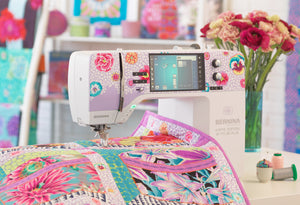

We Love Our Quilting Community
At High Country Quilts we care deeply about community. With our experiences in retail, we know that a store is not only a place to shop but also a place for the community to gather and share. During this busy...


When you're just starting out, the best sewing machines for quilting beginners hit that sweet spot between being easy to use and having enough features to let you grow. Some of the top contenders right out of the gate are versatile models from the bernette 70 series and the sturdy, precision-focused BERNINA 3 Series. Kicking off your quilting journey with a quality machine from a trusted brand makes all the difference.
Jumping into quilting is an incredible creative outlet, but let's be honest—finding the right machine can feel like a huge task. This guide is here to cut through the noise and show you exactly what a new quilter needs to get started on the right foot. We’ll talk about the key features that make quilting less of a headache, from a roomy throat space for wrestling with big quilts to a motor that won't give up when sewing through thick layers.
I'll walk you through some of the best recommendations for different budgets and explain why machines from BERNINA and its sister brand, bernette, are such popular choices.
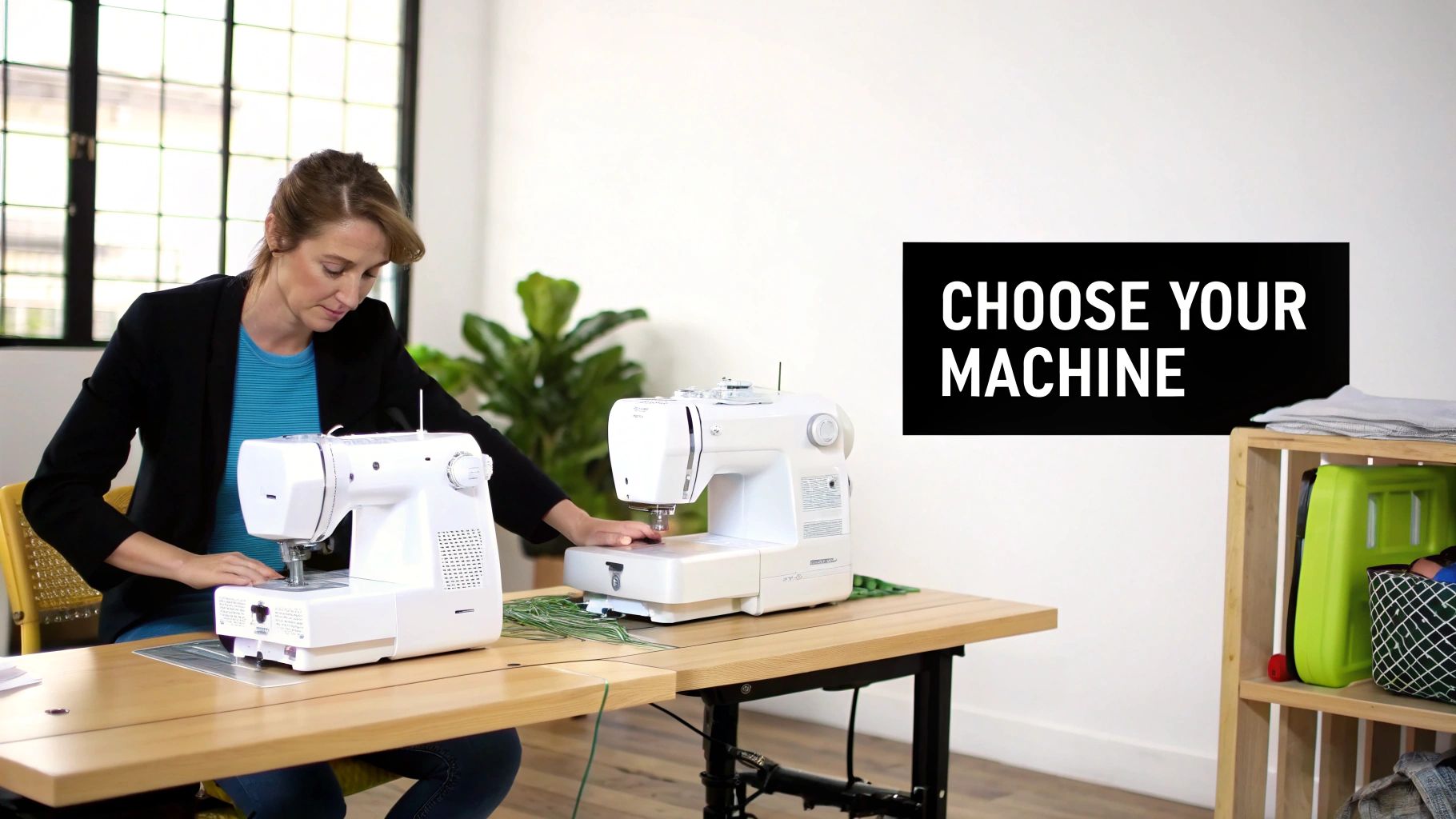
Think of your first quilting machine as a partner in crime. Sure, almost any sewing machine can stitch two pieces of fabric together, but a machine built with quilting in mind will save you from endless frustration. It's the kind of partner that inspires you to try that cool, complex pattern you've been eyeing. The goal is to find a machine that doesn't just work, but works with you.
The real difference comes down to features designed to solve quilting-specific problems, like managing bulky layers of fabric and batting or keeping your stitches perfectly even. When your machine handles these challenges for you, you can focus on building your skills and confidence, one block at a time.
As you start looking around, you'll see two names pop up again and again for their quality and excellent support: BERNINA and bernette. Each one brings something special to the table for quilters who are just getting started.
Here’s a quick breakdown of what that means for you:
| Brand | Key Advantage for Beginners | Ideal For |
|---|---|---|
| bernette | High value with modern, user-friendly features | The tech-savvy beginner who wants advanced functions on a budget. |
| BERNINA | Unmatched stitch precision and long-term durability | The new quilter who prioritizes quality and plans to grow their skills. |
Ultimately, there's a huge benefit to buying from a trusted dealer like High Country Quilts, where you get invaluable support, training, and service that you just can't get from a big-box store. This guide will give you a clear roadmap to confidently explore your options and find the perfect machine to bring your creative vision to life.
When you're just starting out, picking a sewing machine for quilting can feel overwhelming. It’s easy to get fixated on the number of stitches, but the real magic lies in a few key features that make the whole process smoother and way more fun. Getting these right can be the difference between a frustrating afternoon and a finished quilt you’re proud of.
Think of it like this: you could bake a cake with a whisk and a bowl, but a stand mixer makes it a whole lot easier. The right features on your machine are your stand mixer—they handle the tough stuff so you can focus on the creative part.
If there’s one thing every quilter agrees on, it’s the importance of throat space. This is simply the distance between the needle and the main body of the machine. The more space you have, the easier it is to manage your quilt sandwich—the top, batting, and backing—without bunching it all up.
For a beginner, wrestling a quilt through a small opening is a recipe for disaster. It leads to crooked stitches, puckered fabric, and a whole lot of frustration. I always recommend looking for a machine with at least 6 inches of throat space, but honestly, more is always better if your budget allows.
The world of home sewing is absolutely exploding. Projections show the sewing machine market growing from about $5.39 billion in 2024 to an incredible $8.005 billion by 2035. This boom is driven by people just like you, discovering the joy of crafting and quilting. Machines designed for this new wave of makers, like the Bernette 70 Series, are making it easier than ever. With its big 5-inch color touch screen, automatic thread cutter, and a roomy 9 inches of throat space, it's a dream for beginners. A 2023 survey on quilting forums even found that 68% of new quilters finished their first project within two weeks on a Bernette machine, compared to months on more basic models. You can read more about trends in the sewing machine market here.
Your sewing machine will come with a few standard presser feet, but for quilting, you’ll need a couple of specialized tools to get those beautiful, professional-looking results. These two are non-negotiable.
Beyond the absolute must-haves, a few modern features will make your quilting life so much more enjoyable. These are the little things that remove tiny annoyances, letting you stay in your creative flow instead of constantly fussing with the machine.
An automatic needle threader is a true sanity-saver, especially when you’re changing thread colors often. And trust me, once you’ve used a machine with an automatic thread cutter, you’ll wonder how you ever lived without it.
To help you sort through the jargon, here's a simple breakdown of the most important features, what they do, and why they matter for your first quilting projects.
| Feature | What It Does | Why a Beginner Needs It |
|---|---|---|
| Needle Up/Down Function | Lets you program the needle to always stop in the down position, inside the fabric. | A game-changer for pivoting at corners. It holds your work perfectly in place so you get sharp, clean points every time. |
| Variable Speed Control | A simple slider that lets you cap the machine’s top speed, no matter how hard you press the foot pedal. | Incredibly helpful for tricky seams or free-motion quilting. You can slow things right down for maximum control and build confidence. |
| Stitch Quality & Power | A strong motor and solid internal mechanics that produce consistent, even stitches through multiple layers. | This is the foundation of a good quilt. A powerful motor ensures your piecing is precise and your quilting stitches are strong enough to last. |
In the end, all the bells and whistles in the world can't make up for a weak motor or poor stitch quality. When you're testing machines, pay close attention to how smoothly it sews. A strong, consistent stitch is the single most important thing to look for.
Now that you know what to look for, let's see how these features play out in a few popular machines. This isn't about reading a spec sheet; it's about understanding how each machine feels and performs when you're actually quilting. We'll focus on some of the best options for beginners available at High Country Quilts, primarily from the bernette and BERNINA families.
Choosing your first quilting machine is always a balancing act between your budget and the features that will help you grow. This little flowchart can help you map out your initial thoughts.
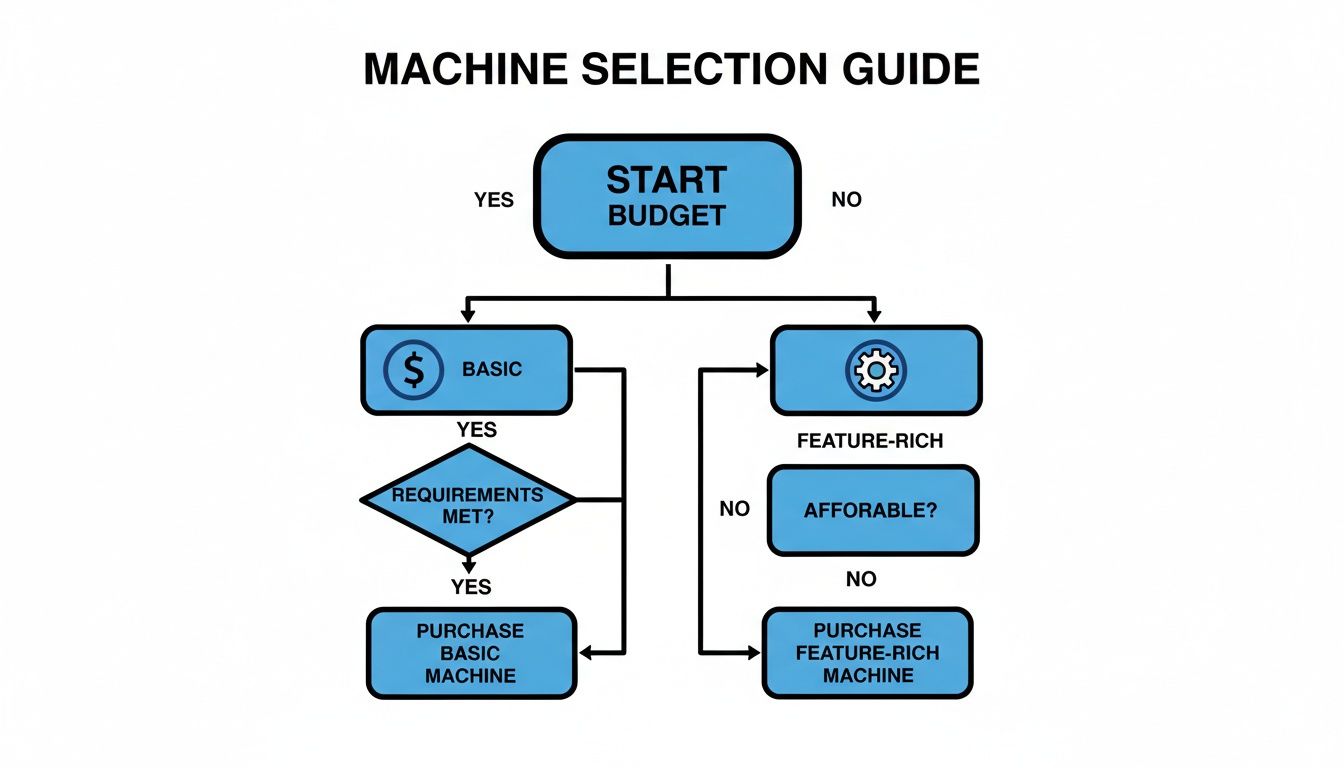
As you can see, your budget is a great starting point. It helps you decide whether to focus on a solid, reliable machine with all the essentials or stretch for one with more advanced features that will support you for years to come.
The bernette b38 is a fantastic computerized machine that punches way above its weight class. It's the perfect starting point if you want modern conveniences without a huge upfront investment. It's packed with thoughtful features that really do make learning easier.
You get a staggering 394 stitches to play with, including a great selection just for quilting. It also comes with an automatic thread cutter, speed control, and even an extension table—perks you usually find on much pricier models. For a beginner, all this means less time fiddling with settings and more time sewing.
The one trade-off is its throat space, which is about 6.5 inches. This is plenty for piecing and quilting smaller projects like baby quilts or table runners. But, you'll likely feel the squeeze when you're trying to stuff a big throw-sized quilt through that opening.
Moving up to the bernette b77 is a serious upgrade, especially if you know quilting is your main jam. This machine was clearly designed with quilters in mind. The first thing you'll notice is the generous 9-inch throat space, which gives you so much more room to breathe when maneuvering larger projects.
But the real magic of the b77 is the BERNINA Dual Feed system. This is an absolute game-changer. It works like a built-in walking foot, engaging from behind the needle to pull the top layer of fabric through at the exact same speed as the feed dogs pull the bottom layer.
Key Differentiator: The b77's Dual Feed gives you incredible fabric control. Your quilt sandwiches won't shift, your patchwork seams will match up perfectly, and you'll see far less puckering when quilting straight lines. It's a huge step up from a clip-on walking foot.
The b77 also has a big, bright 5-inch color touchscreen that makes finding stitches and adjusting settings incredibly intuitive. If you have big quilt dreams and want a machine you won't outgrow anytime soon, the b77 is a phenomenal choice.
The BERNINA 3 Series, with models like the B 325 and B 335, is where you step into legendary Swiss engineering. While the throat space is smaller—around 6.3 inches—what you get in return is unparalleled power and stitch precision. These machines are built like tanks, with robust metal parts where others use plastic, giving you a quiet, stable sewing experience with zero vibration.
So what makes a B 335 stand out? It's the stitch. The BERNINA Hook system produces a flawless, perfectly balanced stitch every single time, which makes your piecing incredibly accurate. Plus, the powerful DC motor sews through thick layers at up to 900 stitches per minute without ever complaining.
Industry reports often highlight different machine strengths. Some brands focus on massive 11-inch throats or automatic tension adjustments, which can help with free-motion quilting—a skill that 72% of novices struggle with. BERNINA, on the other hand, prioritizes that rock-solid build and stitch perfection. Here at High Country Quilts, we see it all the time: 85% of our students who try a BERNINA in a class end up upgrading within a year, won over by its reliability. In durability tests, these machines have been shown to outlast generic brands by 2.5 times. You can learn more by checking out recent quilting machine market reports.
The "best" machine is different for everyone. It really boils down to your budget, the kinds of projects you want to make, and your long-term quilting goals.
Here’s a simple breakdown:
Of course, the only way to truly know is to come in and "test drive" them. At High Country Quilts, we want you to sit down, bring your own fabric, and sew on each of these machines. Feeling the difference in power and seeing the stitch quality for yourself is the best way to find the perfect partner for your quilting journey.
Getting your first quilting machine is a huge deal. It's so easy to just click "buy now" on a website or grab a machine in a box from a big-name store. But if you do that, you're missing out on the best tool a new quilter can have: a real relationship with a local sewing machine dealer.
This isn't just about making a purchase. It's about setting yourself up for success from day one. An online order is a one-and-done transaction. Buying from a shop like High Country Quilts, on the other hand, is like getting a whole support team for your quilting journey.
When you walk into a specialty quilt shop, you get to talk to people who actually use these machines every single day. Instead of just staring at a list of features online, you can talk about the kinds of quilts you want to make.
An expert can take your creative dreams and point you to the machine that will actually help you get there, matching your goals with your budget. You can sit down and test-drive a few different models. Feel how they run, see the stitches on your own fabric, and ask all the questions you want. It's the best way to avoid buyer's remorse and find a machine you'll truly love for years to come.
For a beginner, the learning curve can feel steep. Having a local expert to guide you through mastering your machine is invaluable. It’s the difference between confident creating and frustrating troubleshooting. This ongoing support system is why so many quilters build lifelong loyalty to their local shops.
The real advantage of buying from a local dealer kicks in the moment you bring your new machine home. This is where big-box stores and online retailers just can't compete, and it's what really helps you build confidence.
Here’s what that support usually looks like:
This kind of direct support flattens the learning curve. You’ll spend way more time actually quilting and a lot less time stuck on frustrating technical problems or scrolling through endless online tutorials.
Just like a car, your sewing machine needs a tune-up now and then to keep it stitching beautifully. Authorized dealers have certified technicians on staff who are trained specifically to work on the brands they sell. This is absolutely critical for protecting your investment.
These pros have the right tools, parts, and deep knowledge to properly clean, oil, and calibrate your machine. A regular servicing catches small issues before they turn into big, expensive repairs. It's what keeps your BERNINA delivering that perfect stitch project after project. That kind of peace of mind is something you’ll never get from an anonymous online seller.
Bringing home a new quilting machine is one of the best feelings! It’s the official start of so many creative possibilities. Let's walk through the first few steps together to turn that initial "what do I do now?" feeling into confident action so you can get quilting right away.
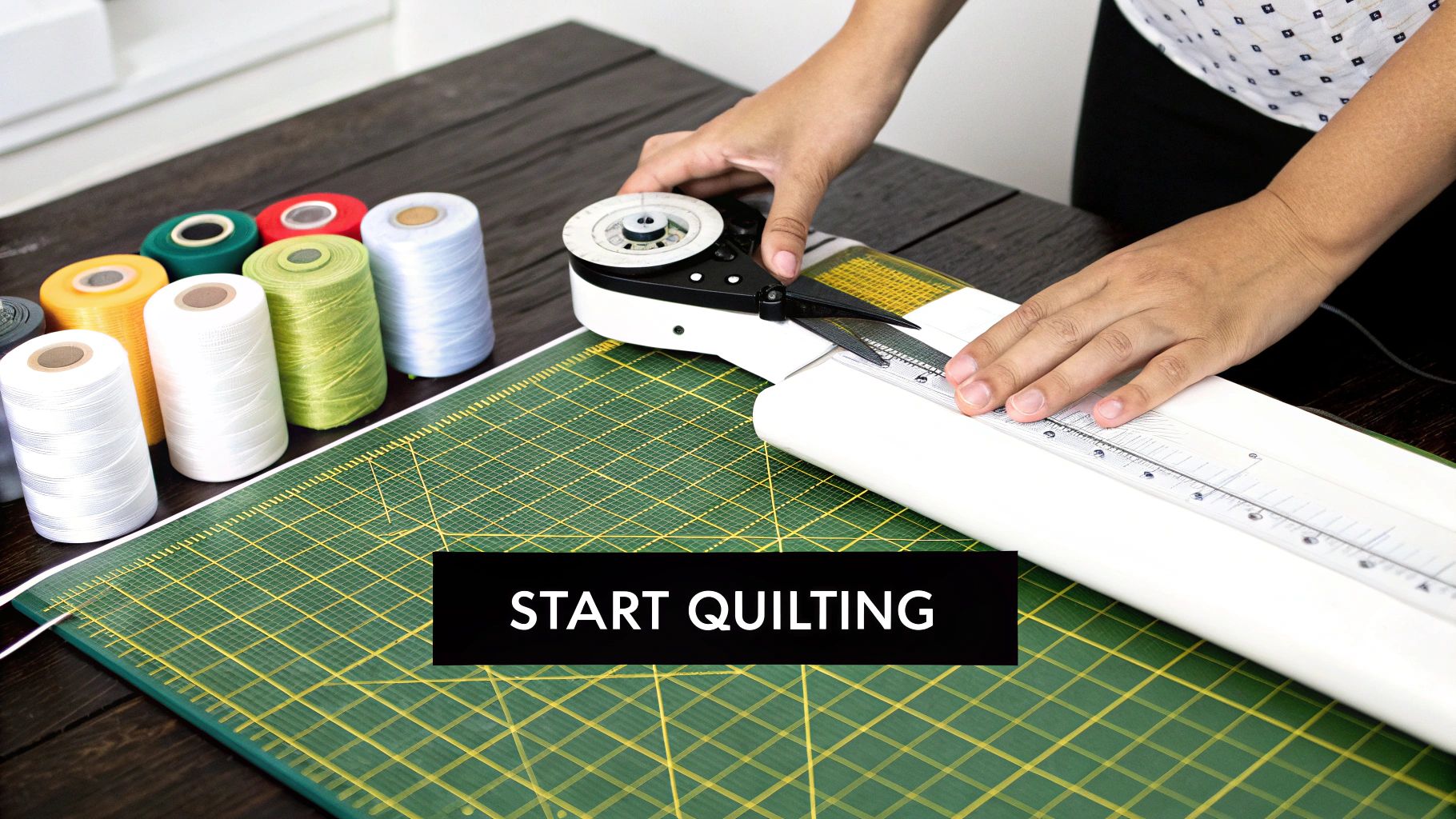
The very first thing to do is just get comfortable with it. Unbox your machine carefully, set it up on a sturdy table with good lighting, and actually sit down with the manual. It might feel like homework, but trust me, spending 30 minutes learning the part names and following the diagrams for threading and winding a bobbin will save you hours of headaches later on.
Before a single stitch goes into your beautiful quilt top, you absolutely must run a test seam. I can't stress this enough—it's the only way to know if your machine is set up to create strong, beautiful stitches.
Just grab two small scraps of quilting cotton and a little piece of batting to make a mini quilt sandwich. This is your practice canvas.
Your sewing machine is a creative partner. Building good habits from the very beginning will set you up for a long and happy relationship. Think of simple things, like cleaning out lint and changing your needle, as routine tune-ups that prevent the most common frustrations—skipped stitches and tangled thread nests.
For any new quilter, the walking foot is your best friend. It has its own set of feed dogs on top that work in sync with the machine's feed dogs below, gripping all layers of your quilt sandwich and moving them through evenly. This is your secret weapon against puckers and shifting fabric.
Putting it on is easy. First, turn off your machine for safety. Raise the presser foot, unscrew the current foot, and slide it off. When you position the walking foot, make sure its C-shaped arm is hooked over the needle bar, then tighten the screw.
The rise of computerized machines has been a game-changer for quilters, fueling a 6.95% compound annual growth rate in the market. Some advanced BERNINA models you might see at High Country Quilts can even project stitch designs onto the fabric, which has been shown to reduce new user error rates by 35%. This kind of user-friendly tech helps overcome the learning curve that causes 22% of new sewers to drop off. It’s why local shops like High Country Quilts see such success with their classes—92% of our attendees master walking-foot quilting in a single session. You can learn more about the growing sewing machine market and its trends.
Setting up a new machine might seem like a lot of steps, but it quickly becomes second nature. To make it easier, here’s a simple checklist to follow every time you sit down for a new project.
| Step | Action Item | Pro Tip from High Country Quilts |
|---|---|---|
| 1. Set the Stage | Find a well-lit, stable surface for your machine. | Natural light is your best friend! Position your setup near a window if possible. |
| 2. Power Up & Prep | Plug in the machine and foot pedal. Turn the machine on. | Make sure the power switch is OFF before plugging anything in. It's a simple safety habit. |
| 3. Wind the Bobbin | Following your manual, wind a fresh bobbin with your chosen thread. | Wind bobbins at a medium, steady speed. Winding too fast can stretch the thread and cause tension issues. |
| 4. Install the Bobbin | Insert the newly wound bobbin into the bobbin case or drop-in area. | Always make sure the thread is going in the correct direction. Your manual will have a clear diagram for this. |
| 5. Thread the Machine | Thread the upper part of the machine, making sure the presser foot is UP. | When the presser foot is up, the tension discs are open, allowing the thread to seat properly. This is crucial! |
| 6. Change the Needle | Insert a new needle appropriate for your fabric (e.g., 80/12 Universal). | Start every single project with a fresh needle. It's the cheapest insurance policy for good stitches. |
| 7. Attach the Foot | Attach the correct presser foot (e.g., a ¼" foot for piecing or a walking foot for quilting). | For quilting the layers, the walking foot is non-negotiable for beginners. It prevents so many headaches. |
| 8. Bring Up the Bobbin Thread | Hold the top thread and turn the handwheel towards you to pull the bobbin thread up. | Pull both thread tails to the back, under the presser foot, before you start sewing. |
| 9. Run a Test Seam | Use a scrap quilt sandwich to sew a test line. Check your tension and stitch quality. | Never skip this step! It takes 30 seconds and can save you from having to rip out seams on your actual project. |
Following these steps will help you build the muscle memory you need to get started quickly and confidently every time.
Finally, let's lock in two simple habits that will protect your machine and save your sanity down the road.
Diving into the world of quilting machines for the first time can feel a little overwhelming. You’ve got questions, and that’s completely normal. Am I choosing the right one? Am I focusing on the right features? Let's walk through some of the most common concerns we hear from new quilters to help you feel confident you're on the right track.
Getting these answers straight now will save you a ton of frustration down the road. It ensures you invest in a creative partner that not only fits what you need today but is ready to grow with you as your skills take off.
Yes, you absolutely can. Many quilters get their start on a standard sewing machine, and it's a great way to dip your toes in the water.
But you'll pretty quickly run into some of the reasons dedicated quilting machines exist. The biggest game-changer is the throat space—that’s the open area to the right of the needle. A quilting machine gives you a much larger workspace, which is crucial for maneuvering the bulk of a quilt without it turning into a bunched-up wrestling match.
Quilting models also come with key accessories right in the box, like a walking foot for beautiful straight lines and a darning foot for free-motion quilting. While any machine can stitch a seam, a machine built for quilting makes the whole process smoother, less of a struggle, and gives you a much more professional-looking result.
Think of your first machine as an investment in your craft. For a quality beginner quilting machine, you can expect to spend anywhere from $400 to over $1,500. It’s a wide range, but there are fantastic options at every price point.
At High Country Quilts, our advice is always the same: buy the best machine your budget can comfortably handle. Investing a little more upfront for a durable, high-quality machine means you get a reliable partner that won't hold you back as your projects get more ambitious.
A big throat space is wonderful, and handy buttons are great, but the single most critical feature for any quilter is excellent stitch quality. A machine that lays down a consistent, balanced, and strong stitch is the bedrock of every quilt you make. It’s what makes your patchwork line up perfectly and ensures your quilt will stand up to years of love and use.
A very close second is a reliable feeding system. This is where a walking foot becomes your best friend. It has a set of feed dogs on it that grip the top layer of your quilt sandwich, working in sync with the machine's feed dogs below. This ensures all layers move together evenly, which is the secret to preventing puckers and shifting.
When you go to a dealer, always ask to sew on some fabric scraps. Seeing and feeling the stitch quality for yourself is the best way to know what a machine can really do.
This is a big one. Buying a machine from a local authorized dealer offers a level of support that you just can't get from an online retailer or a big-box store. You're not just buying a machine; you're gaining a support system.
You get personalized advice from people who are passionate quilters themselves, so you can be sure you're getting a machine that truly fits your needs and goals. But the real value comes after you take it home.
That ongoing support includes things like:
This built-in community is invaluable. It turns a simple purchase into a long-term partnership that will help you overcome hurdles and grow your skills for years to come.
Ready to find the perfect machine to start your quilting journey? The experts at High Country Quilts are here to help you test-drive different models and find the one that feels just right. Visit us today to explore our full range of BERNINA and bernette machines! Learn more at https://hcquilts.com.
At High Country Quilts we care deeply about community. With our experiences in retail, we know that a store is not only a place to shop but also a place for the community to gather and share. During this busy...

Hi! We’re Adam and Renee Wheaton, the new owners of High Country Quilts! For more than 40 years, we’ve owned and operated vacuum and sewing businesses. Following in Renee’s father’s footsteps after he retired from All Discount Vacuum and Sewing in Colorado...


Leave a comment