
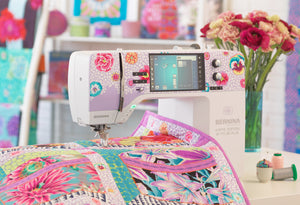

We Love Our Quilting Community
At High Country Quilts we care deeply about community. With our experiences in retail, we know that a store is not only a place to shop but also a place for the community to gather and share. During this busy...


Walking into a sewing machine shop can feel a bit like stepping into a car dealership—so many models, so many features. But here’s the secret: the best sewing machines for beginners aren't the fanciest ones. They're the ones that are simple to use but still give you room to grow your skills.
Your best bet is a reliable electric model, either a solid mechanical workhorse or a user-friendly computerized machine. Both get the job done without a cockpit's worth of confusing buttons.
When you're just starting out, it's easy to get sidetracked by machines boasting hundreds of stitch patterns. Trust me, you don't need them yet. The goal is to find a machine with the right features for a beginner, focusing on what will make your first projects fun and frustration-free.
The first big choice you'll make is between a mechanical and a computerized machine. Think of mechanical models as the trusty, all-manual sedans of the sewing world. You turn dials and knobs to select stitches and adjust tension. They’re known for being incredibly durable and are fantastic for learning the fundamentals on projects like simple garments, hemming pants, or making throw pillows.
Computerized machines, on the other hand, are more like a modern car with a digital dashboard. They have a small LCD screen, push-button controls, and handle a lot of the fine-tuning for you. While there's a small learning curve, their automated features are a huge help for anyone dreaming of tackling more ambitious projects like quilting or detailed costume-making.
No matter which type you lean toward, a few key features will make your sewing journey infinitely smoother. These are the things I always tell new sewists to look for, as they genuinely save you time and headaches.
Your project goals are the best compass for pointing you toward the right machine.

As you can see, for basic repairs and alterations, a mechanical machine is more than enough. But if your imagination is running wild with ideas for cosplay or quilts, the precision of a computerized model is a better fit.
So, what do you actually want to make? Are you dreaming of hemming your own jeans and mending your kids' clothes? Or are you picturing yourself creating an elaborate gown for the next comic convention? Be honest about your goals, and the right machine will become clear.
The industry stats back this up. Electric sewing machines are the go-to for beginners, claiming a 45.6% revenue share in 2024 because they hit that sweet spot of functionality and price. They’re designed to handle a variety of fabrics without causing the physical strain of older manual models. You can dive deeper into these trends over at Data Bridge Market Research.
To make it even simpler, here’s a quick breakdown to help you decide.
This table summarizes which machine type aligns best with common beginner goals and what to look for when you're ready to start your sewing journey with us.
| Machine Type | Best For | Key Features | Famcut Use Case |
|---|---|---|---|
| Mechanical | Simple mending, basic garments, hemming. | Durable build, manual controls, essential stitches. | Perfect for learning the fundamentals in a beginner's sewing class at Famcut. |
| Computerized | Cosplay, quilting, decorative projects. | LCD screen, push-button stitch selection, speed control. | Ideal for creating a multi-fabric cosplay costume with precise, even details. |
| Heavy-Duty | Thick fabrics like denim, canvas, vinyl. | Strong motor, metal frame, high presser foot lift. | Great for sewing durable tote bags or sturdy elements for a costume. |
| Quilting | Large quilting projects, free-motion work. | Wide throat space, extension table, walking foot. | The best choice for assembling and finishing your first full-size quilt. |
Ultimately, thinking about your "why" for sewing will lead you to the perfect machine to get you started.
 When you start looking for a sewing machine, the term "beginner" can be a little misleading. It covers a huge range of machines, and what works for one person might be frustrating for another. To find your perfect match, it helps to first get a handle on the three main categories you’ll encounter.
You'll generally find yourself choosing between a classic mechanical model, a modern computerized machine, or a more specialized quilting machine. Each one is built for a different style of sewing and creative path. Getting this first choice right sets you up for a much more enjoyable journey.
Mechanical machines are the tried-and-true workhorses of the sewing world. You operate everything with manual dials and knobs—physically turning a wheel to choose your stitch and adjusting sliders to set the length and width. This hands-on approach is fantastic for learning because you can feel and see the direct result of every change you make.
Because they have fewer electronic components, these machines are famously durable and often simpler to maintain. It’s a bit like learning to drive a stick shift; you develop a much deeper feel for how the mechanics work together. They are absolutely perfect for straightforward jobs like hemming pants, mending seams, and sewing simple home decor or garments.
Their reliability keeps them incredibly popular. In 2024, the General Sewing Machine market, which is dominated by these mechanical models, brought in an impressive $3,541.20 million in revenue. That accounts for 54% of the entire global market. Their focus on essential utility stitches and adjustable tension makes them a go-to for anyone starting out. You can dig into more of this data over at Market Growth Reports.
On the other end of the spectrum are computerized sewing machines, which offer a huge leap in convenience. Instead of dials, you have an LCD screen and simple push-buttons that let you browse a vast library of built-in stitches. The machine often does the heavy lifting for you, suggesting the right presser foot and automatically setting the ideal stitch length and width.
This automation can be a real confidence booster, allowing beginners to get polished, professional-looking results much faster. You'll find features like perfect one-step buttonholes, speed control sliders, and the needle up/down function, all designed to take the guesswork out of sewing.
The real advantage of a computerized machine is its precision and consistency. For tasks that demand accuracy, like creating decorative patterns for cosplay or sewing delicate fabrics, the machine’s ability to flawlessly replicate a stitch every time is invaluable.
If you can already see yourself wanting to experiment with decorative stitches or you plan to work with tricky fabrics like chiffon or knits, a computerized machine provides the flexibility and power to grow with you.
While plenty of computerized machines are great for quilting, a dedicated quilting machine is purpose-built for the craft. The most obvious difference is the huge throat space—that’s the open area between the needle and the machine's main body. A generous throat, sometimes 20 inches or more, lets you manage the bulk of a large quilt without having it all bunch up.
These machines also come with a walking foot (or an Integrated Dual Feed system). This special foot grabs the top and bottom layers of your quilt "sandwich" and pulls them through together, which is crucial for preventing the layers from shifting and puckering.
Finally, quilting machines are built for marathon sewing sessions. They have powerful motors that can stitch at incredible speeds and heavy-duty frames that won't vibrate on your table. While it's an ambitious starting point for a brand-new sewist, anyone who knows they want to make quilts will find these features essential.
 Okay, you know the basics of what makes a machine tick. Now let's get into the fun part—looking at some real contenders. I'm not just going to give you a dry list of features. We need to talk about what it’s really like to sit down and sew with these machines, because that's what makes the difference between a tool you love and one that gathers dust.
We'll focus on four popular models I often recommend to new sewists: the Brother CS6000i, the Singer Heavy Duty 4423, the Janome MOD-19, and the Singer Quantum Stylist 9960. Each one shines in its own way, so your choice really comes down to what you see yourself making.
This is the classic debate, and no two machines frame it better than the Brother CS6000i and the Singer Heavy Duty 4423. They sit at opposite ends of the spectrum and are built for totally different creative goals.
The Brother CS6000i is a computerized darling, and for good reason. It’s incredibly easy to use right out of the box. You get an LCD screen, simple push buttons to select from its 60 built-in stitches, and a ton of automated functions that just make life easier. If you’re dreaming of making quilts or putting perfect, one-step buttonholes on a blouse, this is your machine.
On the other hand, the Singer Heavy Duty 4423 is a mechanical workhorse. It’s got a solid metal frame and a motor that won’t quit, making it perfect for tougher jobs. Want to whip up canvas tote bags, hem a pile of jeans, or even work with vinyl for a cosplay project? This machine's raw power is its biggest asset. It has fewer stitches—just 23 total—but every single one is a practical, get-the-job-done stitch.
A key differentiator is the sewing experience itself. The Brother CS6000i offers a quiet, smooth operation ideal for delicate fabrics like chiffon, while the Singer 4423 provides a more tactile, hands-on feel with audible feedback that confirms its power as it tackles thick seams.
So, the choice boils down to your priorities. Do you want the versatility and push-button ease of a computerized machine, or do you need the sheer, unapologetic strength for heavy-duty projects?
Now let's look at two other fantastic options: the Janome MOD-19 and the Singer Quantum Stylist 9960. The Janome is an amazing mechanical all-rounder, while the Singer 9960 is a more feature-packed computerized machine that gives you tons of room to grow.
The Janome MOD-19 is a favorite among sewing teachers because it's simple, reliable, and just works. With only 19 built-in stitches selected by a straightforward dial, it perfectly captures the "less is more" mindset. It's a breeze to thread, and Janome is known for its incredible stitch quality. For making clothes and handling everyday mending, it’s a dependable partner that won’t overwhelm you.
The Singer Quantum Stylist 9960, however, is built for the ambitious beginner. This computerized powerhouse comes with a whopping 600 built-in stitches, an extension table for quilting, and a huge set of presser feet. If your sewing aspirations involve intricate costumes or beautiful quilts, the 9960 is an investment that will grow with you. I know one sewist who used hers for over eight years, tackling everything from Lycra to sequined fabrics without missing a beat.
This really brings up the importance of thinking about your future goals. The Janome is perfect for getting confident with the fundamentals. The Singer 9960, on the other hand, ensures you won't feel the need to upgrade a year or two down the road.
To make things even clearer, here’s a table breaking down how these four models compare side-by-side. Use this to quickly see which machine’s strengths line up with the projects you’re excited to start.
| Model Name | Type (Mechanical/Computerized) | Built-in Stitches | Key Feature for Beginners | Ideal for (Quilting, Cosplay, Garments) |
|---|---|---|---|---|
| Brother CS6000i | Computerized | 60 | Push-button stitch selection and included walking foot | Garments, Light Quilting |
| Singer Heavy Duty 4423 | Mechanical | 23 | High-speed stitching and heavy-duty metal frame | Cosplay (Denim, Canvas), Home Decor |
| Janome MOD-19 | Mechanical | 19 | Top-loading bobbin and ultra-simple stitch dial | General Garment Sewing, Mending |
| Singer Quantum Stylist 9960 | Computerized | 600 | Extension table and vast decorative stitch library | Advanced Costumes, Quilting, Decorative Work |
Ultimately, finding the right machine isn’t about getting the one with the most bells and whistles. It’s about choosing the one with the right features for what you want to create. By understanding what makes each of these models tick, you can confidently pick a machine that will be a joy to use from your very first stitch.
The idea of a single "best sewing machine for beginners" is a myth. The real question isn't what's best, but what's best for you. Finding the right machine is like finding a creative partner—the one that excites a quilter might just frustrate a cosplayer. By thinking about the projects you're itching to make, you can choose a machine that not only gets the job done now but also has room for your skills to grow.
So, let's get practical. We'll look at three of the most popular sewing paths—garment making, quilting, and cosplay—and pinpoint the features that actually matter for each. This will help you see past the marketing fluff and focus on what you truly need.
If your dream is to build a wardrobe piece by piece, your machine needs to be a master of the fundamentals. You don't need hundreds of fancy decorative stitches. What you do need is reliability, precision, and features that make putting clothes together feel less like a chore.
A garment maker's workhorse is a machine that delivers a beautiful, consistent stitch, especially for the basics like straight and zigzag stitches. But here’s a feature you should absolutely prioritize: a one-step buttonhole. This function automatically creates perfect, uniform buttonholes every single time. It's a small detail that gives homemade clothes that polished, professional look.
You also want a machine that isn't picky about fabrics. Pay close attention to these key features:
A solid computerized model like the Brother CS6000i or a tough-as-nails mechanical one like the Janome MOD-19 often hits that sweet spot for someone just starting to sew their own clothes.
Quilting is all about precision, and your machine should be a supportive partner in that journey. While you can technically piece quilt blocks on any machine, a few features make a world of difference for beginners getting serious about the craft.
The most important factor is throat space—the open area to the right of your needle. A generous throat space makes it so much easier to wrangle the bulk of a quilt as it grows. For a beginner, a machine with at least 6-8 inches of throat space is a great place to start. For comparison, dedicated longarm machines can offer over 20 inches!
Trust me, a walking foot is non-negotiable for quilting. This special foot has its own set of feed dogs that grip the top layer of your quilt "sandwich" while the machine's feed dogs grip the bottom. They work together to pull all the layers through evenly, preventing the shifting and puckering that can ruin hours of work.
A few other must-haves for new quilters are an extension table, which gives you a large, flat surface to support your project, and a needle up/down function. This lets you stop with the needle buried in the fabric, which is essential for pivoting perfectly at sharp corners. A machine like the Singer Quantum Stylist 9960 is a fantastic entry point, as it often comes with both an extension table and that all-important walking foot right in the box.
Cosplayers are the daredevils of the sewing world. You're constantly pushing the limits, working with materials that would make other sewists run for the hills. Your machine needs to be a versatile beast, ready to tackle everything from slippery spandex to tough-as-nails faux leather.
Your number one priority is power. A machine with a strong motor and a full metal frame, like the Singer Heavy Duty 4423, is non-negotiable. These workhorses can punch through thick layers of fabric, foam, and vinyl without the motor whining or skipping stitches. Also, look for a high presser foot lift, which gives you extra clearance to slide bulky seams and materials under the foot.
Beyond sheer power, you need versatility. One day you might be sewing a stretchy Lycra bodysuit, and the next you're crafting vinyl armor. That means you'll rely on:
Ultimately, choosing your first machine is a personal decision. When you match its strengths to your creative goals, you’ll find a reliable partner that will be with you for every step of your sewing adventure.

So, you've picked out your first sewing machine. That's a huge, exciting first step! But a machine, no matter how great, is just a starting point. To really get sewing, you need to assemble a small but mighty toolkit.
Having the right accessories on hand is what turns a potentially frustrating session of tangled thread and wonky seams into a genuinely fun, creative experience. These are the items that will make your sewing life infinitely easier right from the very first stitch.
Don't fall into the trap of buying every shiny gadget you see. You'll get much more mileage out of a few high-quality basics than a drawer full of specialty tools you won't touch for months. Start here.
These core items are the foundation of any good sewing kit. They help you avoid the most common beginner pitfalls and let your new machine do its job properly.
Okay, you’ve got your machine and your starter kit. Now what? That brand-new machine can feel a bit intimidating, but you absolutely don't have to figure it all out on your own. This is where finding some expert guidance becomes the most important accessory of all.
At Famcut, we firmly believe that support is just as crucial as the hardware. We're not just here to sell you a machine; we're a community resource dedicated to seeing you succeed. Our entire approach is built around closing that gap between unboxing your machine and confidently finishing your first real project.
One of the best things you can do for your new hobby is find a local spot for classes and service. It’s your safety net. Having someone to call for advice, troubleshooting, or a tune-up will keep you sewing happily for years to come.
We’ve created a support system designed specifically for beginners who want to get the most out of their new machine.
We know the hurdles new sewists face because we've been there ourselves. That's why we've built our services to provide practical, hands-on support to get you going.
Hands-On Sewing Classes Nothing beats learning in person where you can ask questions as they pop up. Our beginner sewing classes are held in a friendly, no-pressure environment. We'll walk you through everything from threading the machine to sewing your first perfect seam.
Expert Advice and Troubleshooting Is your thread bunching up? Can't figure out why your tension seems off? The team at Famcut.com is made up of experienced sewists who love to solve problems. We can help you figure out what's going on, whether you're making a simple pillowcase or tackling an ambitious cosplay.
Professional Machine Servicing Just like a car, your sewing machine needs a regular tune-up to stay in peak condition. We offer professional servicing to clean, oil, and adjust your machine, which extends its life and prevents frustrating issues down the road. Kicking off your hobby with a properly maintained machine makes all the difference.
Alright, you've done the research, but a few questions might still be rattling around in your head before you commit. That's completely normal! Choosing your first sewing machine is a big deal, and it's smart to have all your ducks in a row.
Let's clear up some of the most common things new sewists ask. Think of this as a final chat with an experienced friend before you dive into this wonderful hobby.
It's so easy to get dazzled by a machine advertising hundreds of decorative stitches, but here's a little industry secret: you won't use most of them, especially at first. The truth is, about 90% of all sewing projects are built with just two fundamental stitches: a straight stitch and a zigzag stitch. They are the absolute workhorses of sewing.
The only other feature that I’d call a "must-have" is a one-step buttonhole function. It’s a game-changer that makes your homemade shirts and dresses look professionally finished. Beyond that, a solid machine with 15-25 high-quality, reliable stitches gives you everything you need to learn, grow, and tackle a huge range of projects.
I get it—that beautiful, all-metal vintage machine on the marketplace is tempting, and the price is hard to beat. While those old machines can be amazing, they can also be a minefield for a beginner. You never know if it has hidden problems, needs an immediate (and potentially costly) tune-up, or is missing a crucial foot or its manual.
For your very first machine, buying new is almost always the safer, smarter choice. You get a warranty for peace of mind, a full set of accessories right out of the box, and customer support to lean on.
The most important thing for a new sewist is to avoid frustration. A new machine lets you focus on learning how to sew, not playing mechanic.
Think of your sewing machine like your car—a little preventative maintenance goes a long way. The frequency of professional servicing really just depends on how much you sew. If you're a casual hobbyist, pulling your machine out a few times a month, you'll be fine taking it in for a professional tune-up every 18-24 months.
However, if the sewing bug bites hard and you find yourself sewing several hours a week, plan on a yearly service. A pro will give it a deep clean, get oil into all the right places, check the timing, and make sure everything is calibrated perfectly. This is the best way to extend your machine’s life and avoid common headaches like skipped stitches or dreaded thread nests.
Absolutely! We live in a golden age of DIY education. With countless YouTube tutorials, blogs, and online classes at your fingertips, teaching yourself to sew has never been easier. That said, the machine you choose can either make that journey smooth or frustrating.
If you're planning to teach yourself, look for a machine with these user-friendly features:
Any beginner-friendly machine will work, but one designed to be intuitive will make the learning process so much more enjoyable. Don't be afraid to just jump in with some scrap fabric and start practicing!
Ready to find the perfect machine and the support to match? At Famcut, we offer hands-on classes and expert advice to help you get started. Explore our resources and join our community.
At High Country Quilts we care deeply about community. With our experiences in retail, we know that a store is not only a place to shop but also a place for the community to gather and share. During this busy...

Hi! We’re Adam and Renee Wheaton, the new owners of High Country Quilts! For more than 40 years, we’ve owned and operated vacuum and sewing businesses. Following in Renee’s father’s footsteps after he retired from All Discount Vacuum and Sewing in Colorado...


Leave a comment