
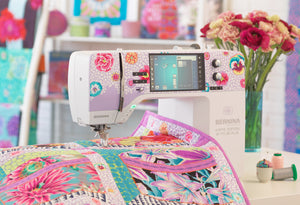

We Love Our Quilting Community
At High Country Quilts we care deeply about community. With our experiences in retail, we know that a store is not only a place to shop but also a place for the community to gather and share. During this busy...


So, you're ready to find the best sewing machine for quilting? That's fantastic! To get started, you'll want a machine that has a few key features: a wide throat space, a walking foot, and a needle-down function. These aren't just buzzwords; they're the tools that make handling those big, beautiful quilts a whole lot easier and help you create neat, even stitches right from the start. A good entry-level machine will feel intuitive while still having the core functions you need to grow your skills.
Welcome to the wonderful, creative, and sometimes addicting world of quilting! I know that choosing your first sewing machine can feel like a massive decision, but it really doesn't have to be scary. Think of it like a chef picking out their first set of great knives—the right tool turns learning the craft into a pure joy instead of a frustrating chore. This guide is here to walk you through it, so you can feel confident in your choice.
My goal is to show you that finding the perfect machine is just the first exciting step on an amazing creative journey. If you focus on a few key elements, you can pick a quilting partner that will be right there with you, from your very first nine-patch block to your first king-sized quilt.
The quilting community is booming! A recent report found that a whopping 18% of quilters now identify as new to the craft, which is a big jump from just 11% the year before. This wave of new quilters has pushed manufacturers to design machines that are perfect for beginners, balancing user-friendly controls with must-have quilting features. You can actually read more about these quilting industry trends if you're curious.
A great beginner machine truly sets you up for success. It needs to be strong enough to punch through multiple layers of fabric and batting, but simple enough that you're spending more time sewing than you are flipping through the user manual. The real magic is in finding a machine that can grow with you.
A machine that’s easy to get the hang of lets you focus your energy on learning actual quilting techniques—like piecing, appliqué, and free-motion stitching—without getting bogged down by a complicated interface.
When you're looking at different sewing machines, some features are simply non-negotiable for a beginner quilter. These aren't just fancy bells and whistles; they're practical tools designed to solve the unique challenges that come with quilting.
To make things even easier, I've put together a quick cheat sheet summarizing the features you should be looking for. Think of this as your shopping checklist!
| Feature | Why It Matters for Beginners | Look For |
|---|---|---|
| Throat Space | Gives you room to manage your quilt without bunching it up. | At least 6 inches. If you can find one with 8+ inches, you'll be set for years to come. |
| Walking Foot | Stops your quilt layers from shifting, ensuring flat, even seams. | A machine that includes one in the box is best, but make sure it's available as an add-on. |
| Needle Up/Down Setting | A must-have for pivoting on corners and stitching intricate designs. | A simple, dedicated button on the front of the machine. |
| Adjustable Speed | Lets you slow down for tricky parts, giving you much better control. | A physical slider control is the most intuitive and easy to use. |
| Sturdy Construction | A heavier machine with a metal frame won't vibrate or skip stitches. | Look for a machine that weighs at least 15 pounds. |
Having these features on your side will make your first projects so much more enjoyable. They're the building blocks that will help you quilt with confidence from day one.
Stepping into the world of sewing machines can feel like trying to read a different language. All those specs and features can be overwhelming! But here's the good news: for a beginner quilter, you only need to focus on a handful of things that will make your life so much easier.
Think of it this way: you wouldn't use a tiny paring knife to chop a giant watermelon. You need the right tool for the job. Let's break down the features that truly matter, so you can pick a machine that will feel like a creative partner, not a frustrating puzzle.
If there's one feature quilters talk about endlessly, it's throat space (sometimes called the harp). This is simply the distance from the needle to the right side of the machine.
Imagine trying to stuff a fluffy queen-sized comforter into a tiny pillowcase. That's what it feels like to quilt on a machine with a small throat. As you sew, all the rolled-up fabric of your quilt has to fit into that space.
A generous throat space is your best friend. It gives you the room to maneuver your quilt sandwich without a constant struggle. While a standard sewing machine might have just 5-6 inches, a good machine for quilting will have at least 7 inches. Many of the most-loved models offer 8 inches or more, and that extra room makes a world of difference.
As a beginner, having that extra space lets you focus on your stitching, not on wrestling a bulky quilt. It's a game-changer.
:max_bytes(150000):strip_icc():format(webp)/parts-of-a-sewing-machine-2977568-final-HL-8822bc21c2514413a522a1068b3d63b2.jpg)
The little metal feet that attach to your machine are more important than you might think. For quilting, two of them are absolutely non-negotiable.
The Walking Foot: This is your secret weapon for preventing puckers. A quilt has three layers, and a standard presser foot only glides over the top one while the machine's "feed dogs" pull the bottom layer. This mismatch can cause the layers to shift and bunch up. The walking foot has its own set of feed dogs on top, grabbing the top fabric and moving all three layers through at the exact same time. It’s a must for straight-line quilting.
The Free-Motion Quilting Foot: You might also hear this called a darning foot. It’s what lets you "draw" on your quilt with thread. Instead of clamping the fabric down, it hovers just above the surface. This allows you to drop the feed dogs and move the quilt in any direction you want—sideways, backward, in circles—to create beautiful, flowing quilting designs.
Getting a machine that comes with these feet, or is at least compatible with them, is a huge head start.
Finally, there are a few simple functions that feel like having an extra set of hands. These are the details that separate a basic sewing machine from one that truly understands a quilter's needs.
Needle Up/Down Function: This is a lifesaver. It’s a button that tells your machine to always stop with the needle either all the way up or buried down in the fabric. Stopping with the needle down acts like a third hand, pinning your quilt in place. You can lift the presser foot and pivot your entire quilt perfectly around the needle for sharp corners and precise turns.
Speed Control Slider: Quilting is all about control, not speed. A physical slider lets you set a maximum sewing speed. You can floor the foot pedal, and the machine will just chug along at a nice, steady pace. This is fantastic when you're learning free-motion quilting or navigating a tricky curve.
The global sewing machine market, which was valued at $4.65 billion, is actually expected to climb to $6.20 billion in the next five years. A big driver for that growth is the rising popularity of hobbies like quilting. Entry-level machines, often in the $100 to $300 range, have become incredibly popular because they pack these key features into an affordable package, giving new quilters a fantastic starting point. You can dig deeper into these sewing machine market trends if you're curious.
When you know what these features do and why they’re so important for quilting, you can look at any machine with confidence. You’ll be able to spot the models that will grow with you as your skills blossom.
When you start shopping for the best sewing machine for quilting beginners, you'll quickly hit a fork in the road: mechanical or computerized? This is a huge decision, and it really shapes how you'll learn and grow as a quilter.
There’s no "right" answer here. Think of it like learning to drive a car. A mechanical machine is like a manual transmission—it’s tough, reliable, and puts you in direct control of every single thing the machine does. A computerized machine is the automatic—it handles a lot of the tricky stuff for you, letting you focus on where you're going.
Mechanical sewing machines are the tried-and-true classics. You control everything with physical knobs and dials, from picking your stitch to adjusting its length and width. No screens, no menus—just pure, hands-on sewing.
For a quilter just starting out, this simplicity is a massive plus. There are fewer things to learn, and when something goes wrong, it's usually easier to figure out why. If your stitch looks wonky, you can physically turn the dial that controls it. They're also famously durable; with fewer electronic parts that can fizzle out, a good mechanical machine can be a friend for life.
The main trade-off? A much smaller stitch library. But honestly, for quilting, you mostly need a great straight stitch, and these machines absolutely nail that.
Computerized machines are the modern kids on the block. They come with an LCD screen and push-button controls, all run by a tiny internal computer that automates everything from stitch creation to tension. This is where a whole new world of creative options opens up.
Here’s why quilters often fall in love with computerized models:
It’s no surprise that these machines are getting more popular. The market was valued at $1.0366 billion recently and is expected to climb to $1.26 billion in just a few years. Manufacturers are now making fantastic entry-level computerized machines designed specifically for quilters, packing them with user-friendly features. You can read more about the growth of computerized quilting machines to see how the industry is adapting.
So, which one is for you? Let's be practical: your budget is the best place to start. Mechanical machines give you incredible bang for your buck, making them a fantastic way to get into quilting without breaking the bank. Computerized machines cost more, but they come with features that save you time and give you room to grow.
This simple decision tree can help you figure out where to start, based on what you want to spend.
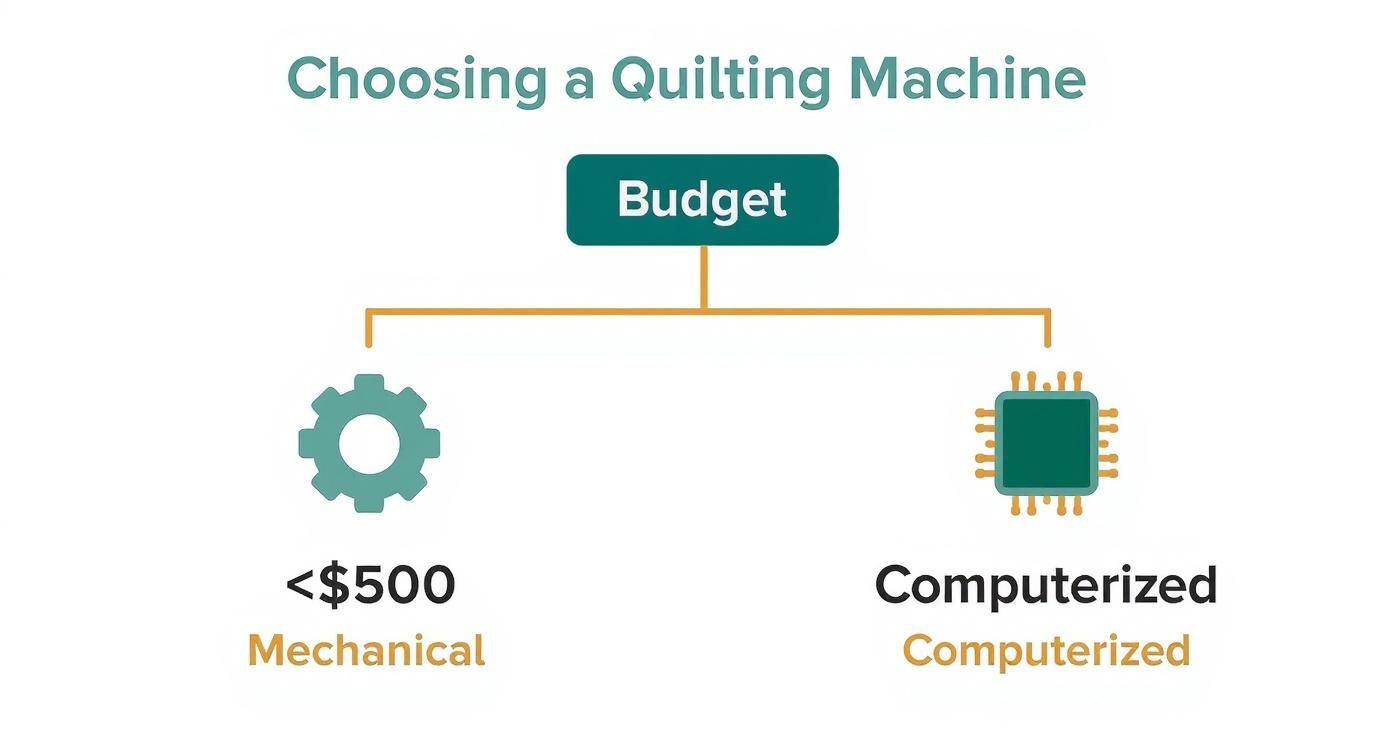
As you can see, if your budget is under $500, the durability and straightforward nature of a mechanical machine is probably your best bet. If you have more to invest, you can jump into the feature-rich world of computerized models.
Key Takeaway: If you want something simple, tough, and affordable, a mechanical machine is a brilliant choice. If you get excited about automation, tons of creative options, and features that make life easier, a computerized machine is an investment you won't regret.
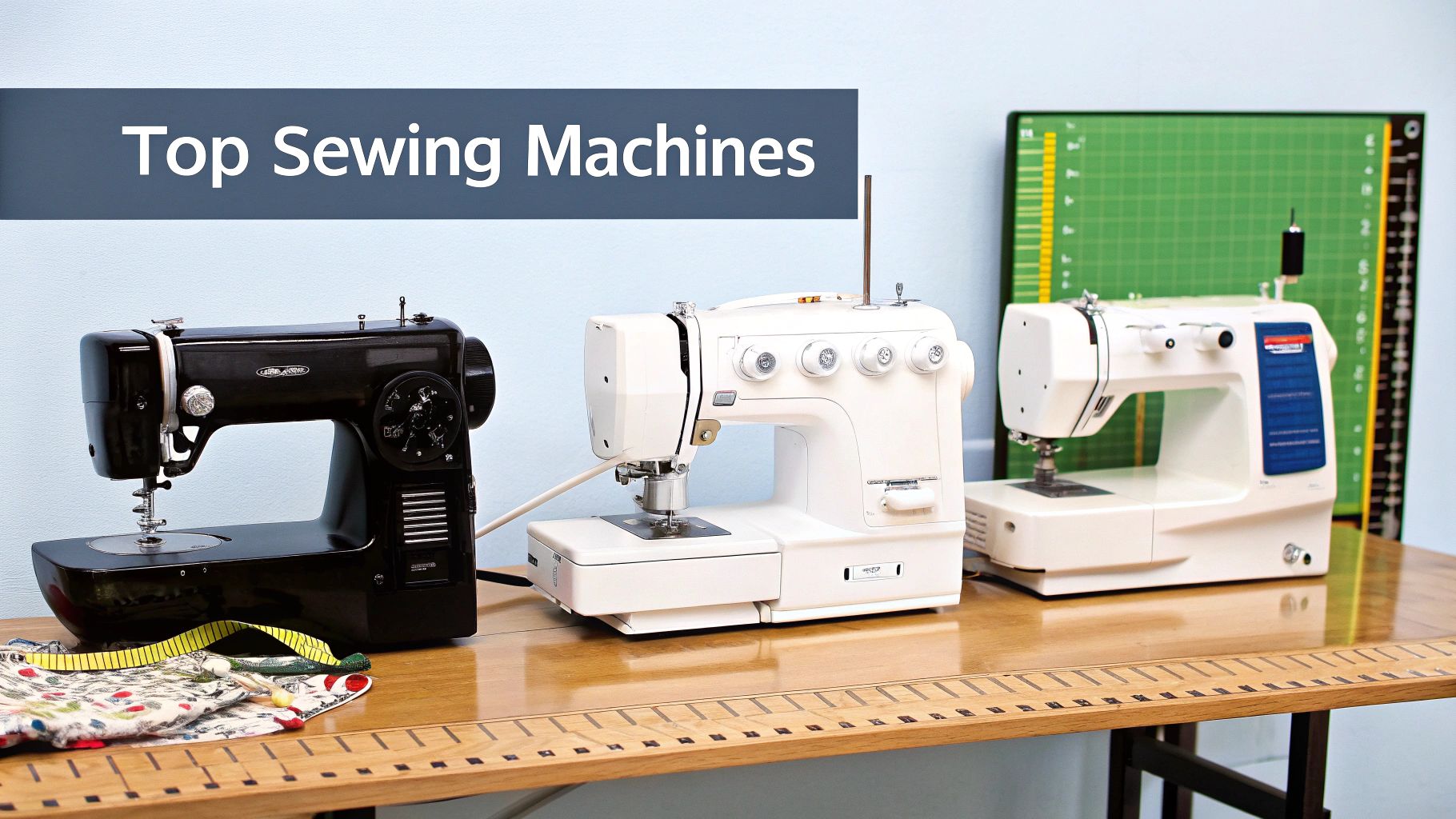
Alright, now that we've covered the essential features and the difference between mechanical and computerized models, let's get to the exciting part—looking at some actual machines. Instead of throwing a huge, overwhelming list at you, I’ve hand-picked a few standout models that I consistently recommend.
These machines are often hailed as the best sewing machine for quilting beginners because they hit that sweet spot of performance, ease of use, and value. Each one shines in a different way, and by looking at them, you’ll see how the features we just talked about play out in the real world.
The Brother CS6000i comes up a lot for a good reason: it’s a fantastic computerized machine that gives you a ton of features for a very friendly price. It’s lightweight but surprisingly sturdy, making it a perfect first machine for anyone who wants modern conveniences without a confusing interface.
What really makes it a great quilting starter is how thoughtfully it’s packaged. It comes with a wide extension table right in the box, which gives you a much bigger surface for handling quilt blocks. It also includes both a walking foot and a free-motion quilting foot, so you don’t have to buy them separately. You’re ready to start quilting right away.
With 60 built-in stitches, a clear LCD screen, and a speed control slider, the CS6000i is designed to help you build confidence. It takes the guesswork out of the equation so you can just focus on learning.
If you're drawn to the idea of a no-fuss, purely mechanical machine, you can't do much better than the Janome HD3000. This thing is an absolute tank. Its heavy-duty aluminum body means it stays put on your table, with no vibrating or bouncing around, even when you're stitching through a thick quilt sandwich.
Its superpower is its piercing power and stitch quality. The motor is a beast, and its straight stitch is flawless every single time—which is the most important thing for accurate piecing. While you won't find a fancy screen, selecting one of its 18 stitches is dead simple with the dial and clear diagram on the front.
This machine is a true long-term investment. It's simple enough for a beginner to master but so well-built that it will be your reliable quilting partner for years and years to come.
For the beginner who knows they're in this for the long haul and has a bit more to invest, the Juki HZL-F600 is an absolute dream. Juki's roots are in industrial machines, and you can feel that professional-grade quality in this model. Its biggest selling point for quilters? A generous 8-inch throat space.
That extra room to the right of the needle is a game-changer when you start quilting larger projects. But it's not just about space. The F600 features Juki's box feed system, which grips your fabric from all sides to feed it through perfectly, preventing any shifting. It also has a knee lift to raise the presser foot (so your hands stay on the quilt), an automatic thread cutter, and a library of 225 stitches.
It’s definitely a jump in price, but it offers performance that you’ll grow into, not out of.
Sometimes seeing things side-by-side makes the decision clearer. This table gives you a quick snapshot of how these three fantastic machines stack up against each other based on the key features we’ve talked about.
A side-by-side look at the key specifications and features of our recommended models.
| Machine Model | Type (Mechanical/Computerized) | Key Quilting Features | Throat Space | Price Range |
|---|---|---|---|---|
| Brother CS6000i | Computerized | Included extension table, walking foot, speed control | ~6.5 inches | $ |
| Janome HD3000 | Mechanical | Heavy-duty metal frame, powerful motor, consistent stitch | ~6.5 inches | $$ |
| Juki HZL-F600 | Computerized | Box feed system, knee lift, automatic thread cutter | 8 inches | $$$ |
At the end of the day, the right machine is the one that gets you excited to sit down and sew. Any of these models will give you a wonderful start on your quilting journey, paving the way for years of creativity and beautiful projects.
It's so easy to get swept up in the excitement of starting a new hobby like quilting. But before you dive headfirst into a sea of beautiful fabrics, let's talk money. Setting a realistic budget from the start is the key to enjoying this craft for years to come, without any financial regrets. The best sewing machine for quilting beginners isn't just about features; it's about what fits your wallet.
Your sewing machine will be your biggest initial purchase, no doubt about it. You might see some machines for under $200, and while tempting, they often cause more frustration than they're worth for quilting. They typically lack the power and space you need, meaning you could outgrow it in just a few months.
For a solid machine that will serve you well as you learn and grow, a good ballpark is the $300 to $600 range. Machines in this sweet spot usually have the must-have features—like a needle up/down button and maybe even an included walking foot—without being overly complicated.
Here’s a classic rookie mistake: thinking the spending stops once you buy the machine. That’s like buying a new car and forgetting you need to pay for gas and insurance. Quilting requires a few other essential tools to get you from a pile of fabric to a finished quilt.
These aren't just "nice-to-have" extras; they're the foundational supplies you'll reach for on every single project. Budgeting for them upfront saves you from those annoying, unexpected trips to the craft store.
Here are the absolute essentials you'll need to account for:
And of course, the best part—the fabric! You don't need a massive collection right away. Just make sure to budget enough for the fabric, batting, and backing to complete your very first project, like a cute baby quilt or a simple table runner.
So, what are we really looking at for a total investment? Let's crunch the numbers. Keep in mind that prices can vary, but this will give you a pretty clear picture of what it takes to get started on the right foot.
| Item | Estimated Cost Range |
|---|---|
| Beginner Quilting Machine | $300 - $600 |
| Cutting Mat & Rotary Cutter | $40 - $70 |
| Quilting Rulers | $20 - $40 |
| Thread, Needles, Pins | $25 - $50 |
| First Project Supplies | $30 - $60 |
| Total Estimated Startup Cost | $415 - $820 |
By planning for this total cost, you'll have everything you need to hit the ground running. You can unbox your machine and start creating immediately, turning that initial investment into a fun, rewarding hobby from the very first stitch.
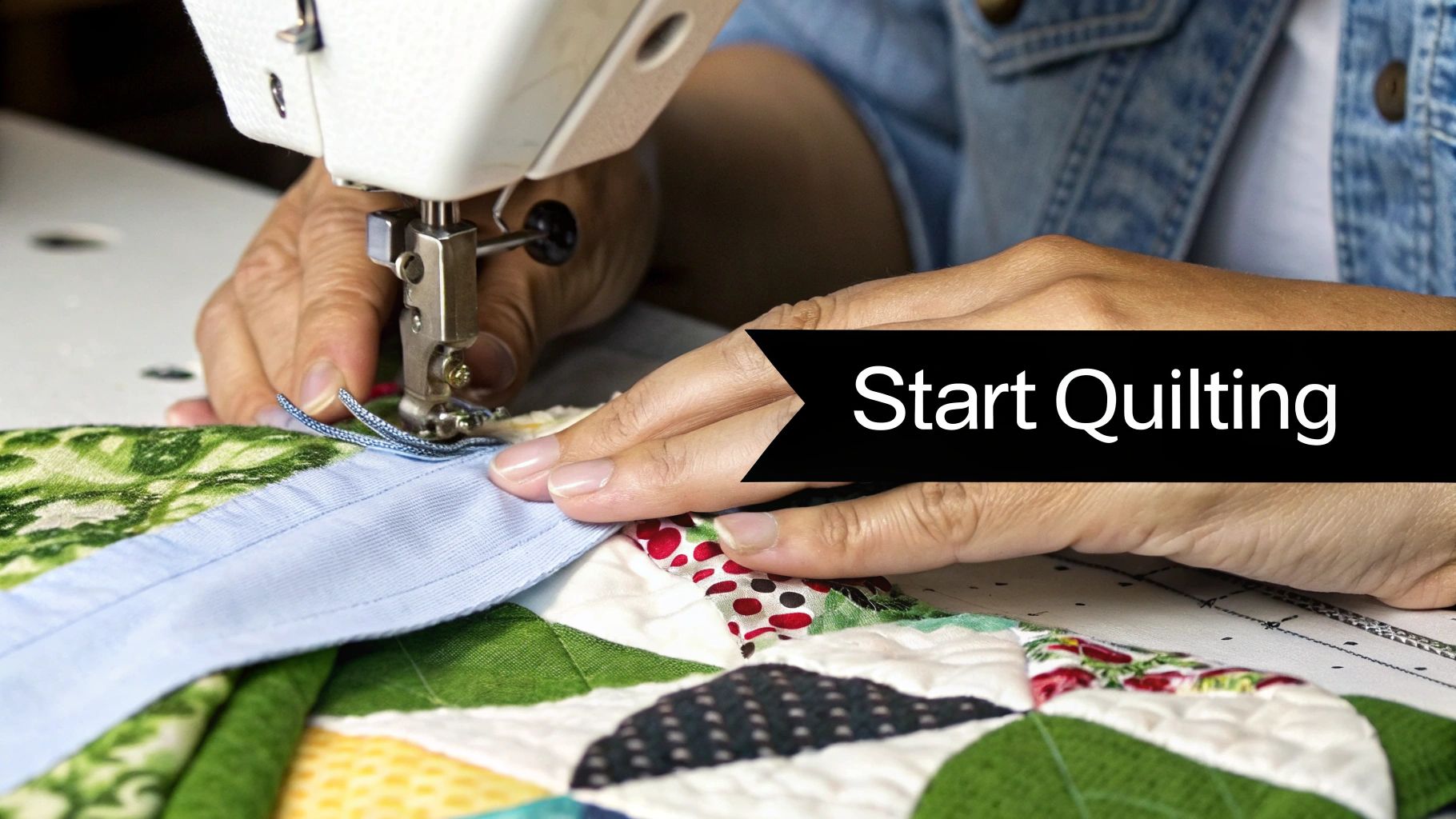
Alright, you did it! You’ve found the best sewing machine for quilting beginners that fits your needs. Now, the real fun can start. That very first project is your chance to really get to know your new machine, transforming a simple pile of fabric into something you can be proud of.
Before you dive into a pattern, just get comfortable. Unbox your machine, plug it in, and actually spend a little time with the manual—I promise it helps! Practice winding a bobbin and threading the needle a few times until it feels less awkward. Grab some scrap fabric and just play around with different stitches and get a feel for how the foot pedal responds.
The key to building confidence is to start with a project that's manageable but still gives you that "I made this!" feeling. A small project is perfect for learning the absolute essentials: how to cut accurately, how to sew a consistent quarter-inch seam, and the art of pressing.
Here are a few classic first projects that are perfect for beginners:
As you start dreaming up that first project, a little inspiration can go a long way. If you love clean lines and bold shapes, you can find some incredible ideas for designing geometric quilt patterns to get your creative gears turning.
Remember, every single quilter you admire was once a beginner fumbling with their first seam. Your first project isn't about creating a flawless masterpiece. It’s about learning the rhythm of sewing and discovering how joyful it is to bring your own design to life.
Embrace the whole process, find a few online quilting groups for tips and encouragement, and be sure to celebrate that first finished piece, no matter what it looks like. This is just the beginning of a really wonderful hobby.
Diving into the world of quilting machines can feel a little overwhelming, and it's natural to have questions. Let's tackle some of the most common ones we hear from folks just getting started. The goal here is to cut through the noise so you can feel totally confident in your choice.
You absolutely can! In fact, most quilters start their journey using a standard sewing machine, especially for piecing together the quilt top. It’s a great way to see if you enjoy the craft.
But here’s the thing: machines designed specifically for quilting have a few tricks up their sleeve that make the whole process so much smoother. Features like a wider throat space for managing big projects, a walking foot to feed layers of fabric evenly, and a needle up/down button for perfect corners are true game-changers. While a regular machine will get you by on smaller projects, the best sewing machine for quilting beginners will save you from a ton of frustration down the road.
Throat space (sometimes called harp space) is simply the open area to the right of your needle. Think of it as your quilting workspace. As you quilt, you have to bunch up the quilt "sandwich"—your top, batting, and backing—and feed it through that space.
A small throat space is like trying to stuff a fluffy comforter into a pillowcase; it’s a constant battle. For a beginner making smaller things like mug rugs or baby quilts, a machine with 6-7 inches of space is manageable. But moving up to a machine with 8 inches or more gives you breathing room and makes quilting so much more enjoyable as your ambitions grow.
A larger throat space is the single biggest feature that cuts down on quilting frustration. It lets you focus on your beautiful stitches, not on wrestling a giant fabric burrito.
It's easy to get wowed by a machine that boasts hundreds of fancy stitches, but the truth is, you don't need most of them for quilting. The one stitch you'll rely on for 95% of your piecing is a good, solid straight stitch. That's your bread and butter.
A reliable zigzag stitch is also handy for appliqué or finishing raw edges. So, instead of getting hung up on the sheer number of stitches, look for quality. Does the machine have adjustable stitch length? Can you drop the feed dogs? That last one is crucial for when you want to try free-motion quilting. When it comes to stitches, always choose quality over quantity.
This is a classic dilemma, and there are good arguments for both. Buying a new machine is all about peace of mind. You get a full manufacturer's warranty, support from the dealer (who can also offer classes!), and every single original foot and accessory. You know it's ready to go right out of the box.
On the flip side, a well-maintained used machine can be a fantastic bargain, letting you snag a higher-end model for a beginner-friendly price. The catch is the risk. If you go the used route, make sure you buy from a reputable sewing machine dealer who has serviced it properly. For most people just starting out, the security and support of a new machine are well worth the investment.
Ready to find the perfect partner for your quilting adventures? At High Country Quilts, we have a hand-picked selection of top-quality BERNINA machines that are perfect for quilters at every stage. Come see us in the shop or browse our collection online to get started. Find your next machine at https://hcquilts.com.
At High Country Quilts we care deeply about community. With our experiences in retail, we know that a store is not only a place to shop but also a place for the community to gather and share. During this busy...

Hi! We’re Adam and Renee Wheaton, the new owners of High Country Quilts! For more than 40 years, we’ve owned and operated vacuum and sewing businesses. Following in Renee’s father’s footsteps after he retired from All Discount Vacuum and Sewing in Colorado...


Leave a comment